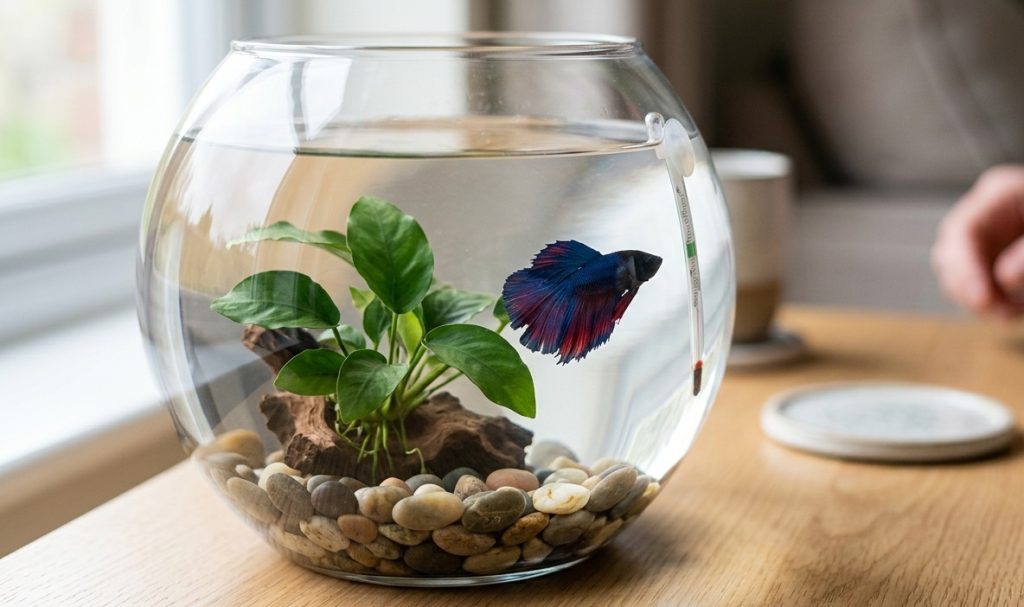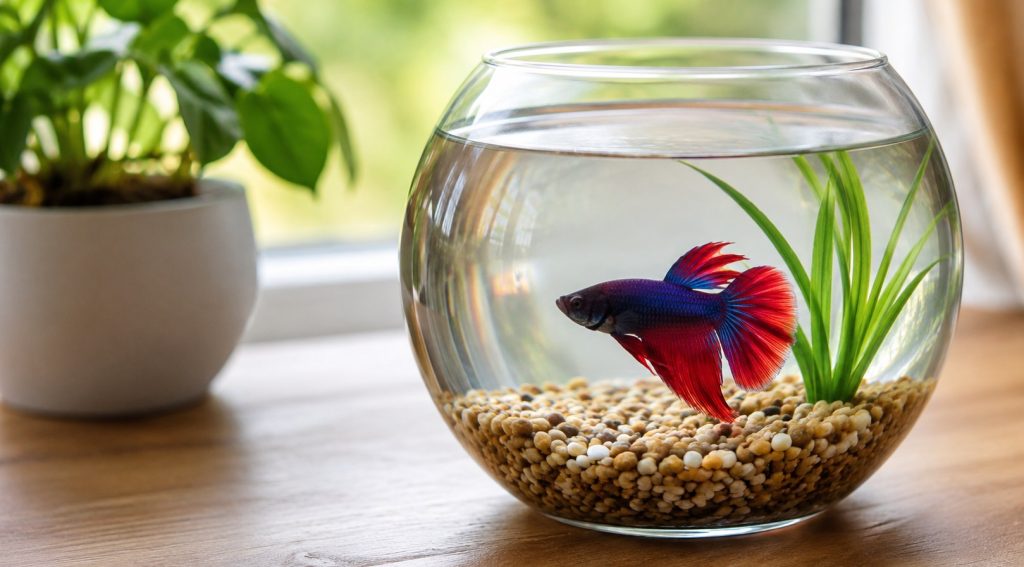
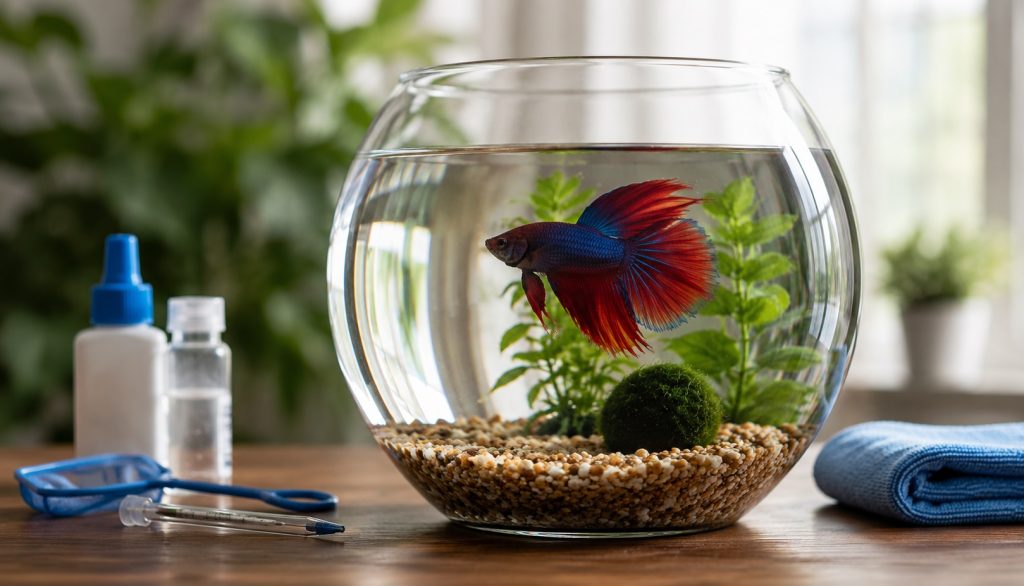
Proper care for a betta in a bowl requires steady warm water, careful feeding, and enrichment.
I have kept and cared for bettas for years and worked with aquarists and vets to refine practical, humane routines. This article explains exactly how to care for a betta fish in a bowl, step by step. You will find clear setup guidance, daily and weekly care plans, troubleshooting tips, health signals to watch, and real-world lessons I learned so you can give a betta a safe, comfortable life even in a small container.
Why a bowl is challenging for bettas and what to consider first
Bettas are hardy-looking but sensitive fish. How to care for a betta fish in a bowl begins with understanding limits. Small volumes of water change temperature and chemistry fast. That stresses fish and raises disease risk.
Key considerations:
- Volume matters. Small bowls magnify ammonia and temperature swings.
- Equipment trade-offs. Traditional bowls often lack space for a heater or filter.
- Ethical choice. If possible, choose at least a 5-gallon tank. If you keep a bowl, follow strict care to reduce harm.
How to care for a betta fish in a bowl requires balancing realistic constraints with best practices. Expect more hands-on maintenance than with a larger tank.

Source: wikihow.com
Minimum bowl size and essential equipment
Bowl size and equipment are the backbone of how to care for a betta fish in a bowl. Aim for the largest bowl you can comfortably maintain.
Recommended minimums:
- Size: 2.5 gallons is the absolute minimum; 5 gallons is strongly preferred.
- Heater: Small adjustable heater to keep water 76–82°F.
- Thermometer: Simple stick-on or floating thermometer.
- Filtration: Gentle sponge filter or low-flow internal filter to keep water stable.
- Water conditioner: Removes chlorine and chloramine from tap water.
- Test kit: Ammonia, nitrite, nitrate, pH strips or liquid tests.
- Substrate and plants: Fine gravel or sand and live plants for biofiltration.
How to care for a betta fish in a bowl depends on adding basic tools that stabilize environment and reduce toxin build-up.
Step-by-step setup for a healthy betta bowl
Follow these clear steps when setting up a bowl. Good setup avoids most problems later.
- Choose the bowl and location.
- Pick a stable surface away from direct sun and drafts.
- Avoid noisy spots or areas with wide temperature swings.
- Clean the bowl.
- Rinse with warm water only. Do not use soap.
- Add substrate and decorations.
- Rinse substrate well first.
- Provide smooth hiding places and live plants like Java fern or Anubias.
- Fill and treat water.
- Fill with dechlorinated water at room temperature.
- Use water conditioner per label.
- Install equipment.
- Place heater and thermometer, adjust to 76–80°F.
- Add a sponge filter with an air pump for gentle flow.
- Cycle the bowl.
- Ideally, pre-cycle using bottled nitrifying bacteria or run a setup with a small “starter” load and test water daily.
- Wait for ammonia and nitrite to reach zero before adding your betta, or plan for frequent water changes and close monitoring.
How to care for a betta fish in a bowl begins with a careful, slow setup to avoid shock and poor water quality.

Source: reddit.com
Daily and weekly care routines
Consistency is central to how to care for a betta fish in a bowl. Small volumes need small, regular checks.
Daily tasks:
- Check temperature and the betta’s behavior.
- Feed the fish once or twice, giving only what it eats in 1–2 minutes.
- Remove uneaten food and visible debris with a small net.
Weekly tasks for bowls under 5 gallons:
- Do 25–50% water change every other day, or 50% water change twice weekly for very small bowls.
- Vacuum substrate lightly during water changes.
- Test water for ammonia, nitrite, and nitrate twice weekly.
Monthly tasks:
- Deep clean decor gently and replace filter media as recommended.
- Inspect equipment for wear.
How to care for a betta fish in a bowl means frequent, short maintenance sessions. This prevents toxic spikes and keeps the fish healthy.
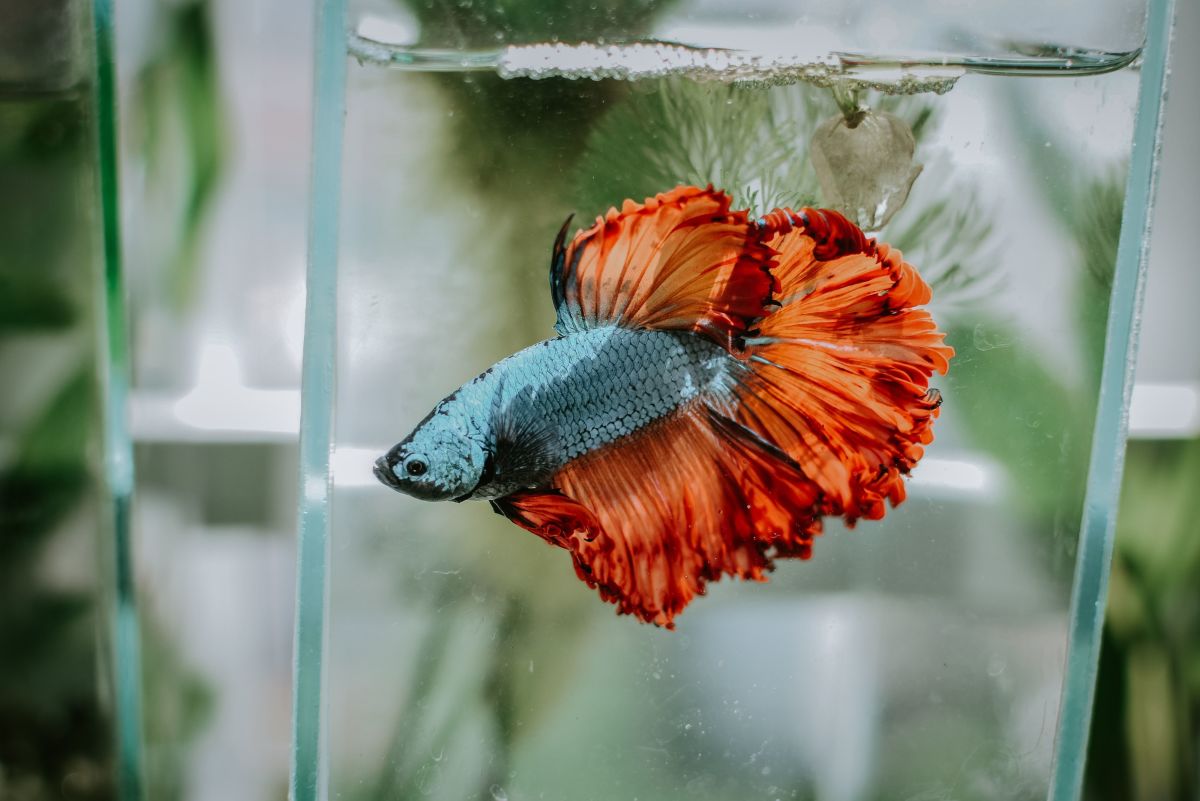
Source: soinspalliatifspaca.com
Feeding and nutrition
Feeding is a simple but crucial part of how to care for a betta fish in a bowl. Overfeeding is the most common mistake.
Feeding guidelines:
- Diet: High-protein betta pellets as staple. Supplement with frozen or live daphnia, bloodworms, or brine shrimp.
- Portion: 2–4 pellets per feeding, once or twice daily. Adjust for the size of pellets.
- Fasting: Skip feeding one day per week to reduce bloating and clear the gut.
- Avoid fillers: Do not rely on flakes as the sole diet; pellets formulated for bettas are better.
How to care for a betta fish in a bowl includes watching body shape and behavior to adjust feeding.
Enrichment, decor, and compatible companions
A bowl can be more than bare water. Enrichment reduces boredom and stress, which supports health.
Enrichment ideas:
- Live plants: Provide cover, oxygen, and gentle filtration. Hardy choices include Java moss, Anubias, and Marimo moss balls.
- Hiding spots: Smooth ceramic caves or halved flower pots create security.
- Gentle currents: Bettas prefer calm water; ensure filters produce minimal flow.
- Toys and interaction: Move objects slowly, or use a mirror briefly for a few seconds to stimulate natural flare behavior without stressing the fish.
Tankmates caution:
- Bettas are solitary and can be aggressive. In a bowl, avoid fish tankmates.
- Snails or certain peaceful shrimp can work in larger bowls if water quality is excellent, but risk is higher in small bowls.
How to care for a betta fish in a bowl is largely about mental stimulation and safe decor to mimic a natural microhabitat.
Common health issues and how to spot them
Knowing signs of illness helps you act fast. Quick response often prevents escalation.
Watch for these issues:
- Fin rot: Ragged or disintegrating fins; treat by improving water quality and using appropriate medication.
- Ich: Small white spots; gradual warming and proper meds help.
- Bacterial infections: Faded color, lethargy, loss of appetite; keep good water quality and consult a vet.
- Swim bladder problems: Floating or sinking; caused by constipation or infection. Fast the fish 24–48 hours and feed daphnia or a pea if constipated.
Water parameters to maintain:
- Temperature: 76–82°F
- Ammonia: 0 ppm
- Nitrite: 0 ppm
- Nitrate: Keep under 20 ppm
- pH: 6.5–7.5
How to care for a betta fish in a bowl is largely preventative: stable water and good diet prevent most illnesses.

Source: reddit.com
Troubleshooting common problems
Problem-solving is part of how to care for a betta fish in a bowl. Here are quick fixes for frequent issues.
Cloudy water
- Cause: Bacterial bloom or overfeeding.
- Fix: Partial water changes, reduce feeding, check filtration.
Algae overgrowth
- Cause: Excess light or nutrients.
- Fix: Reduce light, perform water changes, add planted cover.
Aggression or flaring
- Cause: Reflections, stress, or nearby bettas.
- Fix: Move the bowl away from windows and mirrors; limit flaring stimulus.
Sudden lethargy
- Cause: Temperature drop or toxic spike.
- Fix: Check heater and water test; perform an immediate partial water change and warm the bowl slowly.
How to care for a betta fish in a bowl is about spotting small changes early and acting calmly.
Quick PAA-style questions
Q: Will my betta be happy in a bowl?
A: A bowl can stress a betta over time due to unstable water. A larger, filtered, heated tank is better for long-term welfare.
Q: How often should I change water in a betta bowl?
A: For small bowls, partial water changes every other day work well. For larger bowls (3–5 gallons), 25–50% twice weekly is often enough.
Q: Can I keep plants in a betta bowl?
A: Yes. Live plants help water quality and provide cover. Choose low-light plants and avoid heavy root systems in tiny bowls.
Personal experience: lessons learned from keeping bettas in bowls
I started with a decorative glass bowl years ago. My first betta had stressed fins and frequent cloudy water. I learned several lessons the hard way.
What I learned:
- Size matters more than looks. Upgrading to a 5-gallon tank cut maintenance and improved behavior.
- Heating stabilizes mood. Once I added a mini heater, the fish became more active and fed reliably.
- Plants are lifesavers. Live plants reduced algae and gave the fish hiding places.
- Routine trumps perfection. Short, frequent water changes kept ammonia down and prevented disease.
If you must keep a betta in a bowl, use these lessons: choose the largest bowl possible, add a heater and sponge filter, and commit to frequent testing and water changes.
Frequently Asked Questions of how to care for a betta fish in a bowl
How large should a bowl be for a betta?
A bowl should be at least 2.5 gallons, but 5 gallons is strongly recommended for long-term health. Larger volume stabilizes temperature and water chemistry.
Do bettas need a heater in a bowl?
Yes. Bettas are tropical fish and need a stable temperature between 76–82°F, so a small adjustable heater is recommended even in a bowl.
How often should I feed my betta in a bowl?
Feed once or twice daily, offering only what the betta eats in 1–2 minutes. Fast the fish one day per week to prevent bloating.
Can I keep other pets with my betta in a bowl?
It is risky. Bettas are territorial and small bowls have poor capacity for safe tankmates; avoid other fish and be cautious with snails or shrimp.
How do I treat cloudy water in a betta bowl?
Perform partial water changes, reduce feeding, and ensure filtration is working. Test water for ammonia and nitrite and adjust maintenance accordingly.
Conclusion
How to care for a betta fish in a bowl comes down to commitment: choose a roomy bowl, add heat and gentle filtration, feed properly, and perform regular water changes. Small, steady actions prevent disease and keep your betta active and bright. If you want the best life for your fish, upgrade to a 5-gallon tank when possible and maintain a simple routine.
Take action today: evaluate your bowl size, add a thermometer and water conditioner, and start a short maintenance checklist. Share your progress, ask questions, or subscribe for more practical fish-keeping guides.