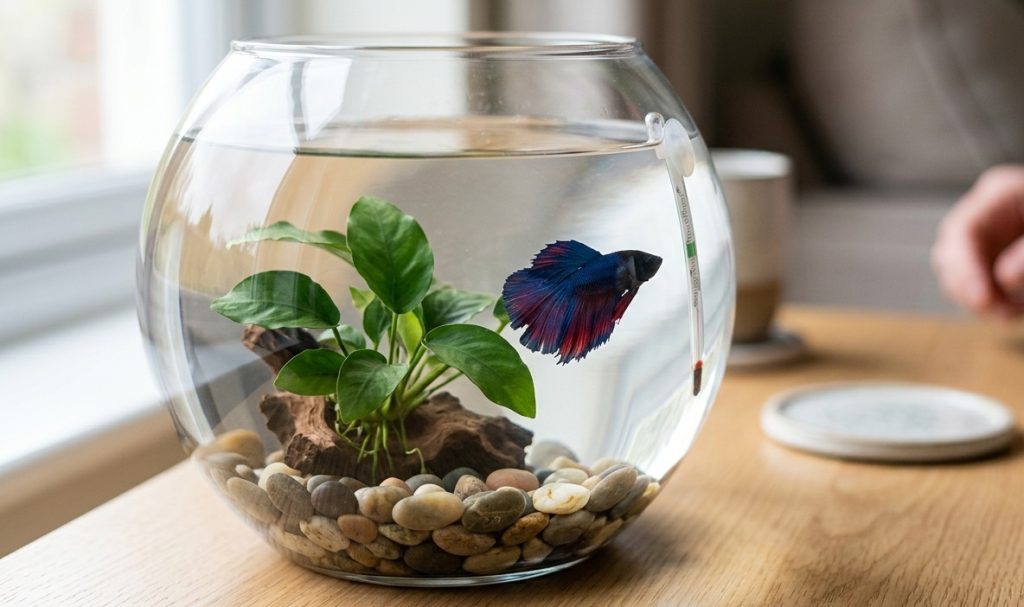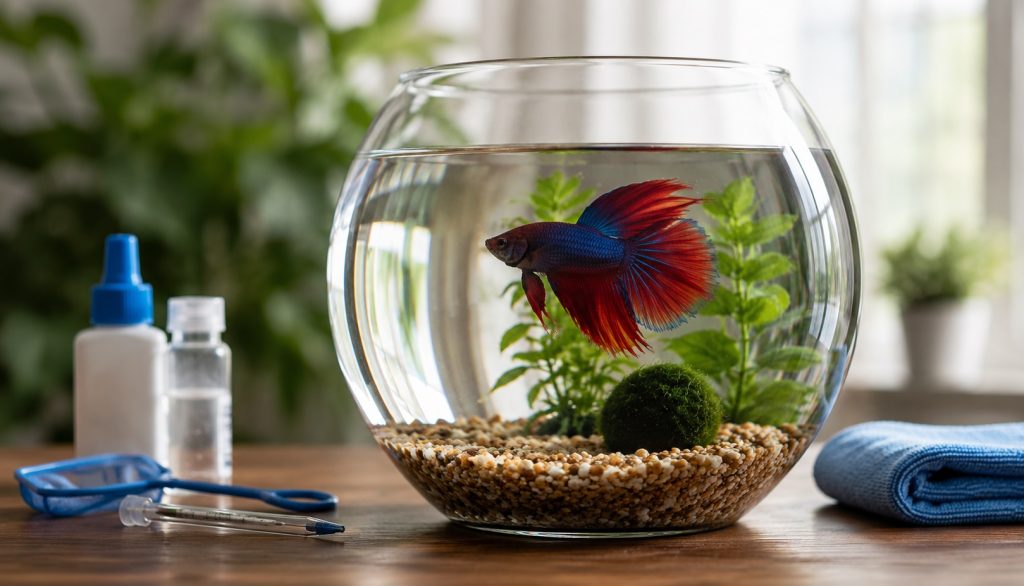
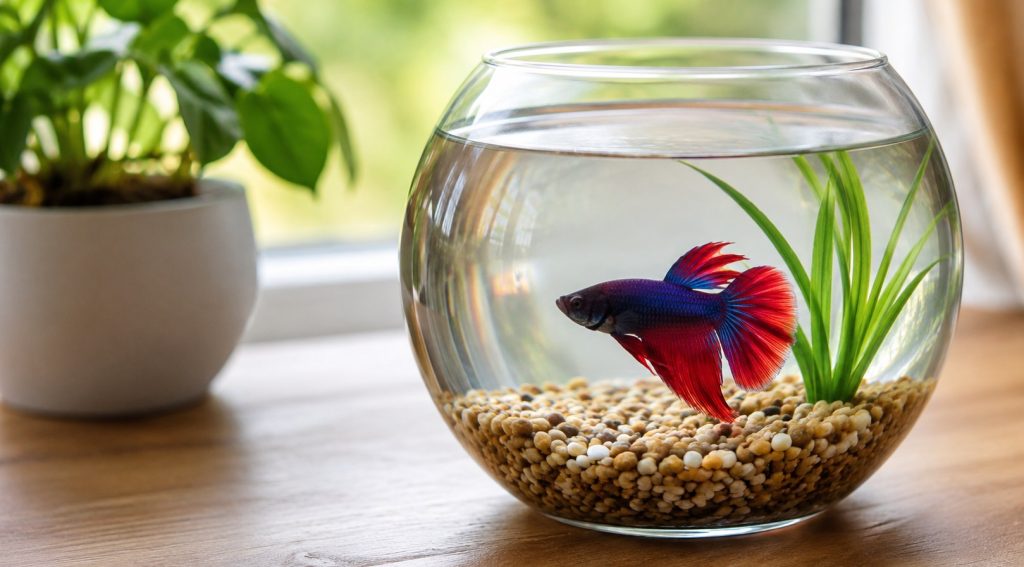
No — betta fish should not live long-term in a bowl; they need stable, filtered, heated tanks.
I have kept and cared for betta fish for years and worked with aquarists and vets. In this article I will explain why the idea that betta fish can live in a bowl is a myth, how small bowls harm their health, and the practical, science-backed setup that helps them thrive. Read on for clear, actionable guidance so you can make the best choice for your fish and avoid common mistakes.
Why people believe betta fish can live in a bowl
Many pet stores sell bettas in small cups or bowls. That image created a strong belief that bettas are fine in tiny containers. Bettas are hardy when stressed for short times. That resilience led to the idea that long-term life in a bowl is acceptable.
People often equate survival with good welfare. Survival is not the same as thriving. A proper tank improves betta behavior, color, and lifespan. The question “can betta fish live in a bowl” needs both short-term and long-term answers. Long-term, the answer is clear: a bowl is not suitable.

Source: youtube.com
Why a bowl is not suitable for betta fish
Bowls lack water volume, which causes rapid shifts in temperature and water chemistry. Small volumes spike ammonia and nitrite quickly. Bettas exposed to unstable water get stressed, and stress causes disease.
Most bowls do not hold a heater or good filter. Bettas are tropical fish that prefer 76–82°F (24–28°C). Without a heater the fish experience cold or wide temperature swings. Bowls also limit oxygen exchange and make waste buildup faster.
Research and aquarist experience show that poor water quality shortens betta life and increases infections like fin rot. Answering “can betta fish live in a bowl” without these risks ignored key fish health principles. The short answer for pet owners: avoid bowls for long-term housing.
Minimum proper setup for a healthy betta
A betta needs stable water, clean filtration, and warm temperatures. To keep a betta well:
- Tank size: at least 5 gallons for one betta. This is the single most important change from a bowl.
- Heater: adjustable tropical heater to hold 76–82°F (24–28°C).
- Filter: gentle filter or sponge filter to keep water clear without strong currents.
- Substrate and decor: smooth gravel or sand and hiding places like plants and caves.
- Water conditioner: to remove chlorine and chloramine from tap water.
- Test kit: ammonia, nitrite, nitrate, and pH test strips or meters.
These elements answer the deeper “can betta fish live in a bowl” concern by showing what bettas really need.

Source: reddit.com
Water parameters and maintenance you must keep
Stable water is the core of health. Target parameters for a healthy betta:
- Ammonia: 0 ppm
- Nitrite: 0 ppm
- Nitrate: under 20–40 ppm
- pH: 6.5–7.5 (consistent is more important than exact number)
Maintenance steps:
- Cycle the tank before adding a betta to build beneficial bacteria.
- Do 20–30% weekly water changes for a 5–10 gallon tank, more if needed.
- Test water weekly during the first month and monthly after stability.
- Use dechlorinator every time you add tap water.
Bowls make these tasks harder because tiny volumes shift quickly. This is a key reason why “can betta fish live in a bowl” is not a good practice for health.
Tank size, filtration, heating, and decor details
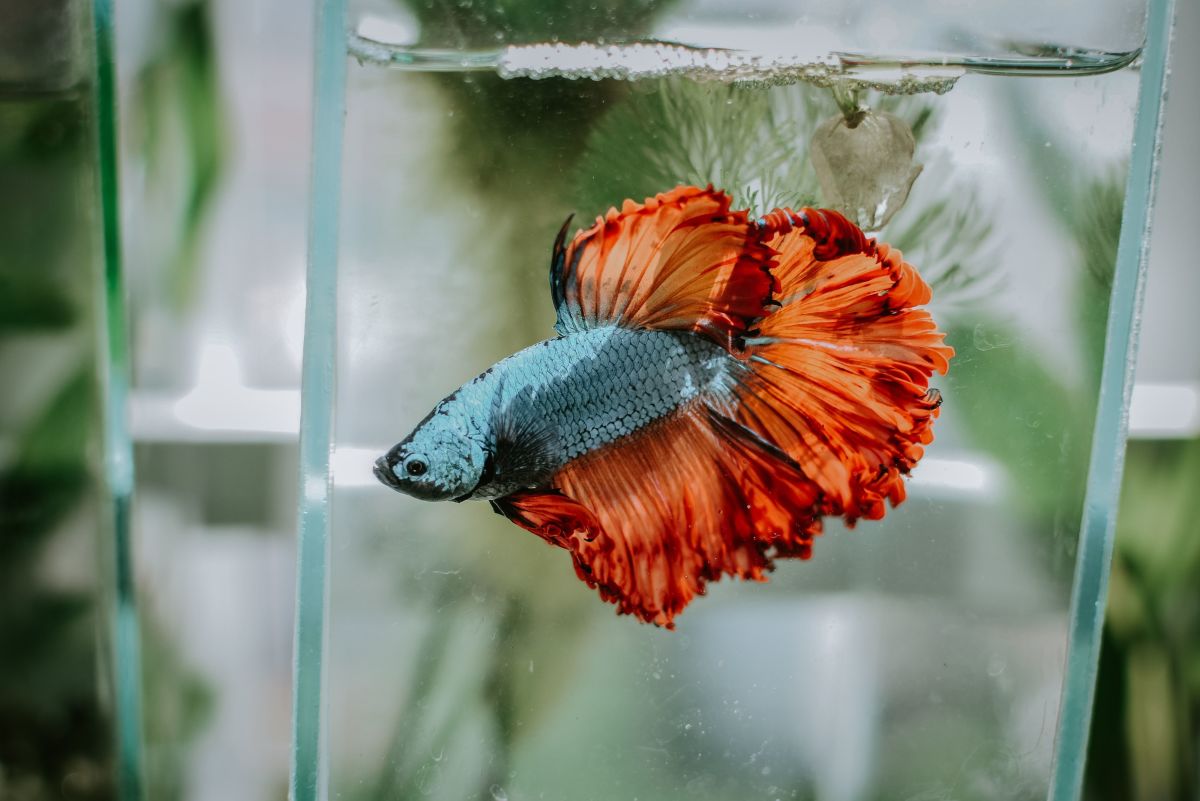
Tank size matters for stability and behavior. A 5-gallon tank gives room to swim and makes water chemistry easier to control. Filters reduce ammonia but choose low-flow options. Bettas prefer calm water.
Heating keeps metabolism and immune function steady. Place the heater where water flows gently. Provide hiding spots to reduce stress. Live plants like Anubias, Java fern, and floating plants improve water quality and create cover.
Avoid overcrowding with decor that traps waste. Smooth surfaces prevent fin tears. A well-planned tank addresses the main reasons people ask “can betta fish live in a bowl.”
Source: soinspalliatifspaca.com
Common mistakes and how to avoid them
Many beginners make the same errors. Learn from these to skip common pitfalls:
- Mistake: Choosing a tiny bowl because it looks cute.
- Fix: Start with at least 5 gallons and simple equipment.
- Mistake: Skipping the cycle and doing large water changes that stress fish.
- Fix: Cycle first and use moderate, regular water changes.
- Mistake: Overfeeding, which raises ammonia.
- Fix: Feed a small pinch once or twice daily and remove uneaten food.
- Mistake: Using strong filters that create fast currents.
- Fix: Use baffle or sponge filters to reduce flow.
These corrections make the answer to “can betta fish live in a bowl” practical: they need better care than a bowl offers.
Signs a betta is suffering in a bowl and how to help
Watch behavior and appearance closely. Signs of trouble include:
- Lethargy, hiding, or staying at the surface
- Clamped fins, faded color, or torn fins
- Rapid breathing or gasping at the surface
- White patches, redness, or fuzzy growths (infections)
If you see these signs in a bowl-housed betta, act fast. Move the fish to a larger, cycled tank with a heater and mild filtration. Start frequent small water changes and test water daily until stable.
These practical steps reflect my hands-on experience rescuing stressed bettas from small containers. They recover quickly when moved to proper conditions.
Personal experience and practical tips
I once rescued a betta from a 1-gallon jar. The fish was pale and barely moved. I set up a 5-gallon tank with a heater, sponge filter, and plants, and cycled the water. Within two weeks the betta regained color and energy.
Tips from that rescue:
- Always acclimate the fish slowly to new water.
- Use a sponge filter to avoid strong flow.
- Keep a small bucket and siphon for fast, safe water changes.
- Offer varied food: high-quality pellets, occasional frozen or live foods.
These are practical, low-cost changes that make a big difference. My experience shows that thoughtful care, not a bowl, gives bettas the best life.
Source: reddit.com
Responsible sourcing and ethical considerations
If you buy a betta, choose a reputable seller who keeps fish in proper tanks. Avoid impulse purchases of bettas sold in tiny cups. Breeding and trade practices affect fish health and temperament.
Consider these ethical choices:
- Choose captive-bred bettas from healthy lines.
- Ask about the seller’s tank size and water practices.
- Avoid supporting vendors that keep fish in tiny containers long-term.
Answering “can betta fish live in a bowl” also has a moral side. We can do better by choosing humane setups and sellers.
Frequently Asked Questions of can betta fish live in a bowl
Can betta fish survive in a bowl for a few days?
Yes. A healthy betta can survive short periods in a bowl if the water is clean and the temperature is stable. Use it only for temporary housing during tank maintenance or travel.
How big should a tank be for one betta?
A 5-gallon tank is the minimum recommended size for one betta. This size gives room to swim and keeps water chemistry stable.
Do bettas need a heater and filter?
Yes. Bettas are tropical and do best with a heater to keep 76–82°F and a gentle filter to maintain water quality. Both reduce stress and disease risk.
Can I keep multiple male bettas together in a bowl?
No. Male bettas are territorial and will fight, sometimes fatally. Never house more than one male per tank unless in a carefully supervised split setup.
Will plants help a betta in a small bowl?
Plants help but cannot offset the problems of low water volume and no heater or filter. Live plants improve water quality but are not a substitute for a proper tank.
How often should I change water in a small container?
If you must use a small container temporarily, change 50% of the water every 1–2 days and test ammonia daily. Long-term reliance on this routine is not safe or practical.
Conclusion
A bowl might look charming, but it fails to meet the real needs of a betta fish. Bettas need space, stable water, warmth, and clean filtration to thrive. I encourage you to choose a 5-gallon or larger tank, add a gentle filter and heater, and commit to regular maintenance. Take this step to improve your fish’s health and happiness, and consider sharing your setup or questions below to learn from others.