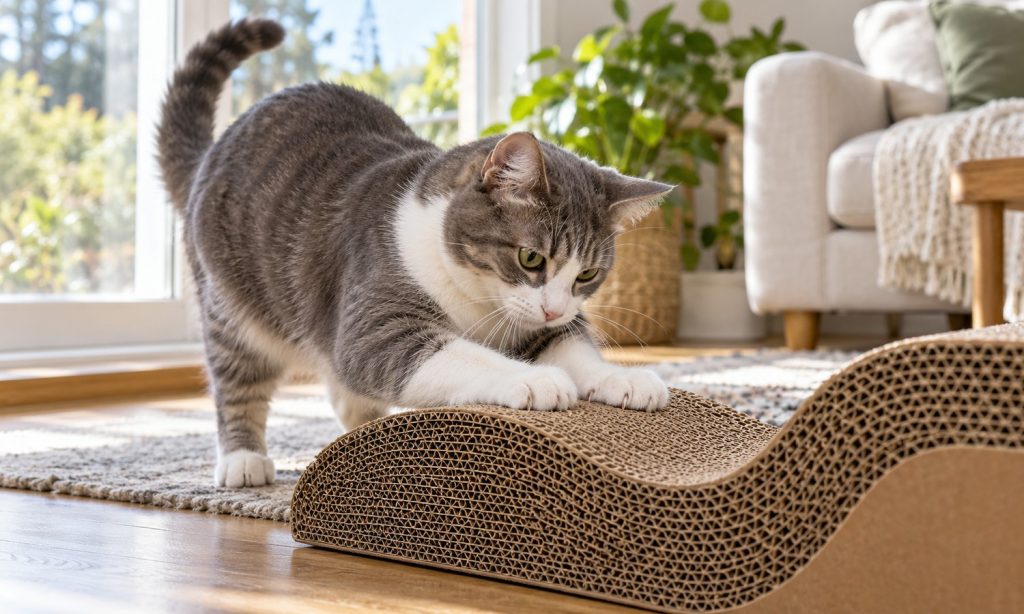
How to choose the right cardboard scratcher for cats begins with matching the design to your cat’s preferences, routine, and environment. The right one should fit your cat’s preferred posture, offer enough room to use comfortably, stay stable, and hold together with regular scratching. Corrugated cardboard is popular with many cats, yet it can shed, absorb moisture, or wear through faster than other materials. Before choosing, observe whether your cat scratches flat rugs, curved surfaces, or upright furniture. Then compare pad dimensions, orientation, construction, and placement with those habits. This guide explains what to inspect, how to keep a cardboard scratcher clean and safe, and how to introduce one without pushing your cat to use it. A few simple checks can help you choose a practical surface that works for your cat and your home.
Start with the way your cat scratches
Scratching is a normal behavior that helps cats stretch, leave scent and visual marks, and maintain their claws. Some cats prefer vertical posts, while others scratch horizontally or on a slope. The surface matters too: a cat that rakes at carpet may not automatically enjoy cardboard. Watch where the cat scratches and how its body is positioned.
A flat cardboard pad usually suits cats that crouch over rugs or stretch forward. A curved lounger may appeal to a cat that likes to scratch and then rest on the same surface. An angled board offers a middle ground for cats that reach downward but want some height. If your cat scratches furniture upright, you may need a vertical surface alongside the cardboard pad.
Preferences can change with age, health, or changes in the home. Keep other acceptable scratchers available while trying a new one. The goal is to provide a choice that fits the cat’s behavior rather than expect one style to work for every feline.
Choose a size and shape that allow full strokes
Check the usable scratching surface, not just the outside dimensions. Frames, raised lips, or curved ends can limit how much cardboard is exposed. Your cat should have room to place both front paws and pull across the board without slipping off. Large cats may need a broader or longer pad, while kittens may be comfortable with a smaller surface.
Consider the posture your cat uses. A cat that leans forward needs a longer board; one that scratches with both paws side by side may need more width. A curved scratcher should not be so steep that the cat loses balance. A flat scratcher should be thick enough to remain stable and not buckle under the cat’s weight.
Think about where you will place it. Measure the available floor area and leave space for the cat to approach, turn, and exit. In a small home, a low-profile rectangle may tuck beside furniture more easily than a large curved lounge. Avoid putting it where a door can hit it or where it blocks a walkway.
Inspect cardboard construction
Corrugated cardboard has ridges that claws can catch. Look for a dense, evenly layered core with no large gaps, crushed sections, or loose edges. A scratcher should feel firm when pressed. If it flexes heavily or sheds pieces before use, it may not last under normal scratching.
Some boards use horizontal layers, while others arrange the corrugation in a different direction. There is no single direction every cat prefers. The visible surface should allow the claws to engage without snagging dangerously. Avoid scratchers with exposed staples, sharp corners, or adhesive that the cat can reach.
Some designs include a surrounding frame or non-cardboard base. Check that the frame does not rock, pinch paws, or hide a loose edge. If the scratcher includes a reversible core, make sure both sides are usable and that flipping it does not leave a wobbly base. Replace the core when it becomes loose or too worn to stay in place.
Think about mess, moisture, and maintenance
Cardboard naturally breaks down with use. Small flakes around the scratcher are common, but large torn strips or frequent dust may signal that the board is worn or damaged. Put it on a surface that is easy to sweep or vacuum. Check the surrounding area for pieces the cat might chew or swallow.
Keep cardboard dry. Water spills, damp floors, and humid storage can soften the layers and encourage odors or mold. Do not wash a corrugated board with liquid. If it becomes wet, stained, or musty, discard it. A damaged scratcher is not worth keeping simply because some surface remains.
Inspect the board every few days at first, then adjust to your cat’s use. Replace it when the surface is crushed, loose, or no longer holds together. Keep replacement parts out of reach until needed, and dispose of damaged material promptly. A clean, intact scratcher is more appealing and easier to maintain in a shared room.
Place the scratcher where your cat wants it
Set the board near a place your cat already scratches, at least during the introduction period. Cats often scratch after waking, so a location beside a favorite resting spot may help. A visible area in a room where the family spends time is often more useful than a hidden corner.
If the cat scratches the carpet in a particular doorway or beside the sofa, place the cardboard surface nearby. You can gradually move it if needed, but moving it far away at the start may leave the old scratching habit unchanged. Keep the board flat and secure so it does not slide while the cat uses it.
In a multi-cat household, consider separate scratchers in distinct areas. One shared board may be guarded or occupied, especially in a busy room. Observe who uses it and whether any cat waits, avoids it, or is interrupted. Multiple accessible surfaces make it easier for each cat to scratch without competition.
Introduce it calmly
Give your cat room to investigate the scratcher. A small treat or toy near the board can create a positive association, and you can reward voluntary pawing or scratching. Do not hold the cat on the board or force its paws against the cardboard. If the cat walks away, let it.
For a cat that keeps scratching another surface, make the approved scratcher easy to find and temporarily cover the targeted area with a safe barrier. Reward the cat when it chooses the board. Avoid punishment, yelling, or startling tactics. They do not teach the cat where scratching is welcome and can create stress around the area.
If your cat ignores the board, change one factor at a time. Try a different location, a flatter or more curved shape, or another material. Keep notes for a week so you can spot patterns. A cat may prefer a sisal or fabric surface, and providing that alternative is a reasonable adjustment.
When cardboard may not be the best fit
Cardboard may be a poor choice if your cat chews or eats it, if the scratcher becomes unstable quickly, or if the cat avoids its texture. Choose a durable alternative and monitor whether the cat interacts with materials safely. If you see repeated chewing or swallowing, discuss it with a veterinarian, particularly if there are changes in appetite, vomiting, or other unusual signs.
A sudden change in scratching behavior can also reflect discomfort. Cats with stiffness or reduced mobility may choose a low scratcher because reaching up is harder. If the change comes with limping, trouble jumping, altered grooming, or difficulty using the litter box, contact a veterinarian. Offer an easy-to-access surface while you seek advice.
Frequently Asked Questions
Do cats like corrugated cardboard scratchers?
Many cats enjoy the ridged feel, but preferences vary. Watch your cat’s existing scratching habits and offer a cardboard surface as one option.
How often should I replace a cardboard scratcher?
Replace it when the surface is crushed, loose, wet, musty, or shedding large pieces. Check it regularly because wear depends on how often your cat uses it.
Are cardboard scratchers safe for kittens?
A stable, intact scratcher can be offered, but monitor kittens so they do not chew or swallow loose pieces. Remove damaged cardboard promptly.
Where should I put a cardboard scratcher?
Place it near an existing scratch site or favorite resting place. Keep it dry, visible, and clear of door swings and walking paths.
What if my cat ignores a cardboard scratcher?
Try a different location or shape, and consider offering another texture or orientation. Never force the cat to use it.
Final Words
The right cardboard scratcher for cats matches your cat’s posture and preferred texture, offers enough room for complete strokes, and stays stable in a convenient place. Keep it dry, inspect the layers, and replace it when worn or damaged. Introduce the surface with patience and provide alternatives if your cat prefers another material. If scratching changes alongside signs of discomfort or the cat eats cardboard, ask your veterinarian for guidance. A safe, well-placed surface supports normal scratching while keeping the setup practical for your home.