How to choose the right sisal scratching post for cats begins with matching the design to your cat’s preferences, routine, and environment. Cats need acceptable places to scratch, but each one may prefer a different angle, texture, height, or location. Sisal’s coarse fibers offer claws a firm grip, and a vertical post can support a full-body stretch. Yet a tall sisal post that wobbles or feels too rough may be ignored. Observe your cat’s current scratching habits, then compare the post’s usable height, sisal construction, base stability, placement, and maintenance needs. Consider the cat’s size and mobility too. This guide explains how to evaluate a sisal post, introduce it positively, and tell when another material or orientation may be a better fit. You can make a more practical choice by matching the surface to behavior instead of relying on a material label alone.
Why a cat may choose sisal
Scratching is normal feline behavior. It allows cats to stretch, leave scent and visual marks, and maintain their claws. Sisal rope has a rough, ridged texture that many cats can catch with their claws. Woven sisal offers a flatter surface that some cats prefer. Neither version is guaranteed to suit every cat.
Look at what your cat scratches now. A cat that claws at rough upholstery or a woven rug may appreciate woven sisal. One that hooks claws into a rope or coarse surface may engage with sisal rope. A cat that scratches cardboard, carpet, or wood may need a different texture. If you do not know the preference, offer more than one safe surface in separate locations and see which gets used.
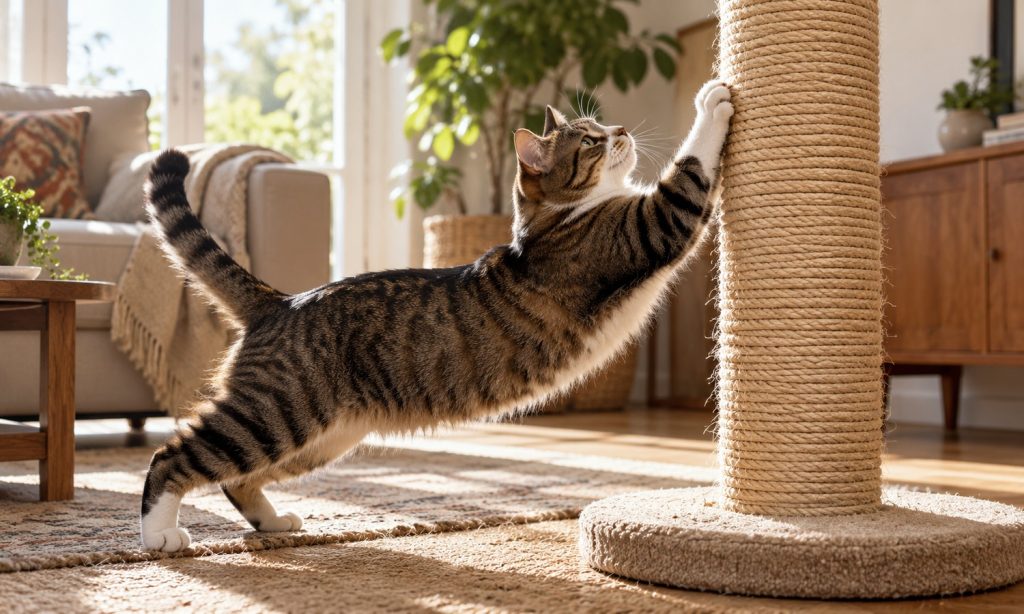
Also notice the cat’s posture. If it stands and reaches upward, a vertical sisal post may match. If it scratches the carpet from a crouch, a horizontal or angled scratcher could be more appropriate. The material and orientation work together; a familiar texture cannot compensate for an uncomfortable posture.
Choose the right height and exposed area
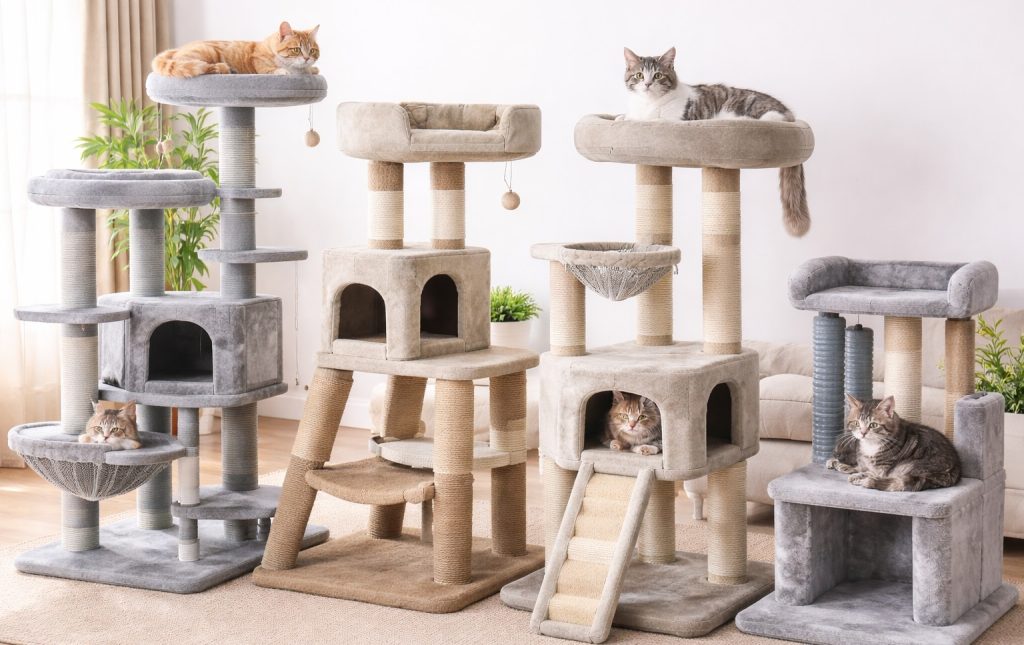
Measure the usable sisal surface, not just the post’s overall height. Caps and bases do not count as scratching area. Watch the cat stretch naturally and estimate how far it reaches with the front paws. Choose an exposed surface tall enough to allow an unhurried stretch and repeated strokes without the cat hunching.
Large cats and long-bodied cats need room to extend. A post that looks tall in a product photo may still be too short once the base and top are excluded. If several cats will use it, size for the tallest cat and the most vigorous scratcher. Give each cat access to other scratching options as well.
Height is not the only dimension. The post should have enough width for the cat to place its paws and move them naturally. A narrow column may be easier to grip, but too little surface can limit the scratching motion. Check the total post height and the width of the sisal-wrapped section before settling on a design.
Inspect the sisal material and wrapping
Look for rope or fabric that is tightly attached, evenly wrapped, and free of loose ends. Gaps can catch a claw or expose the inner post. A clean, consistent surface lets the cat scratch along the length without encountering sharp staples or protruding fasteners. The sisal should feel firm, not slick or heavily frayed out of the box.
Sisal rope or woven sisal
Rope wrapping creates visible ridges and a round profile. Cats can hook claws between the coils, but the coils should be close enough to prevent toes from slipping into large gaps. Woven sisal has a more uniform face and can work well for broad strokes. Compare the texture with the surfaces your cat already uses rather than assuming one format is universally better.
Check the material after assembly and during use. Loose strands can tangle around claws, and frayed pieces may invite chewing. Trim only loose fibers if the post remains secure and smooth; replace the covering or post when the structure is damaged. Keep the cat away from exposed nails, staples, or sharp broken parts.
Check stability before letting your cat climb or scratch
A vertical post must stay put when a cat leans into it. A broad, heavy base reduces tipping, though its footprint must fit the room. Press on the top and pull gently from several directions. The post should not rock, slide, or lift from the floor. Tighten fasteners fully after assembly and recheck them over time.
Place the post on a level surface. On slick flooring, use an appropriate nonslip pad beneath the base if it does not interfere with stability. Avoid setting a tall post on a table or narrow shelf unless the structure is designed and secured for that use. A loose post can startle a cat and create a fall risk.
If the cat will climb as well as scratch, inspect shelves and platforms for secure attachment. A scratching post is not automatically safe as a climbing structure. Follow the assembly guidance and keep it away from unstable furniture, open windows, and objects that can topple.
Place it where scratching already happens
Put the sisal post near an existing scratch site, such as beside a sofa, doorway, or favorite resting spot. Cats often scratch after waking, so positioning it near a sleeping area can make it convenient. A post hidden in a low-traffic corner may be ignored even when its material and height are suitable.
Keep space around it so the cat can stand, stretch, and turn without bumping into furniture. In an apartment, measure the base and the approach area. A tall post can fit a compact room if its footprint is stable and it does not block a path or door swing.
In multi-cat homes, place scratchers in more than one area. Cats may avoid a surface that another cat controls. Separate locations allow each cat to use a scratcher without having to pass through a competitor’s resting place.
Help your cat accept a new post
Let the cat approach the post voluntarily. Place a favorite toy nearby, or reward sniffing and scratching with a treat or gentle attention. Keep the interaction calm. Do not lift the cat and press its paws into the sisal; that can make the post unpleasant.
If the cat scratches furniture, temporarily protect the chosen spot with a safe cover and position the post close by. Reward use of the post. Avoid shouting, spraying, or startling the cat. Those tactics do not teach a preferred scratching location and may increase stress.
If the post goes unused, reconsider location, height, and texture one at a time. A second option with woven sisal or a horizontal orientation can reveal what the cat prefers. Keep a short note of use rather than moving everything at once.
Maintain the post and notice behavior changes
Inspect the base, hardware, and covering regularly. Tighten loose joints and replace a post that leans, cracks, or exposes sharp parts. Vacuum loose fibers around the base. If the sisal is worn smooth or badly frayed, refresh it or offer another surface. Avoid cleaning products with strong odors that may put the cat off.
A sudden change in scratching posture may reflect a new preference or discomfort. Older cats may choose a lower or horizontal surface. If the cat also limps, avoids jumping, grooms less, or seems stiff, ask a veterinarian about possible pain or mobility issues. Keep an accessible scratching option available in the meantime.
Frequently Asked Questions
Is sisal rope or sisal fabric better for cats?
Neither is best for every cat. Rope has ridges; woven sisal has a flatter texture. Choose based on the surfaces and motions your cat already prefers.
How tall should a sisal scratching post be?
It should provide enough exposed surface for your cat to stretch comfortably while scratching. Observe your cat’s reach and account for the post’s base and cap.
How do I stop a sisal post from tipping?
Choose a broad, heavy base, assemble it securely, and place it on a level floor. Test for rocking or sliding before allowing use.
Can a cat scratcher be too rough?
A cat may reject a texture that feels unfamiliar or uncomfortable. Offer a different material or weave if the cat consistently avoids the sisal.
When should I replace sisal rope on a scratching post?
Repair or replace it when the rope becomes loose, severely frayed, or exposes fasteners or the post beneath. Remove any sharp or unstable structure promptly.
Final Words
A good sisal post combines a texture your cat accepts with adequate stretch height and a base that remains steady. Place it near established scratching activity and introduce it through voluntary exploration. Inspect the wrapping and structure regularly, and keep alternative surfaces available if your cat prefers another texture or angle. If scratching changes alongside signs of stiffness or pain, consult a veterinarian. Choosing around your cat’s habits makes a sisal scratching post for cats more likely to meet its purpose in your home.