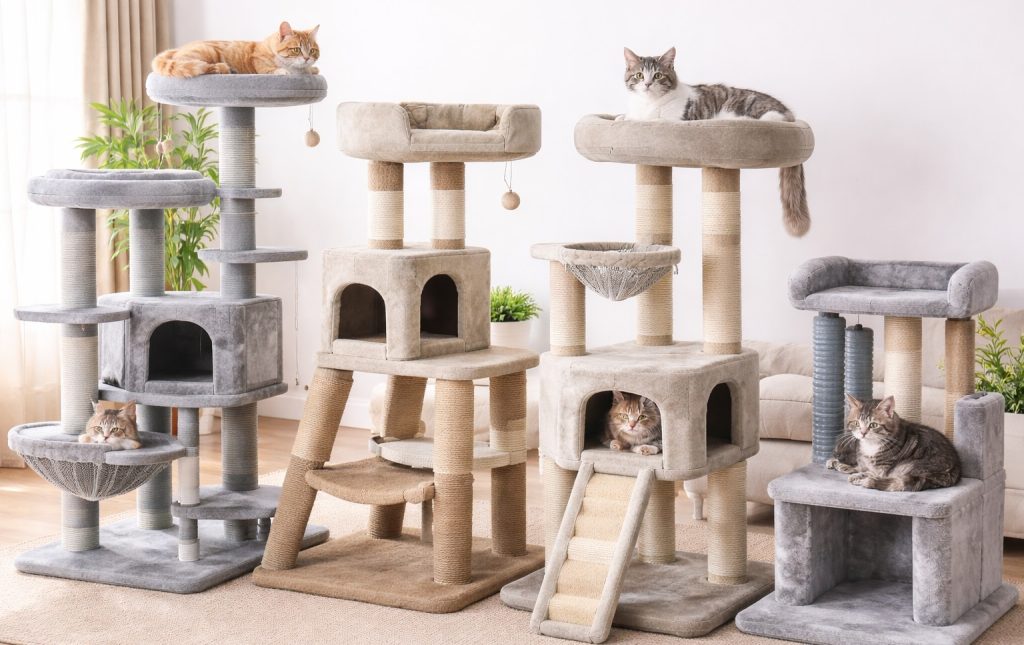
How to choose the right cat scratching post for large cats begins with matching the design to your cat’s preferences, routine, and environment. This guide explains how to measure the fit, choose a useful location, introduce the post, and check it over time.
Start with the way your cat scratches
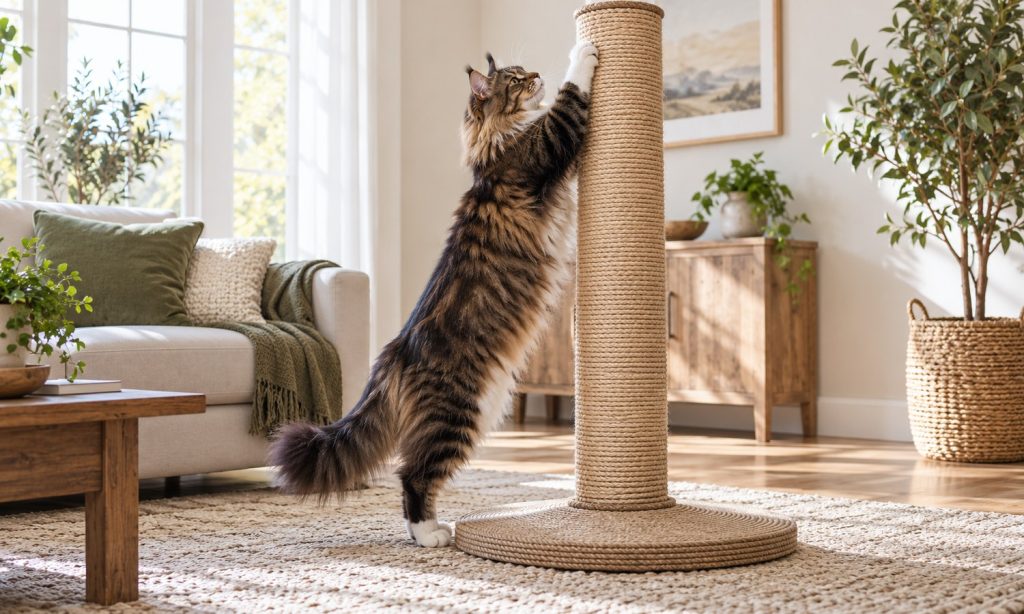
Notice what your cat scratches and where. A cat that grips the side of a sofa may prefer a vertical post. A cat that scratches rugs may favor a horizontal pad, while some cats choose a slanted surface. Watch the whole movement, including how far the cat stretches and whether it braces with its front paws. That observation is more useful than choosing a surface only because it is labeled for a large breed. Check whether your cat stretches upright or scratches lower surfaces, and make sure the base will remain steady while it reaches the full surface.
Scratching is a normal feline behavior. It lets cats stretch, maintain their claws, and leave visual and scent marks. A suitable post gives that behavior an acceptable place in the home. Preference can differ between cats and may change over time, so keep other scratch-appropriate surfaces available rather than expecting one post to solve every scratching need.
Measure usable scratching height
A vertical post should let your cat extend its body without running out of scratchable surface. Observe a natural full stretch beside a wall or other safe reference point. Compare that reach with the uninterrupted height of the post, not the total height of a cap or decorative platform. A cat that must crouch, bend, or stop midway may not find the post satisfying.
Check the post’s usable length from the floor to the first shelf, bed, or obstruction. If it has several short sections separated by platforms, the cat may not have one continuous area for a long stretch. A sturdy vertical scratcher may be easier for some cats to use than an upright post; the guide to a vertical scratcher for cats explains how height and orientation affect that choice.
Prioritize stability and a secure base
A post that rocks, slides, or tips during scratching can startle a cat and discourage future use. Look for a base that sits flat and has enough footprint for the post’s height. Check whether the upright connects firmly to the base and whether the assembly instructions explain how fasteners should be tightened. Do not judge stability by weight alone; the base shape and joints matter too.
Think about how your cat uses furniture now. A cat that leans its full body into a sofa corner may put substantial force on a post. The structure should remain steady during ordinary scratching, without wobbling or lifting at one edge. Place it on a level floor and follow the maker’s assembly guidance. If the post has an approved wall attachment, use only compatible hardware and follow the directions for your wall type.
Before letting your cat use a newly assembled post, check for loose screws, rough edges, exposed staples, or gaps that could catch claws. If it begins to tilt or loosen, stop access until you have corrected the problem. A cat should not have to balance on a moving base to reach the scratching surface.
Choose a surface that suits your cat
Sisal rope, sisal fabric, carpet, cardboard, and wood can feel different under a cat’s claws. Some cats enjoy a rough surface they can hook and pull; others avoid it. Look at what your cat already scratches. If it favors a particular texture, choose a post with a comparable feel where practical. The material is not automatically right just because many cats use it.
Inspect how the surface is attached. Winding should be firm, fabric should not flap, and edges should not expose staples or sharp fasteners. A large cat may use the post with considerable force, so loose material can wear quickly or create snagging points. Follow care instructions, and replace a worn surface when it no longer provides a stable, safe scratching area.
Plan the post’s location
Place the post near a spot your cat already scratches, then gradually make the preferred alternative more appealing. Cats often scratch after waking or in visible areas they regularly use. A post hidden in a quiet back room may be ignored even when its height and texture are suitable. Keep it clear of narrow walkways where a cat could be startled or blocked.
If the target is a sofa corner, place the post beside that corner first. Protect the furniture temporarily with a suitable cover while the cat learns to use the post. The guide to redirecting furniture scratching covers additional ways to make an appropriate surface easier to choose. Avoid punishment, which can increase stress and does not teach the cat where scratching is allowed.
Introduce the post and maintain it
Let your cat inspect the post without pressure. You can reward voluntary interest with praise, play, or a suitable treat. A toy moved around the base may invite the cat to approach, but do not force its paws onto the surface. If the cat ignores it, reconsider placement, orientation, height, or texture one at a time. That makes it easier to see what the cat prefers.
Check the post regularly for loosened joints, a rocking base, frayed rope, torn fabric, or dangling pieces. Tighten or repair it only as directed by the maker. If your cat suddenly stops using a familiar post or shows a new reluctance to stretch or climb, consider whether the post has become unstable. A sudden change in movement or comfort can also deserve veterinary attention.
Frequently Asked Questions
How tall should a scratching post be for a large cat?
There is no single height for every cat. Compare the uninterrupted scratching surface with your cat’s natural full stretch, then leave enough room for the cat to extend comfortably.
Is a wide base important for a large cat?
Yes. A stable base helps the post stay in place while the cat leans into it. Check the base, connections, and assembly together rather than relying on weight alone.
Which material do cats prefer for scratching?
Preferences vary. Observe the surface your cat already uses, then look for a similar texture that is firmly attached and safe to scratch.
Should I choose a vertical or horizontal scratcher?
Choose the orientation that resembles your cat’s existing behavior. Cats that scratch furniture upright may prefer vertical options, while rug scratchers may prefer horizontal surfaces.
What if my large cat ignores the scratching post?
Try placing it near a commonly scratched spot and check whether the post is tall, steady, and textured to your cat’s preferences. Introduce it calmly and avoid forcing use.
Final Words
Choose by your cat’s actual reach, preferred scratching angle, and favorite texture. Check the full usable height, secure joints, and a base that stays flat while the cat leans into it. A sturdy cat scratching post for large cats should fit both the cat and the space where it will be used. Put the post near a familiar scratching area, reward voluntary use, and inspect it regularly. If it wobbles or wears through, fix or replace it before inviting another stretch.