How to choose the right vertical scratcher for cats begins with matching the design to your cat’s preferences, routine, and environment. The right one matches the way your cat scratches, reaches high enough for a comfortable extension, and stays steady under pressure. A tall-looking post is not automatically a good fit: a narrow base, slippery covering, or loose wall mount can make it wobble and discourage use. Start by observing where and how your cat scratches now. Then compare the scratcher’s usable height, material, stability, footprint, and placement with those habits. Cats differ, and preferences can shift with age or mobility. This guide explains how to assess those details, introduce a new surface, and adjust the setup if your cat ignores it, so you can choose a practical option for your home and the cat who lives there.
What a vertical scratcher needs to do
Scratching is normal feline behavior. Cats use it to leave visual and scent marks, stretch their bodies, and care for their claws. A vertical surface lets a cat brace with the front paws and extend the shoulders, back, and legs. Some cats strongly prefer that posture; others choose a flat or angled surface. There is no universal orientation that every cat will accept.
Look for the combination your cat already likes: the angle, texture, height, and location. If your cat scratches the side of a sofa while standing tall, a sturdy upright post or wall panel may fit. If the cat claws at a rug while crouched, an upright post may not solve the problem on its own. Keep familiar scratch options while you test a new one.
Measure the usable scratching height
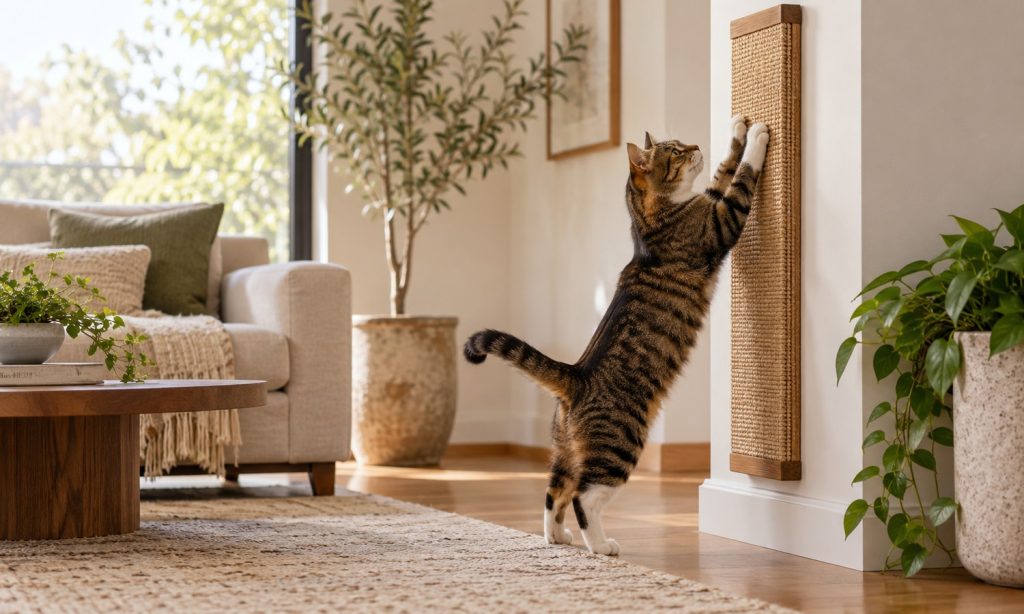
Measure the area your cat actually uses, not just the product’s advertised total height. A post with a large cap or base may offer less exposed scratching material than its overall dimensions suggest. Watch a full-body stretch and estimate the distance from the floor to the highest point the cat reaches. Choose a surface that allows that movement without forcing the cat to hunch.
For a wall-mounted panel, think about where the cat’s paws will land and how far the body can extend. Mount it at a height that supports a natural standing stretch, with enough uninterrupted surface for repeated strokes. In a multi-cat home, size for the largest or longest cat that will use it. A surface that is too short can lead a tall scratcher back to door trim or furniture.
Do not make the scratcher so high that it becomes difficult to reach. Kittens, older cats, and cats with limited mobility may prefer a lower panel or a pair of surfaces at different heights. A vertical scratcher should invite a comfortable stretch, not require a leap or awkward climb.
Choose a texture your cat will use
Common scratcher coverings include sisal rope, woven sisal fabric, carpet, cardboard, and wood. Texture preference is individual. Notice what your cat targets: a rough woven rug, the looped upholstery on a chair, or a coarse doormat may provide useful clues. Offer a safe surface with a similar feel, while keeping loose strings, fraying material, or unstable household objects out of reach.
Rope, woven fabric, carpet, and wood
Sisal rope has ridges that many cats can grip with their claws. A post wrapped in rope should have tight, even coils without large gaps or loose ends. Woven sisal presents a flatter, consistent texture and may be a better match for cats that scratch broad surfaces. Carpet can work when it resembles a preferred household texture, but avoid a style that is indistinguishable from carpets you want to protect.
Some cats scratch wood or textured bark-like surfaces. A natural wood panel can suit that preference if it is smooth enough to avoid splinters and securely fixed. Check any material regularly. Replace or repair it if fibers loosen, edges become sharp, or the structure begins to break down.
Prioritize stability and safe mounting
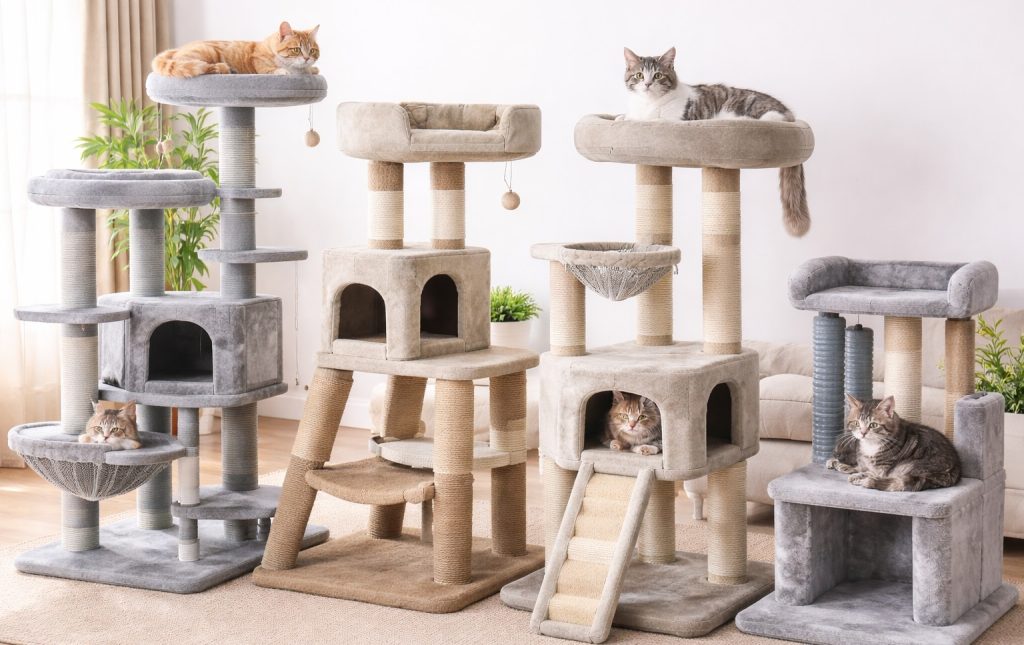
A vertical scratcher should resist the force of a full-body pull. For a freestanding post, a broad, heavy base helps reduce tipping. Press down and gently pull on the top before letting a cat use it. The post should not rock, slide, or lift. Place it on a nonslip floor or secure the base if the surface is smooth.
Wall-mounted panels need hardware suited to the wall and the combined force of the cat pulling against the surface. Follow the mounting instructions and attach to a stud or use appropriate anchors for the wall type. Do not rely on adhesive strips or a loose leaning panel where a cat could dislodge it. If you rent or cannot drill, choose a stable freestanding option and confirm that it stays planted during a test pull.
Check the structure periodically, especially after vigorous use or a move. Tighten fasteners when needed, replace worn coverings, and remove a scratcher that has cracked or become unstable. Stability matters for confidence as well as safety: a scratcher that shifts under the paws can quickly lose its appeal.
Fit the scratcher into your home
Placement often determines whether a cat notices the new surface. Put it near an established scratching spot, such as beside a sofa the cat targets, rather than hiding it in a low-traffic corner. Cats often scratch after waking or in socially important areas. A visible spot near a favorite resting place, doorway, or window may be more useful than a surface placed only where it looks tidy.
Measure the available floor or wall space, including the room needed for a cat to stand, turn, and stretch. Keep the base clear of clutter and ensure the cat can approach without being blocked by furniture. If the scratcher is near an entryway or shared path, make sure it does not create a trip hazard for people.
In a home with multiple cats, provide more than one scratching location when possible. Place them in separate areas so one cat cannot easily guard every option. A scratcher in each cat’s preferred territory can reduce competition and make it easier to learn what each individual likes.
Introduce a new vertical surface gradually
Set up the scratcher securely, then give your cat time to investigate. You can place a toy or treat nearby, or reward voluntary approaches and scratching. Keep rewards positive and let the cat choose whether to engage. Avoid carrying the cat to the post and forcing its paws against it; that can make the object feel threatening.
If the cat already scratches furniture, make the appropriate surface more appealing and temporarily protect the targeted area with a safe barrier. Do not punish, yell, or spray the cat. Punishment does not teach where scratching is welcome and may increase stress. Rewarding use and making the right surface convenient are more constructive steps.
Keep a short note of which surface, location, and orientation your cat chooses. If the cat sniffs the post but does not scratch, try moving it closer to a familiar spot or offering a different texture. Test one change at a time so you can tell what helped. A cat may also prefer a horizontal or angled alternative; offer that option rather than assuming every cat should use a vertical post.
When a cat stops using a familiar scratcher
A sudden change in scratching posture or frequency can reflect a changed preference, a stressful environment, or discomfort. Older cats may find a tall stretch harder than before. If your cat seems stiff, avoids jumping, limps, or has trouble using the litter box or grooming, contact a veterinarian rather than treating the behavior as a training problem. A lower, softer, or horizontal surface may be easier while you seek guidance.
For ordinary preference changes, refresh worn material and offer choices. A scratcher that is frayed or slick may no longer feel satisfying. Keep options in accessible places and watch which one the cat selects. Do not trim or alter a structure in a way that leaves sharp edges or unstable parts.
Frequently Asked Questions
How tall should a vertical cat scratcher be?
Choose enough exposed height for your cat to stretch its body comfortably while scratching. Measure the cat’s natural reach and allow a little extra room. Large cats usually need a taller usable surface than kittens.
Is sisal or carpet better for a vertical scratcher?
Neither material is best for every cat. Match the texture to surfaces your cat already scratches. Tight sisal is a common option, while carpet may suit cats that prefer a fabric texture.
Where should I put a vertical scratcher?
Place it near an existing scratch site or a place your cat regularly wakes and stretches. A visible, easy-to-reach location is usually more useful than an isolated corner.
Should I choose a wall-mounted or freestanding scratcher?
Choose the type you can install securely in your home. A wall panel saves floor space when mounted with suitable hardware. A freestanding post needs a stable base that does not tip or slide.
What if my cat prefers scratching horizontally?
Provide a horizontal or angled scratcher as well. Cats can have different orientation preferences, and they may change with age or mobility. Let your cat’s behavior guide the setup.
Final Words
The right vertical scratcher for cats gives your cat room to stretch, a satisfying texture, and a stable surface in a useful location. Measure the usable height, match the material to your cat’s habits, and secure the structure before use. Introduce it calmly and keep alternatives available, since preferences differ. If your cat’s scratching posture changes alongside signs of discomfort, seek veterinary advice. A well-matched scratching area supports normal behavior while helping keep claws away from household surfaces.