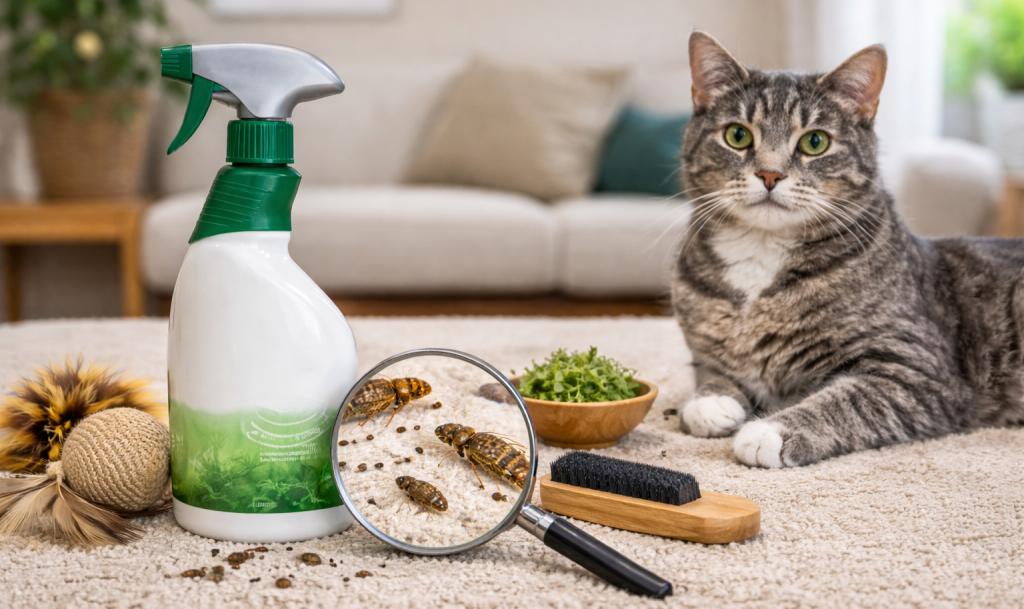
In a small apartment, odors have less room to disperse, so a litter box or accident can affect the whole space quickly. An odor eliminator may help with a specific smell, but it cannot replace scooping, cleaning, ventilation, or checking why an odor keeps returning. If you are learning how to choose the right cat odor eliminator for small apartments, first identify the source: litter, urine on a surface, a waste bin, bedding, or a damp mat. Then consider the surface, product directions, scent, and how to keep your cat away until the treated area is safe. People searching for the Best Cat Odor Eliminator for Small Apartments may expect one spray to solve every smell. This guide explains the difference between source removal, odor absorption, and masking, and how to choose a practical approach for a compact home without exposing your cat to unnecessary fragrance or fumes.
Find the odor source first
Start with the places where odors commonly build up: the litter box, the floor around it, a waste container, washable bedding, soft furniture, or a spot where a cat has urinated. Check under mats and beside furniture, where small spills can be easy to miss. Cleaning the source usually matters more than adding fragrance to the room.
As you learn how to choose the right cat odor eliminator for small apartments, distinguish between ordinary litter odor and repeated urine outside the box. A sudden change in bathroom habits, straining, or frequent attempts to urinate deserves veterinary guidance. A scented product may hide the smell temporarily while the underlying cause remains.
How to choose the right cat odor eliminator for small apartments
First decide what the product is meant to do. A cleaner is intended for a surface; an odor absorber may reduce airborne smells; a room fragrance mainly adds scent. Those purposes are different. How to choose the right cat odor eliminator for small apartments depends on the source, the material being treated, and the cat’s access to the area. It also means deciding whether a cleaner, absorber, or regular cleanup addresses the actual problem.
Match the product to the surface
Check whether directions name the surface you need to clean, such as tile, carpet, upholstery, or a litter box exterior. Test the product on a hidden spot if the label allows it. Follow dilution, contact-time, rinsing, and drying instructions exactly. Do not mix cleaners or layer fragrances, since combining products can create unwanted fumes or residues.
For a washable blanket or mat, laundering may be enough when the care label permits it. For a hard surface, remove visible residue and use a cleaner labeled for that material. A cleaner that works on one surface may damage another. If an odor returns after careful cleaning, inspect for seepage beneath the surface or seek professional advice.
Consider fragrance and airflow
For how to choose the right cat odor eliminator for small apartments, ask whether the product removes the source or only changes the smell. A strong perfume can make a room smell different without removing the source. Some cats avoid heavily scented areas, and some fragrance ingredients may be unsuitable around pets. Avoid essential oils or diffusers in areas your cat can access unless a veterinarian approves the specific use. Follow product directions, ventilate the area, and keep your cat away until treated surfaces are dry and safe to re-enter.
One part of how to choose the right cat odor eliminator for small apartments is deciding whether airflow or cleaning is the missing step. In a compact home, ventilation and routine cleaning can make a noticeable difference. Open a window when conditions and screens make it safe, use a bathroom exhaust fan, or improve airflow without directing a strong draft at the cat’s resting place. Some apartment owners report better results after scooping more often and airing out the room; those individual experiences reinforce routine source control but do not guarantee the same result for every home.
Read safety and use instructions
Read the entire label before use. Check for warnings about pets, ventilation, surface contact, and storage. Keep the product in its original container, away from food, litter, and water bowls. Never spray directly on a cat or use a room product on the cat’s coat. If the directions are unclear, contact the manufacturer or your veterinarian before applying it.
“Pet-safe” language does not replace label directions. The ASPCA advises using cleaning products as directed and keeping pets away from treated areas as needed. Use only the amount listed, allow surfaces to dry, and store bottles where a curious cat cannot reach them.
What to look for in cat odor eliminator for small apartments
Use this checklist to compare options without relying on scent or broad marketing claims.
- Clear purpose: Does it clean a surface, absorb odor, or add fragrance?
- Surface compatibility: Does the label include the material you need to treat?
- Directions: Are application, drying, and ventilation steps clear?
- Cat access: Can you keep your cat away until the area is dry and safe?
- Scent: Can you avoid heavy fragrance in the cat’s living area?
- Storage: Can you store the product securely away from paws and food?
For additional context, see our Best Cat Odor Eliminator for Small Apartments guide, which discusses common odor-control approaches. If urine has reached fabric or flooring, our article on cleaning cat urine from washable items covers a separate cleanup situation. Use each resource to understand the task, not as a substitute for a product’s safety directions.
Reduce litter-box odor in a small space
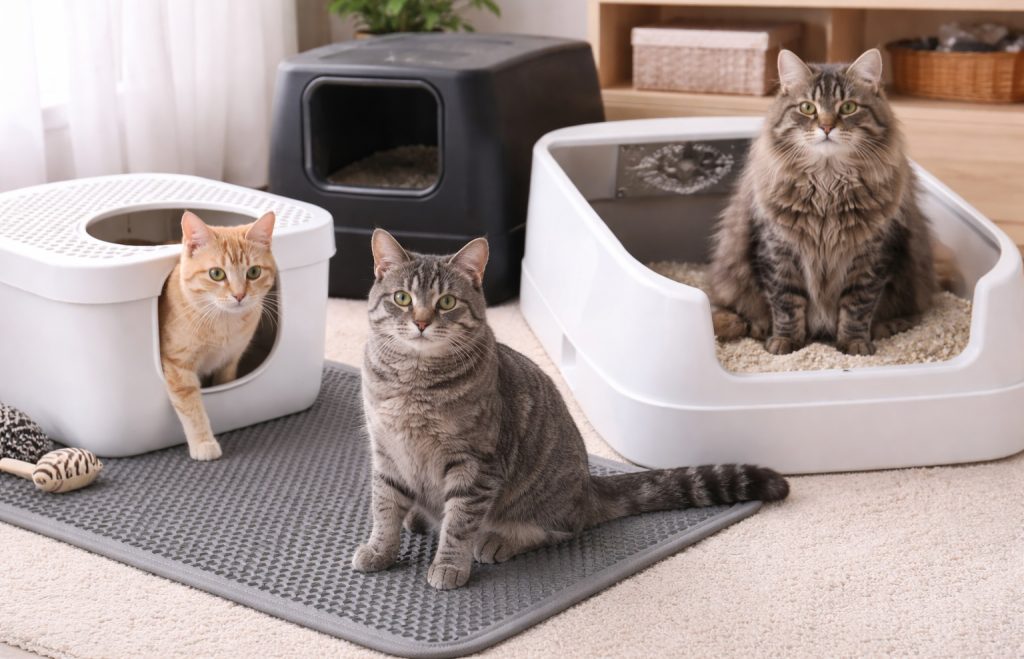
For many homes, how to choose the right cat odor eliminator for small apartments begins with litter-box routine. Scoop solid waste and clumps on a regular schedule, and replace litter according to its directions. Keep the litter box clean and accessible. A covered box may hold odors in from a cat’s perspective, so check whether your cat prefers an open design. In a multi-cat home, provide enough boxes in separate locations when space allows.
Keep the box away from food and water, and use a mat that catches litter without trapping moisture. Empty the waste container often. Wash bedding and mats regularly, and sweep or vacuum loose litter around the box. A routine that takes a few minutes each day can be more effective than repeatedly spraying the same area.
If the litter itself is the main odor source, our guide to cat litter for odor control explains ways litter type and box maintenance affect the room. Change litter gradually so your cat has time to adjust.
How often should you use or replace cat odor eliminator for small apartments
Knowing how to choose the right cat odor eliminator for small apartments includes using each product only for its intended task. Use a cleaner only when there is a specific mess or surface that needs attention, and follow its label. Do not spray it on a daily schedule just to cover an odor. If an absorber has a replacement interval, use the date or condition in its directions. A product that is saturated, damaged, or past its labeled use period may no longer work as intended.
Replace or discard a product if its container leaks, the contents change unexpectedly, the label is missing, or it is beyond its stated shelf life. Keep unused product tightly closed. If you notice irritation or a concerning reaction after use, move your cat away from the area and contact a veterinarian for advice.
When an odor needs more than cleanup
Persistent urine odor can point to a hidden spill, a box-cleaning issue, or a change in the cat’s elimination habits. If you are considering how to choose the right cat odor eliminator for small apartments because the smell has suddenly changed, first check whether your cat starts urinating outside the box, strains, vocalizes, or makes repeated trips, contact a veterinarian. Avoid scolding the cat or using a stronger fragrance to cover the smell.
If a household cleaner is swallowed, gets in your cat’s eyes, or causes breathing difficulty, follow the product label’s emergency directions and contact a veterinarian or an animal poison-control service promptly. Keep the package available so you can identify the ingredients.
Frequently Asked Questions
1. What is the best way to remove cat odor in a small apartment?
Find the source, clean it with a product labeled for that surface, scoop the litter box regularly, and ventilate the room safely. Fragrance alone may only mask the smell.
2. Are scented odor eliminators safe around cats?
Safety depends on the ingredients and directions. Avoid direct application to a cat, follow the label, ventilate as directed, and keep your cat away from treated areas until safe.
3. Can I use essential oils to cover litter-box odor?
Do not use essential oils in spaces your cat can access unless your veterinarian approves the specific use. Cats may contact or inhale concentrated oils.
4. How often should I use an odor eliminator?
Use a surface cleaner for an actual mess and follow its label. Replace absorbers according to their instructions rather than adding fragrance on a fixed schedule.
5. What if cat urine odor keeps returning?
Check for residue on nearby surfaces and under mats. If your cat’s bathroom habits have changed or it appears uncomfortable, contact a veterinarian.
Final Words
How to choose the right cat odor eliminator for small apartments starts with finding the odor source and matching the cleanup method to the surface. Follow the label, keep your cat away until treated areas are safe, and use ventilation and regular litter care to reduce buildup. Best Cat Odor Eliminator for Small Apartments is a broad search phrase, not one universal solution. If the odor is linked to a change in urination or discomfort, ask a veterinarian rather than covering it with fragrance.