
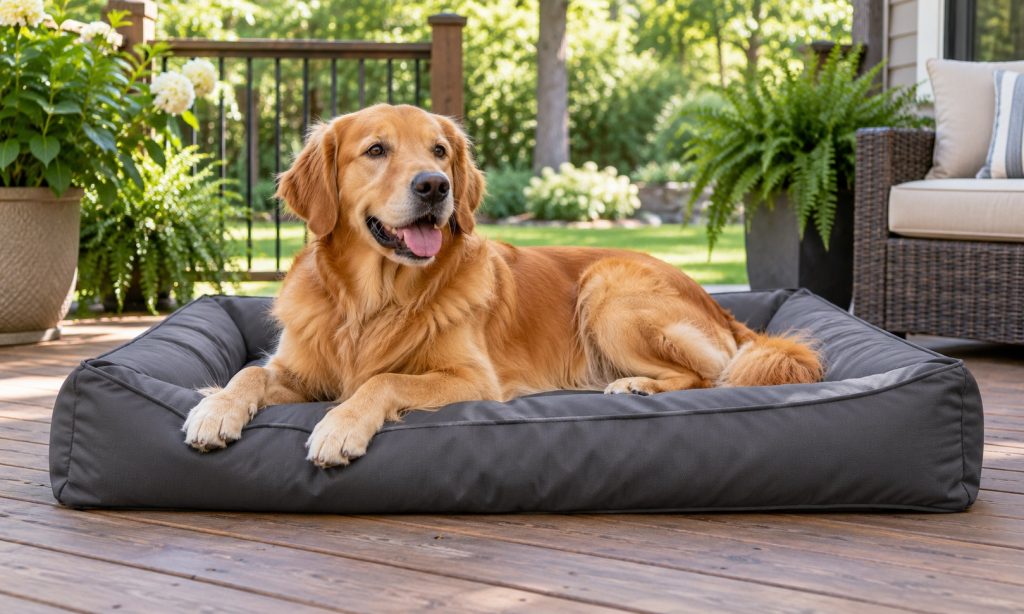
Your dog comes in from the yard damp, muddy, or carrying half the lawn on their coat. A bed that works indoors may not hold up on a patio, porch, covered kennel, or campsite. Choosing a waterproof dog bed for outdoor use means thinking about more than a cover that repels a splash: you’ll also want to consider where the bed will sit, how your dog uses it, how easily it can be cleaned, and what weather it can safely handle.
This guide explains how to choose the right waterproof dog bed for outdoor use and what to check before you buy. A bed can make a sheltered outdoor resting spot more comfortable, but it cannot replace shade, fresh water, supervision, or a safe place indoors when conditions become uncomfortable.

What does “waterproof” mean for a dog bed?
A waterproof bed is designed to resist water passing through its sleeping surface or cover. A water-resistant bed may repel light moisture for a while, but prolonged exposure, heavy rain, or water entering through seams can still soak the inner fill.
Labels alone don’t tell the whole story. A cover can be waterproof while the foam or stuffing inside is not. If water gets through a zipper, seam, tear, or uncovered edge, the interior can stay damp even after the surface looks dry. Ask whether the whole bed is waterproof, whether only the cover is, and whether the manufacturer gives care instructions for outdoor use.
Also consider where you’ll use it. A bed under a roof or canopy has a different job from one left on open grass. Even an outdoor-rated bed can collect water underneath, fade in direct sun, or wear faster when exposed to dirt and weather.
What to look for in a waterproof dog bed for outdoor use
A cover that resists water and is easy to clean
Look for clear material and care information. Some covers use coated fabric; others use tightly woven synthetic materials intended to repel moisture. A smooth surface may be easier to wipe clean, while a textured one may feel more comfortable but hold more dirt or fur.
A removable cover can make washing easier. Check whether the cover is machine washable or needs spot cleaning, and follow its care label. Strong detergents, bleach, high heat, or rough scrubbing may damage coatings or seams. If the cover is not removable, find out how the full bed should be cleaned and dried.
Strong seams, zipper protection, and durable construction
Water often finds its way through openings, not the middle of an intact fabric panel. Inspect the stitching and edges. A zipper flap or covered closure can help shield the opening from splashes. Reinforced seams may be useful for dogs that dig, paw, or circle before lying down.
Durability is not the same as chew-proof construction. If your dog chews bedding, any bed with fabric, a zipper, or fill could be damaged. Choose a setup you can supervise, and remove it if your dog starts pulling at it. Swallowed fabric or filling can pose a serious risk; contact a veterinarian if you think your dog has swallowed part of a bed.
Support that suits your dog
The best bed is one your dog can use comfortably. Consider your dog’s size, preferred sleeping position, and mobility. Measure from nose to tail while your dog is stretched out, then compare that measurement with the bed’s sleeping area—not only its outside dimensions. A curled-up sleeper may need less space than a dog who sprawls, but the bed should still allow easy repositioning.
Some dogs prefer a padded surface; others settle better on a firm, elevated cot. Older dogs or dogs with joint problems may need a particular type of support, so ask your veterinarian if you are unsure what is appropriate. A waterproof surface does not guarantee pressure relief or orthopedic support.
Elevated or ground-level?
An elevated bed can keep a dog off wet ground and may allow air to circulate underneath. It can be helpful on a covered patio, in a dry kennel, or at a campsite where the ground is damp. Check the frame for stability, the fabric tension, the recommended weight limit, and whether your dog can climb on and off safely.
A ground-level cushion may feel more familiar and offer more padding. It needs a dry, level location, and you should lift it regularly to check underneath for moisture, dirt, insects, or damage. Neither style is right for every dog or every location.
Size, weight, and portability
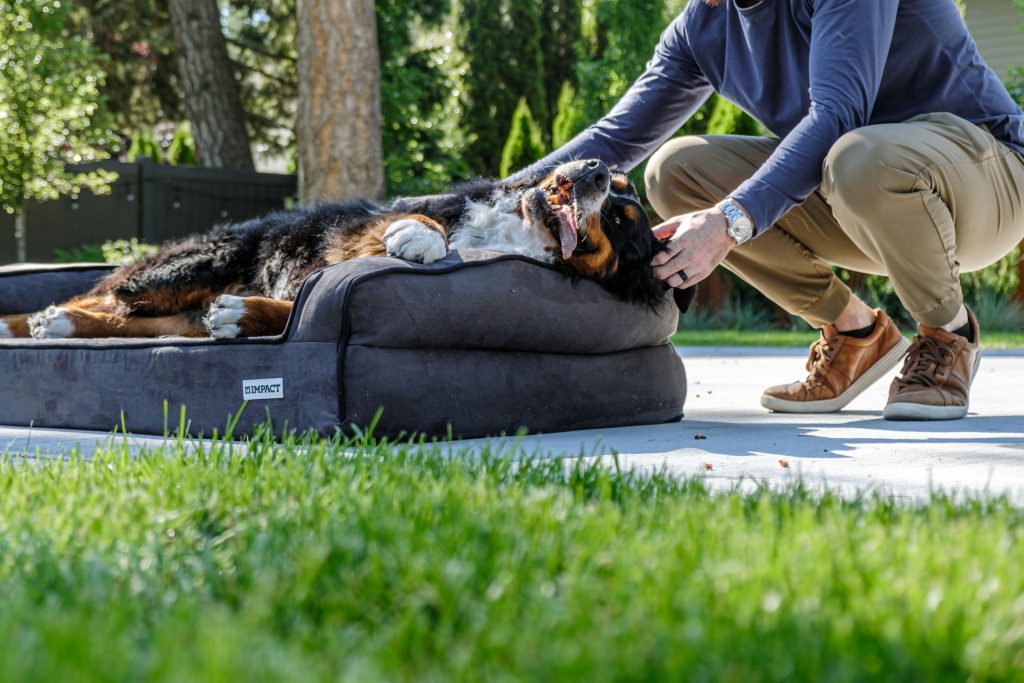
A bed that is difficult to move may be left outside when rain is on the way. If you plan to bring it indoors each evening, check its weight, handles, and folded size. For travel, also consider whether it fits in your vehicle and whether it can be cleaned without special equipment.
For a large dog, check the bed’s weight rating and usable sleeping area. For a small dog, make sure a raised bed is not too high or awkward to access. Puppies may outgrow a bed quickly, while dogs that scratch or chew may need a simpler, sturdier design.
Shade, drainage, and location
Even a well-made bed performs poorly in the wrong spot. Place it on a level surface with good drainage, away from standing water and sprinkler spray. A covered, shaded area can protect the bed from rain and direct sun. If the surface underneath stays damp, move the bed or choose a raised style that allows the area to dry.
Check the temperature of the bed and the ground around it before your dog settles in. Outdoor beds can heat up in direct sun. The American Veterinary Medical Association recommends that pets outside have access to shade and fresh water, and advises owners to understand warm-weather risks. A bed does not make a hot yard safe.
When is an outdoor dog bed not enough?
A waterproof dog bed is a comfort item, not shelter from severe weather. It cannot protect a dog from dangerous heat, cold, wind, or prolonged wet exposure. Keep your dog indoors or in a safe, climate-appropriate area when conditions are unsuitable.
The American Veterinary Medical Association advises shade and fresh water outdoors in warm weather. Veterinary guidance from VCA also emphasizes protection from cold and damp conditions, and says outdoor dogs need appropriate shelter and bedding. If your dog is short-haired, very young, older, small, or has a health condition, ask your veterinarian what outdoor exposure is appropriate.
Watch your dog, not only the thermometer. If your dog seems distressed, unusually tired, persistently pants, shivers, or tries to escape the weather, bring them to a safer place and seek veterinary advice as needed. The bed is not a substitute for checking on your dog.
How often should you use or replace a waterproof dog bed for outdoor use?
There is no universal schedule for how often a waterproof dog bed should be used or replaced. Use it when the conditions are suitable and the bed is dry, clean, and intact. Bring it inside or store it somewhere protected when rain, overnight dampness, extreme temperatures, or long periods without supervision could affect your dog or the bed.
Inspect the bed regularly, especially after wet weather or heavy use. Check for:
- Tears, loose stitching, exposed foam, or damaged zippers.
- Water or dampness trapped beneath the cover.
- Mold, mildew, persistent odors, or stains that cannot be cleaned.
- A sagging frame, broken supports, or slippery fabric.
- Chewing or loose pieces that your dog might swallow.
Replace a bed when it no longer provides a clean, stable, comfortable place to rest, or when damage makes it unsafe. Follow the manufacturer’s care instructions; cleaning frequency depends on how often your dog uses it and how dirty it gets. If the bed is used in a doghouse during cold weather, VCA recommends changing bedding at least every one to two weeks. Conditions vary, so check more often if bedding becomes damp or soiled.
A simple checklist before choosing
Before settling on a waterproof dog bed for outdoor use, ask:
- Where will it sit? Covered patio, kennel, lawn, or travel site?
- Is the sleeping surface protected from water? Check the cover, seams, zipper, and care information.
- Can your dog use it comfortably? Compare sleeping-area measurements, height, and support.
- Can you clean and dry it? Make sure the care routine fits your household.
- Can you move or store it? This matters if weather changes or you need to bring it indoors.
- Will you supervise outdoor use? A bed cannot make unsafe weather or an unsupervised yard safe.
Frequently asked questions
Can I leave a waterproof dog bed outside in the rain?
Check the manufacturer’s instructions. “Waterproof” may describe only the outer cover, and water can enter through seams, zippers, or damaged fabric. Even if the bed sheds rain, remove or dry it as needed and check underneath for trapped moisture.
Is an elevated dog bed better for outdoor use?
It can help keep a dog off damp ground and allow airflow beneath the sleeping surface. It may not suit every dog, especially one who has trouble climbing or needs a particular kind of support. Check stability, height, fabric condition, and weight limits.
Will a waterproof bed keep my dog warm in cold weather?
Not necessarily. Waterproofing helps limit moisture; it does not automatically provide insulation or adequate shelter. Cold, wet, and windy conditions can be hazardous. Use appropriate shelter and ask your veterinarian about your dog’s needs.
How do I clean a waterproof dog bed?
Follow the care label. Some beds have removable, washable covers; others require spot cleaning. Let all parts dry fully before use and inspect seams and closures while the bed is apart. Avoid cleaning methods that the manufacturer says may damage the fabric.
What is the best waterproof dog bed for outdoor use?
There is no single best choice for every dog or yard. The best waterproof dog bed for outdoor use for your household is one that fits your dog, resists the moisture you expect, is easy to clean, and can be placed in a shaded, suitable location. For a covered patio, an easy-to-clean cushion may work well; for damp ground, an elevated cot may be more practical.
Final words
Choosing a waterproof dog bed for outdoor use starts with your dog and the spot where the bed will go. Look beyond the waterproof label: check seams, zippers, support, sizing, cleaning instructions, and how easily you can bring it inside. Then inspect the bed routinely and keep your dog’s access to shade, water, supervision, and safe shelter as the priority.
Those are the details that help you choose the Best Waterproof Dog Bed for Outdoor Use for your dog’s routine—without expecting a bed to do a shelter’s job.









