
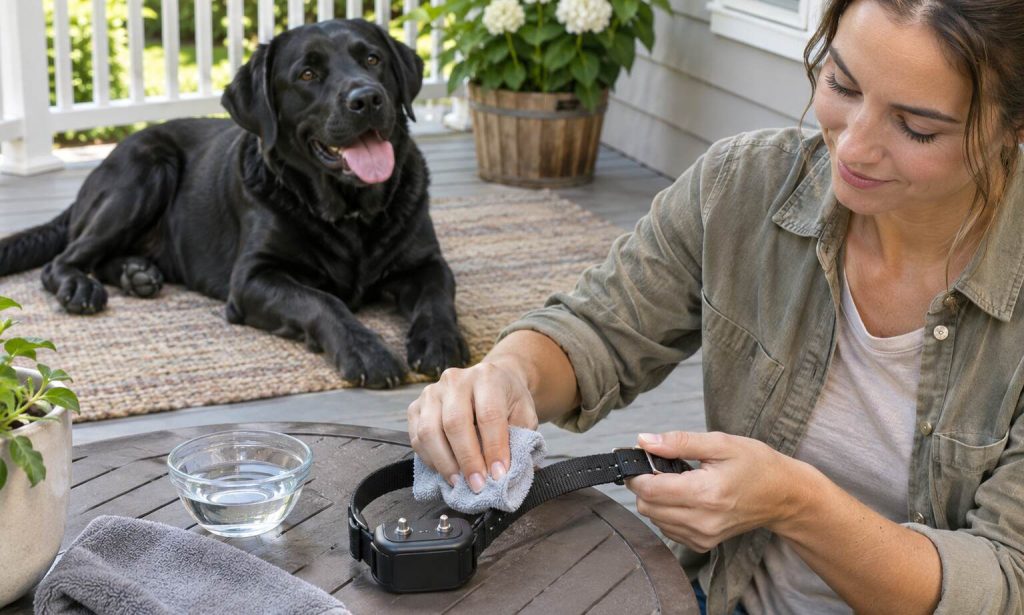
A bark collar for a large dog can collect fur, sweat, dust, and moisture where it rests against the neck. Poor maintenance may leave rough edges or trapped residue that irritate the skin. Learning how to clean a bark collar for big dogs and keep it in good condition starts with the device manual, safe power-off procedures, and frequent skin checks. It also means recognizing the welfare limits of bark-control equipment.
Large dogs vary in neck size, coat density, and activity. A waterproof claim does not automatically mean every component can be submerged or scrubbed with disinfectant. This guide explains routine cleaning, drying, storage, and warning signs without encouraging aversive training. Understanding why a dog barks and teaching alternate behaviors are essential parts of responsible care.
Understand the Collar Type and Its Risks
Bark collars may use sound, vibration, spray, or electrical stimulation. Cleaning instructions differ because sensors, speaker openings, contact points, and spray reservoirs have different vulnerabilities. Identify the exact model and read its manufacturer’s care requirements before opening any cover. Never assume that instructions from another brand or collar type will apply.
Veterinary behavior organizations warn that aversive methods can carry welfare risks and do not address the reason for barking. If a device causes pain, fear, skin injury, or escalating distress, stop using it and seek qualified advice. Our care and safer training context for large-dog electronic collars discusses related concerns, but this article focuses specifically on safe cleaning and maintenance.
Power Off, Remove, and Check Before Cleaning
Remove the collar from the dog before maintenance. Switch the device off, disconnect it from power, and follow instructions for any removable battery or module. Never clean electrical contacts while the unit is charging. Keep the dog in another comfortable area so cleaning products and small parts stay out of reach. Inspect the strap, buckle, sensor housing, charging port, and attachment points.
Look for cracks, frayed webbing, broken plastic, corrosion, or a loose contact point. Damaged equipment should not be put back on the dog. Do not sand or bend electrodes or attempt to repair an electronic circuit at home. If the device has a protective cap or seal, check that it closes fully according to the manual.
Clean the Strap and Accessible Surfaces
For a removable strap, check whether handwashing is permitted and what type of mild cleaner the maker allows. Brush away loose hair first; then use a soft cloth to wipe dirt. Avoid bleach, solvents, abrasive pads, and strong fragrances unless the manual explicitly recommends them. Rinse or wipe away residues as directed and keep soap away from electronic components.
Pay attention to areas where the band folds through a buckle and where fur collects against the housing. Large dogs with dense coats can trap debris quickly. Do not force water into the microphone, sensor, or charging connection. If the manufacturer instructs a damp-cloth-only method, follow it even when the strap looks very muddy.
Protect Sensors, Contacts, and Charging Areas
Use a dry or slightly damp soft cloth only where the manual permits. Some collars have metal contact points; others have spray nozzles or sound openings. The right cleaning method depends on their construction. Never insert sharp pins, swabs, or liquid into a small port unless the manufacturer provides a specific procedure. Residue inside an electronic part can cause malfunction.
Check whether contact points are smooth and secure. Corrosion, discoloration, cracks, or sharp edges warrant professional advice or retirement of the device. Avoid applying oils or lubricants that may collect hair or interfere with contacts. A safe maintenance plan protects the dog’s skin as well as the collar’s electronics. Keep charging cables and adapters dry.
Dry Fully Before Storage or Reuse
After permitted cleaning, air-dry every component as the manufacturer directs. Reassemble only when straps, seals, and accessible housings are fully dry. Do not place electronic modules on radiators or use a hot hair dryer to speed drying. Excess heat can damage plastic, seals, and batteries. If moisture entered an area that should remain sealed, stop using the device.
Store the collar away from heat, direct sunlight, and areas accessible to pets or children. Keep removable parts together in a ventilated container, following battery-storage guidance. Examine charging contacts before any subsequent use and use only the appropriate charger. A wet or damaged device should never be tested on the dog to see whether it still works.
Inspect Skin and Fit After Every Use
Check the neck for redness, hair loss, pressure marks, swelling, or tenderness. A dog that scratches the collar area or avoids handling may be uncomfortable. Large size does not guarantee a loose enough fit, especially when neck shape and coat density change. Avoid prolonged wear or tight fastening; follow veterinary advice about skin problems rather than adjusting a painful device.
A collar that rubs requires a break and reassessment, not a stronger fastening. Seek veterinary care for open sores or persistent irritation. Do not place a device over infected skin. Our guide to proper large-dog collar sizing concerns another equipment category, but it also shows why choosing proper fit matters. Never attach a leash to a device unless its instructions explicitly permit it.
Address Barking With Humane Alternatives
Dogs bark because of alerting, fear, boredom, frustration, isolation, or excitement. A clean device cannot determine which cause is present. Observe when barking happens and how the dog behaves before and after it. Consider mental enrichment, routine adjustments, distance from triggers, and reward-based training with a qualified professional. Check collar sizing for larger dogs if a strap was causing pressure. Avoid punishment for fear-related barking.
The American Veterinary Society of Animal Behavior supports reward-based training and cautions against aversive approaches. If barking increases, the dog panics, or neighbors report distress during absences, seek help from a veterinarian or credentialed behavior professional. A management plan can reduce stress without making equipment the center of the dog’s daily life.
Frequently Asked Questions
Collar hygiene is a narrow technical task, while behavior and welfare require broader judgment. These answers focus on what can be checked without improvising dangerous device procedures.
Whenever the model manual differs, follow it. Stop use after skin injury, malfunction, or signs that the dog is distressed.
Can I soak a bark collar in water?
Only if the model’s instructions explicitly permit that procedure. Water resistance and full submersion are different claims.
What should I use to clean collar contacts?
Follow the manufacturer’s directions. Do not improvise chemicals, solvents, or sharp tools.
Can I charge the collar immediately after washing?
No. Ensure all appropriate parts are completely dry and the device is undamaged before charging, as directed.
What if I see a sore beneath the collar?
Stop using it and contact a veterinarian. Do not cover the sore with the collar while it heals.
Does a clean bark collar fix excessive barking?
No. Hygiene affects equipment safety; barking causes require behavior and veterinary assessment.
Final Words
How to clean a bark collar for big dogs and keep it in good condition comes down to removing the unit, powering it off, following model-specific cleaning rules, drying fully, and inspecting for damage. Check the dog’s neck after every use. Never put an unsafe or wet electronic device back on an animal.
More importantly, consider why the dog barks and whether a humane behavior plan would serve it better. Our safer training discussion for large-dog collars is a related resource, but a professional can help you address the underlying behavior without relying on fear or discomfort.









