
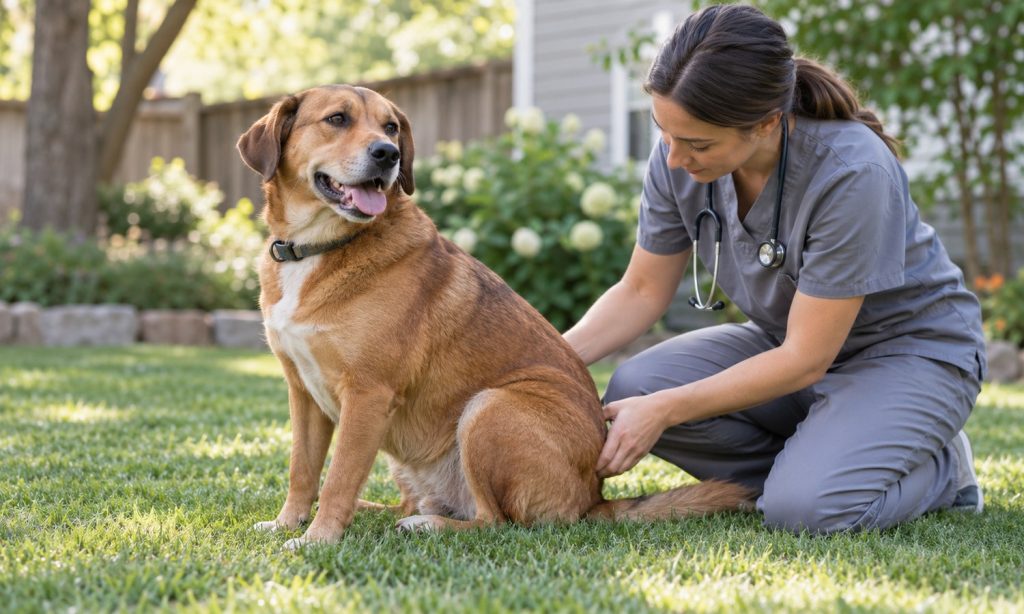
Signs of anal gland issues in dogs and what a veterinarian may check can be confusing because scooting and licking have several possible causes. The anal sacs sit on either side of the anus and normally release a small amount of scent fluid during bowel movements. They can become impacted, inflamed, infected, abscessed, or, less commonly, affected by a tumor. A dog may scoot, lick its rear, strain, or seem uncomfortable, but those behaviors do not prove the sacs are the problem. Owners also search for dog food for dogs with anal gland issues, yet diet alone cannot diagnose or treat every cause. This guide explains common signs, what a veterinary examination may involve, when care is urgent, and how to discuss feeding without delaying an accurate diagnosis.
What anal sacs do
Dogs have two small anal sacs just inside the anus, one on each side. Each sac holds a strong-smelling secretion. During defecation, pressure from passing stool usually helps empty the sacs. Problems can develop if a sac does not empty normally or becomes inflamed or infected. The terms “anal glands” and “anal sacs” are often used interchangeably, although the sacs are the structures owners usually mean.
Signs that may point to a problem
Possible signs include dragging the rear across the floor, frequent licking or chewing under the tail, turning suddenly toward the hind end, discomfort while sitting, or straining during a bowel movement. Some dogs have a strong fishy odor or leave a small amount of fluid. Redness, swelling, tenderness, blood, pus, or an open sore beside the anus can occur with more serious inflammation or an abscess.
Not every dog shows the same pattern. A dog can have an anal sac problem without obvious scooting, while scooting can happen for reasons unrelated to the sacs. Repeated symptoms, pain, or visible changes deserve a veterinary examination instead of repeated at-home expression.
Other problems can look similar
Parasites, soft stool, constipation, skin allergies, infection, wounds, rectal irritation, and perianal fistulas can cause licking, scooting, or straining. In older dogs, a mass near an anal sac may also need to be considered. These conditions require different care, so a symptom alone is not enough to choose treatment.
Tell the veterinarian whether your dog has had diarrhea, constipation, changes in stool shape, blood, weight loss, increased thirst or urination, appetite changes, or a new lump. A photo of swelling or discharge can help if the appearance changes before the appointment. Do not press on a painful area to obtain a sample.
What a veterinarian may check
History and physical examination
The veterinarian will ask when signs began, how often they occur, whether your dog has had similar episodes, and whether bowel habits or diet have changed. The clinician may inspect the skin around the anus for redness, swelling, wounds, discharge, or a lump and assess your dog’s comfort and general health.
Rectal examination
A digital rectal examination is commonly used to feel the anal sacs and surrounding tissues. When appropriate, the veterinarian may gently assess or empty the sacs during the examination. This helps identify enlargement, firm contents, tenderness, asymmetry, or a mass. A painful dog may need additional handling support or pain control, and an examination should not be forced at home.
Appearance of the fluid alone does not always tell whether a sac is infected. If infection is suspected, the veterinarian may examine a sample under a microscope. Recurrent, unusually firm, or one-sided enlargement may prompt additional tests. Depending on findings, these can include blood work, imaging such as ultrasound, or sampling or biopsy of a suspicious mass. The tests are chosen for the individual dog; not every patient needs all of them.
When symptoms need prompt or urgent care
Contact a veterinarian promptly if your dog has painful swelling beside the anus, blood or pus, a draining wound, repeated straining, or escalating discomfort. An abscess can rupture through the skin and needs medical assessment. Do not try to lance, squeeze, or insert anything into the area.
Seek urgent care if your dog seems severely painful, cannot pass stool, becomes weak or lethargic, has significant bleeding, or rapidly worsens. A firm lump, ribbon-shaped stool, unexplained weight loss, increased thirst, or increased urination should also be reported quickly, particularly in an older dog. These signs may have causes beyond routine anal sac impaction.
How treatment depends on the diagnosis
For an uncomplicated impaction, a veterinarian may empty the sacs and discuss follow-up. Inflamed or infected sacs may need medication or additional local care. An abscess may require drainage and pain management. A mass needs its own diagnostic and treatment plan. Repeated episodes may lead to a broader review of stool quality, body condition, allergies, and other health factors.
Routine expression is not automatically needed for every dog. Some dogs empty normally, and unnecessary or forceful expression can irritate tissue. Ask your veterinarian whether your dog needs it, how often it should be considered, and which changes should trigger a recheck. If a groomer notices symptoms, veterinary assessment is especially useful before repeated expression.
Food, fiber, and anal sac concerns
Owners may look for dog food for dogs with anal gland issues, but no single food can be assumed to solve anal sac disease. Stool consistency and overall health may matter for some dogs, and a veterinarian may discuss dietary fiber or a nutrition change when appropriate. The plan depends on the diagnosis, the dog’s current diet, medical history, and body condition.
Do not add fiber, supplements, or a new diet without asking if your dog has pain, constipation, diarrhea, another medical condition, or a prescribed diet. A sudden change can upset digestion and make the pattern harder to interpret. If a diet adjustment is recommended, ask what amount, transition schedule, and follow-up signs to use.
Preparing for the appointment
-
Write down when scooting, licking, odor, or straining happens and how often.
-
Bring a list of medicines, supplements, and recent food changes.
-
Describe stool consistency, frequency, and any blood or mucus.
-
Share photos of a visible lump or discharge if it changes over time.
-
Ask what diagnosis the examination supports and what signs should prompt an earlier recheck.
Frequently Asked Questions
Does scooting always mean anal glands are full?
No. Scooting can be caused by parasites, allergies, irritation, infection, or other problems. A veterinarian can examine the area and determine whether the anal sacs are involved.
Can I express my dog’s anal glands at home?
Do not attempt it if you have not been trained by your veterinarian, especially when the area is painful, swollen, or discharging. Ask whether expression is needed and how it should be handled safely.
Can food fix anal gland problems?
Diet may be discussed as one part of care for some dogs, but it does not replace an examination. The right plan depends on whether the problem is impaction, infection, abscess, a mass, or another condition.
Is a strong fishy smell a definite diagnosis?
No. Odor can come from anal sac fluid, but it does not show whether a sac is impacted or infected. Repeated odor with discomfort should be discussed with a veterinarian.
When is an anal gland problem an emergency?
Severe pain, rapidly increasing swelling, a draining wound, significant bleeding, inability to pass stool, weakness, or sudden deterioration needs prompt veterinary care.
Final Words
Signs of anal gland issues in dogs and what a veterinarian may check include scooting, licking, odor, discomfort, swelling, and changes around defecation. A rectal examination often helps distinguish anal sac disease from look-alike problems, while microscopy or imaging may be useful in selected cases. Dog food for dogs with anal gland issues is not a substitute for diagnosis; ask before changing food or adding fiber. Arrange an examination for repeated symptoms, and seek prompt care for pain, swelling, discharge, bleeding, or difficulty passing stool.









