
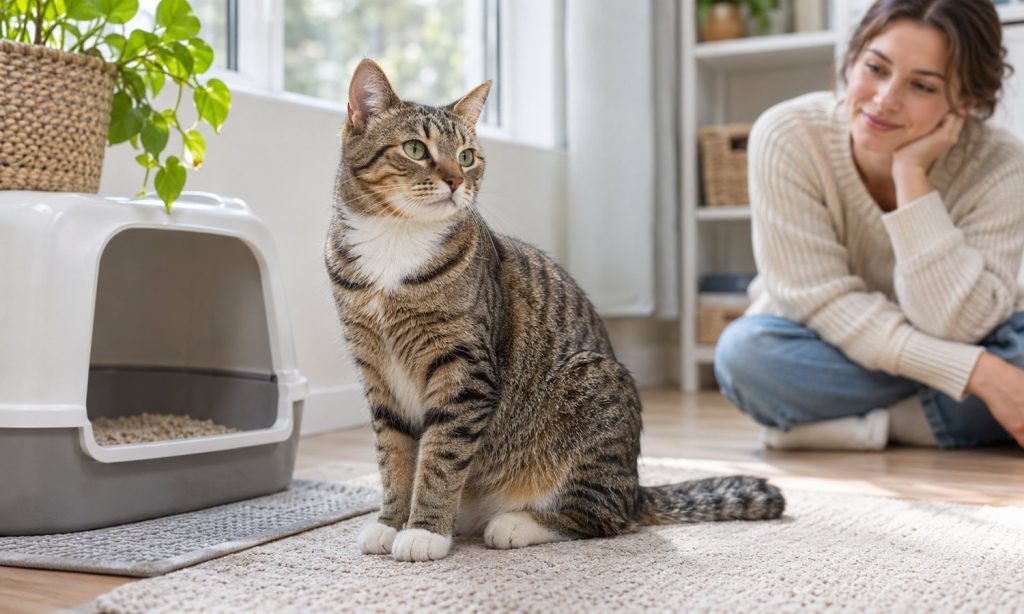
Signs of intestinal parasites in cats can be easy to miss because early changes often resemble ordinary stomach upset. A cat may have softer stool, vomit once, or seem hungrier than usual, while another infected cat looks completely well. The exact signs depend on the parasite, the cat’s age, and how severe the infection is. Kittens and cats with other health problems can become ill more quickly.
This guide explains what to watch for, what a veterinarian can test, and when to seek prompt care. It also covers practical hygiene and prevention steps. If you are comparing treatment options, our guide to broad spectrum dewormer for cats can help you prepare questions for your veterinarian; it is not a substitute for diagnosis or individualized dosing.
What intestinal parasites can affect cats?
Intestinal parasites include worms and microscopic organisms that live in or affect the digestive tract. Common examples include roundworms, hookworms, tapeworms, Giardia, and coccidia. Exposure can happen when a cat swallows parasite eggs, hunts infected prey, ingests fleas carrying tapeworm stages, or contacts contaminated feces or soil.
The parasite and route of exposure matter because different organisms require different tests and medicines. A general dewormer may not treat every parasite. A cat can also carry an infection without obvious illness, so appearance alone cannot confirm or rule out parasites.
How cats may be exposed
Outdoor access, hunting, fleas, shared litter areas, and contact with an infected animal can raise exposure risk. Kittens may acquire some parasites from their mother. Even indoor cats can encounter parasites through fleas, contaminated shoes or objects, or a newly adopted animal.
Risk is not the same as diagnosis. Tell the clinic about recent adoption, outdoor access, flea sightings, hunting, travel, and other pets. These details can help the veterinarian choose suitable testing and prevention.
Common signs to watch for
Signs of intestinal parasites in cats vary widely. Digestive changes are common, but they are not specific to parasites. Diarrhea, mucus or blood in stool, vomiting, reduced appetite, a dull coat, and gradual weight loss all deserve attention, especially when they persist or occur together.
Some cats maintain a normal appetite while losing weight. Others may develop a rounded abdomen, poor growth, dehydration, or pale gums. A visible worm or rice-like tapeworm segments near the anus or in bedding can be a clue, but many parasites cannot be seen without laboratory testing. For a stool baseline, see our guide to what healthy cat poop looks like.
Signs that need urgent veterinary care
Contact a veterinarian promptly if your cat has repeated vomiting, severe or bloody diarrhea, marked weakness, collapse, a painful or swollen abdomen, trouble breathing, or signs of dehydration. Pale or white gums, black tarry stool, or sudden decline are especially concerning.
Kittens, elderly cats, and cats with chronic illness need a lower threshold for care. Do not wait for a parasite to become visible. A serious intestinal infection can worsen quickly, and similar symptoms may result from obstruction, toxin exposure, or another disease.
How veterinarians diagnose intestinal parasites
A veterinary exam begins with the history and physical findings, followed by tests selected for the suspected problem. A fecal flotation looks for parasite eggs or cysts under a microscope. Some clinics also use antigen tests or molecular tests for organisms such as Giardia.
One negative sample does not always settle the question because parasites may shed eggs or cysts intermittently. The veterinarian may ask for another fresh stool sample or a series of samples. Bring a small, fresh specimen in a sealed container and follow the clinic’s storage instructions.
What to tell your veterinarian
Describe when the symptoms began, how often they occur, and whether the stool has changed in color or consistency. Note appetite, water intake, weight, energy, flea prevention, recent medications, and any possible access to prey or contaminated areas.
If you have several cats, say whether they share boxes and whether other pets have symptoms. Do not combine stool from different cats unless the clinic specifically asks. Separate samples can help identify which animal needs treatment.
Treatment and household precautions
Treatment depends on the parasite, the cat’s weight and age, health status, and test findings. The veterinarian may prescribe a targeted medication and schedule follow-up testing. Some infections require more than one dose or treatment of other pets in the home.
Do not give a human medicine, dog product, leftover prescription, or broad-spectrum dewormer without veterinary guidance. Ingredients and doses differ, and a product that treats one parasite may not work against another. Ask the clinic before changing medication or stopping a prescribed course.
Reduce reinfection and protect people
Scoop feces promptly, wash hands after handling litter, and clean litter tools regularly. Keep children away from soiled litter and supervise outdoor play where animal feces may contaminate soil. Use routine flea control recommended for your cat and home.
Wash bedding if it has been soiled and follow veterinary advice for disinfecting surfaces. Some parasite stages resist common household cleaners, so removing feces and preventing re-exposure are important. Ask whether other animals need testing or treatment rather than assuming every pet needs the same medicine.
Prevention and routine monitoring
A prevention plan should reflect your cat’s age, lifestyle, health, and local parasite risks. Your veterinarian can recommend fecal testing intervals and parasite control based on those factors. Kittens often need a different schedule from healthy adult indoor cats.
Keep a simple record of stool changes, appetite, body weight, and preventive care. Regular checkups can uncover gradual weight loss or anemia before the problem is obvious at home. Prevention reduces risk, but it cannot guarantee that a cat will never become infected.
Frequently Asked Questions
These answers offer general guidance, not a diagnosis. A veterinarian can interpret symptoms alongside an examination and the right laboratory tests.
If your cat is acutely unwell, call the clinic instead of relying on a home checklist. Keep the stool sample and medication packaging available if the veterinarian requests them.
Can indoor cats get intestinal parasites?
Yes. Fleas, contaminated objects, newly adopted pets, and prey brought indoors can expose indoor cats. The risk may be lower, but it is not zero.
Can I see worms in my cat’s stool?
Sometimes, but many parasites and their eggs are microscopic. A stool test is more reliable than looking at the litter alone.
Should all cats in my home be treated?
Not automatically. The veterinarian may recommend testing or treating housemates depending on the parasite, exposure, symptoms, and transmission risk.
Can intestinal parasites spread to people?
Some feline parasites can infect people, although risk varies by organism. Handwashing, prompt waste removal, and veterinary prevention lower exposure.
When should I bring a stool sample?
Call the clinic first for collection and storage instructions. A fresh sample is often useful, and repeat samples may be needed for some parasites.
Final Words
Signs of intestinal parasites in cats can range from subtle stool changes to urgent illness, and a cat may show no signs at all. Persistent diarrhea, weight loss, vomiting, a poor coat, or visible segments warrant a call to your veterinarian. Diagnosis matters because treatment is parasite-specific.
Use careful litter hygiene and tailored prevention, and avoid guessing at medication. For treatment discussions, our overview of broad spectrum dewormer for cats may help you prepare questions, but your veterinarian should choose the plan for your cat.
Reference
The following veterinary and university resources support the medical information in this article. They explain common feline parasites, diagnostic testing, transmission, and clinical signs.
Use them as background reading; a veterinarian should evaluate an individual cat’s symptoms and test results.









