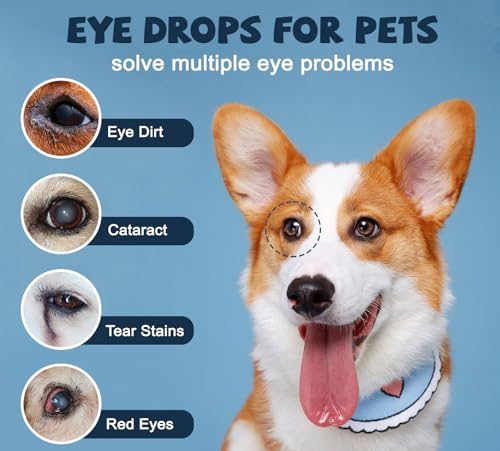
An eye drop can look simple to use, but the right choice depends on what is happening in the eye. Dryness, an ulcer, infection, inflammation, glaucoma, and injury do not all need the same treatment. Before giving any drops, ask a veterinarian to explain the diagnosis, the goal of the medication, and how to use it safely. What to ask a veterinarian before using eye drops includes questions about the exact product, dose, timing, duration, side effects, and follow-up. If you are searching for eye drops for dogs with cloudy eyes, remember that cloudiness is a sign, not a diagnosis. A veterinary exam can help prevent an unsuitable drop from delaying care or worsening an eye problem. A written plan can prevent dosing errors and make it easier to notice whether the eye is improving.
First, explain what is wrong with the eye
Ask, “What do you think is causing the symptoms, and what findings support that?” A clear answer helps you understand why a medication is being prescribed. The veterinarian may describe a problem involving the cornea, tear production, eyelids, lens, pressure, or inflammation inside the eye.
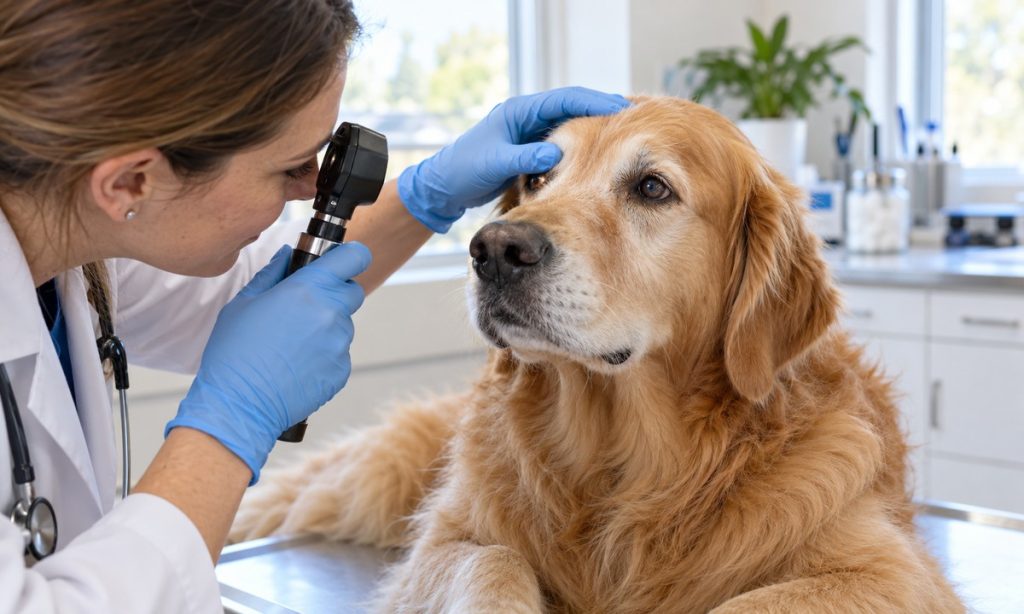
Ask whether the veterinarian performed any tests, such as staining the cornea for an ulcer, measuring tear production, or checking eye pressure. Not every dog needs every test. The examination plan depends on signs and findings. What to ask a veterinarian before using eye drops should begin with the reason for treatment, not only the name of the product.
Tell the clinic when the signs began, whether one or both eyes are involved, and whether the dog is squinting, rubbing, tearing, or acting as if vision changed. Share any prior eye diagnosis and every medication or supplement your dog receives. These details may affect the treatment choice.
Questions about the medication itself
What is the exact name and purpose?
Ask the veterinarian to write down the medication’s full name and explain what it is intended to do. Some drops lubricate the surface; others treat inflammation, infection, pressure, or another specific problem. A similar-looking bottle from a previous visit may contain a different medicine.
Ask whether it is a prescription medication or a lubricant and whether it is suitable for this episode. What to ask a veterinarian before using eye drops includes checking that the medicine is intended for your dog and the affected eye. Do not use leftover drops, human products, or another pet’s prescription unless the veterinarian specifically directs you.
What dose, schedule, and duration should I follow?
Confirm the number of drops, which eye needs treatment, how often to give them, and how many days to continue. Ask what to do if a dose is missed or the dog blinks before the drop enters the eye. Do not double a dose unless the veterinarian instructs you to do so.
If more than one eye medicine is prescribed, ask how long to wait between products and whether drops should be given before ointment. Confirm whether the medication requires refrigeration or other special storage. What to ask a veterinarian before using eye drops includes checking the complete schedule so household members can follow it consistently.
Safety, side effects, and interactions
Ask which side effects are expected and which require a call. Mild brief blinking may differ from worsening redness, swelling, pain, or discharge. The veterinarian can tell you what to monitor for this specific medicine and condition. If your dog reacts unexpectedly, contact the clinic rather than stopping or changing treatment without advice.
Tell the veterinarian about all current medicines, including oral drugs, supplements, and eye products. Ask whether the eye drop could interact with another treatment or affect a pre-existing condition. What to ask a veterinarian before using eye drops also includes confirming whether a previous prescription should be discontinued or continued.
Ask whether the cornea has been checked for an ulcer before using an anti-inflammatory product. Certain medicines can be inappropriate when the eye surface is damaged. Never start a steroid-containing drop from a past prescription unless the veterinarian has evaluated the current problem and approves it.
How to give the drops correctly
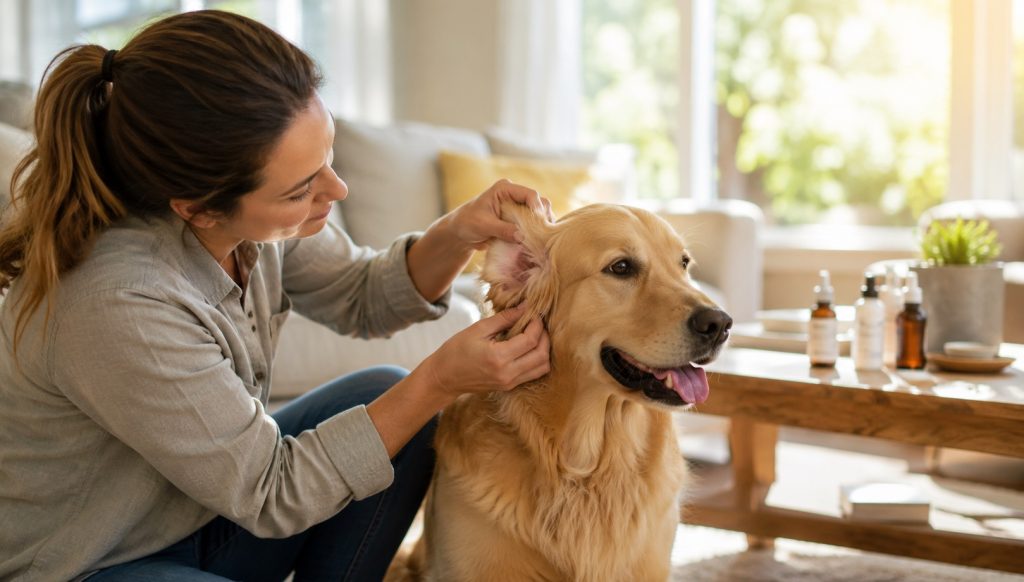
Ask the veterinary team to demonstrate the technique, especially if your dog pulls away. Typically, you wash your hands, steady the head gently, and keep the bottle tip from touching the eye, eyelid, fur, or fingers. The exact method may depend on the medication and the dog’s comfort.
Ask what to do if the drop misses, spills, or the bottle touches the eye. Do not put the applicator back into the bottle after contamination without calling the clinic. What to ask a veterinarian before using eye drops includes safe storage and handling so the medicine remains clean.
If the dog becomes fearful or difficult to handle, ask for a calmer approach or a demonstration using a helper. Do not forcefully restrain a painful dog or press on the eyeball. The clinic may be able to suggest a safe position or discuss another treatment format when available.
Follow-up and when to call sooner
Ask when the veterinarian expects improvement and when a recheck is needed. Some eye problems require repeat examination or testing even if the dog seems better. Find out whether the clinic wants photos or notes about discharge, comfort, and vision changes between visits.
Ask what symptoms mean the medication is not working or the condition is worsening. Sudden cloudiness, a closed or very painful eye, marked redness, swelling, a visible injury, or vision loss may require prompt care. The published guide to when a dog with cloudy eyes should see a veterinarian outlines urgency signs, but call your clinic for your dog’s situation.
What to ask a veterinarian before using eye drops should include a direct contact plan: which number to call during business hours, what to do after hours, and whether a specialist referral may be needed if the problem does not improve.
If the drops are for a cloudy eye
A cloudy appearance may involve the cornea or lens, or reflect another condition. Ask which structure appears affected and whether the veterinarian can distinguish cataracts from age-related lens changes, ulcers, dry eye, inflammation, or pressure-related disease. The right treatment depends on that assessment.
Ask whether the drops are meant to treat the cause, relieve discomfort, or support the eye surface. Do not assume that a lubricant will clear a cataract or that a product labeled for pets is appropriate for every cloudy eye. What to ask a veterinarian before using eye drops is especially important when vision changes or pain are present.
For more background, read the PetAdvisorPro guide on cataracts versus other causes of cloudy eyes. Use it to prepare questions, not to diagnose your dog at home.
A short checklist for the appointment
Before leaving, make sure you know the diagnosis or working explanation, medication name, dose, eye to treat, schedule, duration, storage directions, and follow-up date. Ask how to handle missed or spilled doses and what side effects require a call. Keep the written instructions with the medicine and share them with anyone helping care for your dog.
If any direction seems unclear, ask the clinic to repeat it in plain language. It is safer to confirm than to guess. What to ask a veterinarian before using eye drops can be written on a phone note before the appointment, so the key points are easy to remember.
Frequently Asked Questions
Can I use leftover eye drops if the symptoms look the same?
No, not unless the veterinarian approves them for this episode. Different eye problems can look similar and need different medication.
Should I use human eye drops on my dog?
Ask a veterinarian first. Human products may contain ingredients or concentrations that are unsuitable for your dog or condition.
What if my dog resists the drops?
Ask the clinic to demonstrate a safe technique. Do not force the head or press on a painful eye.
When should I call after starting eye medication?
Follow the veterinarian’s plan and call if symptoms worsen, new signs appear, or the dog seems painful. Seek prompt advice for sudden vision changes or injury.
Do eye drops need to be given for the full prescribed course?
Follow the exact instructions. Ask before stopping early, extending treatment, or changing the dose, even if the eye looks better.
Final Words
What to ask a veterinarian before using eye drops is straightforward: why the medicine is needed, how to give it, what to watch for, and when to return. Confirm the exact product, dose, schedule, storage, interactions, and after-hours plan. Do not use leftover or human drops without veterinary direction. If you are considering eye drops for dogs with cloudy eyes, start by confirming the cause with the veterinarian.