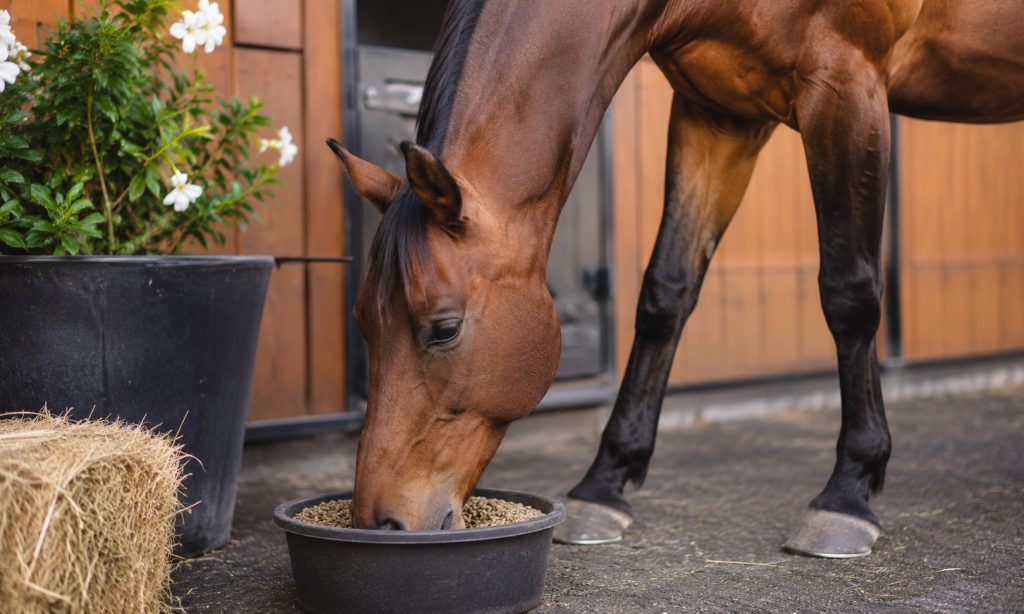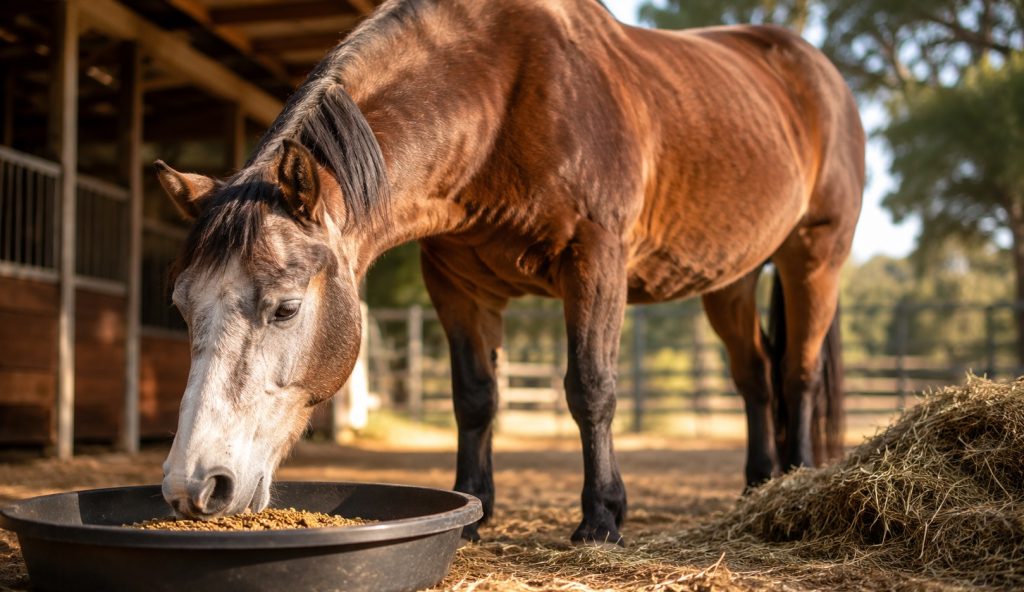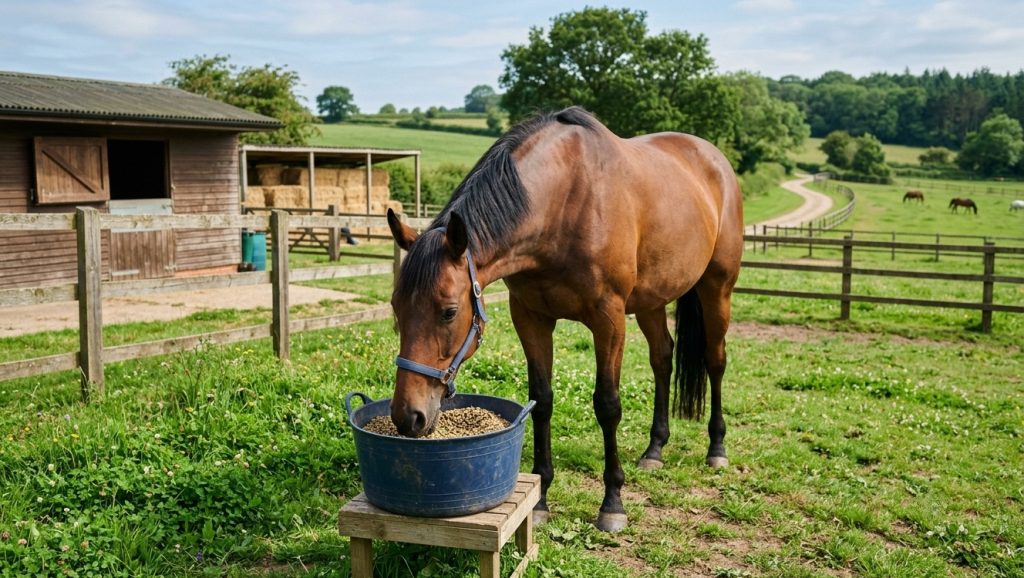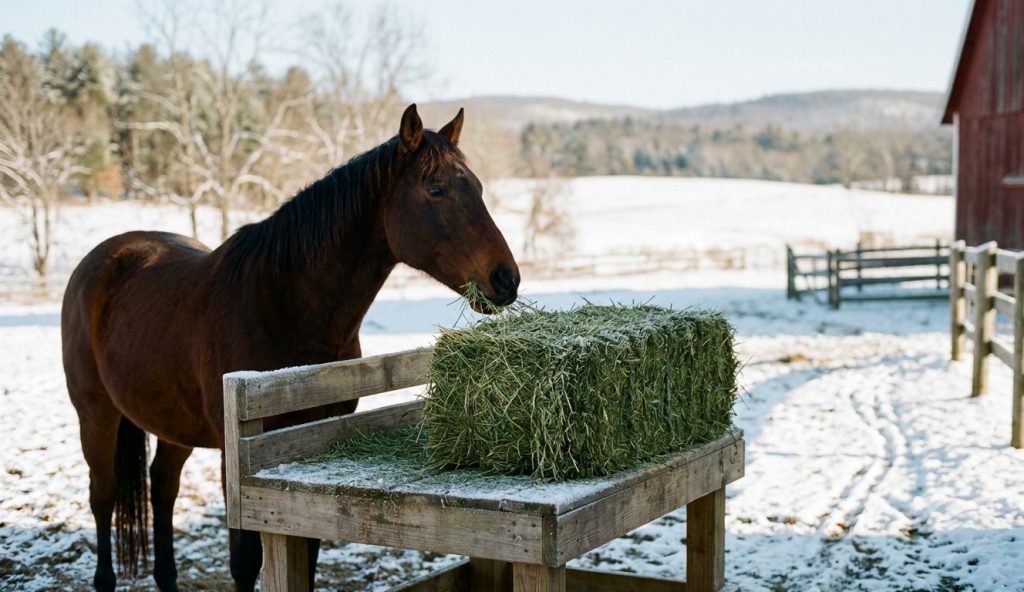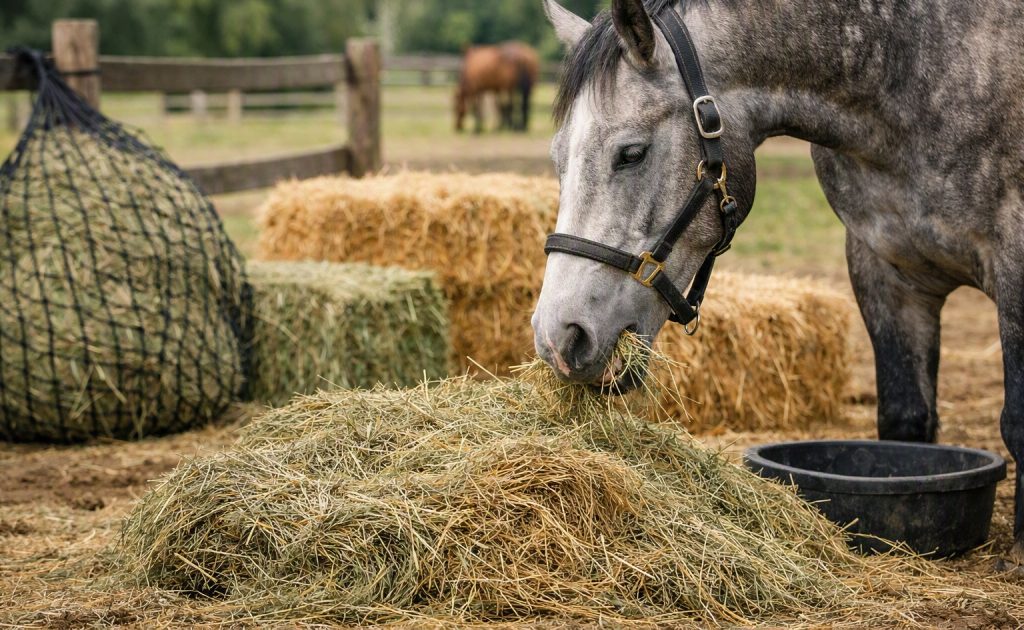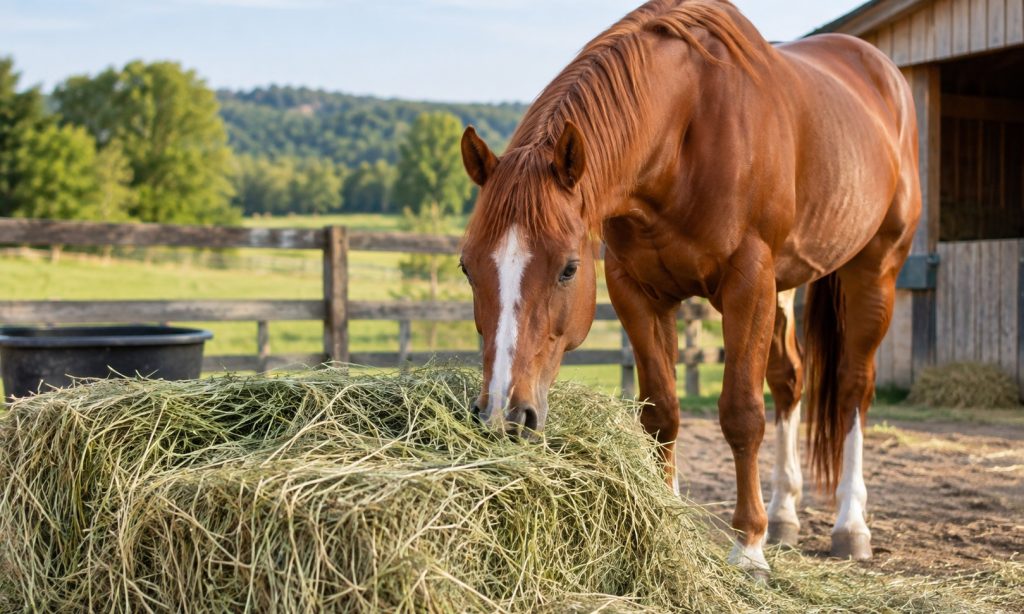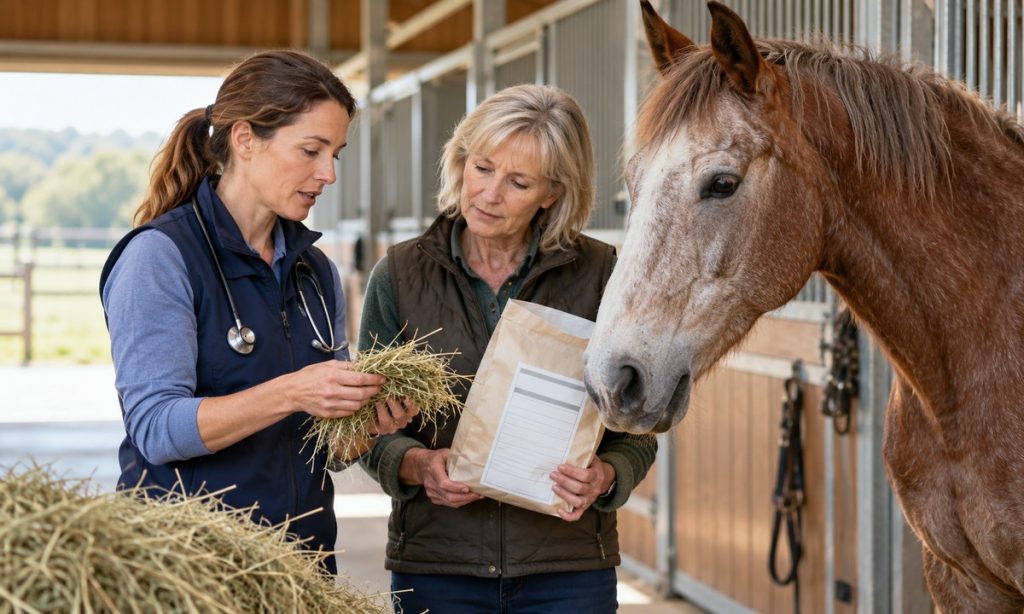
Feeding a horse with pituitary pars intermedia dysfunction (PPID), often called equine Cushing’s disease, starts with the individual horse rather than a universal “Cushing’s diet.” Some horses also have insulin dysregulation, a condition that changes how the body responds to sugar and starch and can increase laminitis risk. Other horses need help maintaining weight, preserving muscle, or chewing forage comfortably. Ask your veterinarian how PPID testing, insulin status, body condition, hoof history, teeth, medications, and workload should shape the ration. Bring the forage analysis and labels for current feeds and supplements. If you are researching feed for horses with Cushing’s, use it to prepare questions, not to choose a diet without an individual assessment. A targeted conversation can help you meet calorie and nutrient needs while reducing avoidable risk.
Why feeding plans differ among horses with PPID
PPID is an endocrine disorder that can affect older horses in different ways. Some horses lose muscle, struggle to maintain weight, or have dental changes. Others carry excess body fat or have a history of laminitis. These differences matter when setting calorie intake and choosing forage or additional feed.
PPID and insulin dysregulation can occur together, but one diagnosis does not automatically confirm the other. Ask whether insulin testing is appropriate and how the result affects feeding decisions. A horse with confirmed insulin dysregulation may need a different approach to pasture access and nonstructural carbohydrate intake than a horse with PPID alone.
The goal is a balanced ration that supports appropriate body condition, muscle, digestion, and hoof health. Restricting feed too aggressively can create other problems, especially when an older horse already has muscle loss or difficulty chewing. A veterinarian or qualified equine nutritionist can help balance these competing needs.
Questions about the diagnosis and health picture
Has my horse been evaluated for insulin dysregulation?
Ask whether the horse’s insulin status should be assessed and when follow-up testing is useful. PPID management and insulin management are related but not identical. Testing helps determine whether diet changes should focus strongly on limiting post-meal insulin responses.
Share any history of hoof soreness, laminitis, cresty neck, weight gain, or unexplained changes in body condition. Tell the veterinarian if signs have changed since testing or treatment began. A plan may need adjustment as the horse ages or as medical control changes.
Could another health issue be affecting appetite or weight?
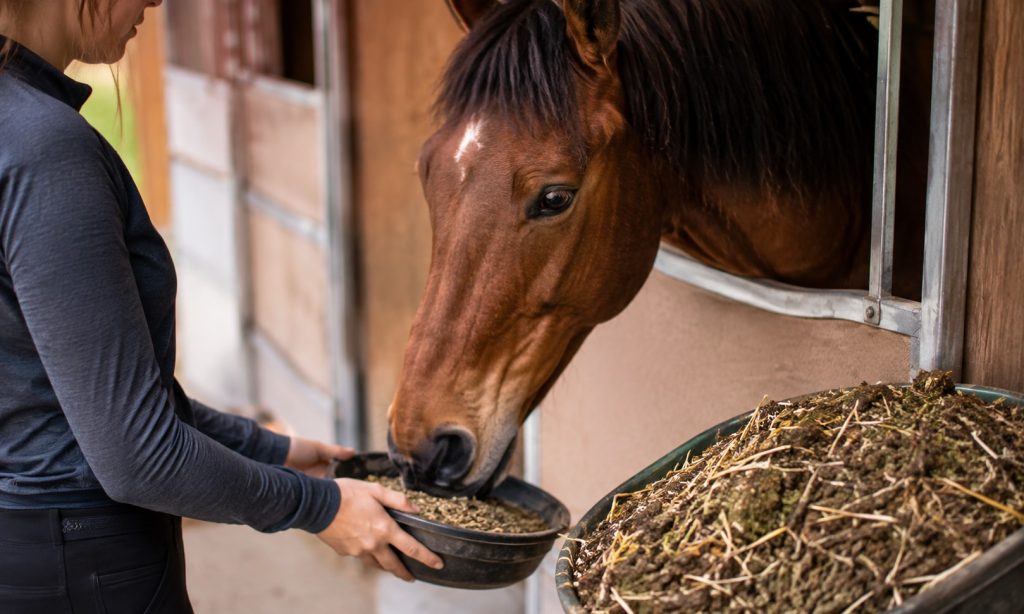
Ask whether dental disease, parasites, pain, infection, or another illness could explain weight loss or poor appetite. A horse that drops feed, chews slowly, or leaves long hay may need dental evaluation or a different forage texture. Do not assume every feeding problem comes from PPID.
If your horse has started or changed PPID medication, discuss appetite changes and any new behavior with the prescribing veterinarian. Never stop or change prescribed medication to improve feeding without veterinary advice.
Questions about forage and pasture
Should my hay be analyzed?
Ask whether a laboratory forage analysis would help select hay and balance the ration. Sugar and starch content can vary among fields, cuttings, and batches. A label or visual inspection cannot reliably tell you the nutrient profile. The veterinarian or nutritionist can explain which results matter for this horse.
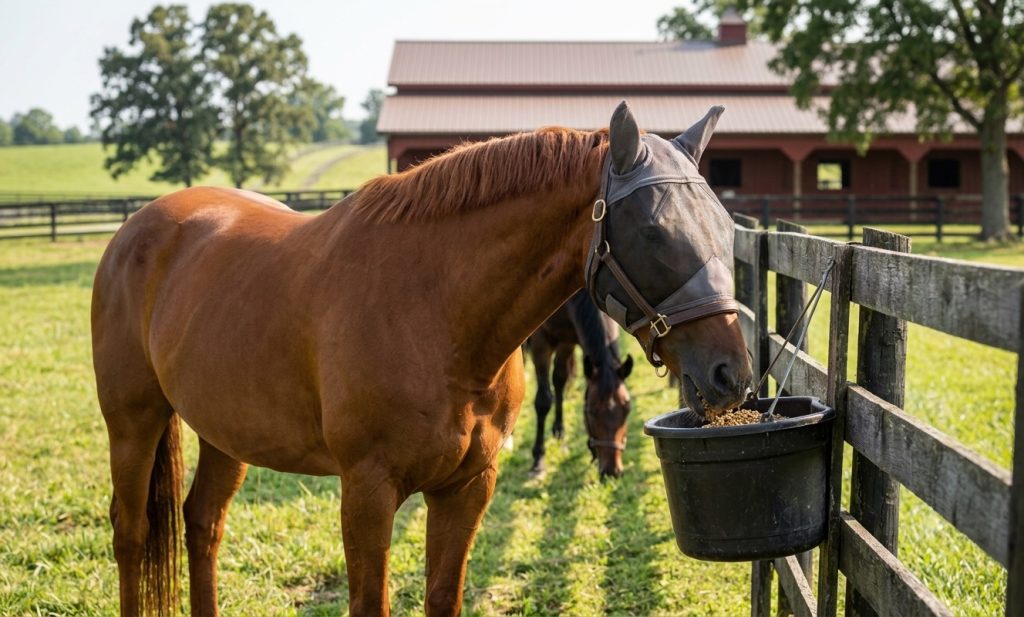
Discuss the horse’s forage amount, type, and feeding schedule, as well as pasture access. If insulin dysregulation is present, ask whether turnout timing, grazing limits, a muzzle, or a dry lot is appropriate. These decisions must account for laminitis risk, exercise, and the horse’s need for movement and forage.
Should I soak hay?
Ask whether soaking is appropriate for the forage and horse, how long to soak it, and how to handle the wet hay safely. Soaking can reduce some water-soluble carbohydrates, but the amount varies. It can also remove dry matter and some minerals, and wet forage can spoil if it is left standing.
Ask whether the soaked hay should be retested or whether the ration needs a vitamin and mineral balancer. Soaking should not be treated as a guaranteed way to make high-sugar hay suitable. If the horse refuses soaked forage, tell the veterinarian rather than allowing intake to fall sharply.
Questions about calories, muscle, and nutrients
Is my horse too thin, overweight, or losing muscle?
Ask the veterinarian to assess body condition and muscle condition separately. A horse can have a rounded belly while losing topline muscle. Agree on what to monitor, such as body weight estimates, girth measurements, photographs, or body condition scoring at regular intervals.
If weight loss is needed, ask for a safe pace and a plan that maintains adequate forage and protein. If the horse needs more calories, ask how to add energy without causing an undesirable insulin response. Avoid large ration changes without a transition plan.
Is the ration supplying enough protein, vitamins, and minerals?
Forage-only diets may not supply every nutrient in the right amount. Ask whether the current ration meets protein and essential amino acid needs, particularly if the horse is losing muscle. Review minerals and vitamins using the forage analysis and the full feed label, since multiple products can duplicate nutrients.
Ask whether a small-volume ration balancer or another approach is appropriate. Do not add a supplement solely because a label claims support for older horses or PPID. The clinician can identify a real gap and consider whether the horse will eat the proposed feed.
Questions about feeding logistics and monitoring
Tell the veterinarian how many meals you can realistically provide, who feeds the horse, and whether pasture or hay is shared. Ask how to make the plan practical at your barn, including what to do when hay or feed batches change. A diet that cannot be followed consistently needs a different plan.
Agree on what changes should prompt a call: weight loss, reduced appetite, new hoof soreness, changes in manure, or difficulty chewing. Ask when to repeat blood tests, body-condition checks, or feed analysis. Owner discussions often mention challenges with soaked forage and picky eating, but those personal experiences do not show what is medically appropriate for another horse.
Keep a written list of feeds, supplements, medications, and amounts. Bring it to veterinary visits. This helps the team spot duplicate ingredients, estimate total nutrient intake, and assess whether a change improved the horse’s condition.
Frequently Asked Questions
Do all horses with PPID need a low-sugar diet?
Not automatically. The horse’s insulin status, body condition, laminitis history, and overall health help determine whether carbohydrate restriction is needed.
Can I feed pasture to a horse with Cushing’s?
It depends on the horse’s insulin status, pasture conditions, season, and laminitis risk. Ask the veterinarian about a safe turnout plan for that individual.
Does soaking hay remove all sugar?
No. Sugar reduction varies with the hay and soaking conditions. Soaking can also remove nutrients and reduce dry matter, so ask how to balance the ration.
Should a PPID horse receive extra protein?
Only if the overall ration and the horse’s needs support it. Ask a veterinarian or nutritionist to evaluate forage quality, body condition, and muscle loss first.
How often should the feeding plan be reviewed?
Ask the veterinarian to set a schedule based on the horse’s condition and testing. Revisit the plan after meaningful changes in weight, insulin status, medication, forage, or health.
Final Words
When discussing what to feed a horse with PPID, ask about insulin testing, forage analysis, pasture access, body and muscle condition, dental comfort, calorie needs, and nutrient balance. Ask how to monitor the plan and when to reassess it. PPID does not create one diet for every horse, and aggressive restriction can be harmful when it overlooks muscle loss or poor forage intake. If you are reviewing feed for horses with Cushing’s, compare the ideas with your veterinarian’s assessment and the horse’s actual forage and health data.
Reference
- American Association of Equine Practitioners: Nutritional Management of Equine PPID
- UC Davis Center for Equine Health: Pituitary Pars Intermedia Dysfunction
- Texas A&M AgriLife Extension: Feeding Senior Horses with Endocrine Diseases
- Rutgers Cooperative Extension: Care for the Older Horse—Diet and Health