
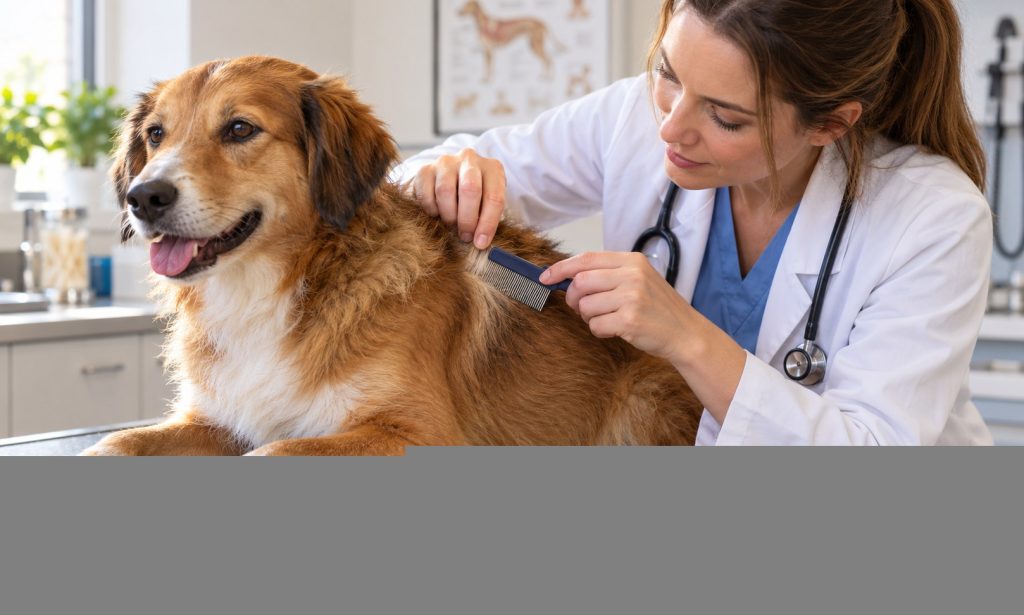
A flea problem may start with itching, flea dirt, or a few visible insects, but some situations call for veterinary care. Contact a veterinarian when your dog has raw or infected skin, intense itching, a heavy infestation, or symptoms of illness. Puppies, very small dogs, older pets, and dogs with other health concerns may need prompt assessment because severe flea exposure can cause complications. Seek urgent advice if your dog is weak, unusually tired, pale around the gums, or collapsing. Your veterinarian can confirm the cause of the skin problem, assess your dog’s overall health, and help choose a safe control plan for every pet in the home. If you are comparing flea treatment for dogs without a vet prescription, check the label and talk with a veterinary professional before combining products or treating a dog with health risks.
Signs that should prompt a veterinary call
Open sores, hair loss, or severe itching
Repeated scratching, chewing, or licking can damage the skin. Call your veterinarian if you see bleeding, moist or crusted areas, spreading redness, marked hair loss, or signs that the skin may be infected. Some dogs develop flea allergy dermatitis, an intense reaction to flea saliva that can cause significant itch even when you see only a few fleas.
A veterinarian can assess whether fleas are the main cause or whether another problem, such as mites, infection, or a different allergy, is also involved. Treating only for fleas may not address the full problem if the skin needs additional care.
Heavy fleas or a vulnerable dog
A large number of fleas can be more than an irritation. Heavy infestations may contribute to anemia, especially in young or small animals. Ask a veterinarian promptly if a puppy, toy-breed dog, frail senior, pregnant dog, or dog with chronic illness has many fleas or is becoming unwell.
Do not wait for visible fleas to disappear before calling if your dog seems weak, is not eating, or is less responsive than usual. A veterinary team can determine how quickly your dog needs an examination and what steps are safe for the animal’s age and condition.
Possible anemia or sudden illness
Pale gums, weakness, rapid or labored breathing, pronounced lethargy, or collapse warrant urgent veterinary attention. These signs can have many causes, and a flea infestation may be only one part of the picture. Call the clinic or emergency hospital for instructions rather than trying to manage serious symptoms at home.
Persistent fleas despite a control plan
You may still notice newly emerged fleas after beginning a control plan because immature stages can remain in the environment and develop over time. But if fleas keep appearing, your dog remains intensely itchy, or the infestation is not improving as expected, contact the veterinarian. They can review product timing, label directions, household pets, and environmental exposure.
Do not increase a dose, apply products more often than directed, or combine preventives without veterinary guidance. Different products have different active ingredients, age and weight limits, and interaction risks. If a treated dog has an abnormal reaction, call the veterinarian promptly and keep the package available.
When a flea product may need veterinary guidance
Ask a veterinarian before using a flea product on a very young, older, sick, pregnant, nursing, medicated, or previously sensitive dog. Check that the product is labeled for dogs, the correct weight range, and your dog’s life stage. Never use a dog-only product on a cat in the household, and follow label directions exactly.
If your dog develops vomiting, tremors, wobbliness, unusual behavior, severe skin irritation, or a seizure after a flea or tick product, contact a veterinarian or emergency clinic right away. Some flea and tick medicines are associated with neurologic adverse events in a small number of animals. A veterinarian can help assess the reaction and report it when appropriate.
What a veterinarian may check
The veterinary team may examine the coat and skin, look for fleas or flea dirt, and ask when the problem started. They may ask about the dog’s age, weight, medical history, medications, prior reactions, products already used, and the other animals in the home. Depending on what they find, they may check for skin infection, anemia, tapeworm infection, or other causes of itching.
Bring product packaging or a clear photo of the label. Note the date and amount used, where it was applied, and whether your dog was bathed before or after treatment. These details can help the veterinarian identify a possible dosing issue or explain why control has been incomplete.
What to do while arranging care
- Use a flea comb to remove visible fleas when your dog tolerates it, and dispose of captured fleas safely.
- Wash the dog’s bedding and vacuum areas where the dog rests, following the household plan recommended by your veterinarian.
- Keep a list of products used, application dates, and symptoms.
- Keep children and other pets away from freshly treated animals until product directions say contact is safe.
- Do not apply household insecticides to your dog or combine flea products unless a veterinarian directs you to do so.
Frequently asked questions
Can a few fleas cause a serious problem?
A few fleas may trigger intense itching in a dog with flea allergy. The number of fleas alone does not show how uncomfortable your dog is, so persistent skin irritation deserves veterinary advice.
When is a flea infestation an emergency?
Seek urgent care for collapse, marked weakness, pale gums, breathing difficulty, or a severe reaction after a flea product. Heavy infestation in a puppy or small dog also warrants prompt veterinary guidance.
Why do I still see fleas after treatment?
Fleas may continue emerging from immature stages in the home, and the control plan may need time and consistent use. Ask your veterinarian to review the product, timing, and all animals in the household.
Should I use more than one flea product?
Do not combine products unless your veterinarian directs you to. Ingredients can overlap or interact, and safe use depends on the dog, product label, and medical history.
Can fleas cause hair loss or skin infection?
Repeated scratching and chewing can damage skin and lead to secondary problems. A veterinarian can check whether fleas, allergy, infection, or another condition is contributing.
Final Words
A flea problem needs veterinary care when your dog has damaged skin, severe itch, a heavy infestation, ongoing fleas despite a plan, or any sign of illness. Puppies, small dogs, seniors, and medically fragile pets deserve extra caution. For severe weakness, pale gums, breathing difficulty, collapse, or a suspected product reaction, seek urgent veterinary advice. Keep product labels and treatment dates handy, and follow directions while the veterinarian helps you build a safe plan for your dog and home. If you are reviewing flea treatment for dogs without a vet prescription, use that information as a conversation starter rather than a reason to stack treatments.
Reference
- Companion Animal Parasite Council: Fleas
- U.S. Food and Drug Administration: Potential adverse events associated with isoxazoline flea and tick products
- U.S. Food and Drug Administration: Safe use of flea and tick products in pets
- American Veterinary Medical Association: Safe use of flea and tick preventive products
- American Veterinary Medical Association: External parasites









