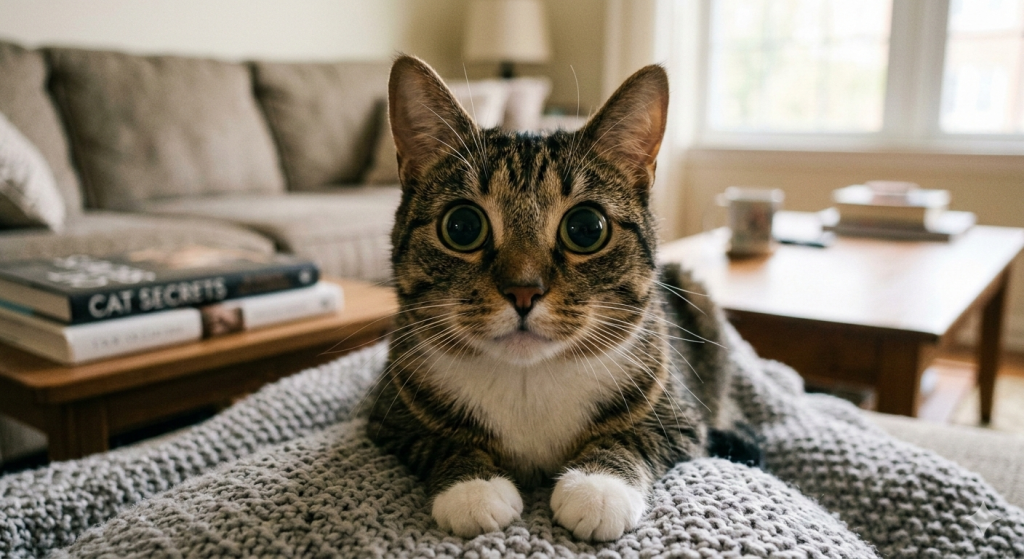
Ever looked at your cat. Wondered if they just saw a ghost or if they’re about to launch themselves at your face?
One minute they have slit-like pupils and the next their eyes turn into giant black saucers. It’s a look that makes them either incredibly adorable or slightly terrifying.
Why do my cats eyes get big?
Honestly it’s one of the common questions I get from fellow cat parents who are tired of guessing their pets next move.
I remember the time my tabby, Oliver did this while staring at a literal piece of lint. His eyes doubled in size his butt started wiggling. I knew my ankles were in grave danger. Understanding these dilated pupils helps you read your cat’s mood better than any “How to Speak Cat” manual ever could. Lets break down whats actually happening behind those glowing orbs.
In terms cats control their pupils to manage how much light enters the eye. Think of it like a camera aperture adjusting for the shot. However cats also use their eyes to show their emotional state. Adrenaline plays a role here causing the iris muscles to pull back and let the world in. Sometimes they just want to see that feather wand better in a lit room. Times they are processing an intense emotion like fear or pure joy. Light levels and emotional triggers act as the dimmer switches” for your cats pupils. Isn’t it fascinating how a tiny muscle twitch can tell you when to stop belly rubs?
Should I Be Worried About My Cats Dilated Eyes?
Most of the time big eyes are part of the feline charm. If your cat is playing, hunting or its just getting dark you have no reason to panic. Normal dilation happens symmetrically—meaning both eyes react the way at the same time. You should only start sweating if the eyes stay big in a room or if one pupil looks different than the other. If your cat looks like they’ve permanently “tripped” into another dimension regardless of the light that’s a flag. Unresponsive pupils usually mean the brain or the eyes aren’t communicating correctly.
4 Reasons Your Cat Has Dilated Eyes
Understanding the “why” usually comes down to these four scenarios:
- Low Light Conditions: Cats are crepuscular meaning they thrive in the twilight. Their eyes dilate to capture every photon so they can hunt at 3 AM.
- The Hunting Instinct: When a cat focuses on “prey”—whether it’s a mouse or your big toe—their brain demands visual data. Dilated pupils give them better depth perception for that pounce.
- Emotional Arousal: This covers everything from “I love this catnip” to “I’m about to fight the vacuum cleaner.” Any spike in excitement or stress triggers a response.
- Physical Stress: Sometimes cats hide their pain well but their eyes give them away. Systemic pain can cause the pupils to widen as the body enters a “fight or flight” mode.
4 Medical Causes of Dilated Eyes in Cats
If the dilation isn’t related to mood or light we might be looking at a health issue.
- Feline Hypertension: High blood pressure is common in cats. It can cause the pupils to stay wide open. If left untreated might even lead to retinal detachment.
- Anisocoria: This is when one pupil is bigger than the other. It often points to an issue, an injury or even a tumor.
- Glaucoma: This involves increased pressure inside the eye itself. It’s painful. Definitely causes the eye to look “fixed” and dilated.
- Toxicity: Certain plants or chemicals can mess with a cats system. If they ate something they shouldn’t have their eyes might be the clue.
When to Visit a Vet for Dilated Cat Eyes
Do the pupils stay huge when you shine a light near them? If so grab the carrier.
Non-reactive pupils are a sign that something is wrong. You also want to look for symptoms like squinting, redness or a cloudy appearance in the eye. If your cat is also acting lethargic bumping into furniture or losing their balance don’t wait. Sudden vision loss often accompanies dilation. Trust your gut—if your cat looks “off ” they probably are.
Checking Your Cats Vision
You can do a at-home” check if you’re worried about their peepers. Try the menace test by slowly moving your hand toward their eye. A cat with vision should blink or flinch. Another trick is the cotton ball test. Drop a cotton ball in front of them and see if their eyes follow it to the floor. If they don’t react all their “big eyes” might actually be a sign they can’t see the world around them.
Big Eyes for Big Excitement
We’ve all seen the “zoomies” look. This is the fun version of dilated pupils. When a cat gets a burst of energy their nervous system goes into overdrive. The pupils widen to take in all the “targets” in the room. During play this dilation helps them calculate distance. If you’re playing with a laser pointer watch how their eyes shift.
Fear in the Eyes
On the side fear causes a very similar reaction. A scared cat needs to see every exit and every potential threat. Their eyes get big so they don’t miss a movement. You can usually tell the difference by the rest of the body. If the ears are pinned back and the tail is tucked those big eyes mean “get me out of here.” ” Stress-induced dilation is a survival mechanism that dates back to their wild ancestors.
Cat’s Eyes Dilate When Something Is Wrong
Sometimes the eyes stay big because the cat is in a state of stress or illness. If you’ve just moved houses or added a pet your cat might have “saucer eyes” for a few days. heir body is constantly on alert waiting for a threat. However if the environment is calm and the eyes are still huge something internal is likely bothering them. Chronic pain, from dental issues or arthritis can keep a cat in a perpetual state of mild dilation.
What does the size and shape of a cats pupils mean?
Cat pupils are pieces of biological engineering. Most of the time they are slits, which allows for highly tuned focus and light control. This shape helps them hunt in daylight without being blinded. When the pupils become round and large they lose that focus but gain a much wider field of vision. When they are slivers they are likely relaxed or in very bright light.
Normal vs. abnormal pupils in cats
So how do you tell the difference at a glance? Normal pupils change constantly. They shrink when you turn on a lamp and grow when you start wiggling a string. They are always symmetrical. The eyes look clear. Abnormal pupils are stubborn. They might stay dilated in the sun. Stay constricted in the dark. If you notice a shape to the pupil that is definitely not normal.
Medical conditions that can alter a cats pupil shape and size
Eye disorders
Conditions like Uveitis (inflammation inside the eye) can make the pupil look small or oddly shaped. Conversely, retinal degeneration can cause the pupils to stay wide open as the eye “searches” for light it can no longer process.
Eye injury or toxicities
A simple scratch on the cornea from a backyard scuffle can cause the pupil to react strangely. Also, certain toxins—like those found in lilies or some medications—can paralyze the muscles that control the iris.
Infectious disease
Believe it or not, things like Feline Leukemia (FeLV) or FIP can affect the eyes. These viruses sometimes cause neurological damage that manifests as permanent pupil dilation or “unequal” eyes.
How vets treat the cause of abnormal pupils in cats?
When you take your cat to the vet they’ll likely start with an ophthalmoscope to look at the back of the eye. They aren’t just looking for ” eyes”; they are checking the health of the retina and the optic nerve. They might also check your cats blood pressure. Since hypertension is a leading cause of fixed dilation in seniors this is a first step. Treatment varies wildly—it could be as simple as blood pressure meds or as intense, as treating an underlying infection.
Are small or different-sized pupils an emergency?
If your cats pupils are sizes yes it’s an emergency. This often means a stroke, head trauma or a big neurological event. You shouldn’t wait with brain-related symptoms. If both pupils are large but your cat seems normal it might not be an urgent situation.. You should still call your vet. If their pupils stay dilated for than a day that’s not okay. What to do if your cat has large, small, misshapen or unequal pupils
First stay calm. Your cat can sense your anxiety and stress will make their pupils get bigger. Move them to a room with dim light to see if their eyes adjust. If they don’t change in a minutes or if you notice other symptoms call your vet right away. Tell them when you noticed the change and if your cat ate anything lately. Taking a photo can also help your vet see what you’re seeing.
Summary
Usually your cat has eyes because they’re excited, scared or trying to see better in the dark. It’s a reaction to their environment or mood.. Keep an eye on pupils that stay stuck or look unequal. Watching your cats eyes is a way to stay on top of their health. Whether they’re playing or just relaxing their pupils are like windows to their health.
Frequently Asked Questions
Why do my cats eyes get big when we play?
It’s because of adrenaline! Their body gets ready for the hunt by letting in light and widening their vision.
Can stress cause dilation?
Acute stress causes dilation but chronic stress can make a cats pupils look bigger more often. Permanent dilation usually has a cause.
Is it normal for one eye to be bigger than the other?
No that’s not normal. This is called Anisocoria. Is usually a sign of a serious medical or neurological issue that needs immediate attention.
Final Words
Cats are mysterious. Their eyes are one thing they can’t hide. Time you see those big round eyes take a second to look at the context. Are they about to pounce on a toy or are they staring at a wall? If its the latter maybe they’re seeing something.
Keep an eye on those pupils. You’ll be good at reading your cats vibe in no time. Do you want me to help you create a checklist, for monitoring your cat’s eye health at home?