
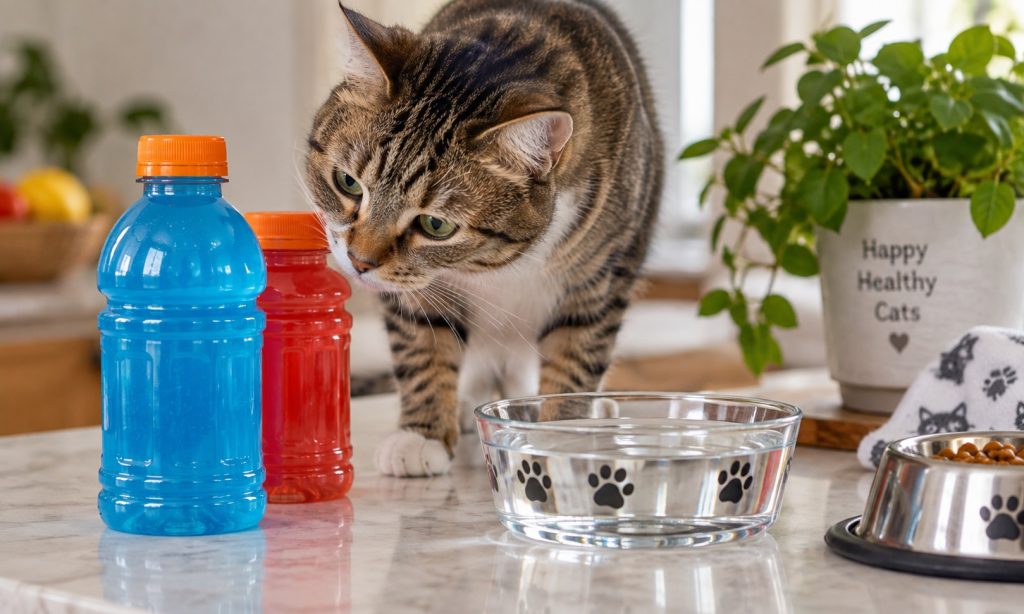
It’s a hot July afternoon in Texas. You’re sitting on the couch after a workout, cracking open an ice-cold bottle of Gatorade or Powerade. Out of nowhere, your fluffy tabby jumps onto the coffee table, dips her whiskers toward the rim, and gives you that wide-eyed “can I have a sip?” look.
As pet parents who want nothing but the best for our furry family members, our instinct is to share. And if you’ve noticed your cat looking a bit sluggish during a summer heatwave, you might naturally wonder: Can Cats Drink Sports Drinks?
The short, direct answer is absolutely not. While sports beverages do wonders for sweating human athletes losing sodium on a basketball court, pouring even a small splash into your cat’s bowl is a fast track to stomach trouble—or worse, a costly trip to the emergency vet clinic.
Let’s tear down what actually happens when a feline laps up human electrolyte drinks, explore safer hydration hacks, and answer every burning question you have about keeping your cat hydrated without risking their health.
What’s Actually Inside Your Sports Drink?
To understand why human sports beverages are bad news for felines, we have to look past the flashy neon bottles and inspect the ingredient label. Humans sweat out water and minerals when we exercise. Cats, on the other hand, barely sweat at all (they only have active sweat glands in their paw pads!).
Their bodies simply aren’t engineered to dump or process massive loads of electrolytes from a bottle.
1. High Sodium Content
Sports drinks are packed with sodium to replace what human skin secretes during intense sweating. For a 150-pound human, 150 milligrams of sodium in a drink is a minor drop in the bucket. For an 8-pound cat, that exact same dose is a massive surge that can quickly disrupt their delicate electrolyte balance.
2. Excessive Refined Sugars & Carbohydrates
Cats are obligate carnivores. In plain English, that means their biological engine runs strictly on animal protein and fat—not carbohydrates. Felines actually lack the taste receptors to taste sweetness altogether. They literally cannot taste the sugar in your sports drink, yet their digestive system is forced to digest dozens of grams of high-fructose corn syrup or cane sugar.
3. Dangerous Artificial Sweeteners (Xylitol)
If you drink zero-sugar or low-calorie sports drinks, the danger jumps significantly. Many sugar-free human beverages use artificial sweeteners like xylitol (sometimes listed as wood sugar or birch sugar). While xylitol is famous for causing fatal liver failures in dogs, it can also cause severe digestive distress, blood sugar crashes, and toxic reactions in cats.
4. Citric Acid & Artificial Dyes
Ever noticed how bright red or blue sports drinks are? Those artificial dyes, combined with citric acid used for flavor preservation, heavily irritate the sensitive lining of a cat’s stomach.
IMO, if an ingredient list looks like a high-school chemistry exam, it has no business being anywhere near your cat’s water dish. :/
Feline Physiology: Why Human Electrolytes Don’t Mix with Cats
When asking Can Cats Drink Sports Drinks?, it helps to look at how a cat’s body handles hydration differently than ours.
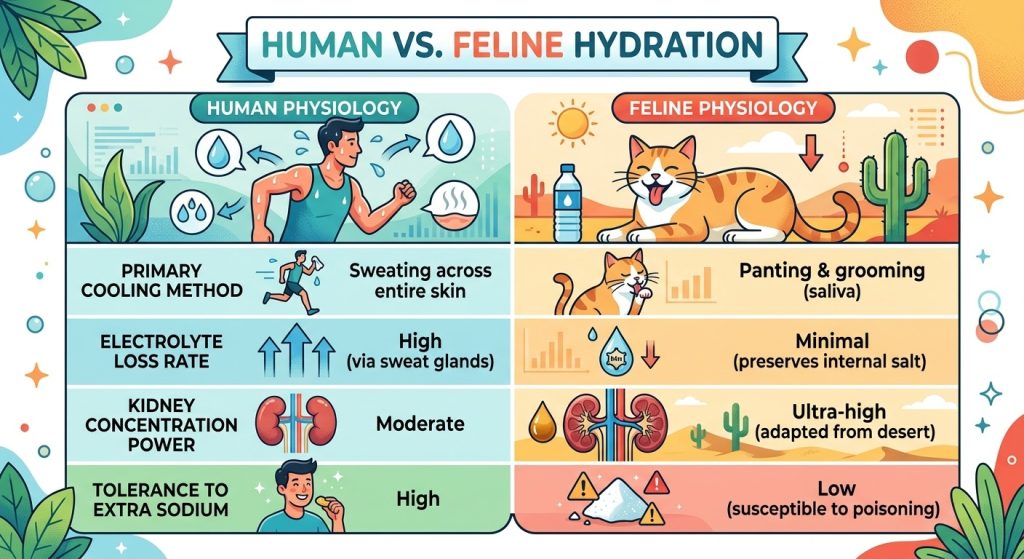
Because wild ancestors of domestic cats originated in arid desert environments, felines evolved kidneys that excel at concentrating urine to conserve every drop of water. They don’t lose large amounts of salt through sweat.
When you introduce a salty, sugary drink designed for human athletes into a cat’s system, their hyper-efficient kidneys are suddenly forced into overdrive trying to filter out toxins they were never designed to handle.
Impact & Signs of Sports Drink Toxicity in Cats
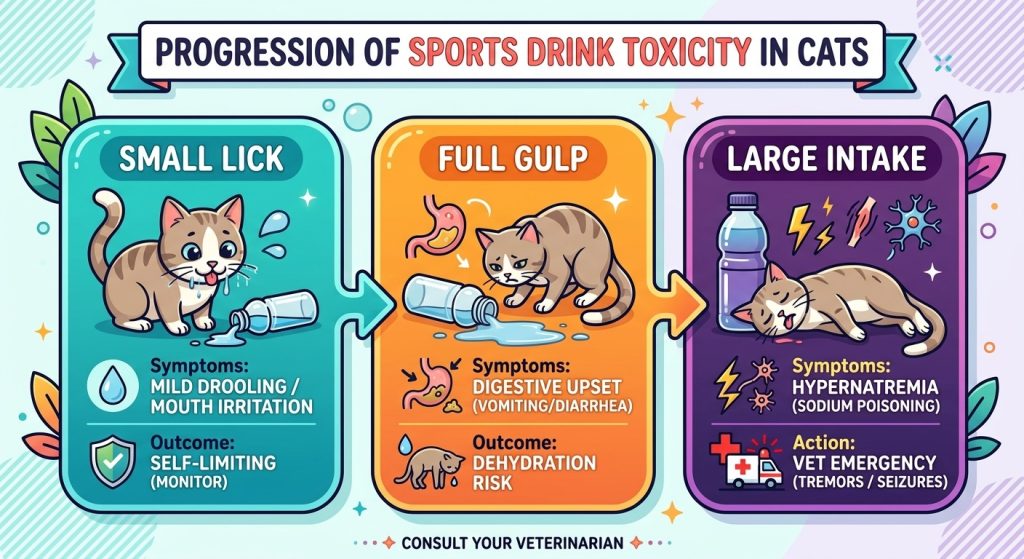
What actually happens if your mischievous kitty takes more than a quick curiosity lick? Depending on the volume ingested and your cat’s weight, symptoms can range from mild tummy troubles to severe metabolic shock.
Gastrointestinal Upset
The high sugar concentration pulls water out of the body and into the intestinal tract through osmosis. The immediate result?
-
Volcanic diarrhea
-
Repeated acute vomiting
-
Excessive drooling (ptyalism)
-
Abdominal cramping and discomfort
Sodium Ion Poisoning (Hypernatremia)
If a small cat consumes a significant amount of high-sodium sports beverage, their blood sodium levels spike dangerously fast. NGL, hypernatremia is scary. As sodium builds up in the bloodstream, water is drawn directly out of brain cells to balance the concentration gradient.
Watch for these warning signs of sodium toxicity:
-
Marked muscle weakness or stiffness
-
Sudden disorientation or stumbling (ataxia)
-
Muscle tremors or twitching
-
Extreme thirst paired with inability to hold down fluids
-
Seizures or sudden collapse
Long-Term Metabolic Stress & Diabetes Risks
Repeated exposure to sugary human drinks puts immense pressure on the feline pancreas. Over time, excessive sugar consumption contributes heavily to feline obesity and insulin resistance, significantly raising the risk of chronic feline diabetes.
When to Visit a Vet: Emergency Protocol
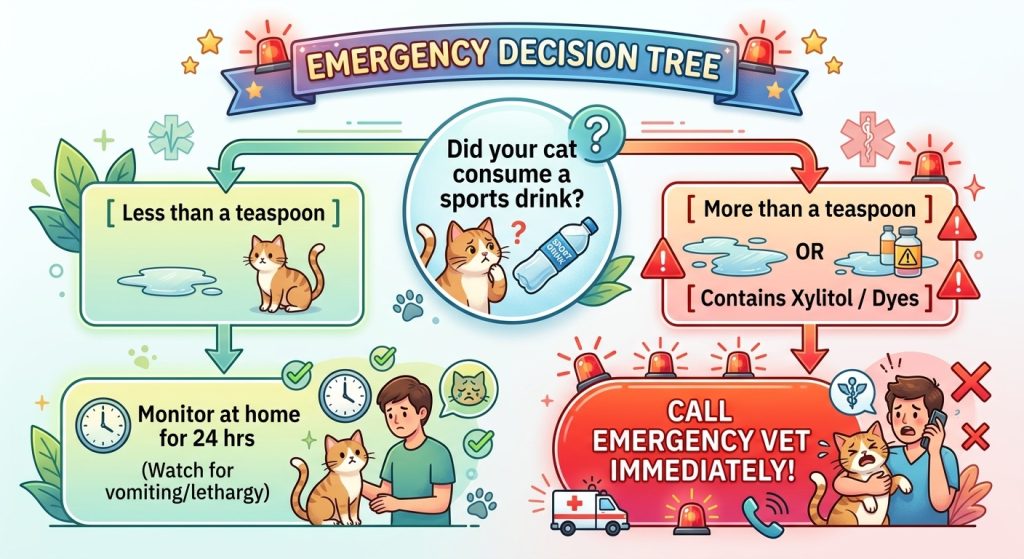
If you catch your cat drinking a few drops off the counter, don’t panic. A single lick off a spilled cap usually won’t cause severe toxicity in a healthy adult cat. However, if your cat drank a measurable amount (more than a tablespoon) or ingested a drink containing xylitol, immediate action is required.
Red Flag Symptoms Requiring Immediate Medical Attention:
-
Continuous vomiting or inability to keep plain water down.
-
Complete lethargy or unresponsive behavior.
-
Visible loss of coordination, wobbling, or head tilts.
-
Glassy eyes or dilated pupils.
-
Panting heavily with an open mouth.
What to tell your emergency vet:
-
The exact brand and flavor of the sports drink.
-
An estimate of how much fluid was consumed.
-
Whether the product contained artificial sweeteners (like xylitol).
-
Your cat’s current weight and pre-existing conditions (e.g., chronic kidney disease).
Safe Solutions, Treatment & Recovery for Dehydrated Cats
If a cat becomes dehydrated from heat, illness, or stomach upset, giving them human beverages is never the solution. Here is how veterinary professionals and experienced owners handle feline rehydration safely.
Professional Veterinary Treatment
At the clinic, your vet will evaluate your cat’s hydration levels using skin-turgor testing (checking how fast the skin on the back of the neck snaps back) and blood work.
-
Subcutaneous (SQ) Fluids: For mild to moderate dehydration, the vet injects a sterile, balanced electrolyte solution right under the loose skin between the shoulder blades. The body slowly absorbs this pocket of fluid over 6–12 hours.
-
Intravenous (IV) Fluids: For severe dehydration or sodium poisoning, your cat will be admitted for intravenous fluid therapy. This allows precise control over blood sodium levels, preventing brain swelling while flushing out excess toxins.
At-Home Recovery Care
Once your cat is back home, focus on gentle recovery:
-
Keep them in a quiet, temperature-controlled room away from loud noises.
-
Offer small amounts of clean room-temperature water every 30 minutes rather than leaving a massive bowl they might gulp down too quickly.
-
Rest their stomach for a few hours before introducing bland wet food.
Alternative Hydration Options: What About Coconut Water?
In recent years, health-conscious pet owners have turned to natural human beverages like coconut water as an alternative hydration source. But does that natural label mean it’s safe for kitties?
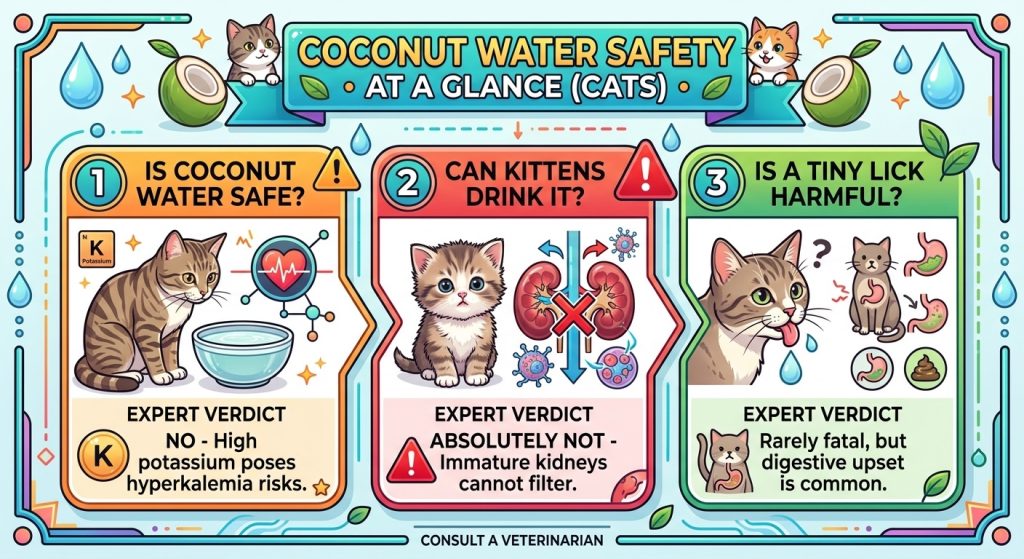
Is coconut water safe for cats?
Many owners ask is coconut water safe for cats when searching for natural electrolyte replacements. The short answer is no. While unflavored coconut water isn’t outright poisonous like lilies or onions, it contains extremely high concentrations of potassium.
Introducing excessive potassium into a cat’s system can lead to hyperkalemia (elevated blood potassium levels). Hyperkalemia disrupts the electrical signaling in your cat’s heart, potentially causing dangerously slow heart rhythms or cardiac arrest.
Understanding coconut water for cats
When considering coconut water for cats, remember that even natural coconut water carries high carbohydrate and fat levels. Cats simply don’t have the digestive enzymes required to process heavy plant juices comfortably. Giving coconut water for cats on a regular basis almost guarantees watery diarrhea, stomach cramps, and unwanted weight gain.
Can kittens drink coconut water?
If you’re asking can kittens drink coconut water, the answer is a strict, resounding no. Kittens have tiny, developing digestive systems and fragile kidney functions. Their bodies cannot balance high potassium or natural sugars. Feeding coconut water to a kitten can cause rapid dehydration through severe diarrhea. Stick exclusively to mother’s milk, kitten milk replacer (KMR), or fresh water.
Safe, Vet-Approved Ways to Hydrate Your Cat
So, if sports drinks are off the table and natural juices are out, how do you help a dehydrated cat? Here are pet-safe solutions that actually work.
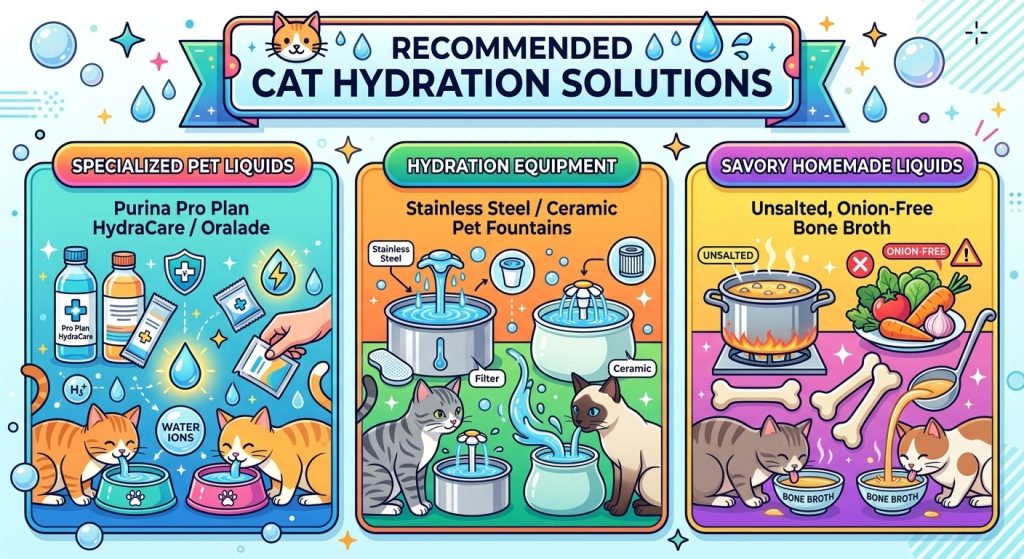
1. Specialized Feline Electrolyte Supplements
Instead of asking Can Cats Drink Sports Drinks?, look for hydration products designed specifically for feline physiology. Products like Purina Pro Plan Veterinary Diets HydraCare or Oralade use targeted nutrient-enriched water that entices cats to drink while delivering the exact balance of minerals their kidneys can process.
Pet Parent Tip: Keep a few pouches of feline liquid hydration supplements in your pet emergency kit for hot summer days or after sudden stomach upsets!
2. Unsalted, Garlic-Free Bone Broth
Cats love savory meat flavors. You can make or buy plain, unsalted chicken or beef bone broth.
-
Crucial Warning: Ensure the broth contains zero onions, zero garlic, and zero added salt. Onions and garlic cause fatal hemolytic anemia in cats.
3. Pet Water Fountains
Cats are instinctively wired to avoid stagnant water because, in the wild, still water often harbors bacteria. Investing in a quiet, filtered pet water fountain creates continuous motion, encouraging your cat to drink significantly more fresh water every day.
Prevention: How to Keep Your Cat Hydrated Every Day
Preventing dehydration is infinitely easier than treating a dehydrated cat. Here are straightforward, battle-tested habits to keep your cat happily hydrated:
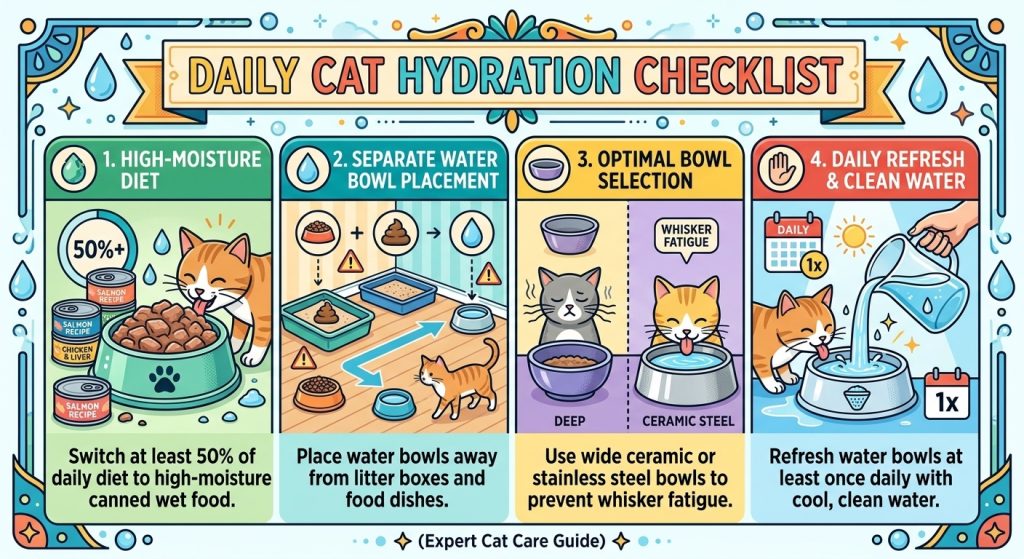
-
Increase Wet Food: Dry kibble contains only about 10% moisture, whereas canned wet food contains 75% to 80% water. Mixing a spoon of warm water into their daily wet food is the easiest hydration trick in the book.
-
Mind the Whisker Fatigue: Cats hate when their sensitive whiskers brush against narrow deep bowls. Switch to wide, shallow ceramic or stainless steel dishes.
-
Separate Water from Food & Litter: In the wild, cats don’t drink near their kill site or where they eliminate. Move water dishes to quiet locations away from food bowls and litter boxes.
Frequently Asked Questions
Can cats drink sports drinks like Gatorade if diluted with water?
No. Diluting a sports drink with water reduces the concentration of sugar and sodium, but it does not make it safe. The artificial flavorings, dyes, and potential chemical additives remain unsuited for feline digestion. Plain, clean water or a vet-approved liquid hydration supplement is always safer.
What should I do if my cat licked a small splash of my sports drink?
If your cat took a quick lick off a spill, don’t panic. Wipe their paws and face with a damp towel to prevent them from grooming more off their fur. Offer them fresh water immediately and monitor them over the next 12 to 24 hours for any vomiting or loose stool.
Can cats drink Pedialyte instead of sports drinks?
While unflavored, clear Pedialyte is sometimes used by veterinarians in strict emergency situations when nothing else is available, you should never administer it without explicit guidance from your vet. Pedialyte is formulated for human infants, and giving improper dosages can easily cause electrolyte imbalances in small cats.
Why do people wonder, can cats drink sports drinks when sick?
When people see a sick, lethargic cat refusing food and water, human instincts kick in. We know sports drinks help dehydrated humans recover from stomach bugs, so we naturally wonder if the same logic applies to pets. However, because feline kidney function and metabolic pathways are completely different from ours, applying human remedies often makes a sick cat worse.
Can cats drink sports drinks that are zero sugar or low calorie?
Zero-sugar or low-calorie sports drinks are actually more dangerous for cats than regular versions. These diet drinks frequently rely on artificial sweeteners like xylitol, stevia, or sucralose. Xylitol, in particular, can trigger severe health crises in pets. Always keep diet sports drinks far out of reach.
Final Words
At the end of the day, our job as pet parents is to protect our cats from things they don’t realize are bad for them. So, Can Cats Drink Sports Drinks? The verdict is crystal clear: keep the Gatorade, Powerade, and energy drinks for your own workouts, and keep your cat’s bowl filled with clean, fresh water or vet-approved feline liquids.
By upgrading to a quality pet water fountain, adding moisture-rich wet food to their meal plan, and keeping a few pouches of feline-safe electrolyte toppers on hand, you’ll ensure your furry friend stays happy, healthy, and perfectly hydrated for years to come. FYI, your cat will thank you for it! 🙂









