If you’ve ever caught your cat staring at your glass while you’re having a drink, you may have wondered, “What Drinks Are Safe for Cats?” Cats can be surprisingly interested in whatever their humans are eating or drinking, even when they have absolutely no business sharing it.
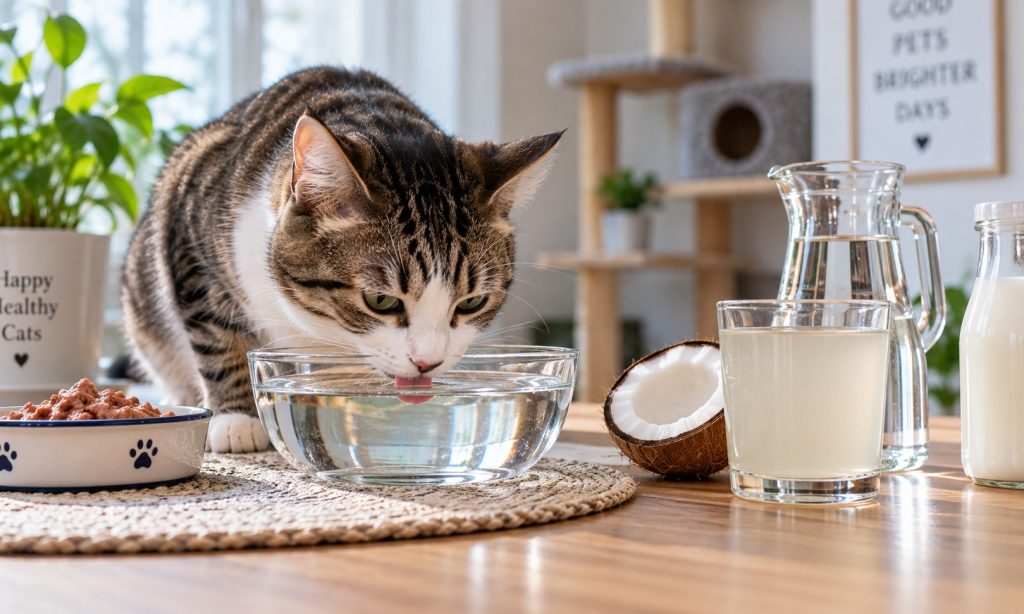
The good news is that the answer is fairly simple: fresh, clean water is the safest and most appropriate everyday drink for cats. Some other liquids may be acceptable in very small amounts or in specific circumstances, but most cats don’t need fancy beverages to stay hydrated.
In fact, one of the best things you can do for your cat’s health is also one of the least exciting: keep fresh water available and make it appealing enough that your cat actually wants to drink it.
What Drinks Are Safe for Cats?
For most healthy cats, the safest choices are:
- Fresh, clean plain water
- Water obtained through wet cat food
- Occasionally, a small amount of appropriate low-sodium broth with cat-safe ingredients
- In limited circumstances, certain specially formulated cat milk products as an occasional treat
Water should remain the main beverage.
Cats don’t need sports drinks, fruit juice, soda, coconut water, or other human beverages to maintain normal hydration. Their bodies are designed around a carnivorous diet, and their hydration needs can be met through drinking water and consuming moisture-rich food. That’s worth remembering before you reach for that trendy beverage in your refrigerator. Your cat doesn’t need a tiny wellness shot. 🙂

Source: Pixabay — Cat Drinking Water by Dustytoes
Why Water Matters So Much for Cats
Hydration supports many basic functions, including temperature regulation, digestion, circulation, and normal organ function. Water also plays an important role in maintaining appropriate electrolyte concentrations and transporting nutrients throughout the body. Cats can be particularly interesting when it comes to drinking. Some seem to empty their water bowl enthusiastically, while others appear to regard the bowl as a decorative household object.
Part of the explanation is diet. Wet cat food contains a large amount of water, so a cat eating canned food may naturally drink less than a cat eating primarily dry kibble. Cornell notes that wet food can contain up to about 80% water. That doesn’t mean a wet-food cat can go without a water bowl. Fresh water should still be available.
How Much Water Does a Cat Need?
A commonly used general estimate for healthy cats is around 4 ounces of water per 5 pounds of lean body weight per day, although actual requirements vary. Food moisture, body size, activity, environmental temperature, and health status all matter.
For example, a 10-pound cat may have a general daily water requirement around 8 ounces, but that does not necessarily mean your cat will drink 8 ounces directly from a bowl. Some of that water may come from food. This is why watching your cat’s overall eating, drinking, urination, and behavior is often more useful than obsessing over one number.
What Can Cats Drink Besides Water?
If you’re asking What Drinks Are Safe for cats, the answer doesn’t mean your cat can never have anything except plain water. There are a few situations where another liquid may have a practical role, but these should be viewed as occasional additions rather than replacements for water.
Plain Fresh Water
This is the clear winner. Offer your cat clean drinking water every day and refresh it regularly. Wash the bowl frequently as well. VCA recommends keeping water clean and experimenting with bowl types, locations, temperatures, and fountains because individual cats can have surprisingly strong preferences.
If you have multiple cats, consider providing several water stations. One bossy feline shouldn’t be able to monopolize the household hydration department.
Water From Wet Cat Food
Wet food can be an excellent way to increase a cat’s moisture intake. Canned cat food generally contains considerably more water than dry kibble, so cats eating wet food may receive a meaningful portion of their daily water through meals. You can also discuss adding additional water to food with your veterinarian if your cat needs more moisture. This is often much more sensible than trying to convince a cat that coconut water is the next big thing.

Source: Wikimedia Commons — Cat drinking water by Klaas1978
Low-Sodium, Cat-Safe Broth
A small amount of appropriate broth can sometimes make water more attractive to a reluctant drinker. However, ordinary human broth is not automatically safe for cats. Read the ingredient list carefully. Onion, garlic, chives, excessive salt, and certain seasonings can create problems. VCA suggests that a small amount of low-sodium chicken broth without additional spices may be used to encourage some cats to drink more. If your cat has kidney disease, heart disease, urinary problems, diabetes, or another medical condition, ask your veterinarian before routinely adding broth or other supplements.
Coconut Water for Cats: Is It a Good Idea?
This is where the question What Drinks Are Safe for Cats? gets a little more interesting. Coconut water is popular among people because it contains naturally occurring electrolytes. That doesn’t mean cats need it. For a healthy cat, plain water is generally the better choice. There is no established need for coconut water as a routine feline hydration drink.
Coconut and coconut-based products are not generally considered highly dangerous to pets in small amounts, but the ASPCA notes that coconut products can cause stomach upset or loose stools in some animals. Coconut water also isn’t the same thing as plain water. Depending on the product, it can contain carbohydrates, calories, added sugar, flavorings, or other ingredients that offer your cat little nutritional benefit.
Coconut Water vs Water for Cats
When comparing coconut water vs water for cats, plain water wins for everyday hydration.
| Plain Water | Coconut Water | |
|---|---|---|
| Everyday hydration | Excellent choice | Not necessary |
| Calories | None | Can contain calories |
| Added ingredients | Usually none | Depends on product |
| Appropriate as primary drink | Yes | No |
| Useful for most healthy cats | Yes | Little reason to use it |
In other words, don’t replace your cat’s water bowl with coconut water because you read that electrolytes are good for humans. Cats aren’t miniature humans wearing fur.
How Much Coconut Water Can Cats Drink?
If you’re searching for how much coconut water cats can drink, the most important point is that there isn’t a standard daily serving that cats need. For a healthy cat, coconut water should not be used as a regular replacement for fresh water. If your veterinarian says an occasional small amount is acceptable for your individual cat, follow that guidance rather than relying on a generic internet serving size.
Be especially cautious with cats that have kidney disease, heart disease, diabetes, urinary conditions, dietary restrictions, or other medical problems. Changes to fluid or electrolyte intake can matter more for these animals. Also check the label. A coconut beverage containing added sugar, artificial flavoring, excessive sodium, or other unnecessary ingredients is a poor choice. IMO, if your cat is happily drinking fresh water, there is no reason to make the situation more complicated.
Can Cats Drink Milk?
The classic image of a cat happily drinking a saucer of milk is charming, but it isn’t particularly good nutritional advice. Many adult cats have limited ability to digest lactose. Milk and other dairy products can cause digestive upset, including diarrhea and vomiting. Both Cornell and the ASPCA advise against treating ordinary milk as a normal part of a cat’s diet.
Some specially formulated cat milk products are lower in lactose and designed specifically for cats. Even then, they’re treats rather than necessary hydration.
So if you’re wondering What Drinks Are Safe for Cats?, regular cow’s milk should not make the shortlist simply because cartoons have been recommending it for decades.
Drinks Cats Should Avoid
Some beverages are inappropriate because they provide no useful nutrition, while others can be genuinely dangerous.
Coffee and Caffeinated Drinks
Coffee, energy drinks, and other caffeinated beverages should never be offered to cats. Cornell lists caffeine among substances that can be toxic to cats and dogs. Keep coffee cups, energy drinks, caffeinated tea, and similar products away from curious cats.
Alcohol
Alcohol should never be given to cats. Even small animals can be affected significantly by substances that might seem relatively harmless to a much larger human.
Chocolate Drinks
Chocolate contains compounds that are dangerous to pets, and chocolate beverages may also contain caffeine. Don’t share hot chocolate, chocolate milk, mocha drinks, or similar products with your cat.
Sugary Soft Drinks and Sweetened Beverages
Cats don’t need added sugar in their drinks. Soda and sweetened beverages offer no meaningful hydration advantage and can add unnecessary calories and ingredients.
Human Electrolyte or Sports Drinks
Human sports drinks are designed for human physiology, not feline nutrition. They can contain sugar, sodium, flavorings, and other ingredients that your cat doesn’t need. If your cat appears dehydrated, don’t attempt to treat the problem with a human electrolyte drink. Contact your veterinarian.
How to Encourage a Cat to Drink More Water
Sometimes the question isn’t What Drinks Are Safe for Cats? but rather, “How can I get my stubborn little roommate to drink anything?” Fortunately, there are several practical strategies.
Keep Water Fresh
Cats can be sensitive to smell and taste. Replace stale water frequently and clean the bowl regularly. The ASPCA recommends that cats always have access to fresh, clean water.
Try Different Bowls
Some cats prefer ceramic, stainless steel, or glass. Others seem to have strong opinions about bowl shape. Try different options and see what your cat prefers.
Use Multiple Water Stations
If you have several cats, multiple water bowls can reduce competition. Even in a single-cat home, placing water in more than one convenient location can make drinking easier.
Try a Cat Water Fountain
Some cats prefer moving water. A fountain can encourage drinking, although not every cat will love one. If you use a fountain, clean it and replace filters according to the manufacturer’s instructions.
Add Moisture to Food
Wet food is an easy way to increase dietary water intake. Some cats also tolerate additional water mixed into wet food. Introduce changes gradually, and don’t allow your cat to stop eating simply because you’ve modified the food.
Keep Water Away From the Litter Box
Most people wouldn’t enjoy eating next to a bathroom, and cats aren’t exactly campaigning for that arrangement either. Put water bowls in quiet, clean areas where your cat feels comfortable.

Source: Pexels — Cat Drinking Water by Doğan Alpaslan Demir
Signs Your Cat May Not Be Drinking Enough
Dehydration can become serious.
Potential signs include:
- Lethargy or weakness
- Poor appetite
- Dry or tacky gums
- Sunken-looking eyes in more severe cases
- Vomiting
- Diarrhea
- Changes in normal drinking behavior
Cornell notes that dehydration can interfere with circulation, temperature regulation, and normal organ function. Importantly, dehydration is not simply a “needs more water” problem. Kidney disease, diabetes, vomiting, diarrhea, hyperthyroidism, dental problems, and other conditions can affect hydration and drinking behavior.
When to Call a Veterinarian
Contact your veterinarian if your cat suddenly stops drinking, appears dehydrated, becomes unusually weak or lethargic, repeatedly vomits, develops persistent diarrhea, or shows significant changes in urination. A sudden increase in drinking deserves attention too. Excessive thirst can sometimes accompany underlying medical conditions, so don’t assume your cat simply discovered a new appreciation for the water bowl.
If you suspect your cat consumed a potentially toxic beverage, contact your veterinarian or an appropriate animal poison-control service promptly. Do not induce vomiting unless a veterinary professional specifically instructs you to do so.
Frequently Asked Questions
What drinks are safe for cats?
Fresh, clean water is the safest and most appropriate everyday drink for cats. Water from wet food also contributes to hydration. In certain circumstances, a veterinarian may approve small amounts of another cat-safe liquid, but unusual beverages should not replace water.
Can cats drink coconut water?
A small amount of plain coconut water is not generally considered a necessary or beneficial drink for healthy cats. Coconut-based products can cause digestive upset in some pets, and coconut water may contain calories or added ingredients. Fresh water remains the better everyday choice.
How much coconut water can cats drink?
There is no standard daily amount that cats need. Coconut water should not replace fresh drinking water. If you’re considering giving it to a cat with a medical condition, ask your veterinarian first.
Can cats drink milk?
Regular cow’s milk is not recommended as a routine drink for cats. Many cats have limited lactose digestion and may develop diarrhea or other gastrointestinal problems after consuming dairy.
What should I do if my cat won’t drink water?
First, try fresh water, a clean bowl, multiple water stations, a different bowl material, or a water fountain. You can also discuss increasing moisture through wet food with your veterinarian. If your cat refuses water or shows signs of illness or dehydration, contact your veterinarian promptly.
Final Words
So, What Drinks Are Safe for Cats? The answer is much less complicated than the beverage aisle at your local grocery store might suggest. For everyday hydration, fresh, clean water is the clear winner. Wet food can provide additional moisture, and in selected situations a veterinarian may recommend a small amount of another appropriate liquid. But coconut water, milk, juice, soda, sports drinks, and other human beverages aren’t necessary for a healthy cat.
When considering coconut water vs water for cats, choose water for routine hydration. And if you’re wondering how much coconut water can cats drink, don’t treat it as a required supplement or replacement for their water bowl. Most importantly, pay attention to changes in your cat’s normal drinking habits. A cat that suddenly drinks far more, far less, or refuses fluids altogether may be telling you something important. Sometimes the healthiest choice for our pets is also the simplest one: a clean bowl of water, refreshed regularly, in a place where they feel safe and comfortable.