Bringing a new puppy into your home is an incredible mix of endless cuddles, middle-of-the-night potty runs, and the mysterious disappearance of your favorite leather shoes. FYI, that infamous “new puppy smell” is quickly replaced by wet fur and chewed-up drywall if you aren’t paying attention :). But among all the chaos of crate training and picking out the squeakiest toys on Amazon, nothing matters more during those first four months than establishing a solid preventative health routine. Navigating the Puppy Vaccination Schedule: DHLPP and Rabies isn’t just standard vet protocol—it is the single most effective barrier standing between your vulnerable fur ball and a host of dangerous, preventable diseases.
As someone who has navigated the wild waters of puppyhood with multiple dogs across different life stages, I know firsthand how overwhelming the clinical terms can feel. You sit down in the examination room, and your veterinarian starts throwing around acronyms like DHPP, DHLPP, CAV-2, and core boosters. It sounds more like an alphabet soup than a medical plan. However, staying strictly on top of your Puppy Vaccination Schedule: DHLPP and Rabies ensures your puppy builds robust immunity while their body is growing at lightning speed.
This comprehensive guide breaks down every shot, every timeline, and every legal requirement so you can walk into your veterinary clinic feeling informed, confident, and ready to protect your newest family member.

Source: Pexels — Mikhail Nilov
Understanding DHLPP: Breaking Down the 5-in-1 Combination Shot
When you look at your vet invoice, you will likely see a single charge for a shot labeled “DHLPP”. Rather than poking your puppy five separate times with five different needles, veterinary medicine combines these critical immunizations into a single, highly efficient vaccine.
Each letter in that acronym stands for a specific pathogen that poses a distinct threat to canine health:
-
D – Canine Distemper: A severe, highly contagious viral disease that attacks a dog’s respiratory, gastrointestinal, and central nervous systems. Distemper spreads through airborne exposure or shared water bowls and is often fatal or leaves permanent neurological damage.
-
H – Infectious Canine Hepatitis (Adenovirus Type 1 & 2): Caused by canine adenovirus, this virus targets the liver, kidneys, lungs, and eyes. The vaccine utilizes CAV-2 to protect against both severe liver infection and upper respiratory disease (kennel cough) without causing side effects like blue-eye syndrome.
-
L – Leptospirosis: A tricky bacterial infection spread through the urine of wildlife like squirrels, raccoons, and rodents. It penetrates damaged skin or mucous membranes when a dog drinks from or splashes in stagnant puddles. Crucially, Leptospirosis is zoonotic—meaning it can easily jump from your dog to you or your family.
-
P – Canine Parvovirus: The absolute scourge of puppyhood. Parvo is a hardy, incredibly contagious virus that attacks the lining of the gastrointestinal tract and destroys white blood cells. It causes severe, foul-smelling diarrhea, vomiting, and extreme dehydration. Treatment often requires thousands of dollars in intensive care hospitalization, making prevention paramount.
-
P – Canine Parainfluenza: A viral infection that contributes to infectious tracheobronchitis, commonly known as kennel cough. While rarely fatal on its own, it opens the door for severe secondary bacterial pneumonia.
DHLPP vs DHPP: What’s the Difference and Which Does Your Puppy Need?
One of the most frequent points of confusion for new dog parents is the debate over dhlpp vs dhpp. The only structural difference between the two is the inclusion of the “L”—the Leptospirosis component.
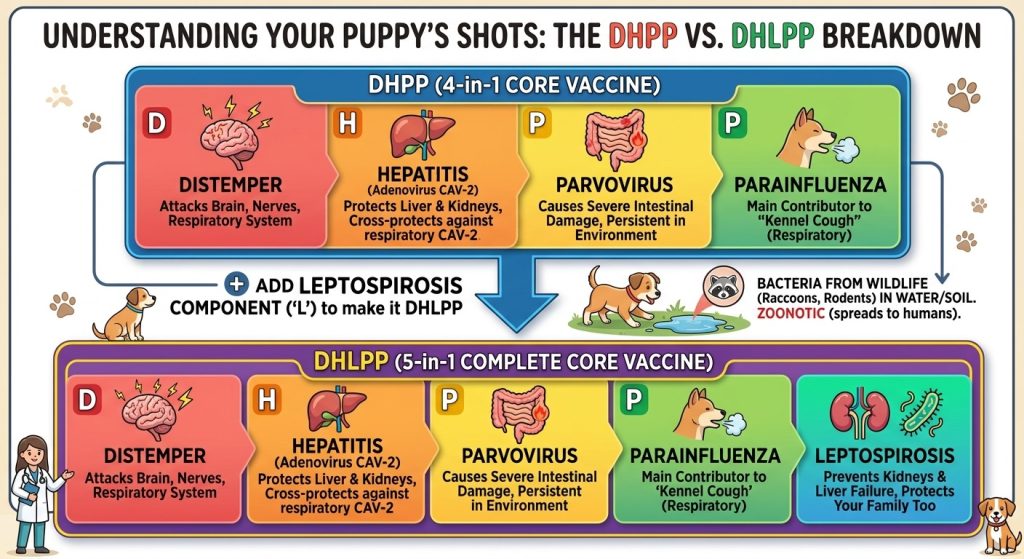
Traditionally, the American Animal Hospital Association (AAHA) categorized DHPP as a mandatory “core” vaccine and treated Leptospirosis as “non-core” (optional based on lifestyle). However, modern veterinary consensus across the US has shifted dramatically. Because urban and suburban areas now see high wildlife crossover (yes, even suburban backyards visited by raccoons at night), AAHA guidelines strongly recommend the Leptospirosis component for almost every dog.
When analyzing dhlpp vs dhpp, your location and puppy’s age play a role. Very young puppies (6 to 8 weeks old) often start with DHPP because their immune systems are still maturing, and the Lepto component is typically introduced during the 10-to-12-week or 14-to-16-week booster rounds.
Demystifying the Rabies Vaccine: Legal Mandates and Health Protection
While the DHLPP combo shot protects against complex canine viruses, the Rabies vaccine stands in a class of its own. Rabies is a fatal viral encephalomyelitis that attacks the central nervous system of mammals. Once clinical symptoms appear in an animal or human, the mortality rate is virtually 100%.
Because of its lethal nature and the risk of transmission to humans, Rabies vaccination is strictly regulated by state, county, and municipal laws across the United States. In almost every US state, you are legally required to vaccinate your puppy against Rabies by 12 to 16 weeks of age and maintain up-to-date boosters throughout their life. Failing to do so can result in heavy fines, mandatory quarantine if your dog accidentally nips someone, or worse.
DHLPP vs Rabies Vaccine: Key Differences Explained
When evaluating dhlpp vs rabies vaccine, it helps to understand how their administration, scheduling, and legal standing differ:
| Feature | DHLPP Vaccine | Rabies Vaccine |
| Disease Target | 5 Diseases: Distemper, Hepatitis, Parvo, Parainfluenza, Lepto | Single Target: Rabies virus |
| Vaccine Type | Combination shot (modified live & killed bacterial antigens) | Monovalent killed or recombinant virus shot |
| Initial Puppy Series | 3 to 4 booster rounds given every 3–4 weeks (6 to 16 weeks old) | Single initial shot given at 12–16 weeks old |
| Legal Requirement | Standard medical core (not dictated by state law, but required by boarding/grooming) | Strictly mandated by state and local laws across the US |
| Adult Booster Schedule | Boosted at 1 year, then every 3 years (Lepto component often boosted annually) | Boosted at 1 year, then every 1 to 3 years depending on local state legislation |
Understanding the distinction between these shots ensures you don’t confuse routine health boosters with legally mandated public health immunizations.
The Master Puppy Vaccination Schedule: DHLPP and Rabies Timeline
To build reliable, lasting immunity, your puppy cannot receive just a single shot and call it a day. They require a carefully timed series of boosters. Below is the standard, AAHA-aligned Puppy Vaccination Schedule: DHLPP and Rabies followed by accredited veterinary clinics across North America.
| Puppy Age | Recommended Core Vaccines | Non-Core / Lifestyle Additions | Key Focus & Milestones |
| 6 – 8 Weeks | DHPP Shot #1 (Distemper, Adenovirus, Parvo, Parainfluenza) | Bordetella (Intranasal/Oral) | Initial health exam, deworming, maternal antibody evaluation. Keep puppy isolated from public grounds. |
| 10 – 12 Weeks | DHLPP Shot #2 (DHPP booster + 1st Leptospirosis dose) | Lyme #1, Canine Influenza #1 (if high risk) | Microchipping, basic home socialization with fully vaccinated household dogs only. |
| 14 – 16 Weeks | DHLPP Shot #3 (Final core booster) + Rabies Vaccine (1-Year) | Lyme #2, Canine Influenza #2 | Critical milestone! Rabies certificate and tag issued. Immunity locks in 14 days post-visit. |
| 12 Months (1 Year) | DHLPP Booster + Rabies Booster (1-Year or 3-Year per state law) | Annual Bordetella, Lepto, Lyme boosters as needed | Transition to adult dog preventative health schedule. |
When keeping track of your Puppy Vaccination Schedule: DHLPP and Rabies, I highly recommend storing physical record certificates in a dedicated pet medical binder or using a digital health tracking app on your phone. If you ever travel across state lines, enroll in agility classes, or need emergency boarding, having these records instantly available saves massive headaches.
Why Timing and Boosters Matter: The Science of Waning Antibodies
A common question many pet parents ask is: “Why does my puppy need three or four rounds of the exact same shot?” It sounds like a scheme to keep your vet in business, but the biological reasoning is rooted in maternal antibodies.
When puppies are born, they nurse and consume colostrum—the initial milk produced by the mother that is rich in protective antibodies. These maternal antibodies act as a natural shield during the first few weeks of life. However, there is a catch: maternal antibodies don’t distinguish between a real disease virus and a vaccine virus. If you vaccinate a 6-week-old puppy whose maternal antibodies are still sky-high, those antibodies immediately neutralize the vaccine, preventing the puppy’s own immune system from creating its own long-term memory cells.
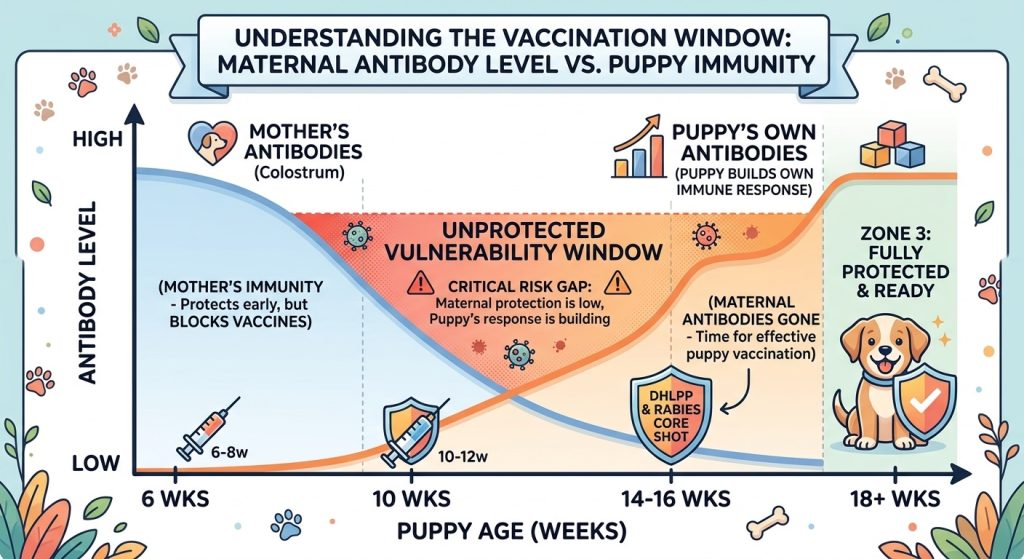
Maternal antibodies fade at unpredictable rates between 6 and 16 weeks of age. One puppy’s maternal protection might drop at week 8, while their littermate’s protection persists until week 14. Because we cannot test every puppy’s antibody blood levels weekly, sticking to the standard Puppy Vaccination Schedule: DHLPP and Rabies guarantees that we catch the exact window when maternal protection drops, ensuring your pup is never left wide open to severe infection.
Signs and Impact of Vaccine-Preventable Diseases
To understand why completing the Puppy Vaccination Schedule: DHLPP and Rabies is non-negotiable, it helps to realize what happens when a puppy catches these pathogens. These aren’t minor belly aches; they are catastrophic health crises.
Canine Parvovirus
Parvo spreads through microscopic fecal matter carried on shoes, grass, or dog park soil. Within days of exposure, an unvaccinated puppy becomes severely lethargic, refuses food, and begins profusely vomiting accompanied by bloody, liquid diarrhea. Without aggressive, round-the-clock veterinary hospitalization, IV fluids, and anti-nausea medications, parvo carries a mortality rate exceeding 90%.
Distemper Virus
Distemper begins with cold-like symptoms—runny eyes, nasal discharge, fever, and coughing. As it progresses, it attacks the gastrointestinal tract and progresses to irreversible neurological damage, causing muscle twitches, seizures, and jaw spasms (often called “chewing-gum seizures”).
Leptospirosis
Lepto attacks the internal organs, specifically triggering acute renal failure or severe liver damage. Symptoms include jaundice (yellowing of the eyes and gums), extreme lethargy, bloody urine, and painful abdomen inflammation. IMO, watching a dog suffer through organ failure from drinking out of an infected mud puddle is a preventable tragedy no owner should ever experience.
Recovery & Post-Vaccination Care at Home
After returning home from the clinic following an entry on your Puppy Vaccination Schedule: DHLPP and Rabies, your little adventurer might not be their usual hyperactive self. Vaccines work by stimulating the immune system, which naturally consumes energy.
Normal Post-Vaccine Reactions (First 24–48 Hours)
It is completely expected for your puppy to exhibit mild side effects after receiving shots:
-
Sleepiness or general lethargy for 12 to 24 hours.
-
Mild soreness or a small, firm bump at the injection site (between the shoulder blades or on the hind leg).
-
A slight reduction in appetite for one meal.
-
Low-grade fever.
To make their recovery as cozy as possible, set up a quiet retreat away from noisy household activities. A plush orthotic dog bed inside a soft-sided travel crate gives them a safe sanctuary to rest undisturbed. Offer plenty of fresh water and keep interactive exercise to a minimum for 24 hours.
When to Contact Your Vet Immediately
While mild soreness is harmless, true allergic reactions (anaphylaxis), though extremely rare, require emergency intervention. Contact your veterinarian or an emergency animal hospital immediately if you observe:
-
Facial swelling, particularly around the muzzle, eyes, or neck.
-
Hives or sudden, severe itching over the body.
-
Repeated vomiting or persistent, watery diarrhea lasting over 24 hours.
-
Pale gums, sudden collapse, difficulty breathing, or severe lethargy lasting beyond 48 hours.
Navigating Socialization vs. Quarantine Safely
One of the biggest dilemmas facing puppy owners during the Puppy Vaccination Schedule: DHLPP and Rabies window is balancing disease protection with behavioral socialization. The critical socialization window for puppies closes around 14 to 16 weeks—the exact same time they are finishing their vaccine series.
If you keep your puppy in total isolation until their final shots kick in at week 18, you risk raising a dog with severe fear, anxiety, or reactivity toward new environments, people, and dogs. Conversely, taking an unvaccinated 10-week-old puppy to a public dog park or bustling pet store floor is playing Russian roulette with Parvovirus.

Source: Unsplash — Alexander Mass
The Safe Socialization Playbook
-
Do: Host playdates in private, fully fenced backyards with adult dogs owned by family or friends who you know are 100% up to date on their core vaccines.
-
Do: Enroll in accredited puppy socialization classes that require vaccine proof for all participants and disinfect their indoor mats before every session.
-
Do: Carry your puppy in a sling bag or place them in a clean stroller when visiting outdoor shopping centers or public parks so they experience urban sights and sounds without their paws touching contaminated ground.
-
Don’t: Allow your puppy to walk on public sidewalks, grass near apartment complexes, or dog parks until 14 days after their final 16-week DHLPP and Rabies shots.
Frequently Asked Questions About Puppy Vaccination Schedule: DHLPP and Rabies
What happens if my puppy misses a scheduled DHLPP booster by several weeks?
If you delay a booster dose beyond the recommended 3 to 4-week window (for instance, waiting 7 or 8 weeks between shot #1 and shot #2), the immune memory created by the previous shot may decay. Your vet might recommend restarting that part of the series or adding an extra booster to ensure your puppy builds complete immunity. Always call your clinic immediately if you fall off schedule so they can adjust your dates.
Can my puppy get Rabies and DHLPP vaccines on the same day?
Yes, it is standard veterinary practice in the United States to administer the final DHLPP booster and the initial 1-year Rabies vaccine during the same 14-to-16-week checkup. Vets typically inject one shot into the right shoulder/leg area and the other into the left to monitor for localized swelling. However, if your puppy is an ultra-small toy breed or has a history of vaccine sensitivity, your vet may choose to split the appointments two weeks apart.
How much does the full puppy vaccination series cost in the US?
Costs vary significantly based on your region, urban vs. rural setting, and clinic type. On average, individual core vaccine visits range from $30 to $70 per appointment. The entire Puppy Vaccination Schedule: DHLPP and Rabies series (covering 3 to 4 visits including physical exams, deworming, and shots) usually totals between $150 and $350 at a standard practice. Non-profit wellness clinics or shelter events often offer low-cost packages for budget-conscious families.
Is the Leptospirosis portion of DHLPP safe for small dog breeds?
Historically, older Lepto vaccines from decades ago carried a higher incidence of mild allergic reactions, leading to lingering internet rumors that small breeds (like Yorkies or Chihuahuas) shouldn’t receive it. Modern purified recombinant Lepto vaccines are exceptionally safe across all breed sizes. Given that small dogs are just as susceptible to Lepto from backyard wildlife or urban puddles, major veterinary associations strongly advocate for Lepto protection regardless of size.
How long after the final 16-week shots is my puppy fully immune?
Full immunity is not instantaneous. It takes approximately 10 to 14 days following the final booster dose in the Puppy Vaccination Schedule: DHLPP and Rabies for your dog’s immune system to mount a peak protective antibody response. Wait two full weeks after that final 16-week visit before taking your pup on public hiking trails or to the local dog park.
Final Words
Raising a happy, well-adjusted dog is one of the most rewarding journeys you will ever undertake as a pet parent. While the early months feel like a non-stop sprint of vet visits, crate training, and buying calming chew toys on Amazon, staying dedicated to the Puppy Vaccination Schedule: DHLPP and Rabies lays the groundwork for a long, vibrant life together.
By partnering closely with your trusted veterinarian, keeping meticulous health records, and sticking to your booster timelines, you are giving your furry best friend the greatest gift possible: guaranteed protection against preventable threats. Stay consistent, keep those cozy post-shot resting spots ready, and enjoy every single milestone of your puppy’s growing years!