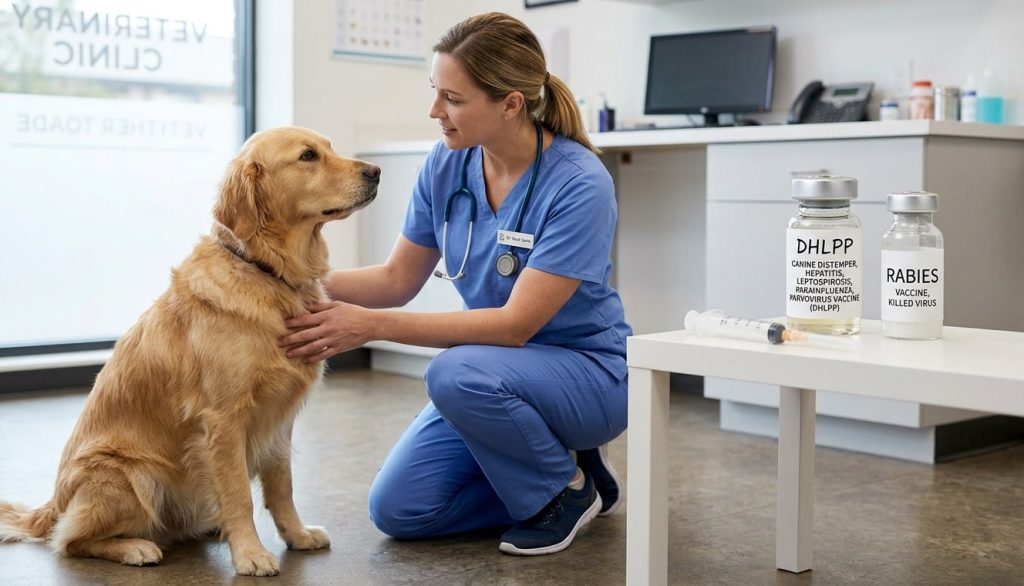
If you have ever stood at the veterinary reception desk staring at an itemized receipt, wondering why your pup just received a alphabet-soup combination shot alongside a Rabies booster, you are not alone. Navigating canine immunization schedules can feel like deciphering an encrypted code. Between state laws, booster timelines, and varying lifestyle risks, sorting out the DHLPP vs Rabies vaccine for dogs is one of the most critical responsibilities every dog owner faces.
Keeping dogs healthy, happy, and protected from preventable diseases is always a top priority. Having shared my home with multiple dogs over many years—from energetic, mud-loving retrievers to stubborn rescue mixes—I’ve sat in those clinical examination rooms more times than I can count. I have asked the tough questions, worried over post-shot naps, and tracked vaccination tags across multiple filing cabinets.
Understanding the differences between the DHLPP vs Rabies vaccine for dogs isn’t just academic; it directly affects your dog’s health, your wallet, and your legal standing as a pet owner in the United States. Let’s break down everything you need to know about these core shots, how they differ, and why your furry family member needs both.
Understanding the Basics: Core vs. Non-Core Dog Vaccines
Before comparing specific shots, it helps to understand how veterinarians categorize canine immunizations. Vaccines generally fall into two categories:
-
Core Vaccines: Recommended for all dogs regardless of breed, location, or lifestyle. These protect against widespread, life-threatening pathogens. Both Rabies and the core components of the DHPP/DHLPP series fall into this category.
-
Non-Core Vaccines: Recommended based on specific exposure risks, geographic location, or daily habits (e.g., Bordetella for dogs that frequent daycare, or Lyme disease shots for heavy hikers).
When evaluating the DHLPP vs Rabies vaccine for dogs, you are looking at two heavyweight pillars of canine preventive care. However, they target entirely different pathogens and carry very different regulatory implications.

Source: Pexels — Mikhail Nilov, A Veterinarian Vaccinating a Dog.
What Is the Rabies Vaccine?
The Rabies shot is the single most important vaccine your dog will ever receive—not just for their health, but for yours.
The Pathology of Rabies
Rabies is a fatal viral disease that attacks the central nervous system of mammals. It spreads primarily through saliva via bite wounds from infected wildlife (such as raccoons, skunks, bats, and foxes). Once clinical symptoms appear in a dog—ranging from severe behavioral changes and aggression to paralysis and difficulty swallowing—the disease is almost 100% fatal. There is no cure.
The Legal Mandate in the USA
Because Rabies is a zoonotic disease (meaning it can easily transmit from animals to humans with fatal consequences), it is heavily regulated. In almost every U.S. state, Rabies vaccination for dogs is strictly required by law.
Failing to keep your dog’s Rabies status current can result in hefty fines, difficulty licensing your pet, refusal of service at boarding or grooming facilities, and severe legal consequences if your dog bites someone. In a worst-case bite scenario, an unvaccinated dog may face mandatory quarantine at your expense or, tragically, euthanasia for testing.
What Is the DHLPP Vaccine?
While Rabies gets all the legal attention, the DHLPP vaccine acts as a comprehensive shield against five distinct, dangerous canine illnesses combined into a single shot.
The acronym DHLPP stands for:
-
D – Canine Distemper
-
H – Infectious Canine Hepatitis (Adenovirus Type 1 & 2)
-
L – Leptospirosis
-
P – Parainfluenza
-
P – Parvovirus
   ┌─────────────────────────────────────────────────────────────┐
   │                       DHLPP VACCINE                         │
   └──────────────────────────────┬──────────────────────────────┘
                                  │
      ┌──────────────┬────────────┼────────────┬──────────────┐
      ▼              ▼            ▼            ▼              ▼
  Distemper      Hepatitis   Leptospirosis Parainfluenza  Parvovirus
(Respiratory/  (Liver/Organ  (Bacterial/   (Respiratory   (Severe GI/
 Neurological)    Damage)     Zoonotic)     Kennel Cough) High Mortality)
Breaking Down the Components
1. Canine Distemper (D)
A highly contagious viral disease related to measles. It attacks a dog’s respiratory, gastrointestinal, and nervous systems. Distemper spreads through airborne exposure or shared water bowls. Symptoms include nasal discharge, severe coughing, fever, vomiting, and eventually muscular twitching, seizures, and paralysis. It carries a very high mortality rate, particularly in puppies.
2. Infectious Canine Hepatitis (H)
Caused by Canine Adenovirus Type 1, this virus targets the liver, kidneys, spleen, and lungs. Transmitted through infected bodily fluids, it causes fever, abdominal pain, jaundice, and severe liver inflammation.
3. Leptospirosis (L)
Unlike the other viral components in this vaccine, Leptospirosis is caused by spiral-shaped bacteria (Leptospira) found in wildlife urine, soil, and stagnant water. If your dog drinks from puddles, swims in ponds, or chases backyard wildlife, they face exposure risk.
Leptospirosis causes kidney failure, liver damage, and severe systemic disease. Crucially, Leptospirosis is zoonotic—it can pass from your dog to you and your family.
(Note: Some veterinary formulations omit the “L” and are labeled as DHPP or DAPP. However, most modern U.S. protocols favor including the Leptospirosis component due to expanding suburban wildlife interactions).
4. Canine Parainfluenza (P)
A contagious viral infection that contributes to upper respiratory disease complexes, commonly grouped under the term “kennel cough”. While rarely fatal on its own, it causes hacking coughs, nasal discharge, and secondary bacterial infections.
5. Canine Parvovirus (P)
Every experienced dog owner shudders at the word “Parvo.” Parvovirus is an incredibly resilient, fast-acting virus that attacks the gastrointestinal tract and bone marrow. It spreads via contaminated feces and can survive on surfaces, shoes, and soil for months. Parvo causes severe hemorrhagic (bloody) diarrhea, uncontrollable vomiting, extreme dehydration, and rapid shock. Without prompt, aggressive veterinary intervention, it is frequently fatal.

Source: McConnell Air Force Base / U.S. Air Force — Erin Hiskett administering a vaccination to a dog.
DHLPP vs Rabies Vaccine for Dogs: Key Differences
Understanding the structural contrast between the DHLPP vs Rabies vaccine for dogs helps clarify why your vet handles them differently during wellness exams.
| Feature / Aspect | Rabies Vaccine | DHLPP Vaccine |
| Pathogens Covered | Single virus (Rabies virus) | 5 pathogens (Distemper, Hepatitis, Leptospirosis, Parainfluenza, Parvo) |
| Type of Organisms | Viral | 4 Viral components + 1 Bacterial component (Leptospira) |
| Legal Mandate (US) | Mandatory by state/local laws | Strongly recommended core standard; rarely legally mandated |
| Zoonotic Potential | Yes (transmissible to humans with fatal results) | Partial (Leptospirosis can infect humans; others are canine-specific) |
| Initial Puppy Age | Typically 12 to 16 weeks | Begins early at 6 to 8 weeks |
| Booster Schedule | 1 year after initial, then every 3 years | Booster at 1 year; DHPP component every 3 years; Leptospirosis boosted annually |
| Primary Goal | Public health, legal compliance, disease prevention | Broad-spectrum personal protection for your dog |
When assessing the DHLPP vs Rabies vaccine for dogs, remember that Rabies protects society as a whole, while DHLPP provides a personal safety net for your dog’s daily life.
Vaccination Schedules: From Puppyhood to Senior Years
Proper timing is crucial when administering canine vaccines. Young puppies rely on maternal antibodies from milk, which gradually fade over their first few months. Vaccines must be stepped in carefully as maternal protection wears off.
PUPPY VACCINATION TIMELINE

6-8 Weeks          10-12 Weeks         14-16 Weeks        1 Year Mark
   │                    │                   │                  │
   ├── DHLPP #1         ├── DHLPP #2        ├── DHLPP #3       ├── DHLPP Booster
   │                    │                   ├── Rabies Shot    └── Rabies Booster
   ▼                    ▼                   ▼                  (Transition to
(Early Parvo/        (Leptospirosis       (Legal standard;     3-yr schedule)
 Distemper prot.)    added safely)        1-yr booster set)
1. Puppy Protocol (6 Weeks to 16 Weeks)
-
6 to 8 Weeks: First DHLPP shot.
-
10 to 12 Weeks: Second DHLPP booster.
-
14 to 16 Weeks: Third DHLPP booster + First Rabies Vaccine. (Note: In most U.S. states, Rabies cannot be legally administered prior to 12 weeks of age).
2. The Adult Booster Phase (1 Year and Beyond)
One year after completing the initial puppy series, your dog receives a 1-year booster for both shots. Following that 1-year milestone, modern veterinary protocols (guided by the American Animal Hospital Association / AAHA) recommend shifting to an extended schedule:
-
Rabies: Boosted every 3 years (using a state-approved 3-year labeled vaccine).
-
DHPP (Distemper, Hepatitis, Parvo, Parainfluenza): Boosted every 3 years.
-
Leptospirosis (The “L” in DHLPP): Boosted annually. Because bacterial immunity wanes faster than viral immunity, dogs in high-risk areas require yearly Lepto boosters to stay fully protected.
IMO, tracking your dog’s immunizations on a simple digital calendar beats frantically searching through desk drawers when booking a last-minute boarding spot.
DHLPP Vaccine Side Effects and Reactions
It is completely normal to feel protective when taking your dog in for shots. Seeing a tiny puppy or a senior dog get poked with needles isn’t fun for anyone. Understanding the difference between expected mild responses and actual dhlpp vaccine reactions helps provide peace of mind.
                  POST-VACCINE OBSERVATION
                             │
            ┌────────────────┴────────────────┐
            ▼                                 ▼
      EXPECTED / MILD                  CONCERNING / SEVERE
   (Monitor at home 24-48h)           (Requires immediate Vet)
   • Slight lethargy                  • Facial swelling / Hives
   • Mild soreness at site            • Persistent vomiting
   • Low-grade warmth                 • Difficulty breathing
Normal, Mild Reactions (What to Expect)
Within 24 to 48 hours after receiving shots, your dog’s immune system works hard building antibodies. You may notice:
-
Mild lethargy or extra napping.
-
Slight tenderness, redness, or a small bump at the injection site.
-
Reduced appetite for one or two meals.
-
A minor low-grade fever.
These are temporary signs that the vaccine is working as intended. Ensure your pet has a comfortable bed, fresh water, and time to rest quietly.
Managing Common DHLPP Vaccine Side Effects
If your dog seems stiff or tender around their shoulders after receiving a booster, hold off on strenuous fetch sessions or long runs for a day or two. Keep young children from hugging tender injection spots. Most mild dhlpp vaccine side effects resolve on their own within 2 days.
Adverse DHLPP Vaccine Reactions (When to Seek Immediate Help)
While serious adverse events are rare, true allergic responses can occur. Anaphylaxis typically develops rapidly—within minutes to a few hours following the injection. Contact an emergency vet immediately if you notice:
-
Facial swelling (puffiness around the muzzle, eyes, or neck).
-
Hives, severe itching, or sudden raised red bumps across the skin.
-
Persistent vomiting or sudden diarrhea.
-
Pale gums, weakness, collapse, or cold extremities.
-
Wheezing, coughing, or labored breathing.
If your dog has a history of sensitive reactions, talk to your veterinarian beforehand. They may recommend splitting up the shots—administering the Rabies vaccine on one visit and the DHLPP shot two weeks later—or pre-treating your dog with an antihistamine in the clinic.

Source: CDC Public Health Image Library (PHIL), Image ID 8333.
Practical Tips for Managing Vet Days
Over years of taking dogs in for routine wellness exams, I’ve developed a few simple habits that make vaccine days run much smoother for everyone involved:
-
Exercise before the visit: Take your dog on a relaxed walk before heading to the clinic. Burning off nervous energy helps keep their heart rate steady during injections.
-
Bring high-value rewards: Bring peanut butter (xylitol-free!), freeze-dried liver, or their favorite soft treat. Offering a reward during the injection creates positive associations.
-
Keep your cool: Dogs pick up on human anxiety instantly. If you are tense, your dog will assume something dangerous is happening. Stay calm and reassuring.
-
Plan a low-key evening: Don’t schedule grooming, dog park trips, or visitors on vaccine days. Let your pup rest quietly at home afterwards.
Are Vaccine Titers a Viable Alternative?
As pet parents become more conscious of over-vaccination, interest in vaccine titer testing has grown. A titer test measures the concentration of antibodies in a dog’s blood sample to confirm whether existing immunity remains strong.
-
For DHLPP Components: Titer tests for Distemper and Parvovirus are reliable and widely accepted by many veterinarians. If your adult dog shows high antibody titers, your vet may agree to delay the DHPP booster. However, Lepto titers are less predictive long-term, which is why annual Lepto boosters remain standard in high-risk regions.
-
For Rabies: While Rabies titers exist (such as the FAVN test used for international travel), they do not override legal mandates in most U.S. jurisdictions. Even if a titer shows high antibody levels, local laws typically require physical revaccination on a 1-year or 3-year cycle.
Frequently Asked Questions (FAQs)
Can my dog get the DHLPP vs Rabies vaccine for dogs on the same day?
Yes, most healthy adult dogs can safely receive both the DHLPP and Rabies vaccines during a single veterinary visit. However, if your dog is toy-sized, elderly, or has a history of vaccine sensitivities, your vet may suggest spacing the shots two to four weeks apart to minimize stress on their immune system.
What happens if I miss my dog’s booster deadline?
For Rabies, letting the shot lapse means your dog is legally considered unvaccinated, which can require restarting a 1-year series or facing quarantine rules if an incident occurs. For DHLPP, an overdue booster may mean your vet needs to re-administer a two-shot series rather than a single quick booster shot to restore immunity. Contact your clinic as soon as you realize you’re behind.
Does an indoor-only dog really need both vaccines?
Yes. Rabies is required by law regardless of your dog’s lifestyle because bats, raccoons, or squirrels can occasionally enter homes or garages. Meanwhile, airborne viruses like Parainfluenza and resilient pathogens like Parvovirus can be carried inside on your shoes or clothing.
What is the difference between DHPP and DHLPP?
The single letter L. DHPP covers Distemper, Hepatitis, Parainfluenza, and Parvovirus. DHLPP includes protection against Leptospirosis, a bacterial disease carried by wildlife urine. Your vet will recommend one over the other based on local Lepto risk factors.
How much do these vaccines typically cost in the U.S.?
On average, a Rabies vaccine costs between $20 and $45, while a combination DHLPP shot ranges from $30 to $60, depending on your region and clinic type. Low-cost community clinics, shelters, and mobile vet events often offer discounted packages for routine core vaccines.
Final Words
Navigating the DHLPP vs Rabies vaccine for dogs comes down to balancing broad viral protection with legal compliance. While the Rabies shot satisfies state health laws and guards against a fatal disease, the DHLPP series protects your companion against everyday environmental hazards like Parvovirus, Distemper, and Leptospirosis.
By maintaining a consistent vaccination schedule, watching for potential dhlpp vaccine reactions, and working closely with a trusted veterinarian, you give your dog the best possible protection. A short visit to the vet clinic every few years is a tiny price to pay for years of healthy tail wags, backyard fetch sessions, and couch cuddles.