Keeping up with your dog’s health can sometimes feel like managing a chaotic family calendar. Between grooming appointments, flea prevention schedules, and finding a toy that lasts longer than four minutes, veterinary visits tend to sneak up on you. If you have ever looked at your dog’s medical records and wondered, When Should a Dog Get a DHLPP Booster?, you are certainly not alone.
Vaccination schedules can get confusing quickly. Between core shots, non-core add-ons, and changing veterinary guidelines, it is easy to feel overwhelmed. Having spent decades sharing my home with dogs of all breeds and personality types—from energetic puppies who treat shoes as chew toys to calm senior dogs—I have navigated every combination of vaccine visits.
The DHLPP vaccine—often called the “5-in-1” combination shot—is one of the most vital protective measures in modern canine care. Knowing when your dog needs a booster shot is essential to keeping them protected without over-vaccinating.
What Is the DHLPP Vaccine and What Does It Protect Against?
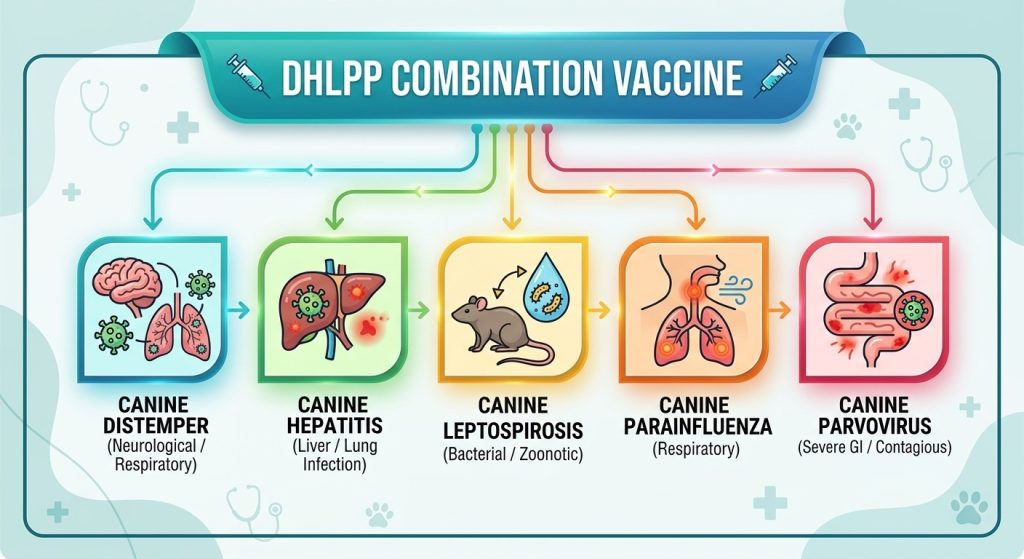
Before answering When Should a Dog Get a DHLPP Booster?, it helps to understand what those five letters actually mean. DHLPP is a combination vaccine that protects against five severe, highly contagious, and potentially fatal canine diseases:
-
D – Canine Distemper: A dangerous viral disease affecting a dog’s respiratory, gastrointestinal, and nervous systems.
-
H – Infectious Canine Hepatitis (Adenovirus Type 1 & 2): A viral infection that targets the liver, kidneys, spleen, and lungs.
-
L – Leptospirosis: A bacterial infection spread through urine-contaminated water or soil. It affects both dogs and humans (a zoonotic disease) and can cause severe liver or kidney failure.
-
P – Canine Parainfluenza: A respiratory virus that contributes to upper respiratory infections and kennel cough symptoms.
-
P – Canine Parvovirus: A dangerous, highly contagious virus that attacks the gastrointestinal tract, causing severe vomiting, bloody diarrhea, and rapid dehydration.
Is DHLPP Necessary for Dogs?
A common question pet parents ask during routine wellness checkups is: is dhlpp necessary for dogs who spend most of their time indoors?
Except in rare circumstances where a dog has a severe medical contraindication or autoimmune disorder, the protection offered by the DHLPP combination far outweighs the minimal risk of temporary soreness after the shot.
The Complete Timeline: When Should a Dog Get a DHLPP Booster?
Determining When Should a Dog Get a DHLPP Booster? depends primarily on your dog’s age, vaccination history, and lifestyle factors. Veterinary protocols established by the American Animal Hospital Association (AAHA) provide a clear framework.
1. The Puppy Vaccination Series (6 to 16 Weeks)
Puppies receive temporary maternal antibodies from their mother’s milk, but these antibodies gradually fade between 6 and 16 weeks of age. During this window, maternal antibodies can block a vaccine from working properly, which is why a series of boosters is necessary rather than a single shot.
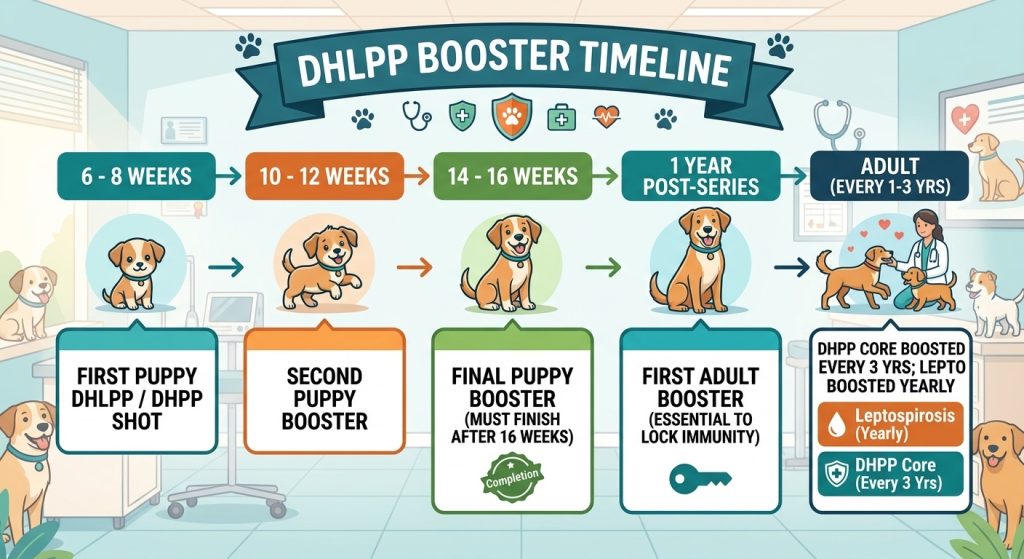
- First Dose: 6 to 8 weeks old
- Second Dose: 10 to 12 weeks old
- Third/Final Puppy Dose: 14 to 16 weeks old
FYI: The final puppy dose must be administered at or after 16 weeks of age to ensure full protection as maternal antibodies dissipate.
One year after your puppy completes their initial puppy series (around 12 to 16 months of age), they require their first adult booster.
This single booster is arguably the most important shot in your dog’s life—it seals long-term immunological memory. If you are wondering When Should a Dog Get a DHLPP Booster? after the puppy phase, calendar this appointment exactly 12 months after their final puppy shot.
Once your dog receives their 1-year adult booster, the schedule shifts. However, this is where many dog owners get confused:
- The DHPP Component (Viral): Current AAHA guidelines indicate that viral protection (Distemper, Hepatitis, Parvovirus, Parainfluenza) lasts significantly longer than previously thought. For adult dogs, a DHPP booster is recommended every 3 years.
- The “L” Component (Leptospirosis): Immunity against the bacterial Leptospira organism wanes much faster than viral immunity. Therefore, the Leptospirosis component requires an annual booster (every 12 months).
Life happens. Sometimes medical records get lost, or you adopt a rescue dog with zero health history. Knowing When Should a Dog Get a DHLPP Booster? in these scenarios requires a slightly tailored approach.
Adopted Adult Dogs with Unknown Vaccine History
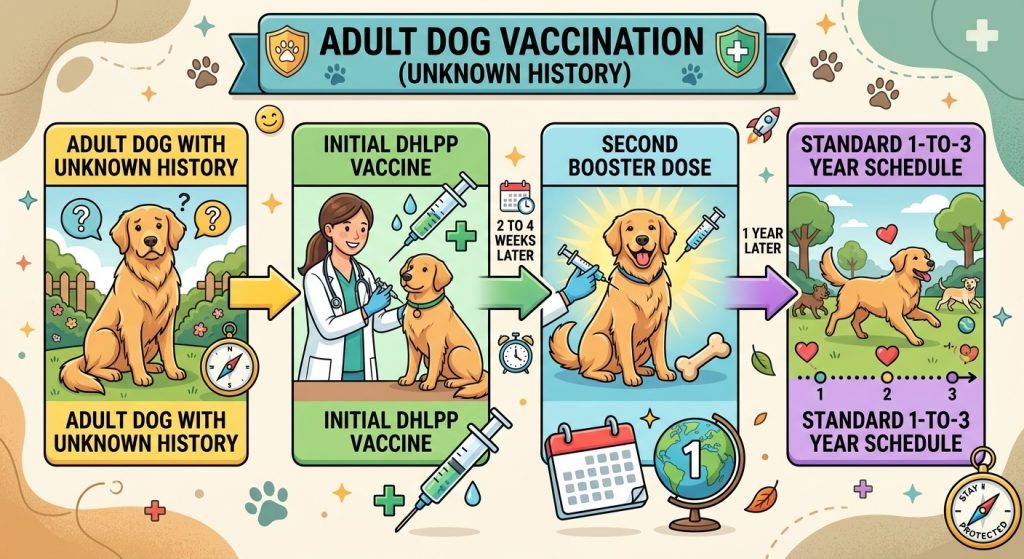
If you adopt a stray or rescue dog without medical documentation, assume they are unvaccinated.
Rather than repeating an entire puppy series, adult dogs with unknown history usually receive one initial DHLPP shot, followed by a booster 2 to 4 weeks later. After that initial two-shot sequence, they enter the standard adult schedule (a booster 1 year later, then every 1 to 3 years).
Overdue Boosters: What If You Missed the Window?
If your adult dog is a few months overdue for their 3-year DHPP or annual Lepto shot, do not panic.
- Overdue by less than 2-3 months: A single booster shot is typically sufficient to bring immunity back up to strength.
- Overdue by a year or more: Your vet may recommend giving two doses spaced 2 to 4 weeks apart, particularly to ensure proper Leptospirosis protection.
As dogs reach their golden years, some owners worry about over-vaccination. If you are questioning When Should a Dog Get a DHLPP Booster? for a senior dog with underlying health conditions, ask your vet about vaccine titer testing.
A titer test is a simple blood test that measures the concentration of antibodies against distemper and parvovirus in your dog’s bloodstream. If antibody levels remain high, your vet may issue a booster waiver for the viral components. Keep in mind, however, that titers for Leptospirosis are less reliable, meaning annual Lepto boosters are usually still recommended for dogs in high-risk areas.
What to Expect After the Shot: Normal Reactions vs. Warning Signs
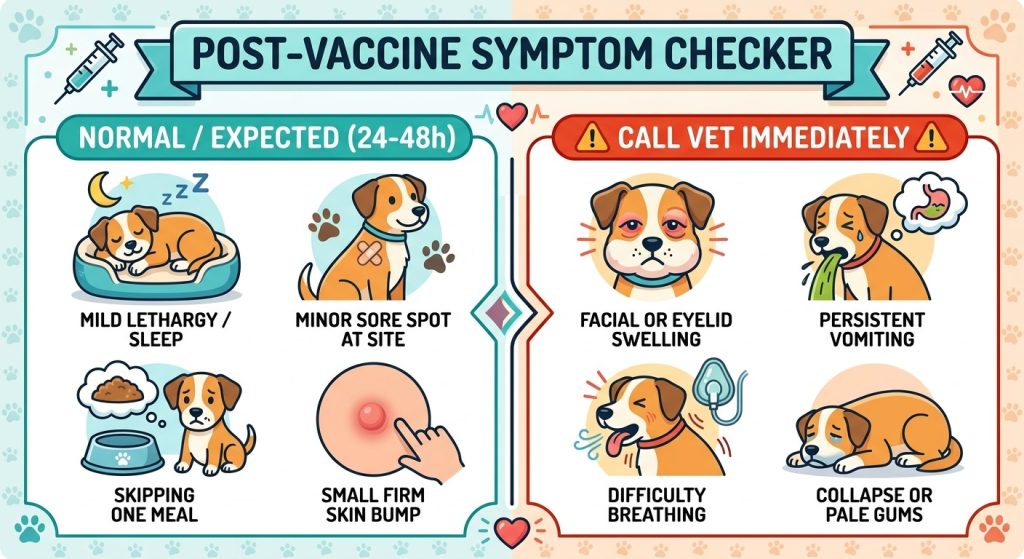
Vaccines work by stimulating the immune system to produce antibodies. Because of this, mild lethargy or slight soreness at the injection site is entirely normal for 24 to 48 hours following a vet visit.
Normal, Mild Reactions
-
Slight decrease in energy or sleeping more than usual
-
Mild soreness or stiffness near the shoulder blades/neck where the shot was given
-
A slight reduction in appetite for one or two meals
-
A small, firm bump under the skin at the injection site (which should gradually disappear over 2 to 4 weeks)
When to Contact Your Veterinarian
While severe allergic reactions (anaphylaxis) are extremely rare, they usually occur within minutes to hours of vaccination. Seek immediate veterinary care if you observe:
-
Facial swelling, hives, or swelling around the muzzle and eyes
-
Persistent vomiting or severe diarrhea
-
Difficulty breathing or heavy wheezing
-
Sudden collapse or pale gums
To keep your pup comfortable during post-vaccine downtime, set up a quiet, cushioned space with a orthopedic dog bed, low ambient noise, and easy access to fresh water. Providing a soft enrichment toy, like a stuffed peanut-butter lick mat or interactive puzzle feeder, keeps their mind gently occupied without putting physical stress on their body.
Frequently Asked Questions About DHLPP Boosters
What is the difference between DHPP and DHLPP?
The only difference is the letter L, which stands for Leptospirosis. DHPP is a 4-in-1 vaccine covering Distemper, Hepatitis, Parainfluenza, and Parvovirus. DHLPP adds protection against Leptospirosis bacteria, which is transmitted through wild animal urine and contaminated water or soil.
Can my dog get sick from the DHLPP booster?
No. The viral components of the vaccine are modified-live or inactivated, meaning they cannot cause the actual diseases. Your dog may feel slightly sluggish or low-energy for a day because their immune system is working hard to create antibodies, but this is a sign of a healthy immune response, not illness.
How much does a DHLPP booster shot cost in the US?
In the United States, a single DHLPP booster shot typically ranges from $25 to $50 at standard veterinary clinics. Mobile vaccine clinics or non-profit humane societies often offer them for $15 to $30. Keep in mind that full-service veterinary clinics usually require a routine physical exam fee ($45 to $80) alongside the vaccine cost.
What happens if I miss my dog’s DHLPP booster date by a few months?
If your adult dog was previously fully vaccinated, missing the booster date by a couple of months is rarely a catastrophe. Schedule an appointment with your vet as soon as you notice. Depending on how much time has passed, your vet will either administer a single booster or recommend a brief 2-shot reset.
Does my dog need a DHLPP booster if they never leave our fenced yard?
Yes. Wildlife like squirrels, raccoons, opossums, and rodents can easily enter fenced yards, leaving behind urine that carries Leptospirosis bacteria. Furthermore, Parvovirus is notoriously resilient and can be tracked into your yard or home on footwear. Maintaining a regular vaccination schedule ensures your dog remains safe regardless of their routine.
Final Words
Understanding When Should a Dog Get a DHLPP Booster? boils down to three milestone stages: completing the initial puppy series by 16 weeks, securing that crucial 1-year adult booster, and then maintaining a regular 1-to-3 year schedule recommended by your veterinarian.
Our dogs give us unconditional love, loyalty, and entertainment every single day. Keeping their core vaccinations up to date is one of the simplest, most effective ways we can protect their health in return. If you are unsure where your pup stands on their shot record, give your vet’s office a quick call today—their front desk staff will happily look up your dog’s chart and help you stay on track! 🙂