

Late one October evening, I was sitting on my back porch sipping tea when I caught a pair of glowing eyes near the edge of the woods. It was a healthy, full-grown red fox. Standing on the fence line just ten feet away was my tuxedo cat, Jasper, casually grooming his left ear. My heart jumped into my throat. I held my breath expecting a dramatic confrontation, but what happened next surprised me: the fox looked at Jasper, Jasper blinked lazily at the fox, and both walked in opposite directions as if they had a mutual union contract requiring them to ignore each other.
If you share your home with a feline adventurer, you have likely found yourself staring out the window at dusk asking the pivotal question: Are Foxes Dangerous to Outdoor Cats?
It is a completely rational worry. Seeing a wild canine lurking near your backyard triggers every protective instinct you have as a pet parent. If you have been wondering are foxes dangerous to outdoor cats, the short answer is that while attacks can happen under specific circumstances, foxes are rarely the ruthless cat hunters rural legends make them out to be.
Let’s look at the real-world facts, wildlife statistics, and practical steps you can take to keep your free-roaming companion safe from urban and suburban wildlife.
Understanding the Threat: Are Foxes Dangerous to Outdoor Cats?
To understand whether are foxes dangerous to outdoor cats, we have to examine the physical matchup between a standard domestic feline and a wild red or gray fox.
Wild foxes in North America typically weigh between 8 to 15 pounds. Interestingly, the average adult domestic house cat weighs anywhere from 8 to 12 pounds—and some Maine Coon mixes easily tip the scales at 18 pounds! When evaluating a fox vs cat physical matchup, they are surprisingly evenly matched in body weight.
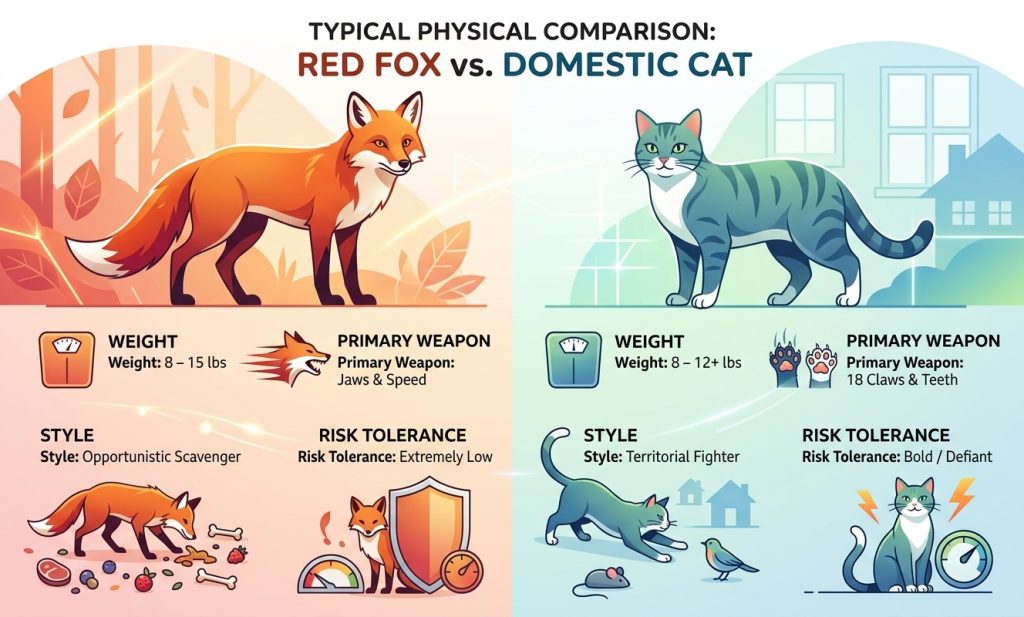
A wild fox relies entirely on its physical health to hunt mice, voles, rabbits, and insects. If a fox suffers a severe scratch to its eye or an infected bite on its nose, its ability to hunt drops drastically, which can lead to starvation.
Cats, on the other hand, carry eighteen needle-sharp claws, a mouth full of bacteria-laden teeth, and zero hesitation when cornered. A healthy adult cat presents far too much defensive firepower for a fox to consider it an “easy meal.”
Veterinary research backs this up. Large-scale epidemiological studies tracking urban cat injuries show that cats are roughly 40 times more likely to sustain bite wounds from territorial fights with other neighborhood cats, and 14 times more likely to be hit by a car, than to be attacked by a fox.
In fact, most veterinarians in suburban practices report seeing zero confirmed fox bites in a given year. The statistical answer to are foxes dangerous to cats is that they pose a remarkably low direct physical threat compared to everyday suburban hazards.
Do Foxes Hunt Cats or Is It Just Scavenging?
A common myth among backyard wildlife watchers is that foxes actively prowl neighborhoods searching for domestic pets to hunt. So, do foxes hunt cats as a standard food source?
The short answer is no. Foxes are opportunistic omnivores and scavengers, not apex big-game hunters. Their natural diet consists of small rodents, fallen fruit, earthworms, bird eggs, and whatever garbage humans leave unsecured. Hunting a fast, agile predator like a domestic cat violates a fox’s basic survival calculus: high risk for a low-margin reward.

When a fox does consume cat meat, it is almost always a case of scavenging roadkill rather than an active kill. If someone spots a fox carrying a dead cat across a street, it is easy to assume an attack occurred, but necropsies routinely reveal the cat was initially struck by a vehicle.
Vulnerability Factors: When Are Foxes Dangerous to Outdoor Cats?
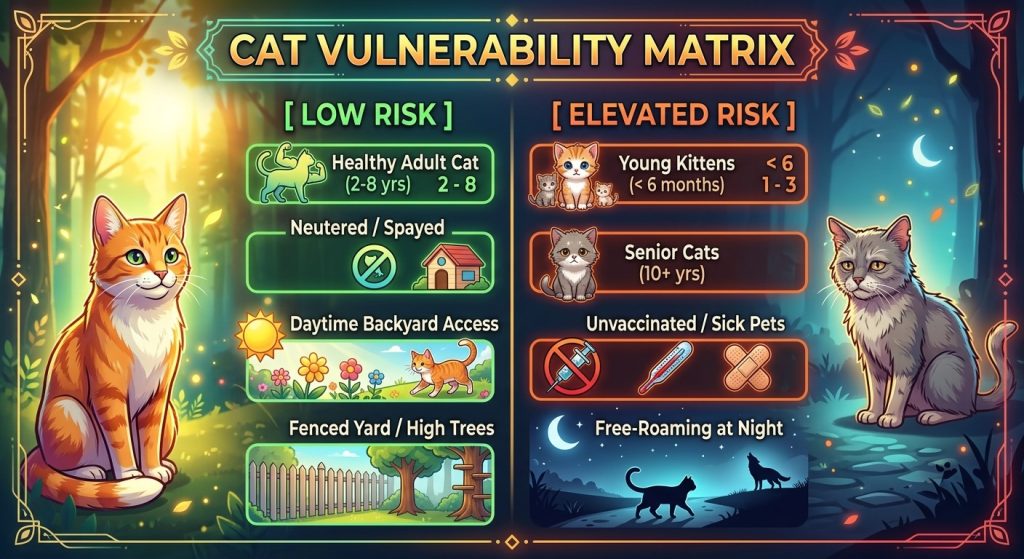
While a healthy adult feline can usually hold its ground or climb a tree to safety, the equation changes under specific conditions. Knowing when are foxes dangerous to outdoor cats helps you assess your own yard’s risk level.
1. Young Kittens and Small Breeds
Kittens under six months old lack the size, experience, and defensive claws necessary to deter a wild predator. To an adult fox searching for quick nourishment, a 2-pound kitten looks no different than a wild rabbit. If you have young kittens, keep them strictly indoors until they are fully grown and spayed or neutered.
2. Senior, Sick, or Disabled Felines
Elderly cats dealing with arthritis, vision loss, or chronic renal disease cannot move quickly or defend themselves effectively. A fox that would normally back away from a bold 4-year-old tomcat might recognize weakness in an ailing senior cat.
3. Springtime Cub Season (Defensive Aggression)
During spring (typically April through June), female foxes (vixens) are raising cubs in hidden dens under backyard sheds, decks, or wooded brush lines. If an overly curious cat wanders too close to a fox den, the mother fox will aggressively defend her offspring. These encounters are not motivated by hunting, but by parental protection.
4. Competition Over Pet Food Scraps
Leaving bowls of dry kibble or wet cat food on your back porch is an open invitation to wild animals. When a hungry fox and a protective cat arrive at the same food bowl simultaneously, a territorial fight can break out over the meal.
Secondary Health Risks: Diseases, Mange, and Rabies
When owners ask are foxes dangerous to outdoor cats, they often focus entirely on bites and scratches. However, secondary disease transmission is sometimes a more realistic concern than physical combat.
Sarcoptic Mange
Sarcoptic mange is caused by microscopic mites (Sarcoptes scabiei) that burrow into the skin, leading to intense itching, hair loss, and crusty lesions. Urban foxes frequently suffer from severe mange infestations. While transmission requires close physical contact or shared sleeping bedding, indoor-outdoor cats that explore under sheds where mangy foxes nest can contract the mites.
Rabies Virus
In North America, foxes are considered a primary rabies vector species alongside raccoons, skunks, and bats. While rabies outbreaks vary greatly by state, an unvaccinated cat bitten by a rabid fox faces a fatal outcome. Ensuring your pet stays up to date on rabies vaccinations is non-negotiable for outdoor access.
Fleas, Ticks, and Internal Parasites
Foxes carry wild flea populations and ticks that transmit Lyme disease and Anaplasmosis. They can also shed intestinal parasite eggs (like roundworms) in their feces. If your cat frequents areas where foxes mark territory, routine vet-recommended flea and tick preventatives are essential.
Practical Prevention: Protecting Your Outdoor Cat
You do not have to banish your pet to a life of staring longingly out the window to keep them safe. Implementing a few smart habitat tweaks and protective items allows you to grant outdoor enrichment while neutralizing wildlife dangers.

Secure the Yard with Motion-Activated Deterrents
Foxes rely on stealth and hate sudden surprises. Installing motion-activated solar LED spotlights or water sprinklers along your fence line creates an unwelcome environment for wild visitors. Ultrasonic animal repellents that emit high-frequency sound waves can also discourage foxes from frequenting your perimeter.
Upgrade to an Enclosed Outdoor Catio
IMO, an enclosed outdoor cat playpen (commonly called a “catio”) is the absolute gold standard for pet safety. These mesh-enclosed structures connect directly to a window or patio door, giving your cat fresh air, sunshine, and bird-watching access while keeping them 100% protected from foxes, coyotes, and cars.

Install a Microchip Selective-Entry Cat Door
If your cat uses a traditional flap door, an intrepid urban fox or raccoon can potentially follow them inside your home during the night. A microchip-activated pet door scans your cat’s unique microchip, unlocking only for registered pets and keeping wild animals locked outside.
Utilize GPS Collar Trackers
If your feline friend is a persistent roamer who dislikes enclosure boundaries, attaching a lightweight GPS collar tag gives you real-time location tracking and safe zone alerts on your smartphone. Knowing where your cat hangs out at dusk takes the guesswork out of evening call-ins.
Enforce a Dusk-to-Dawn Curfew
Both foxes and domestic cats are crepuscular—meaning they are most active during dawn and dusk—and nocturnal. Restricting your cat’s outdoor access strictly to daylight hours slashes their chance of wild animal encounters by over 80%.
Medical Care: When to Visit a Vet After a Wildlife Sighting
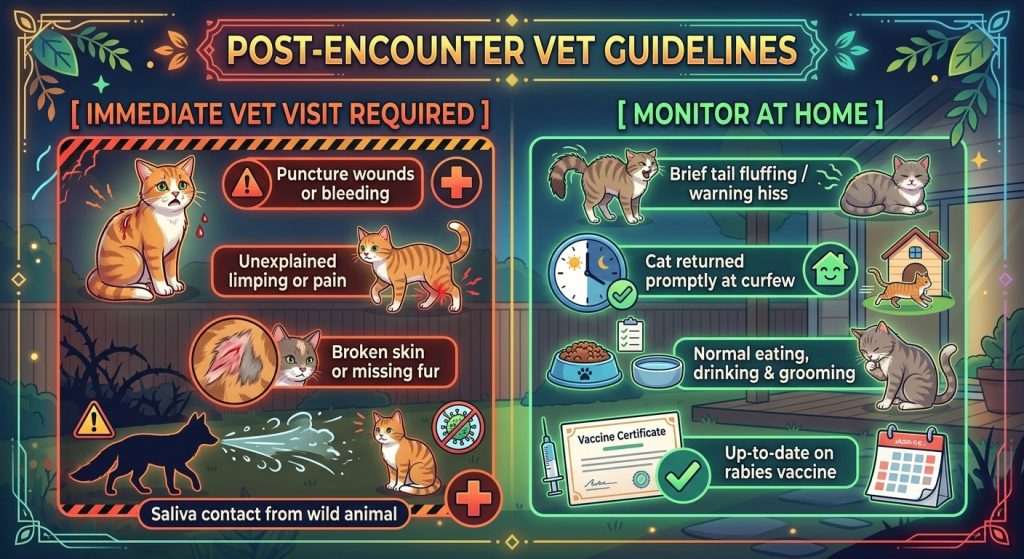
If your cat comes home after an encounter with a fox—or simply returns with unexplained injuries—prompt medical attention is crucial.
Immediate Red Flags Requiring Urgent Vet Care:
-
Puncture Wounds: Bite marks from wild animals often look small on the surface but carry heavy bacteria deep beneath the skin, forming painful abscesses within 24 to 48 hours.
-
Limping or Stiffness: Indicates potential muscle trauma, joint damage, or impact injuries sustained during an escape climb.
-
Torn Ears or Scratched Eyes: Requires professional antibiotic eye drops or minor wound care to prevent permanent damage.
-
Unvaccinated Saliva Exposure: If an unvaccinated cat comes into physical contact with a wild fox, contact your vet immediately for a booster rabies vaccine and quarantine instructions.
When reassuring pet owners asking are foxes dangerous to outdoor cats, veterinarians consistently stress that early wound flushing and antibiotic treatment turn potential emergencies into minor recoveries.
Frequently Asked Questions
Will a red fox actively stalk my cat in broad daylight?
Knowing are foxes dangerous to outdoor cats helps put daylight sightings in perspective. Red foxes are naturally timid around humans and rarely attack cats during the day. If you see a fox during daylight hours, it is usually just searching for squirrels or returning to a den. Unless the fox appears visibly sick, disoriented, or aggressive, it poses little threat to a healthy daylight-roaming cat.
Do foxes eat domestic cats if food is scarce during winter?
While winter forces wildlife to scavenge more aggressively, healthy cats remain a high-risk target. A hungry fox will seek out unsecured garbage, birdseed, or dead carrion long before attempting to hunt a live, clawed adult cat.
Can my indoor-outdoor cat catch diseases from a fox without fighting?
Yes, indirect transmission is possible. Cats can pick up flea infestations, tick-borne illnesses, or sarcoptic mange mites by investigating brush piles, shed undersides, or bedding spots where an infected fox recently rested.
What should I do if a fox enters my backyard while my cat is outside?
Do not run or scream hysterically, as this can startle both animals into an unpredictable reaction. Clap your hands loudly, blow a whistle, or spray a garden hose near the fox. Foxes are skittish and will almost always bolt over the nearest fence when confronted with loud noises. FYI, carrying an air horn during evening check-ins works wonders 🙂
Are coyotes more dangerous to cats than foxes?
Yes, significantly so. While a fox vs cat encounter usually results in a standoff, coyotes are larger pack predators that actively hunt domestic cats as prey. If coyotes operate in your geographic area, strict outdoor supervision or a secure catio is mandatory.
Final Words on Protecting Your Feline Companion
When considering are foxes dangerous to outdoor cats, the balance of evidence offers genuine peace of mind. For the vast majority of healthy, adult domestic cats, a backyard fox is simply a wild neighbor to be watched from a safe distance rather than a lethal predator.
By removing food attractants from your yard, keeping kittens inside, enforcing a night curfew, and utilizing smart safety gear like microchip cat doors and catios, you can let your pet enjoy the great outdoors with confidence. Wild animals are part of living alongside nature—and with a few practical precautions, your feline companion can stay happy, healthy, and safe.









