
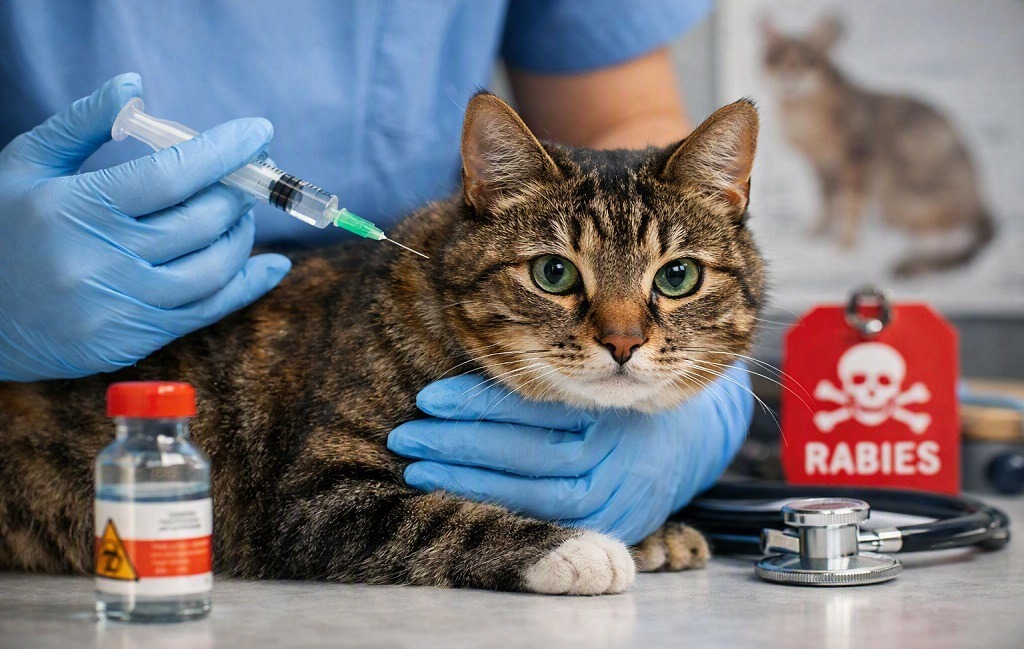
If you’re wondering how long does a cat rabies vaccine last, the short answer is: usually one or three years, depending on the specific vaccine, the cat’s vaccination history, and applicable state or local requirements. Some licensed rabies vaccines for cats are labeled for three years after the appropriate repeat dose, while other products are labeled for one year. Your veterinarian should follow the vaccine’s label and the laws where you live.
That distinction matters. A vaccine’s biological duration of immunity and the date your cat is legally considered currently vaccinated are not necessarily identical questions.
After caring for pets for many years, I’ve learned that vaccination records are one of those boring little pieces of paperwork that become extremely important when you actually need them. Keep that certificate somewhere safe. Your future self may thank you.
What Does a Cat Rabies Vaccine Do?
Rabies is a viral disease that affects the nervous system and is almost always fatal once clinical signs develop. It can infect mammals, including cats and humans, and is generally transmitted through the saliva of an infected animal, most commonly through a bite.
A rabies vaccine for cats trains the immune system to recognize the rabies virus and mount a protective response. Vaccination is considered a core component of feline preventive healthcare by the AAHA/AAFP guidelines.
The vaccine does not guarantee that a vaccinated cat can never become infected. However, maintaining current vaccination substantially improves protection and is an important part of rabies prevention.
For U.S. cat owners, vaccination also has a public-health and legal dimension. Rabies vaccination requirements vary by state and local jurisdiction, so your veterinarian needs to consider both the vaccine product and the applicable regulations.
How Long Does a Cat Rabies Vaccine Last?
So, how long does a cat rabies vaccine last?
The practical answer is one year or three years, depending on the product and circumstances.
AAHA/AAFP guidance states that rabies vaccination should follow the vaccine manufacturer’s label and local laws. Where laws permit, the guidelines recommend a three-year vaccination interval when a three-year-labeled vaccine is used.
For example, one licensed feline rabies product from Merck Animal Health is labeled to provide at least three years of immunity in cats after a repeat dose. That does not mean every rabies vaccine given to every cat has the same duration.
This is why searching online for one universal answer to how long does a cat rabies vaccine last can become confusing. Two cats living in different circumstances may have different vaccination schedules even though both are healthy adult cats.
1-Year Rabies Vaccines for Cats
Some rabies vaccines are labeled for one year. If your veterinarian uses a one-year product, the cat generally needs revaccination according to that product’s label and applicable law.
The important word here is label.
Don’t assume that because a friend’s cat received a three-year vaccine, your cat automatically has three years of coverage. The product administered to your cat matters.
3-Year Rabies Vaccines for Cats
Three-year rabies vaccines are also available for cats in the United States.
For example, NOBIVAC 3-Rabies is labeled for use in healthy cats 12 weeks of age or older and has demonstrated at least three years of duration of immunity in cats after a repeat dose.
However, the vaccination history still matters. Initial vaccination, subsequent boosters, product labeling, and local regulations all need to be considered.
In other words, don’t look at the word “3-year” on a vaccine and assume it answers every question about your cat’s vaccination status. Veterinary medicine rarely rewards that kind of shortcut. 🙂
Cat Rabies Vaccine Schedule: When Should Cats Get Rabies Vaccine?
The question when should cats get rabies vaccine does not have one identical answer for every cat in every state.
The timing depends on the vaccine product, the cat’s age, vaccination history, and state or local requirements. AAHA/AAFP specifically recommends following the vaccine label and local laws for feline rabies vaccination.
Kittens
Most cats receive their first rabies vaccination when they are old enough according to the vaccine label and applicable law. CDC guidance says most cats, dogs, and ferrets should not be vaccinated before 3 months (12 weeks) of age because the immune response in very young animals is not as strong.
Your veterinarian may therefore recommend the kitten rabies vaccine around this age, subject to the specific product and local regulations.
After the initial vaccination, the kitten’s future schedule depends on the product and local requirements.
Adult Cats
Adult cats should remain on an appropriate rabies vaccination schedule even if they spend most or all of their time indoors.
For an adult cat, the relevant questions include:
- Which rabies vaccine was previously administered?
- Was it labeled for one year or three years?
- When was the last vaccination?
- Was the cat’s initial vaccination completed?
- What does your state or local law require?
These details are more useful than simply counting months since the last veterinary visit.
Previously Vaccinated Cats
A cat with a documented vaccination history may have different requirements from a cat with no documented vaccination history.
If your cat has been vaccinated previously but the certificate is missing, ask the veterinary clinic whether they can retrieve the record. If the previous clinic is unavailable, your veterinarian can help determine the appropriate next step.
Good records can prevent unnecessary confusion—and occasionally an unnecessary argument with a calendar.
How Often Do Indoor Cats Need Rabies Shots?
This is one of the most common questions from cat owners: how often do indoor cats need rabies shots?
Being an indoor cat does not automatically eliminate the need for rabies vaccination.
AAHA/AAFP recommends rabies vaccination for cats even in jurisdictions where vaccination is not legally required, with Hawaii noted as an exception in its guidance. The organization also emphasizes that rabies vaccination requirements can vary by state and locality.
Why vaccinate a cat that never goes outside?
Because “indoor” does not always mean “zero exposure.”
A bat can enter a house. A cat can escape through an open door. Wildlife can enter garages or enclosed areas. A household may also move to a new location where rabies risk and regulations differ.
I’ve always considered this one of those situations where prevention makes more sense than trying to calculate the odds after something has already gone wrong.
So if you’re asking how long does a cat rabies vaccine last specifically because your cat is indoor-only, don’t assume that indoor status changes the vaccine’s labeled duration. The vaccine product and applicable requirements still matter.
What Happens If a Cat’s Rabies Vaccine Is Overdue?
If your cat’s rabies vaccine is overdue, don’t panic—but don’t simply ignore it either.
The appropriate response depends on the cat’s previous vaccination history, the vaccine used, how long it has been overdue, and state or local regulations.
AAHA/AAFP notes that in a majority of jurisdictions requiring rabies vaccination, a single booster for an otherwise healthy cat with documented previous vaccination may be considered an immunizing dose, regardless of how much time has passed. However, some jurisdictions have different requirements, including situations where additional doses may be required.
CDC guidance states that animals with any vaccination history are considered vaccinated immediately after a booster, even if the animal was overdue.
This is one reason you should contact your veterinarian rather than trying to restart a vaccination schedule based on information from a random internet forum.
If the vaccine is overdue, take the vaccination certificate with you if available.
How Long Does It Take for a Rabies Vaccine to Become Effective?
Duration and onset of protection are two different questions.
For an animal receiving its initial rabies vaccination, CDC states that the animal is considered immunized 28 days after the first vaccination. Animals with any vaccination history are considered vaccinated immediately following a booster, even when the booster was overdue.
That distinction is particularly important if a cat has recently been exposed to a potentially rabid animal.
If your cat has been bitten, scratched, or otherwise exposed to a suspected rabid animal, do not simply wait for the vaccine to “kick in.” Contact your veterinarian and local public-health authorities immediately.
Cat Rabies Vaccine Side Effects
Most cats tolerate vaccination without serious problems, although mild reactions can occur.
A cat may experience temporary:
- Tiredness
- Mild soreness at the injection site
- Reduced appetite
- Low-grade discomfort
More serious reactions are uncommon but can occur. Contact your veterinarian promptly if your cat develops significant swelling, difficulty breathing, repeated vomiting, collapse, severe weakness, or other concerning symptoms after vaccination.
The AAHA/AAFP guidelines emphasize individualized vaccination decisions and consideration of the cat’s health status and circumstances.
Don’t skip future vaccinations because of a mild reaction without discussing it with your veterinarian. Your vet can review the reaction and determine the safest approach for future vaccination.
Why Rabies Vaccination Still Matters for Indoor Cats
Indoor cats can have a remarkably comfortable life: food bowl, warm bed, window entertainment, and an impressive ability to demand attention at precisely the wrong time.
But comfortable does not mean completely risk-free.
Rabies is maintained in wildlife populations in the United States, and cats can encounter wildlife even when their normal lifestyle is strictly indoors. CDC recommends keeping pets up to date on rabies vaccination as part of rabies prevention.
An indoor cat that accidentally escapes can also encounter an unfamiliar animal.
For that reason, responsible vaccination is about managing risk rather than predicting that an exposure will happen.
When Should You Contact a Veterinarian?
Talk with your veterinarian if:
- You don’t know when your cat last received a rabies vaccine.
- You don’t know whether the vaccine was labeled for one year or three years.
- Your cat’s rabies vaccine is overdue.
- Your cat has never received a rabies vaccine.
- Your cat was bitten or scratched by another animal.
- Your cat encountered a bat or wild mammal.
- Your cat had a concerning reaction after vaccination.
- You are moving to another state.
- You need documentation for boarding, travel, licensing, or other requirements.
If a cat has potentially been exposed to rabies, treat the situation as urgent. Rabies is nearly always fatal once clinical disease develops, so exposure management should involve veterinary and public-health professionals rather than home observation alone.
5 Frequently Asked Questions
1. How long does a cat rabies vaccine last?
A cat rabies vaccine may be labeled for one year or three years, depending on the specific licensed product and vaccination circumstances. AAHA/AAFP recommends following the manufacturer’s label and local laws.
Therefore, how long does a cat rabies vaccine last cannot be answered accurately by giving every cat the same number.
2. How often do indoor cats need rabies shots?
Indoor cats should follow an appropriate rabies vaccination schedule based on the vaccine label, vaccination history, and applicable state or local requirements. Indoor living does not automatically eliminate rabies exposure risk.
If you’re asking how often do indoor cats need rabies shots, check the vaccination certificate and ask your veterinarian which product was used.
3. When should cats get rabies vaccine?
Most cats receive their first rabies vaccine when they are at least around 12 weeks old, depending on the specific product and applicable law. CDC states that most cats should not be vaccinated before 3 months of age.
The exact when should cats get rabies vaccine schedule should be confirmed with your veterinarian.
4. What happens if my cat’s rabies vaccine is overdue?
An overdue cat should be evaluated by a veterinarian. Depending on vaccination history and local rules, a booster may restore current vaccination status without restarting the entire series. Requirements vary by jurisdiction.
5. Can a cat still get rabies after vaccination?
No vaccine provides an absolute guarantee, but rabies vaccination is an important preventive measure and is highly effective when administered appropriately. If a vaccinated cat is exposed to a suspected rabid animal, contact a veterinarian and public-health authorities immediately rather than assuming the vaccination makes the exposure irrelevant.
Final Words
So, how long does a cat rabies vaccine last? In the United States, the answer is generally one or three years depending on the specific vaccine and circumstances, but the legally relevant schedule can also depend on state and local requirements.
The safest approach is simple: keep your cat’s vaccination records, know which rabies product was used, follow the veterinarian’s recommended schedule, and check local requirements when necessary.
And if you’re wondering how long does a cat rabies vaccine last because your cat’s vaccination is coming due, don’t guess based on another cat’s schedule. Check the actual vaccination record.
A few minutes spent confirming the correct date is considerably easier than trying to sort everything out after a potential rabies exposure. FYI, that is one calendar reminder worth keeping.