
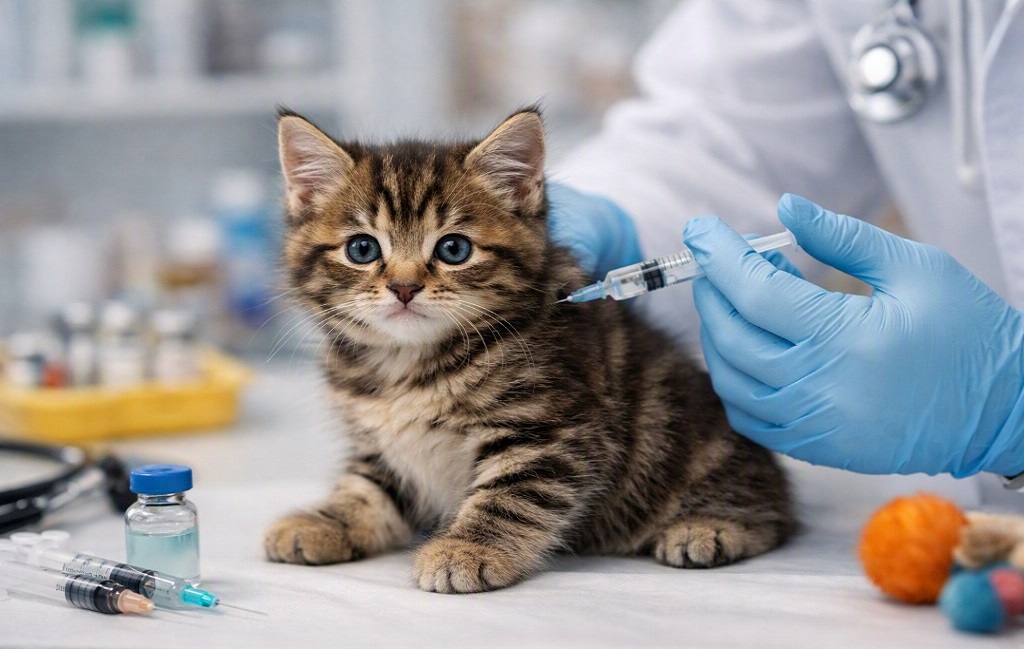
Taking home a new kitten is equal parts pure bliss and chaotic fever dream. One minute they are sleeping peacefully on your chest like a tiny angel, and the next, they are scaling your living room curtains at 3:00 AM because an imaginary speck of dust offended them. Having shared my home with cats, dogs, and everything in between over the last 15 years, I can tell you that those early fuzzy weeks pass in a blink. But amidst the litter box training, scratch-post introductions, and endless photo shoots, there is one non-negotiable responsibility every cat parent must master: establishing a proper kitten vaccination schedule.
If you are a first-time cat parent living in the US, navigating veterinary medicine can feel overwhelming. Between confusing vaccine acronyms, varying municipal rabies laws, and the myth that indoor cats are somehow immune to diseases, it is easy to freeze up.
Keeping your little fur-ball protected does not require a degree in veterinary science. Following a structured kitten vaccination schedule shields your pet from lethal, preventable viruses while saving you thousands of dollars in emergency vet bills down the road.
Why Is a Kitten Vaccination Schedule So Critical?
When kittens are born, they receive temporary immunity through their mother’s first milk, known as colostrum. These maternal antibodies act like a tiny protective shield. However, as the kitten grows—typically between 6 and 8 weeks of age—those maternal antibodies naturally fade, leaving their developing immune systems completely exposed to environmental pathogens.
Maternal Antibodies Fade (6-8 Weeks) ➔ Vaccine Series Begins ➔ Booster Shot Builds Immunity ➔ Full Protection Reached
This transition window is precisely why veterinary experts across America recommend starting a booster series early. A single vaccine dose is rarely enough for a young kitten. The initial shot alerts the immune system, while subsequent boosters build long-lasting, active immunity. Adhering strictly to your kitten vaccination schedule ensures there are no dangerous gaps in protection where viruses like panleukopenia or upper respiratory infections can take hold.
Understanding Core vs. Non-Core Feline Vaccines
Before checking calendar dates, you need to know what shots your kitten will actually receive. Veterinarians divide cat vaccines into two distinct categories: Core and Non-Core.
| Vaccine Category | Medical Name | What It Protects Against | Recommended For |
| Core | FVRCP | Feline Viral Rhinotracheitis, Calicivirus, Panleukopenia | ALL kittens & cats |
| Core | Rabies | Rabies Virus (Fatal Zoonotic Disease) | ALL kittens & cats (Required by US law) |
| Core / Non-Core | FeLV | Feline Leukemia Virus | Core for kittens; risk-based for adults |
| Non-Core | Bordetella | Bordetella bronchiseptica (Bacterial respiratory infection) | Catteries, shelters, multi-cat boarding |
| Non-Core | Chlamydia | Chlamydia felis (Bacterial eye/respiratory infection) | High-risk, multi-cat environments |
Core Vaccines
Core vaccines are considered vital for every single cat, regardless of whether they live in a high-rise apartment in New York City or on a farm in Montana.
FVRCP Combination Shot: Often called the “distemper shot,” this 3-in-1 vaccine protects against Feline Viral Rhinotracheitis (FHV-1), Feline Calicivirus (FCV), and Feline Panleukopenia (FPV). Panleukopenia is particularly deadly, acting much like canine parvovirus, and can survive in home environments for months.
Rabies: A 100% fatal viral disease that affects the central nervous system of mammals, including humans. Rabies vaccination is strictly mandated by state and local laws across almost the entire United States.
Feline Leukemia Virus (FeLV): The American Association of Feline Practitioners (AAFP) classifies FeLV as a core vaccine for all kittens under one year old because young immune systems are highly susceptible to this incurable retrovirus.
Non-Core Vaccines
Non-core vaccines are optional shots recommended based on your cat’s specific lifestyle, geographic location, and potential exposure risk. If you foster cats, run a multi-cat rescue, or board your kitten frequently, your vet may suggest adding protection against Chlamydia felis or Bordetella.
The Master Kitten Vaccination Schedule: Week-by-Week Breakdown
Following a precise timeline guarantees your kitten develops maximum antibody levels safely. Below is the standard kitten vaccination schedule followed by US veterinary practices.
[6-8 Weeks] FVRCP #1 + Health Exam
       │
       ▼
[10-12 Weeks] FVRCP #2 + FeLV #1
       │
       ▼
[14-16 Weeks] FVRCP #3 + FeLV #2 + Rabies
       │
       ▼
[1 Year Old] FVRCP Booster + Rabies Booster
Stage 1: 6 to 8 Weeks Old
At this age, your kitten is likely weaning off mom or adjusting to their new rescue home. Their initial vet visit focuses on a full physical checkup, fecal exam for parasites, and their first round of shots.
FVRCP (Dose 1): Starts building baseline immunity against feline distemper and severe upper respiratory viruses.
Physical Exam & Deworming: Vets will check for heart murmurs, fleas, and intestinal worms.
Stage 2: 10 to 12 Weeks Old
Four weeks after the initial visit, maternal antibodies have dropped significantly, making this booster step critical.
FVRCP (Dose 2): Reinforces the initial dose.
FeLV (Dose 1): First shot to protect against Feline Leukemia.
Stage 3: 14 to 16 Weeks Old
This is the final phase of the primary kitten series. By this window, maternal antibodies are completely gone, allowing the vaccines to provoke a full, permanent immune response.
FVRCP (Dose 3): Final kitten booster for distemper/upper respiratory diseases.
FeLV (Dose 2): Completes the kitten FeLV series.
First Rabies Vaccine for Kittens: Administered as a single shot (usually required by law to be given between 12 and 16 weeks of age).
Stage 4: The 1-Year Adult Booster
Completing the initial kitten vaccination schedule does not mean your cat is done for life. Exactly one year after their final kitten shots, your cat needs adult boosters to lock in long-term immunity.
FVRCP Booster: Boosts protection for 1 to 3 years depending on the vaccine formulation used.
Cat Rabies Booster: A mandatory 1-year booster. After this first booster, depending on local US municipal laws, your vet will switch to either an annual or a 3-year rabies booster protocol.
Indoor Kitten Vaccination Schedule: Do Indoor Cats Really Need Shots?
I hear this question constantly from well-meaning pet parents: “My cat never sets foot outside on the grass, so why do I need an indoor kitten vaccination schedule?”
IMO, skipping vaccines just because your cat lives indoors is one of the biggest gambles a pet owner can make. Here is why an indoor kitten vaccination schedule remains absolutely essential:
Pathogens Travel on You: Viruses like Feline Panleukopenia are extraordinarily resilient. You can inadvertently track FPV virus particles into your living room on the soles of your shoes, on your clothing, or via tote bags after visiting a pet store or walking through your apartment hallway.
Unplanned Escape Attempts: Cats are fast, curious, and notoriously opportunistic. A startled kitten can bolt through a torn window screen or slipped front door in half a second. If an unvaccinated indoor cat escapes and encounters an infected stray, their exposure risk jumps to 100%.
Bats and Uninvited Pests: Bats are the leading cause of rabies transmission to domestic pets in the US. Bats frequently find their way into attics, chimneys, and apartments. A kitten’s natural instinct is to stalk and catch a grounded bat, creating an immediate, dangerous exposure route.
Legal Requirements: In almost every US state, rabies vaccination is legally mandatory regardless of whether your pet is classified as indoor-only. If an unvaccinated indoor cat accidentally nips a plumber, vet tech, or guest, local health authorities can enforce strict, costly quarantines or even mandate euthanasia for testing.
Kitten Vaccination Cost: Real-World Budget Breakdown
Budgeting for a new pet is essential for stress-free ownership. The total kitten vaccination cost in the United States varies based on your city, whether you visit a private veterinary clinic, and if you utilize low-cost community clinics.
Below is a standard breakdown of what you can expect to pay across the US for a complete kitten series:
| Service / Vaccine | Private Vet Clinic (Avg Range) | Low-Cost / Shelter Clinic (Avg Range) |
| Comprehensive Vet Exam Fee | $50 – $90 (per visit) | $0 – $25 (often waived/discounted) |
| FVRCP Vaccine (3 doses required) | $25 – $45 per dose | $15 – $25 per dose |
| FeLV Vaccine (2 doses required) | $30 – $50 per dose | $20 – $35 per dose |
| Rabies Vaccine (1 dose required) | $25 – $50 | $15 – $30 |
| Fecal Exam / Parasite Check | $35 – $60 | $20 – $35 |
| TOTAL ESTIMATED COST (Series) | $300 – $600+ | $100 – $250 |
Tips to Lower Your Kitten Vaccination Cost:
Look for Tractor Supply Co. / Petco Clinics: Mobile wellness clinics like VIP Petcare or Vetco hold weekend events across the US, offering bundled kitten packages that significantly slash costs.
Check Local Humane Societies: Non-profit shelters often run low-cost vaccination clinics funded by local community grants.
Invest in Pet Insurance Early: Many pet insurance plans offer wellness add-ons that reimburse you for routine puppy and kitten vaccines, helping spread out expenses over time.
Deep-Dive: Understanding Rabies Vaccination for Kittens
Rabies deserves its own spotlight because it carries serious legal and public health weight in the US.
Rabies Shot Timeline:
[12-16 Weeks Old] First Rabies Vaccine ➔ [1 Year Later] First Cat Rabies Booster ➔ [Every 1-3 Years] Ongoing Boosters
First Rabies Vaccine for Kittens
Your kitten will receive their first rabies vaccine for kittens around 12 to 16 weeks of age. Vets generally prefer waiting until the kitten weighs at least 2 pounds and has reached the 12-week mark to ensure their body processes the vaccine smoothly.
Cat Rabies Booster Rules
Receiving the initial rabies shot does not mean your cat is set for life. Exactly one year after that initial dose, your cat must get a cat rabies booster. Following this 1-year mark, your vet will determine whether your cat receives a 1-year or a 3-year rabies booster, depending on state regulations and the specific vaccine brand used (such as non-adjuvanted recombinant options).
Managing Rabies Vaccine Side Effects in Cats
It is completely normal to feel protective and worry about rabies vaccine side effects in cats. The overwhelming majority of kittens tolerate their rabies shot with zero issues, but mild reactions can happen.
Mild, Normal Symptoms (24–48 hours): Low-grade fever, slight sleepiness, mild soreness or a small bump at the injection site, and temporary loss of appetite :).
Rare, Severe Symptoms (Seek immediate vet care): Facial swelling, hives, persistent vomiting, severe diarrhea, difficulty breathing, or collapse. Severe allergic reactions (anaphylaxis) usually happen within 10 to 30 minutes of administration, which is why hanging out in the vet waiting room for 15 minutes post-shot is never a bad idea!
Post-Vaccine Care & Recovery: What to Expect
After bringing your kitten home from their appointment, their little immune system gets hard to work converting that vaccine into protective antibodies. You might notice your energetic feline acting a bit subdued.
Post-Shot Care Routine:
Keep warm & quiet ➔ Provide fresh water & easy food ➔ Monitor injection site ➔ Rest!
Here is a quick recovery checklist for owners:
Create a Quiet Recovery Zone: Set up a warm, soft bed in a quiet room away from loud dogs, young children, or noisy household activities.
Keep Food and Water Accessible: Place their water bowl and food dish on floor level so they do not have to jump or strain sensitive muscles.
Limit High-Impact Play: Save the intense laser pointer chase sessions for tomorrow. Let them sleep as much as they want.
Monitor the Injection Site: A tiny, firm lump may form under the skin where the vaccine was administered. This is simply a localized immune response. It should slowly shrink and disappear over 2 to 4 weeks. If it grows larger, feels extremely hot, or persists past a month, give your vet a quick call.
Essential Accessories to Make Vet Visits Stress-Free
Having spent 15 years hauling cats to routine checkups, I can tell you that a bad vet experience usually starts before you even leave the house. Trying to shove a nervous kitten into an old, top-loading cardboard box is a recipe for tears (yours and theirs) :/ .
To keep your kitten vaccination schedule appointments smooth and low-stress, consider stocking up on these highly rated pet supplies:
Top-Loading Hard Carrier or Expandable Soft Carrier: A carrier that opens from both the front and top allows your vet to gently lift your kitten out without scaring them.
Calming Pheromone Sprays: Spraying a feline pheromone mist (like Feliway) onto a soft fleece towel inside the carrier 15 minutes before travel works wonders for anxiety.
High-Value Lickable Treat Pouches: Bring a tube of creamy lickable treats (like Churu) to the vet office. Distracting your kitten with a tasty treat during their injection makes the shot practically invisible to them!
5 Frequently Asked Questions About Kitten Vaccines
1. What happens if I miss or delay a shot on my kitten vaccination schedule?
If you miss a booster window by more than 2 to 3 weeks, your kitten’s maternal antibody levels may drop too low while active vaccine immunity hasn’t fully taken hold. Depending on how late you are, your vet might need to restart that specific multi-shot series to guarantee full protection. Contact your clinic immediately to adjust dates if you fall behind.
2. Can I vaccinate my kitten myself at home to save money?
While feed stores sometimes sell DIY vaccines, veterinarians strongly advise against home administration. Vaccines require strict cold-chain refrigeration from manufacture to injection; if a package gets warm during shipping, the vaccine becomes useless. Furthermore, improper injection techniques can harm your pet, and self-administered rabies shots are not legally recognized by US state authorities.
3. Are feline vaccines safe?
Yes, modern feline vaccines are exceptionally safe. The risk of a kitten contracting a fatal disease like panleukopenia or rabies is exponentially higher than the tiny risk of experiencing a severe adverse vaccine reaction.
4. What is Feline Injection-Site Sarcoma (FISS)?
FISS is an extremely rare form of tumor that can occasionally develop at an injection site. To minimize risks, modern veterinary medicine uses refined vaccine formulations (such as non-adjuvanted shots) and administers vaccines in specific lower leg regions rather than between the shoulder blades. The benefits of immunizing against deadly viruses far outweigh this very small risk.
5. Do indoor cats need the Feline Leukemia (FeLV) vaccine?
The American Association of Feline Practitioners recommends that all kittens complete the initial FeLV 2-dose series during their first year of life. Once they reach adulthood, if your cat lives strictly indoors with no risk of escaping or living with FeLV-positive cats, your vet may decide to discontinue ongoing FeLV boosters.
Final Words
Nurturing a new kitten through their first year is an incredibly rewarding journey filled with purrs, playful pounces, and unconditional bond-building. Sticking diligently to your kitten vaccination schedule is the ultimate gift of preventive care you can offer your new family member. It lays a solid, healthy foundation that protects them through curious adolescent sprees and into a long, vibrant life on your lap.
Work closely with a trusted local veterinarian, keep your appointment records organized, stock up on plenty of carrier-friendly treats, and enjoy every single moment of kittenhood!









