
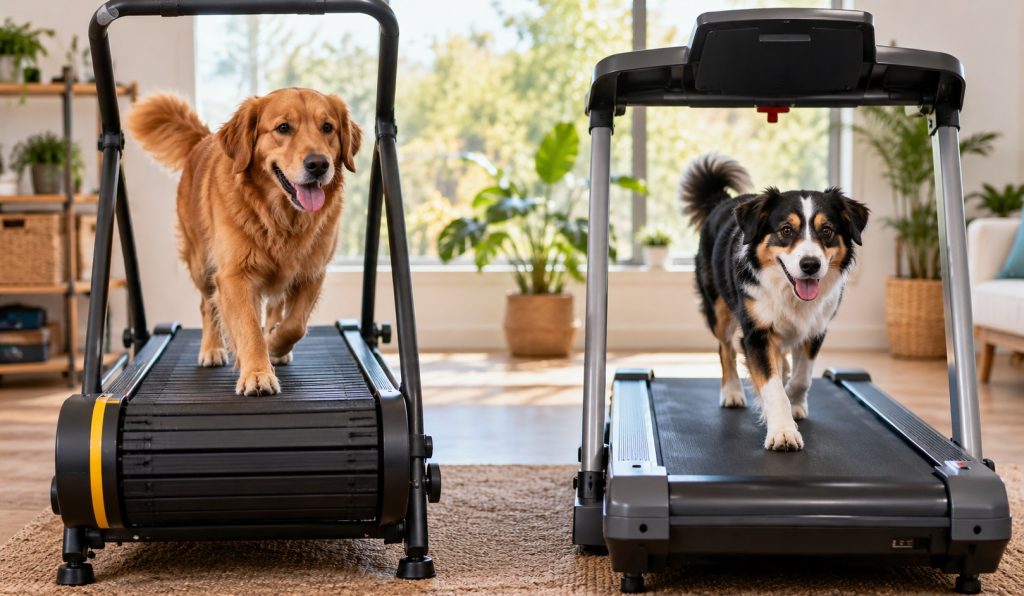
Mechanical treadmills are self-powered, while motorized treadmills use an electric motor for precise speed control.
I have spent years advising dog owners, trainers, and veterinary teams about canine fitness equipment. This article compares Mechanical vs motorized dog treadmills in depth, explaining how each works, who benefits most, safety and training tips, costs, maintenance, and practical recommendations based on real-world testing. If you want to choose the right treadmill for your dog or for a client, this guide offers clear, expert-backed advice and step-by-step help.

Source: frontiersin.org
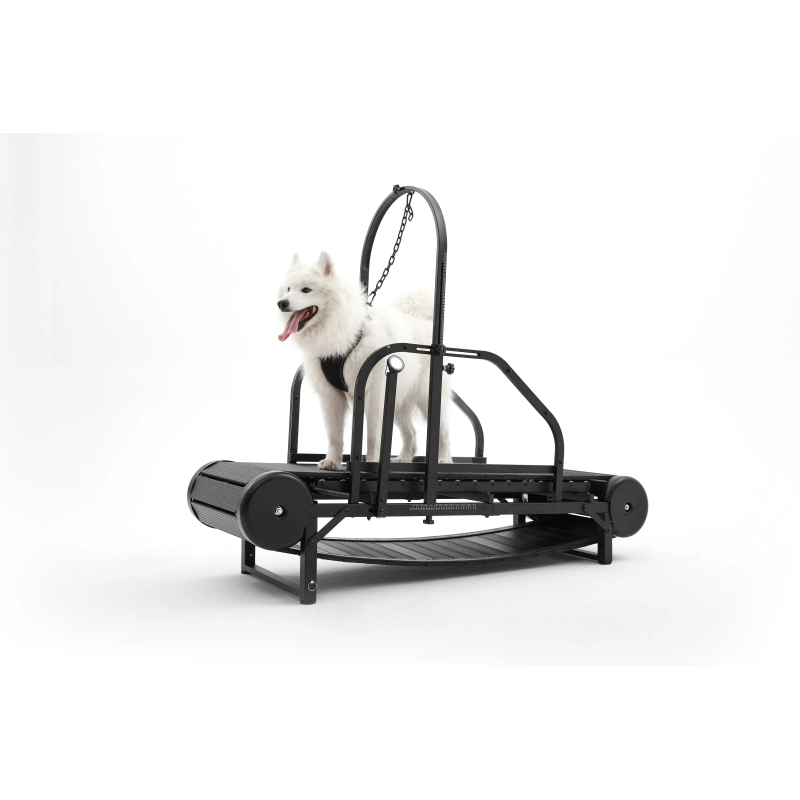
How mechanical and motorized dog treadmills work
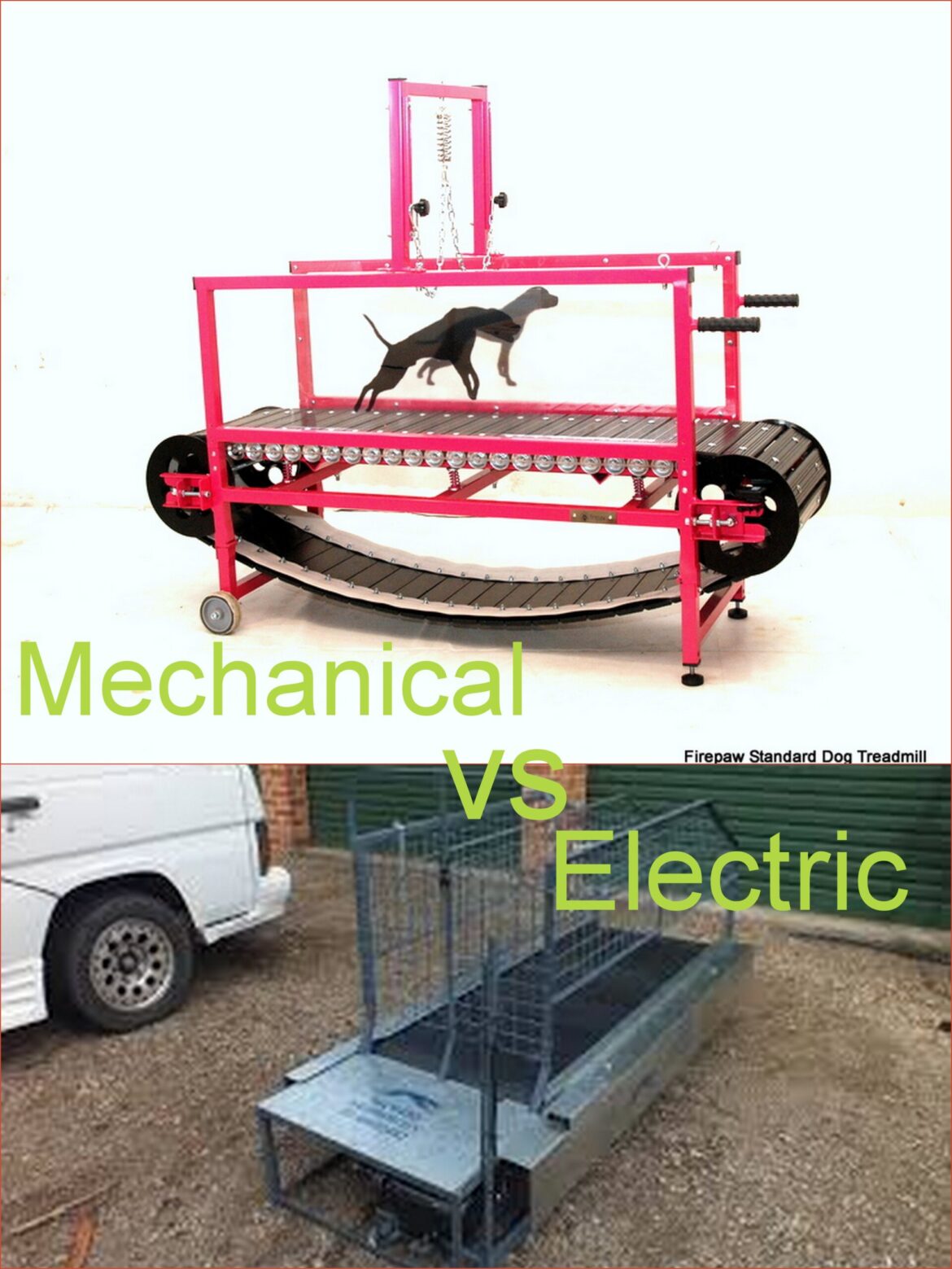
Mechanical vs motorized dog treadmills differ fundamentally in power and control. A mechanical dog treadmill moves when the dog pushes on the belt. A motorized treadmill moves the belt using an electric motor regardless of the dog’s motion.
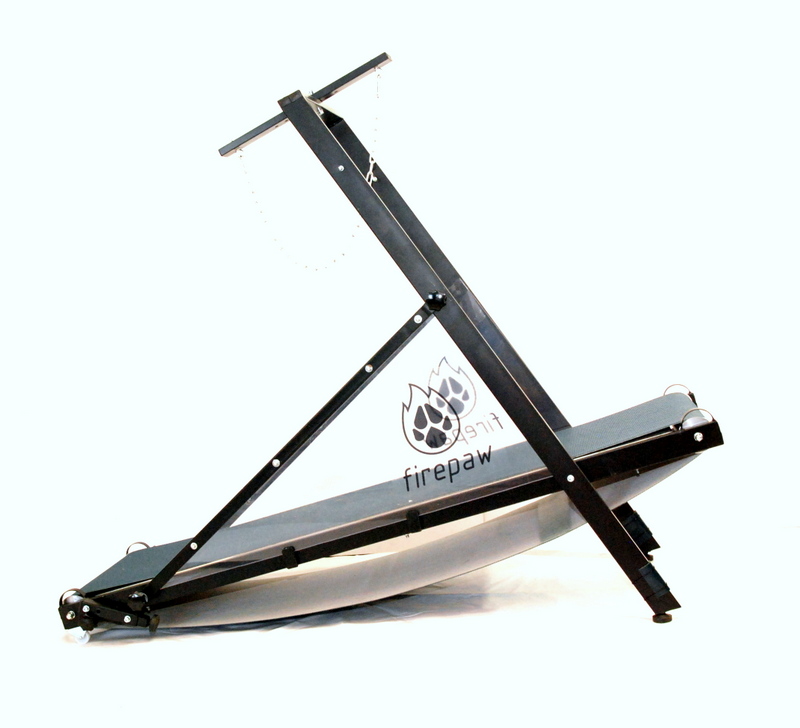
Mechanical dog treadmill
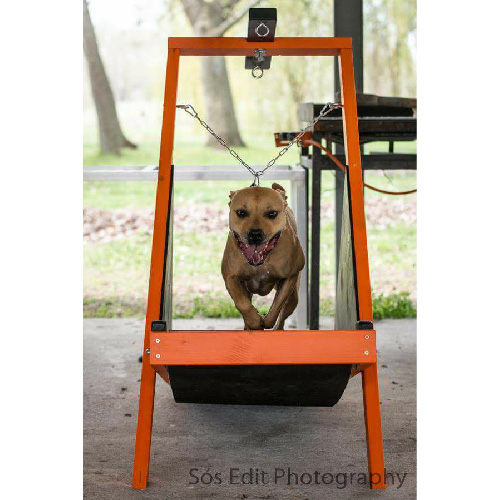
- Belt motion is powered by the dog’s movement.
- Speed depends on the dog’s stride and effort.
- No electricity needed, so it is portable and quiet.
Motorized dog treadmill
- Belt motion is set and maintained by a motor.
- You can choose specific speeds and incline where available.
- Best for structured rehab, interval workouts, and precise conditioning.
Common design elements shared by both types include a low-impact belt, side rails, safety stop mechanisms, and an easy-to-clean surface. Mechanical units tend to have fewer electronics and lower weight. Motorized units offer preset programs, timers, and consistent pace control.
How do you control pace on each type?
- Mechanical: Pace adjusts naturally with the dog’s movement; handlers may guide the dog with leash or treats.
- Motorized: Pace is set by a dial, remote, or digital panel and does not depend on the dog’s push force.
Which is better for rehabilitation?
- Motorized units are generally preferred for rehab. They allow precise, repeatable speeds and inclines essential for recovery plans.
Mechanical vs motorized dog treadmills remain the two main options. Pick the one that matches your dog’s needs, training goals, and your ability to supervise sessions.
Source: firepaw.eu
Pros and cons: mechanical vs motorized dog treadmills
Comparing strengths and weaknesses clarifies which option fits you.
Mechanical pros
- Low cost and energy free.
- Simple setup and durable parts.
- Quiet and portable.
Mechanical cons
- Less control over exact speed and intensity.
- Not ideal for high-speed or interval training.
- May be hard for timid or overweight dogs to initiate movement.
Motorized pros
- Precise speed and incline control.
- Reproducible workout programs for conditioning or rehab.
- Easier to use with dogs that won’t walk on their own.
Motorized cons
- Higher purchase price and power needs.
- Louder and heavier than mechanical models.
- More parts can mean higher maintenance costs.
Example use cases
- Mechanical units suit active dogs that naturally keep pace, and owners seeking low-cost options.
- Motorized units suit injured dogs, competitive athletes, or handlers needing strict workout control.
Source: alamy.com
Performance, space, and suitability
Assess the dog, space, and program before buying.
Dog factors to consider
- Age and weight: Heavy or older dogs benefit from motorized units for controlled intensity.
- Temperament: Nervous dogs may prefer motorized units where speed can be started slowly.
- Fitness goals: Conditioning and rehab demand repeatable settings found on motorized treadmills.
Space and setup
- Mechanical treadmills fit small apartments and can be folded or stored easily.
- Motorized treadmills require a stable floor and access to a power outlet. They also need more clearance for ventilation.
Noise and home life
- Mechanical units are quieter because they lack a motor.
- Motorized units create consistent background noise that can disturb sensitive dogs or neighbors unless chosen for low decibels.
When you weigh these factors, the decision becomes practical and outcome-driven. Mechanical vs motorized dog treadmills both have situations where they outperform the other.
Source: firepaw.eu
Safety, training, and best practices
Safe use is paramount. Follow these guidelines to reduce risk.
Pre-use checklist
- Consult your veterinarian if your dog has medical issues.
- Inspect the treadmill for loose parts, frayed belt, or electric faults.
- Ensure the surface is non-slip and the belt speed is appropriate.
Training plan
- Start with short sessions: 1 to 3 minutes for beginners.
- Use positive reinforcement: treats and praise for calm walking.
- Gradually increase time and, with motorized units, speed by small increments.
Safety devices and monitoring
- Use the emergency stop at all times.
- Stay at dog level or within sight. Do not leave the dog unattended.
- Watch for signs of fatigue, limping, or distress.
How to introduce a dog to a treadmill
- Allow the dog to sniff and explore the stationary unit.
- Reward calm behavior and place treats on the belt while it is stopped.
- Begin with the belt on the slowest setting for motorized units, or gently encourage the dog to walk on a stopped mechanical belt before allowing belt movement.
Mechanical vs motorized dog treadmills both require patient training, but motorized units give more control during the learning curve.

Source: lowes.com
Maintenance, lifespan, and cost breakdown
Budget realistically for purchase and upkeep.
Initial cost range
- Mechanical units: generally lower cost; basic models start at a modest price.
- Motorized units: mid to high range depending on motor quality and features.
Ongoing maintenance
- Mechanical: occasional belt tension checks and lubrication of moving parts.
- Motorized: belt alignment, motor vents cleaning, and periodic electronic checks.
Expected lifespan
- A well-cared-for mechanical treadmill can last many years due to fewer electronics.
- Motorized treadmills last long as well with regular maintenance; motors and control panels may need service after several years.
Cost-saving tips
- Buy a warranty or extended service plan if available.
- Check for spare parts compatibility before purchase.
- Keep an inspection log to catch wear early and avoid major repairs.
Mechanical vs motorized dog treadmills present different cost profiles. Mechanical often wins on upfront cost and simplicity; motorized may cost more but deliver precise performance that can save time and reduce injury risk.

Source: firepaw.eu
Choosing the right treadmill: checklist and buying tips
Use this checklist to decide which type to buy.
Checklist
- Identify the dog’s primary need: conditioning, rehab, or casual exercise.
- Verify weight capacity and belt length for your dog’s size.
- Confirm available space and power access.
- Compare warranty, service plans, and accessory options.
- Test noise and vibration levels when possible.
Buying tips
- Choose a belt long enough for your dog’s stride for safe gait.
- Look for adjustable side rails and easy cleaning surfaces.
- Prioritize units with clear safety stops and speed ranges that match your plan.
If you care for multiple dogs or run a training business, lean toward motorized units for repeatable programs. For single-dog home use where budget and space matter, consider mechanical models.
Source: ronzeil.com
Personal experience and recommendations
From my work as a canine fitness consultant and hands-on testing, I have practical observations.
Experience highlights
- A nervous Labrador adapted faster to a motorized treadmill because speed started very low and increased slowly.
- A high-energy border collie used a mechanical treadmill successfully because it prefers self-paced movement and high motivation.
- In rehab cases, motorized treadmills provided repeatable protocols that improved recovery time and helped track progress.
Lessons learned
- Invest time in proper training sessions; most owners stop too soon.
- Don’t expect instant results. Gradual progress reduces injury risk.
- Always pair treadmill work with other forms of exercise for balanced fitness.
Recommendations
- For rehab or performance training, choose motorized units.
- For low-cost and quiet home use, a mechanical treadmill can be excellent.
- Prioritize safety features and plan a training timeline before first use.
Mechanical vs motorized dog treadmills each serve distinct needs. Your choice should match the dog’s temperament, health goals, and your capacity to supervise and maintain the device.
Source: firepaw.eu
Frequently Asked Questions of Mechanical vs motorized dog treadmills
What is the main difference between mechanical vs motorized dog treadmills?
Mechanical treadmills move only when the dog walks and use no electric motor. Motorized treadmills run via an electric motor and allow preset speeds and inclines.
Which treadmill is better for dog rehabilitation?
Motorized treadmills are generally better for rehabilitation because they provide repeatable, controlled speeds and incline options needed for therapy.
Can older or heavier dogs use mechanical treadmills?
Older or very heavy dogs may struggle to initiate and sustain pace on mechanical treadmills; motorized units are usually a safer choice for those dogs.
How long should treadmill sessions be for a beginner dog?
Start with 1 to 3 minutes of walking and gradually add 1 to 2 minutes per session as the dog gains comfort and endurance.
Do motorized treadmills use a lot of electricity?
Most motorized dog treadmills are small and use modest power; their electricity use is generally low compared to home appliances.
Are mechanical treadmills quieter than motorized ones?
Yes, mechanical treadmills are typically quieter because they lack motors, though noise also depends on build quality and floor type.
Conclusion
Mechanical vs motorized dog treadmills each have clear roles. Mechanical units offer low cost, portability, and quiet operation. Motorized units offer precise control, repeatability, and stronger support for rehab and performance training. Evaluate your dog’s health, temperament, and your training goals before choosing. Start slow, follow safety steps, and commit to consistent sessions—this approach yields the best fitness and welfare outcomes for dogs. Share your experience, ask questions, or subscribe for more canine fitness guidance.