
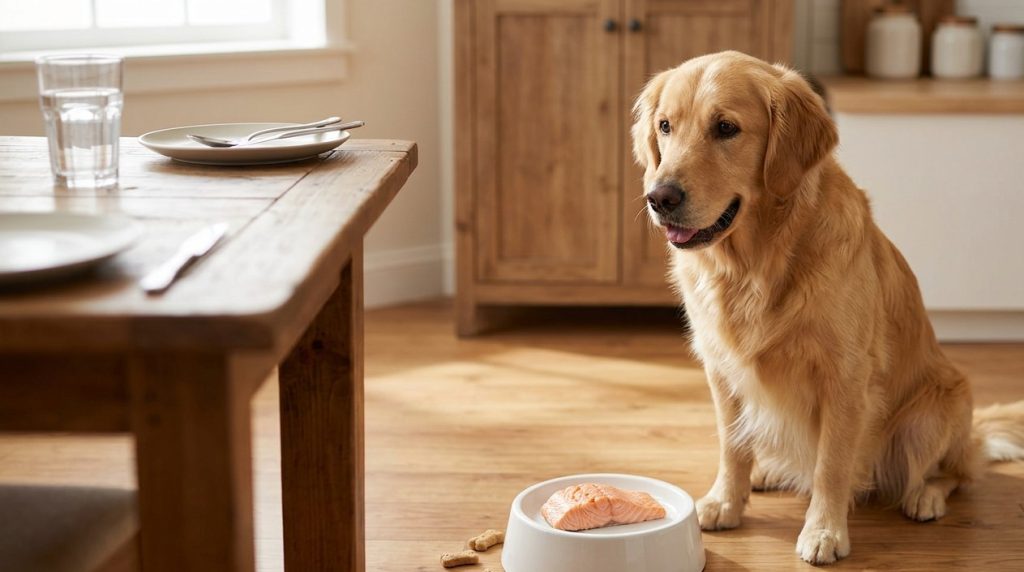
If you have spent any significant amount of time preparing dinner with a dog in the room, you know the look. It is that laser-focused, deeply soul-searching stare that suggests your pup hasn’t eaten in a decade, despite licking their bowl clean twenty minutes ago. As someone who has shared a home with rescue pups, golden retrievers, and a very demanding mutt over the last 15 years, I get this look every single time fish hits the pan.
When sizzled up in a pan, fresh salmon smells fantastic, which naturally raises the question for pet owners: Can dogs eat salmon?
The short answer is yes, dogs can eat salmon, but with a few non-negotiable safety rules. When properly cooked and served plain, salmon is an absolute nutritional powerhouse packed with lean protein and essential fatty acids. However, serving it raw, undercooked, or seasoned with everyday kitchen ingredients can lead to severe health consequences, ranging from GI distress to life-threatening parasitic infections.
In this guide, we will break down the health benefits of salmon, the real risks (including the infamous Salmon Poisoning Disease), safe cooking techniques, portion sizes, and how to safely incorporate this delicious fish into your pet’s routine.
The Health Benefits of Salmon for Dogs
Salmon isn’t just a treat; it’s a superfood when prepared correctly. Over my years as a dog owner, I’ve noticed a distinct difference in coat texture and joint agility when my dogs receive fish-based proteins or supplements.
1. High-Quality Lean Protein
Dogs require adequate protein to build and maintain healthy muscle tissue, repair body cells, and support immune function. Salmon offers an easily digestible, high-protein alternative for dogs that suffer from common food sensitivities related to traditional protein sources like chicken or beef.
2. Rich in Omega-3 Fatty Acids (EPA and DHA)
The standout feature of salmon is its abundance of Eicosapentaenoic Acid (EPA) and Docosahexaenoic Acid (DHA). These long-chain omega-3 fatty acids offer a wide array of health benefits:
-
Skin and Coat Health: Omega-3s strengthen the skin barrier, reducing itchiness, flakiness, and hot spots caused by seasonal allergies.
-
Joint Mobility: The anti-inflammatory properties of EPA help soothe stiff joints, making it particularly beneficial for senior dogs or breeds prone to arthritis.
-
Cognitive and Visual Support: DHA plays a structural role in brain tissue, supporting cognitive retention in older pups and neural development in growing puppies.
3. Essential Vitamins and Minerals
Salmon delivers a rich profile of essential micronutrients:
-
Vitamin B12: Supports nervous system function and energy metabolism.
-
Vitamin D: Works in tandem with calcium for structural bone strength.
-
Selenium: A trace mineral that acts as an antioxidant to defend against cellular damage.
Safe Human Foods for Dogs vs. Toxic Foods for Dogs
Navigating human food for your dog requires knowing what belongs on their plate and what must stay far out of reach. While plain cooked salmon falls under the category of safe human foods for dogs (along with blueberries, plain canned pumpkin, cooked carrots, and skinless chicken), improper preparation can push it into hazardous territory.
To keep your kitchen routine safe, keep these common food classifications in mind:
| Category | Examples | Why It Matters |
| Safe Human Foods for Dogs | Cooked plain salmon, boiled chicken, carrots, blueberries, green beans, cooked sweet potatoes. | Excellent source of extra nutrients, vitamins, and low-calorie rewards when fed in moderation. |
| Toxic Foods for Dogs | Onions, garlic, chives, grapes, raisins, chocolate, xylitol, macadamia nuts, avocado, alcohol. | Can cause severe health issues ranging from acute kidney failure to red blood cell damage and fatal toxicity. |
Pro-Tip (IMO): Always check the ingredient list if you are using pre-packaged or store-bought fish products. Garlic powder and onion powder are standard seasonings in human food, but both are toxic foods for dogs that cause oxidative damage to red blood cells.
Danger Zone: When Salmon Becomes Harmful
While plain salmon flesh is wonderful, serving raw, undercooked, or improperly prepared fish introduces serious hazards.
1. Can Dogs Eat Raw Salmon? (Salmon Poisoning Disease)
No. Never feed raw or undercooked salmon to your dog.
Raw salmonids (salmon, trout, steelhead) from the Pacific Northwest region of North America can carry a micro-parasite called Nanophyetus salmincola. The parasite itself is relatively harmless, but it can be infected with a bacterium named Neorickettsia helminthoeca. This bacterium causes Salmon Poisoning Disease (SPD), a severe and potentially fatal condition unique to canines.
Signs and Symptoms of Salmon Poisoning Disease:
Symptoms usually manifest 5 to 9 days after ingesting infected raw fish:
-
High fever
-
Severe, watery, or bloody diarrhea
-
Projectile vomiting
-
Extreme lethargy and weakness
-
Loss of appetite
-
Swollen lymph nodes
-
Rapid dehydration
If untreated, SPD has a mortality rate exceeding 90%. However, with early veterinary intervention—typically involving antibiotic treatment and supportive fluid therapy—most dogs recover fully.
2. The Danger of Small Bones
Salmon bones are small, thin, flexible, and notoriously hard to spot. Raw or cooked, fish bones present serious risks:
-
Choking Hazard: Can block the esophagus or trachea, especially in small dogs or fast eaters.
-
GI Perforation: Sharp bone fragments can puncture the throat, stomach lining, or intestinal tract.
-
Internal Blockages: Accumulated bones can trigger painful bowel obstructions.
3. Smoked, Canned, and Seasoned Salmon
-
Smoked Salmon: Smoked salmon is cured with heavy amounts of salt and sometimes sodium nitrates. Excessive sodium can lead to ion toxicosis (salt poisoning) and severe dehydration.
-
Canned Salmon: Safe only if packed in water with no added salt, seasonings, or oils. Avoid canned salmon packed in brine or spiced oils.
-
Flavored/Restaurant Salmon: Butter, heavy cooking oils, lemon pepper, garlic, and marinades can trigger acute pancreatitis or toxic reactions.
How to Prepare Salmon for Your Dog Safely
If you want to treat your pup to fresh salmon, follow this step-by-step preparation protocol to eliminate parasite risks and physical hazards.
┌──────────────────────────────────────────────────────────┐
│                   Salmon Prep Flowchart                  │
└──────────────────────────────────────────────────────────┘
                            │
                            ▼
           ┌────────────────────────────────┐
           │ 1. Select Fresh/Frozen Fillet  │
           │    (Boneless, Skinless/Plain)  │
           └────────────────────────────────┘
                            │
                            ▼
           ┌────────────────────────────────┐
           │ 2. De-bone Thoroughly          │
           │    (Feel by hand for pin bones)│
           └────────────────────────────────┘
                            │
                            ▼
           ┌────────────────────────────────┐
           │ 3. Cook Fully (No Raw Pink)    │
           │    (Bake, Steam, or Grill)     │
           └────────────────────────────────┘
                            │
                            ▼
           ┌────────────────────────────────┐
           │ 4. Cool Completely & Portion   │
           │    (Adhere to the 10% rule)    │
           └────────────────────────────────┘
Preparation Guidelines:
-
Choose Plain Cut: Buy fresh or frozen wild-caught or sustainably farmed salmon fillets.
-
Check for Bones: Even fillets labeled “boneless” often have hidden pin bones. Run your fingers along the length of the meat to detect and pull any stray bones.
-
Cook Thoroughly: Cook the fish until the internal temperature reaches at least 145°F (63°C), or until the flesh is completely opaque and flakes easily with a fork. You can bake, steam, poach, or grill it plain.
-
No Oils or Seasonings: Do not cook the salmon in butter, vegetable oil, salt, pepper, or garlic.
-
Let It Cool: Serve warm or at room temperature. Hot fish can burn your dog’s mouth.
Portion Control: How Much Salmon Can Dogs Eat?
Salmon is rich in natural fats. Feeding too much fish at once—even plain and cooked—can cause stomach upset, diarrhea, or pancreatitis due to the high fat load.
As a general rule, treats (including human foods like salmon) should make up no more than 10% of your dog’s daily caloric intake. The remaining 90% should come from a nutritionally complete and balanced commercial dog food.
Here is a simple feeding guide based on body weight:
| Dog Size | Body Weight | Safe Portion Size | Frequency |
| Toy / Small | Under 15 lbs | 1 teaspoon to 1/2 tablespoon | Once a week |
| Medium | 15 to 40 lbs | 1 tablespoon | 1–2 times a week |
| Large | 40 to 80 lbs | 1.5 to 2 tablespoons | 1–2 times a week |
| Extra Large | 80+ lbs | Up to 1/4 cup | 1–2 times a week |
FYI: If you want the benefits of omega-3s without the hassle of cooking fresh fillets, high-quality, wild-caught Alaskan salmon oil is a fantastic option. A pump or two over their morning kibble delivers a clean, therapeutic dose of EPA and DHA with zero cooking required.
What to Do If Your Dog Eats Raw Salmon
Accidents happen. My old dog once managed to swipe a piece of raw salmon off the kitchen counter while my back was turned for five seconds flat. If your dog sneaks a bite of raw or undercooked salmon, don’t panic, but act promptly.
-
Identify the Source: Did the fish come from the Pacific Northwest region (US/Canada border down to Northern California)? This region carries the highest risk for Neorickettsia helminthoeca.
-
Note the Amount: Estimate how much fish they consumed and whether any sharp bones were attached.
-
Contact Your Veterinarian: Call your vet or a local emergency pet clinic right away. Inform them that your dog ingested raw salmon. They may advise monitoring them for early symptoms or bringing them in immediately depending on your geographic location.
-
Monitor Closely: Keep a strict watch over the next 1 to 14 days for signs of fever, vomiting, lethargy, or loss of appetite.
Frequently Asked Questions
1. Can dogs eat salmon skin?
Yes, dogs can eat salmon skin, but only if it is fully cooked and free from extra oils, seasonings, or spices. Salmon skin contains high concentrations of healthy omega-3 fatty acids, but it is also very high in fat. Feed skin in tiny, infrequent portions to avoid triggering gastrointestinal upset or pancreatitis.
2. Can dogs eat canned salmon?
Dogs can eat canned salmon provided it is packed in water, low-sodium or un-salted, and free from added seasonings, sauces, or oils. Always double-check for small bone fragments before mixing canned salmon into your dog’s regular meal.
3. Can puppies eat salmon?
Yes, puppies can eat plain, thoroughly cooked boneless salmon in very small amounts. Because a puppy’s digestive system is still developing, introduce it slowly to avoid stomach upset, and ensure the piece is flaked into tiny bits to prevent choking.
4. What are the signs of a salmon allergy in dogs?
While fish is often used as a hypoallergenic protein source, some dogs can be allergic to salmon. Symptoms of an allergic reaction include skin redness, chronic scratching or biting at paws, ear infections, swelling, vomiting, or persistent diarrhea. Discontinue feeding salmon immediately if you notice these signs.
5. Can dogs eat cooked salmon bones?
No, dogs should never eat cooked salmon bones. Cooking makes fish bones brittle, causing them to splinter easily when chewed. Splintered bones can choke your dog or cause dangerous punctures along the stomach and intestinal walls.
Final Words
When cooked properly, plain, boneless salmon is one of the most rewarding treats you can offer your four-legged companion. Packed with high-quality protein and skin-nourishing omega-3 fatty acids, it offers real health benefits that keep your pup feeling agile and looking sleek.









