If your dog has ever stared at your dinner plate with those impossibly hopeful eyes, you already know how difficult it can be to say no. Salmon is nutritious and many dogs love its rich flavor, but there is one part of the fish that should stay firmly off the canine menu: the bones.
So, can dogs eat salmon bones? No. Salmon bones are not considered a safe food for dogs. They can present choking hazards and may cause injuries to the mouth, throat, esophagus, stomach, or intestines. A bone can also become lodged and create a potentially serious obstruction.
That does not mean salmon itself has to disappear from your dog’s diet. Plain, thoroughly cooked, boneless salmon can be an appropriate occasional food for many healthy dogs when prepared without ingredients that are harmful to them.
As a pet owner, I’ve seen plenty of dogs become dramatically more interested in whatever their humans are eating the moment fish appears on the table. Their enthusiasm is understandable. Their judgment about bones? Not exactly something I’d leave in charge of dinner. 🙂
Can Dogs Eat Salmon Bones?
Can dogs eat salmon bones? The safest answer is no. Salmon bones are small, relatively thin, and can be surprisingly sharp. Dogs may chew them differently from people, but that does not make the bones harmless. Some dogs may swallow a fish bone without immediately showing any symptoms. Others may experience coughing, gagging, vomiting, pain, or difficulty swallowing. In more serious situations, a sharp bone can become lodged or damage the digestive tract.
Risk can vary depending on the bone’s size and shape, how it was prepared, how much was swallowed, and the individual dog. For that reason, intentionally feeding salmon bones to dogs is not a good idea. The simple rule is:
Salmon for dogs can be fine when it is properly prepared. Salmon bones for dogs should be removed.

Source: Wikimedia Commons — Salmon with Bones
Why Are Salmon Bones Dangerous for Dogs?
The main problem is not that salmon is inherently bad for dogs. The concern is the physical structure of the bones.
Choking Risk
A salmon bone can become stuck in the mouth or throat. If it obstructs the airway, the situation can become an emergency. Signs of choking can include:
- Sudden difficulty breathing
- Repeated gagging
- Pawing at the mouth
- Excessive distress
- Inability to breathe normally
- Blue or gray-looking gums or tongue
A dog that cannot breathe normally needs immediate emergency veterinary attention.
Mouth and Throat Injuries
Sharp fish bones can scratch or puncture tissues in the mouth and throat. A dog may drool more than usual, repeatedly swallow, cough, gag, or resist eating because swallowing has become uncomfortable. Even a relatively small bone can cause a problem if it becomes lodged in an unfortunate position.
Esophageal or Gastrointestinal Injury
The esophagus carries food from the mouth to the stomach. A sharp bone traveling through this passage can potentially cause irritation or injury. After reaching the stomach and intestines, a bone may pass normally, but there is no guarantee. That uncertainty is precisely why deliberately feeding salmon bones isn’t worth the gamble.
Intestinal Blockage
Another concern is an obstruction. If a swallowed bone becomes lodged in the digestive tract, food and other material may have difficulty passing normally. Depending on the location and severity, treatment may require veterinary intervention.
Potential signs of intestinal blockage can include:
- Repeated vomiting
- Loss of appetite
- Abdominal discomfort
- Lethargy
- Difficulty passing stool
- Straining
- Swollen or painful abdomen
These symptoms can have many causes, so they do not automatically mean a bone is responsible. However, if you know your dog swallowed a salmon bone and these symptoms appear, contact your veterinarian promptly.
Are Cooked Salmon Bones More Dangerous?
Cooked salmon bones can be particularly concerning because cooking changes the structure of bones and may make them more brittle. That means they can break into sharp fragments when chewed.
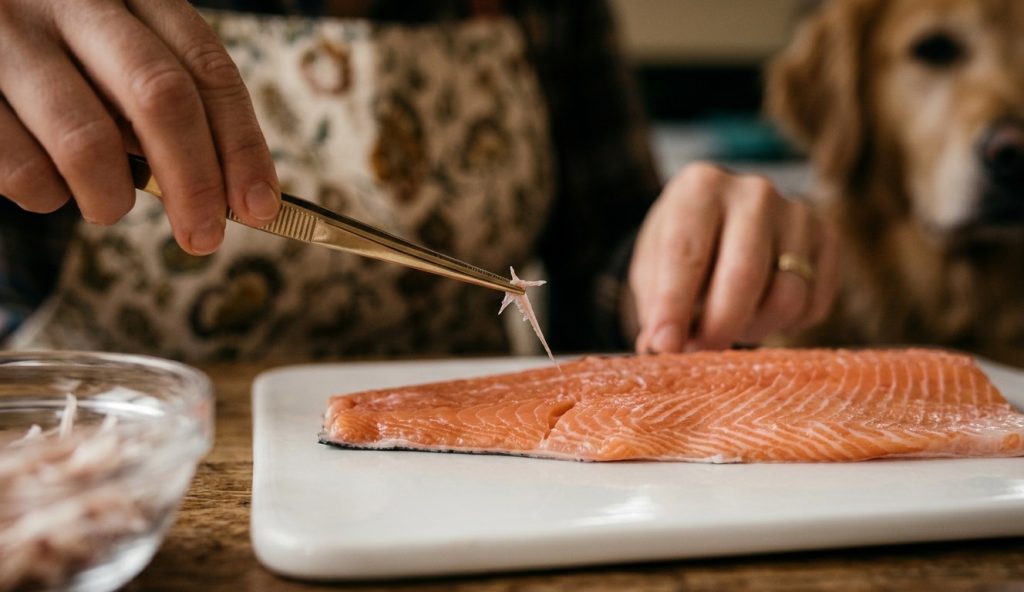
So if you’re wondering, can dogs eat salmon bones after cooking? The answer remains no. Never assume that thoroughly cooking salmon makes its bones safe for your dog. When preparing salmon for a dog, remove the bones before serving. Check carefully for small pin bones because they can be easy to miss. This is one of those situations where an extra minute in the kitchen is far easier than dealing with a potential veterinary emergency later.

Source: Pexels — Grilled Salmon Fish on Vegetables
What About Raw Salmon Bones?
Raw salmon bones are not a safe alternative. Some people assume raw bones are automatically safer than cooked bones. That is an oversimplification, particularly when you’re talking about small fish bones.
Raw salmon also presents additional food-safety concerns. Certain raw or undercooked salmon and related fish can carry parasites or pathogens. In parts of the Pacific Northwest, for example, infected raw salmon can transmit the organisms associated with salmon poisoning disease in dogs.
Therefore, feeding raw salmon—including its bones—is not a good way to make fish safer. If you want to give your dog salmon, properly cooked and completely deboned salmon is a much more sensible option.
What Should You Do If Your Dog Eats Salmon Bones?
Accidents happen. Maybe your dog grabbed a piece from the kitchen floor, stole salmon from the dinner table, or managed to investigate the trash when nobody was looking. If your dog ate salmon bones, don’t panic—but don’t ignore it either.
Check Your Dog Immediately
Look at your dog and pay attention to breathing, swallowing, behavior, and obvious signs of distress. If your dog is choking or struggling to breathe, seek emergency veterinary care immediately. If your dog appears normal, that does not necessarily mean there is no risk. A swallowed bone may not cause symptoms immediately.
Do Not Force Vomiting
Do not induce vomiting at home unless a veterinarian specifically tells you to do so. With a sharp object such as a bone, bringing the object back through the esophagus could potentially cause additional injury. This is one situation where the internet’s “try this at home” advice can be a bad idea. :/
Contact Your Veterinarian
If you know your dog swallowed a salmon bone, contact your veterinarian and explain:
- Your dog’s approximate size and age
- How many bones may have been swallowed
- Whether the bones were raw or cooked
- Approximately when the incident happened
- Whether your dog has any symptoms
Your veterinarian can determine what steps, if any, are appropriate.
Signs That Your Dog May Have a Problem
If your dog has eaten salmon bones, watch closely for unusual symptoms. Possible warning signs include:
- Gagging
- Coughing
- Excessive drooling
- Difficulty swallowing
- Repeated vomiting
- Loss of appetite
- Abdominal pain
- Lethargy
- Straining to defecate
- Blood in vomit or stool
- Difficulty breathing
- Unusual restlessness or discomfort
Emergency Warning Signs
Seek urgent veterinary attention if your dog:
- Has difficulty breathing
- Appears to be choking
- Collapses
- Has significant bleeding
- Develops severe or worsening abdominal pain
- Repeatedly vomits
- Becomes extremely weak or unresponsive
Do not wait for symptoms to become severe if you believe a sharp bone is lodged in your dog’s throat or airway.

Source: Wikimedia Commons — Crispy Salmon Bones
Can Puppies Eat Salmon?
Can puppies eat salmon? In general, appropriately prepared salmon may be suitable for some puppies as an occasional food, but puppies should not be given salmon bones.
Puppies have smaller mouths and digestive systems, and they’re also notorious for trying to eat things they absolutely should not eat. Socks, cardboard, mystery objects from underneath the couch—the puppy résumé can get surprisingly creative.
If you give salmon to a puppy, make sure it is:
- Fully cooked
- Completely boneless
- Plain
- Free from harmful seasonings
- Served in an appropriate portion
Puppies should still receive a nutritionally complete puppy diet as their primary food. Treats and additional foods should not displace the balanced nutrition they need for growth. If your puppy has specific dietary requirements, ask your veterinarian before adding new foods regularly.
Can Dogs Eat Canned Salmon?
Can dogs eat canned salmon? Some canned salmon can be given to dogs in moderation, but you need to read the label carefully.
Choose products that are:
- Plain
- Low in sodium
- Free from added sauces
- Free from onion or garlic
- Free from other potentially harmful seasonings
Canned salmon may contain bones that have been softened during processing. However, I would still avoid casually treating canned salmon as a source of bones. Check the product carefully and consider choosing boneless salmon specifically when preparing food for your dog.
Also remember that canned salmon intended for people may contain considerably more sodium than your dog needs. FYI, “fish” on the label doesn’t automatically mean “perfect dog food.” Ingredients and preparation still matter.
Can Dogs Eat Cooked Salmon Without Bones?
Yes, plain, fully cooked, boneless salmon can be an occasional addition to the diet of many healthy dogs. Salmon provides protein and contains beneficial fatty acids, including omega-3 fatty acids. However, preparation matters.
Avoid serving salmon covered in:
- Garlic
- Onion
- Excessive salt
- Heavy sauces
- Spicy seasonings
- Large amounts of butter or oil
A simple preparation is generally preferable.
Think plain fish rather than restaurant-style salmon swimming in sauce. Your dog doesn’t need a five-star culinary experience to appreciate dinner.
How to Safely Give Salmon to a Dog
If you want to share salmon with your dog, follow a few basic precautions.
Remove Every Bone
Carefully inspect the salmon before serving it. Pay particular attention to small pin bones. They may be difficult to see but can still cause problems.
Cook It Thoroughly
Cooking salmon thoroughly reduces certain food-safety risks associated with raw or undercooked fish.
Keep It Plain
Avoid seasonings and sauces containing ingredients that are unsafe or unnecessarily rich for dogs.
Offer Small Portions
Salmon should generally be treated as an addition or occasional treat rather than a replacement for a complete and balanced canine diet.
Introduce New Foods Gradually
If your dog has never eaten salmon before, start with a small amount. Watch for digestive upset or other unusual reactions.
How to Prevent Dogs From Eating Fish Bones
Prevention is much easier than dealing with an accidental ingestion. When serving salmon at home:
- Keep the fish away from your dog while preparing it.
- Remove bones before placing any salmon in your dog’s bowl.
- Dispose of bones in a secure trash container.
- Don’t leave plates containing salmon unattended.
- Teach dogs not to grab food from tables or countertops.
- Be especially careful around children who may share food with pets.
If you regularly prepare fish, create a simple routine: cook, debone, inspect, serve. That habit takes seconds and can prevent an unnecessary problem.

Source: Public Domain Pictures — Raw Salmon
When Should You Call a Veterinarian?
If your dog swallowed salmon bones, calling your veterinarian is appropriate, particularly when the bone was sharp, several bones were swallowed, or your dog is showing symptoms. You should seek urgent care for signs such as breathing difficulty, choking, severe pain, repeated vomiting, collapse, or significant bleeding.
Even when a dog looks completely normal after eating a bone, a veterinarian may recommend monitoring based on the circumstances. Every dog is different. A large adult dog that accidentally swallowed one tiny bone isn’t necessarily in the same situation as a small puppy that swallowed several sharp bones. That is why individualized veterinary advice matters.
Frequently Asked Questions
Can dogs eat salmon bones?
No. Can dogs eat salmon bones? They should not be intentionally fed salmon bones because the bones can cause choking, injury, or gastrointestinal obstruction.
Can dogs eat salmon skin?
Plain, thoroughly cooked salmon skin may be acceptable in small amounts for some dogs, but it should not contain harmful seasonings or excessive fat. If your dog has dietary restrictions, check with your veterinarian first.
Can puppies eat salmon?
Yes, puppies may be able to eat small amounts of properly cooked, plain, completely boneless salmon. However, salmon should not replace their nutritionally complete puppy food.
Can dogs eat canned salmon?
Some plain canned salmon can be given occasionally, provided the ingredients are appropriate. Check for excessive sodium, sauces, seasonings, and bones, and choose a simple product whenever possible.
What should I do if my dog ate a salmon bone?
Monitor your dog closely and contact your veterinarian for advice, especially if the bone was sharp or your dog swallowed multiple bones. If your dog is choking, struggling to breathe, repeatedly vomiting, or showing severe pain, seek emergency veterinary care.
Final Words
So, can dogs eat salmon bones? The safest answer is no. Salmon itself can be a useful source of protein and omega-3 fatty acids when properly prepared, but the bones create unnecessary risks. Sharp fragments can potentially cause choking, injury, or digestive obstruction.
If you’d like to share salmon with your dog, remove the bones carefully, cook the fish thoroughly, keep it plain, and serve an appropriate portion. And if your dog manages to swallow a salmon bone despite your best efforts, don’t rely on guesswork. Observe your dog carefully and contact your veterinarian for advice tailored to the situation.
A few minutes spent removing bones before dinner is a much better use of your time than wondering afterward whether that tiny piece of fish was worth the risk.