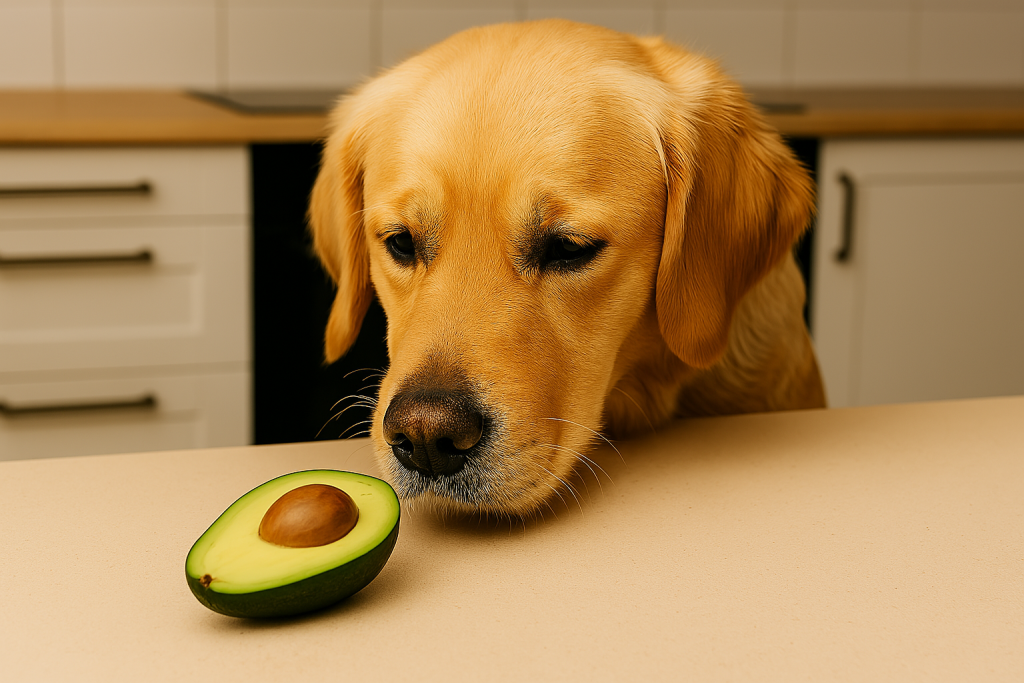

We all know the look. You pull a fresh, glistening fillet out of the fridge, set it on the cutting board, and instantly feel a cold, wet nose press against your knee. Your dog isn’t just asking for a scrap—they’re staging a full-blown visual protest. Seafood has a way of turning even the best-trained pups into relentless beggars. But before you flake off a piece of your dinner and drop it into that eager mouth, a very important question arises: How much salmon can dogs eat?
While salmon is packed with incredible nutrients, dogs cannot consume it with the same wild abandon we might enjoy at a sushi bar. Feeding fish to your four-legged companion requires careful attention to cooking methods, portion sizes, and hidden hazards like pin bones. Knowing exactly how much salmon can dogs eat safely keeps your dog thriving while protecting them from severe digestive upset.
Let’s break down the facts, exact serving math, cooking guidelines, and critical safety warnings every dog parent needs to know.
Nutritional Breakdown: Why Is Salmon Good for Dogs?
Before diving into portion charts, let’s address why so many veterinarians and pet parents praise this cold-water fish. Salmon’s core benefits for dogs come from its exceptionally rich nutritional profile, making it more than just a tasty meal topper.
🌟 Nutritional Highlights: Why Salmon is a Superfood for Dogs
Beyond being a delicious treat, plain, cooked salmon serves as a powerful nutritional boost for your dog’s long-term health. We’ve broken down the key active components that make this fish a powerhouse:
| Vital Nutrient | Key Benefit for Your Dog | Personal Pro-Tip |
|
Omega-3 Fatty Acids (EPA & DHA) |
🛡️ Reduces joint & skin inflammation. Essential for mobility in seniors. | IMO, this is the #1 reason to feed salmon. Great for allergy season! |
| High-Quality Protein | 💪 Supports crucial muscle development and tissue repair. Gentle alternative protein. | Our highly active rescue thrives on fish protein; it keeps her lean and energized. |
| Vitamin D & B-Complex | 🦴 Promotes strong bones and essential cellular energy production. | Keep those bones strong for endless games of fetch! 🙂 |
| Selenium & Zinc | 🦠 Bolsters immune support and maintains healthy thyroid function. | FYI, trace minerals are often overlooked but vital for immune resilience. |

Source: Pexels — Ready-to-Eat Salmon on a Plate
High-Quality Protein for Lean Muscle
Salmon is a premium protein source packed with essential amino acids. It supports muscle development, tissue repair, and everyday energy levels. For dogs with sensitivities or food allergies to traditional protein sources like beef or chicken, salmon serves as a gentle, hypoallergenic alternative.
Essential Omega-3 Fatty Acids (EPA and DHA)
The true star of the show is the dense concentrations of long-chain Omega-3 fatty acids—specifically eicosapentaenoic acid (EPA) and docosahexaenoic acid (DHA). These healthy fats deliver remarkable anti-inflammatory benefits across your dog’s entire body:
-
Skin and Coat Health: Reduces itching, dander, and hot spots while restoring natural shine to dull fur.
-
Joint Care: Lubricates stiff joints, making it a powerful natural helper for senior dogs suffering from arthritis.
-
Cognitive & Immune Support: Promotes brain function in aging dogs and bolsters overall immune resilience.
Vital Vitamins and Minerals
Salmon comes naturally stocked with Vitamin D for bone density, Vitamin B12 for nerve and cellular health, and key trace minerals like selenium and potassium.
How Much Salmon Can Dogs Eat? Safe Portion Sizes by Weight
Determining how much salmon can dogs eat depends entirely on one main rule: the 10% treat rule.
Extra foods, cooked toppers, or treats should never make up more than 10% of your dog’s total daily caloric intake. The remaining 90% must come from a complete and balanced daily diet. Salmon is dense in healthy fats and calories; even small overfed portions add up fast.
📏 The 10% Daily Treat Rule: Visualizing Your Dog’s Ideal Plate
When determining how much salmon can dogs eat, balance is everything. We must ensure that treats, including healthy options like salmon, complement rather than replace a dog’s complete diet.
Use this simple breakdown to visualize how your dog’s daily intake should be distributed. Think of it like a dietary pie chart for perfect health.
🍽️ The Perfect Dietary Balance: Visualize Your Dog’s Plate
How does that translated to actual cooked fish? Here is a helpful breakdown of safe portion sizes based on body weight.

Source: Wikimedia Commons — Dog Salmon, Breeding Female
Daily and Weekly Salmon Portion Guide
| Dog Weight (lbs) | Example Dog Breeds | Max Portion per Serving | Recommended Frequency |
| Toy (2 – 10 lbs) | Chihuahua, Yorkie, Pomeranian | 1 teaspoon to 1/2 tablespoon | Once per week |
| Small (11 – 25 lbs) | Beagle, French Bulldog, Pug | 1 to 2 tablespoons | 1 – 2 times per week |
| Medium (26 – 50 lbs) | Border Collie, Australian Shepherd | 2 to 3 tablespoons (approx. 1 – 1.5 oz) | 1 – 2 times per week |
| Large (51 – 90 lbs) | Golden Retriever, German Shepherd | 1/4 to 1/3 cup (approx. 2 – 3 oz) | 1 – 2 times per week |
| Giant (90+ lbs) | Mastiff, Great Dane, Saint Bernard | 1/2 cup (approx. 4 oz) | 1 – 2 times per week |
When asking yourself how much salmon can dogs eat, always err on the side of caution when introducing it for the first time. If your dog weighs 40 pounds, start with a single tablespoon to test their stomach tolerance before working up to their maximum weight-based portion.
The Hidden Dangers: Raw Fish and Salmon Poisoning in Dogs
While cooked salmon is a nutritional powerhouse, raw or undercooked salmon is dangerous.
What Is Salmon Poisoning Disease (SPD)?
Feeding raw fish exposes your dog to a potentially fatal condition known as salmon poisoning in dogs. This disease occurs when fish carry a microscopic parasite called Nanophyetus salmincola. The parasite itself is relatively harmless, but it often acts as a carrier for a bacterium called Neorickettsia helminthoeca.
When a dog ingests raw, infected salmon, the bacteria attack the intestinal tract, lymphatic system, and internal organs. Without prompt veterinary care, salmon poisoning in dogs carries a mortality rate of up to 90%.
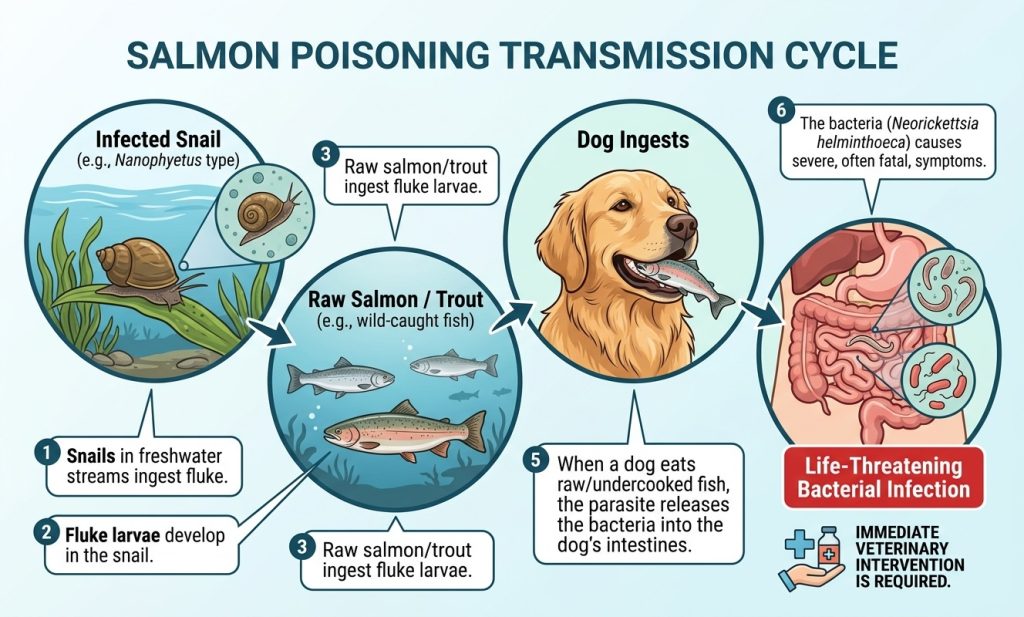
Symptoms of Salmon Poisoning to Watch For
Symptoms typically appear 6 to 10 days after consuming raw fish. Watch closely for:
-
Extremely high fever (often over 104°F)
-
Severe, bloody diarrhea and persistent vomiting
-
Rapid weakness, lethargy, and depression
-
Swollen lymph nodes around the neck and groin
-
Complete refusal to eat accompanied by severe dehydration
If you suspect your dog ate raw salmon while you were preparing dinner (or snatched a washed-up fish on a river hike), contact your vet immediately. Antibiotics and anti-parasitic treatments are extremely effective—provided they are started early.
Bone Hazards and Choking Risks
Beyond parasites, salmon bones present a real physical threat. Salmon contain small, needle-thin pin bones that easily choke a dog or lodge in their esophagus, stomach, or intestinal walls. Always feel through cooked pieces manually to remove every single bone before serving.
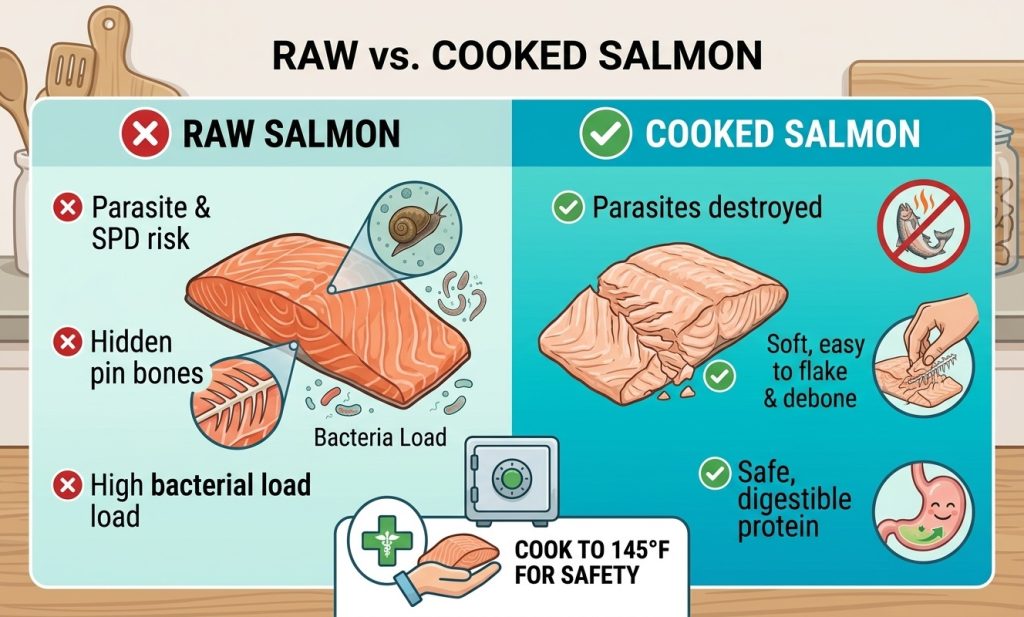
How to Safely Cook and Serve Salmon to Your Pup
Knowing how much salmon can dogs eat is only half the equation—how you cook it matters just as much. Human recipes call for butter, garlic, salt, and heavy spices, many of which are toxic to dogs.
What to Do If Your Dog Overeats Salmon: Symptoms and When to Visit a Vet
Accidents happen. Your dog might snatch an entire cooked fillet off the counter while your back is turned. While plain cooked salmon isn’t toxic, overeating high-fat foods causes real physiological distress.
Short-Term Consequences of Overfeeding
If your pup eats way past their recommended portion, monitor them closely for:
-
Loose stools or sudden diarrhea
-
Vomiting within hours of ingestion
-
Abdominal discomfort (stomach gurgling, restlessness, hunched posture)
-
Lethargy caused by sudden dietary distress
Risk of Acute Pancreatitis
The pancreas produces enzymes that aid digestion. When a dog consumes a large amount of fatty food (like salmon skin or oily belly meat), the pancreas becomes overworked and inflamed. Pancreatitis is painful, severe, and requires immediate medical intervention.
When to Visit the Vet: If your dog vomits repeatedly, refuses water, shows severe abdominal pain, or has eaten raw salmon, visit your veterinarian or an emergency clinic immediately.
Commercial Salmon Options: Kibble, Canned, and Salmon Oil
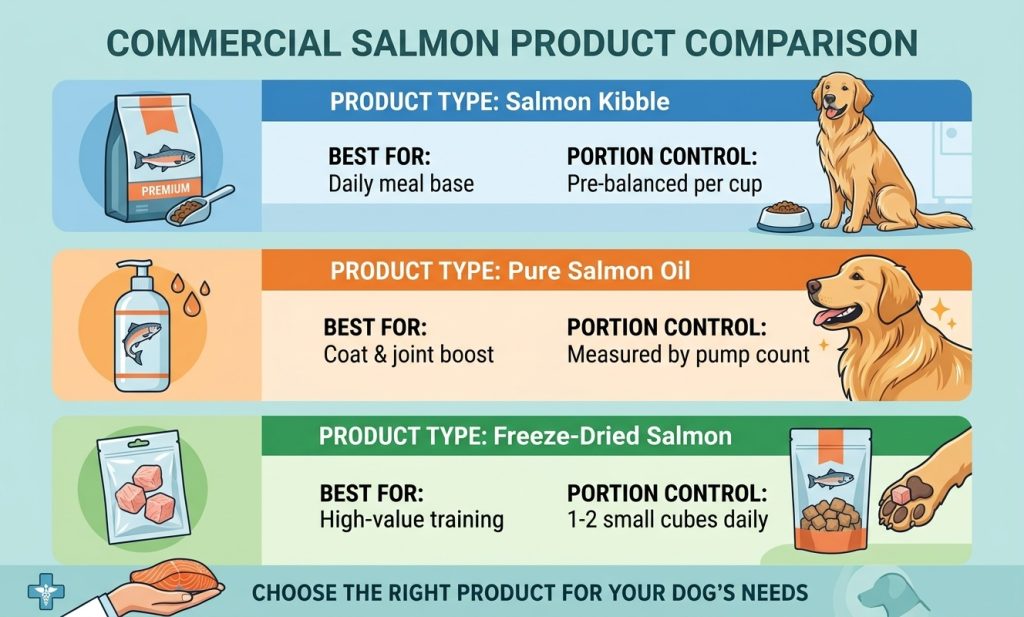
If cooking fresh fish every week feels like a chore, you aren’t alone. Luckily, high-quality commercial pet supplies make it easy to safely deliver all the salmon for dogs benefits without breaking out a baking sheet.
1. Dry Salmon Kibble & Wet Food Formulas
Many premium brands formulate complete dog food recipes using salmon as the primary protein. These diets are fully balanced, eliminating the risk of nutritional imbalances or bone hazards. They are ideal for dogs with poultry or beef sensitivities.
2. Pure Salmon Oil Supplements
If you want to boost your dog’s coat and joint health without adding extra protein chunks, pure wild Alaskan salmon oil is an ideal solution. Stored in pump bottles, a quick squirt over their morning kibble provides concentrated EPA and DHA effortlessly.
3. Freeze-Dried Salmon Treats
Single-ingredient freeze-dried salmon cubes are incredible high-value training rewards. They are light, shelf-stable, and completely free of added preservatives or seasonings.
Frequently Asked Questions About Dogs Eating Salmon
How much salmon can dogs eat on a daily basis?
It is best not to feed fresh salmon every single day. Even cooked salmon should be limited to 1 or 2 meals per week to prevent excess fat accumulation and maintain balanced daily nutrition. If you want your dog to have salmon daily, switch them to a commercially balanced salmon-based kibble.
Can dogs eat canned salmon from the grocery store?
Yes, but check the label carefully! Canned salmon must be packed in water with no added salt, oil, spices, or preservatives. Canned salmon with bones is generally safe because the intense pressure-canning process turns the bones soft and crumbly, but crushing them with a fork first is always best.
Can dogs eat smoked salmon or salmon jerky?
No. Smoked salmon and salmon jerky sold for humans are cured with massive amounts of salt. Many brands also use wood smoke seasonings, garlic powder, or onion powder—all of which are toxic to dogs. High sodium can cause severe dehydration and ion toxicosis.
Is wild-caught salmon better for dogs than farmed salmon?
Wild-caught salmon generally contains higher levels of natural omega fatty acids and fewer contaminants or artificial colorants compared to low-grade farmed salmon. However, properly sourced, high-quality farmed salmon is still safe when cooked thoroughly.
What should I do if my dog accidentally eats raw salmon skin?
Monitor them closely. If the salmon was previously frozen at commercial temperatures, parasite risks are lowered, but salmon poisoning in dogs remains a potential threat. Watch for vomiting, diarrhea, or fever over the next 7 to 14 days, and contact your vet if any unusual symptoms develop.
Final Thoughts on Feeding Salmon to Your Dog
When served correctly, salmon is one of the most rewarding treats you can share with your pup. From soothing itchy skin to keeping joint pain at bay, the natural salmon for dogs benefits make it a true superfood for your canine companion.
Keep the golden rules in mind: cook it plain, remove every bone, stick strictly to the weight-based portion guide, and keep raw fish completely out of reach. Knowing how much salmon can dogs eat gives you total peace of mind while your dog gets to enjoy a delicious, nutrient-dense treat 🙂