
If you love outdoor adventures with your dog as much as I do, there’s nothing quite like watching your pup splash through a mountain stream or investigate a quiet riverbank. But if you live in or visit the Pacific Northwest, those picturesque trail walks hold a hidden danger that every dog owner needs to know about.
A few years back, during an autumn camping trip near the Columbia River, my golden retriever decided that a dead washed-up fish looked like the ultimate prize. I managed to pry it out of his jaws, but the panic was real. That moment sent me down a deep spiral into understanding Salmon Poisoning in Dogs: Risks and Symptoms, and what I learned changed how I manage river trips forever.
Despite its name, this isn’t a chemical toxin or simple food poisoning from spoiled meat. It’s a fast-moving, potentially fatal infection caused by a microscopic organism carried by raw fish. Understanding Salmon Poisoning in Dogs: Risks and Symptoms can literally save your dog’s life, especially because early detection is the difference between a quick antibiotic cure and a tragic veterinary emergency.
What Is Salmon Poisoning in Dogs?
Salmon Poisoning Disease (SPD) is an acute, infectious illness that affects canines after they ingest raw or undercooked fish—specifically salmon, trout, steelhead, and certain freshwater species caught in the Pacific Northwest region (spanning Northern California up through Washington, Oregon, and coastal Alaska).
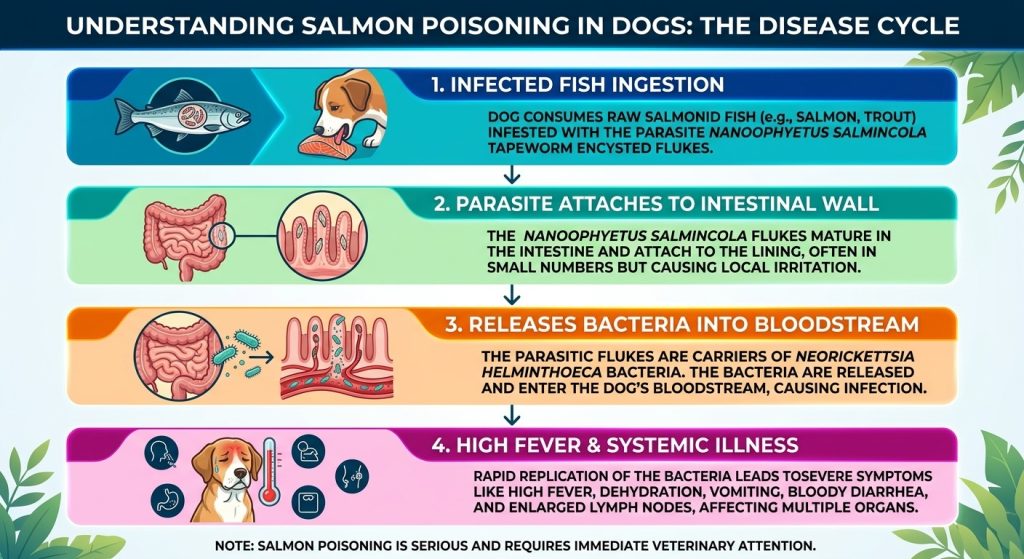
The name causes plenty of confusion. Salmon itself isn’t toxic to dogs. In fact, fresh salmon is packed with healthy omega-3 fatty acids. The real culprit is a complex parasitic-bacterial tag team:
-
The Trematode (Fluke): A microscopic parasite named Nanophyetus salmincola encysts in the tissue of fish.
-
The Bacteria: The fluke itself acts as a Trojan horse carrying a dangerous bacterium called Neorickettsia helminthoeca.
When your dog eats raw infected fish, the fluke attaches to the intestinal wall and releases the Neorickettsia bacteria directly into your dog’s system. From there, the bacteria multiply rapidly within the lymphatic system, spreading throughout the body and triggering severe organ inflammation. Without treatment, SPD carries a mortality rate over 90%.
Identifying Salmon Poisoning in Dogs: Risks and Symptoms
One reason Salmon Poisoning in Dogs: Risks and Symptoms can sneak up on even attentive dog parents is the incubation period. Symptoms rarely show up instantly. It typically takes 5 to 7 days after eating infected fish for the first clinical signs to appear, though delays up to 33 days have been recorded.
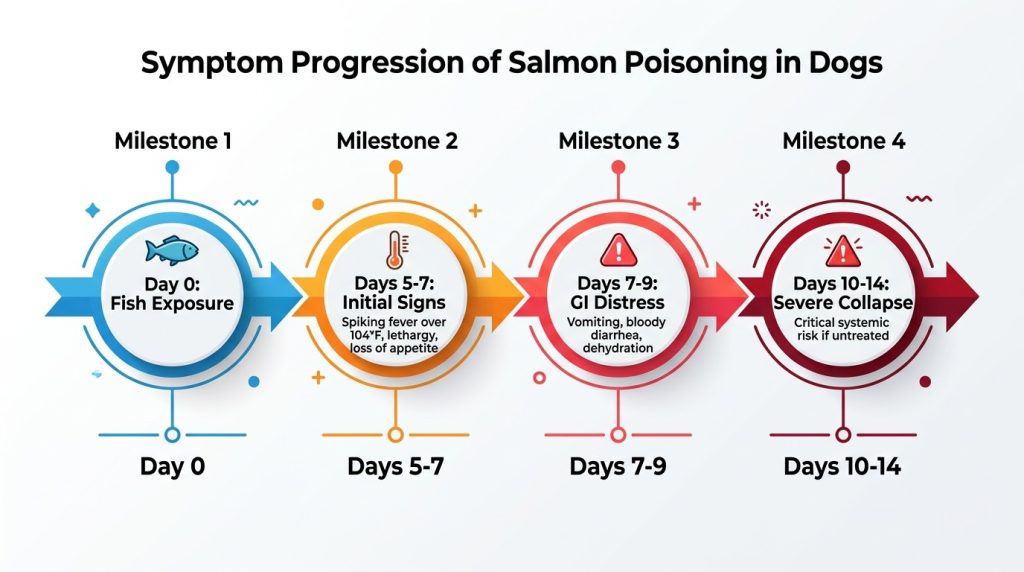
Knowing the exact progression of Salmon Poisoning in Dogs: Risks and Symptoms allows you to act before your dog reaches a state of metabolic shock.
Early Phase Symptoms (Days 5 to 7)
-
Spiking Fever: A dog’s normal body temperature ranges between 101°F and 102.5°F. In the early stages of SPD, temperatures often skyrocket to 104°F–107°F.
-
Profound Lethargy: Your usually energetic pup becomes unusually weak, reluctant to stand, or visibly depressed.
-
Total Anorexia: Complete loss of appetite. Even high-value treats are turned down.
Advanced Phase Symptoms (Days 7 to 10)
-
Severe Vomiting & Bloody Diarrhea: Gastrointestinal distress escalates rapidly. Stools often contain bright red blood or take on a dark, tarry appearance (melena).
-
Extreme Dehydration: Sunken eyes, dry tacky gums, and loss of skin elasticity.
-
Swollen Lymph Nodes: You may feel enlarged, firm nodes under the jaw, around the shoulders, or behind the back knees.
-
Discharge from Eyes or Nose: Rapid discharge that can easily be mistaken for canine distemper.
IMO, if you live near riverways and notice your dog skipping meals while running a sudden fever, don’t wait around to see if their stomach settles 🙂 Get them evaluated immediately.
Is Cooked Salmon Safe for Dogs?
Given the dangers associated with raw fish, a common question among dog parents is: is cooked salmon safe for dogs?
The short answer is yes—absolutely! Fully cooked salmon is not only safe, but it’s also one of the most nutrient-dense proteins you can feed your dog.
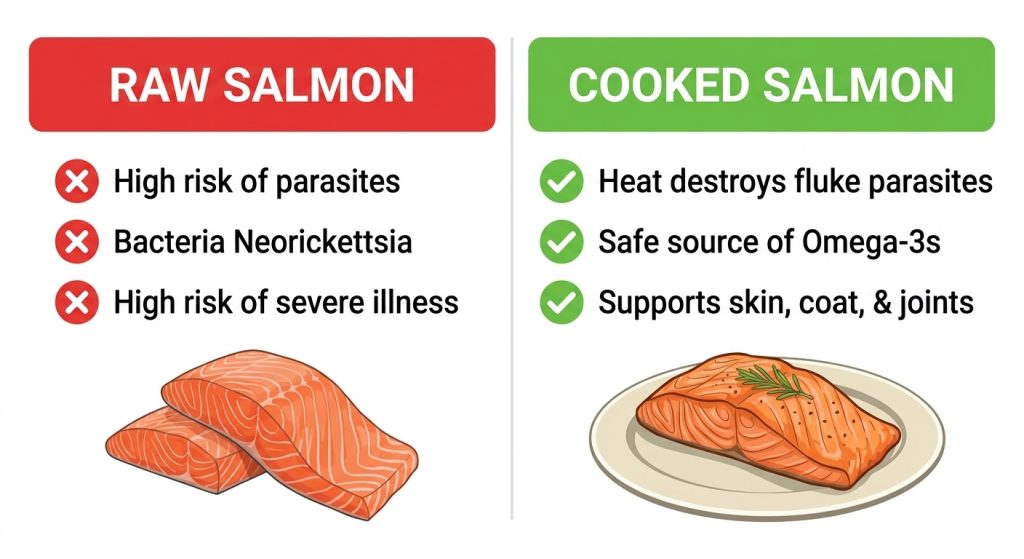
Cooking salmon thoroughly to an internal temperature of at least 145°F kills both the Nanophyetus parasite and the underlying bacteria, rendering the fish completely harmless.
| Preparation Method | Safety Status | Notes |
| Plain Baked / Steamed | Safe | Ideal method. No added fats, oils, or seasonings. |
| Grilled (Unseasoned) | Safe | Fine if free of garlic, onion powder, and excessive salt. |
| Raw / Undercooked | UNSAFE | High risk for Salmon Poisoning Disease in endemic regions. |
| Smoked Salmon | UNSAFE | High sodium content; cold-smoking doesn’t reach temperatures high enough to kill parasites reliably. |
| Canned Salmon (in Water) | Safe | Convenient option; ensure low sodium and no added bones. |
When preparing cooked salmon at home, keep these simple safety guidelines in mind:
-
Remove All Bones: Salmon bones are thin, brittle, and can easily lodge in your dog’s esophagus or puncture their intestinal tract.
-
Skip the Spices: Garlic, onions, excessive salt, butter, and black pepper cause digestive upset or toxicity.
-
Verify Doneness: Flake the fish with a fork to ensure it is cooked through completely to the center.
How Much Salmon Can A Dog Eat?
Even healthy foods can cause stomach upset if overfed. Knowing how much salmon can a dog eat comes down to body weight and treating salmon as an occasional treat or meal topper rather than their primary daily diet.
As a general rule, treats or cooked plain toppers should make up no more than 10% of your dog’s daily caloric intake.
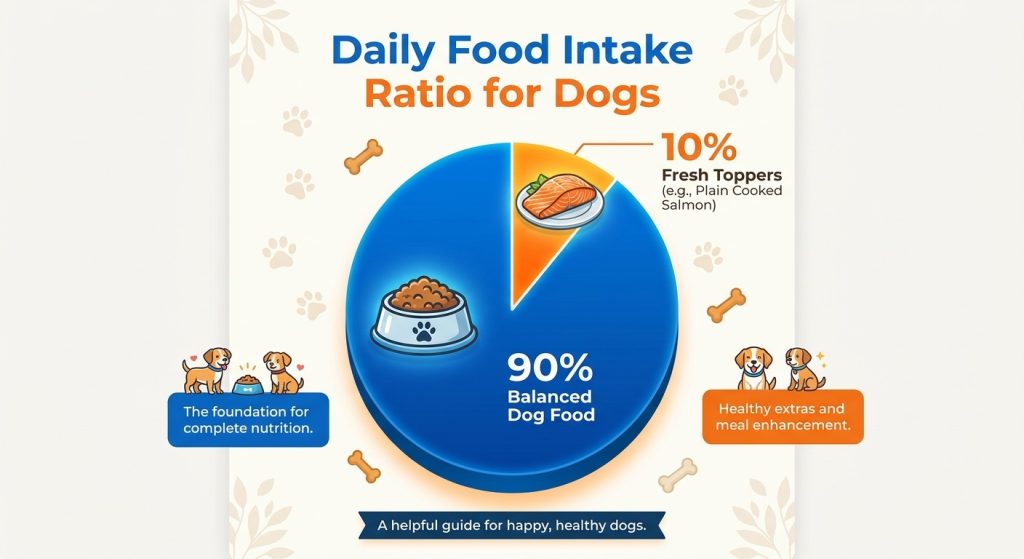
Here is a quick portion reference guide based on your dog’s weight:
-
Small Dogs (Under 20 lbs): 1 to 2 teaspoons of cooked salmon once or twice a week.
-
Medium Dogs (20–50 lbs): 1 to 2 tablespoons per serving.
-
Large Dogs (50–90 lbs): 2 to 3 ounces per serving.
-
Giant Breeds (90+ lbs): Up to 3 to 4 ounces per serving.
Feeding cooked salmon 1 to 2 times per week provides a great boost of Omega-3 fatty acids (EPA and DHA) to support joint health, lower inflammation, and give your pup a shiny coat without overloading their digest system with fat.
Comparing Salmon Poisoning to Common Canine Illnesses
Because the initial symptoms of Salmon Poisoning in Dogs: Risks and Symptoms look like standard stomach flu or parvovirus, misdiagnosis is a real risk if the vet isn’t aware of potential raw fish exposure.
| Symptom / Feature | Salmon Poisoning Disease (SPD) | Canine Parvovirus | Dietary Indiscretion (“Garbage Gut”) |
| Primary Cause | Bacterial infection via parasitic fluke | Viral infection | Ingestion of spoiled food or non-food items |
| Fever Severity | Very High (104°F–107°F) | Moderate to High | Rare or mild |
| Swollen Lymph Nodes | Extremely common (>70% of cases) | Rare | Absent |
| Diarrhea Type | Frequent, watery, often bloody/tarry | Profuse, foul-smelling, bloody | Mild to moderate, usually non-bloody |
| Geographic Link | Pacific Northwest rivers & coastlines | Nationwide | Nationwide |
| Treatment Response | Rapid improvement with antibiotics | Requires supportive viral care | Self-limiting (24–48 hours) |
Diagnosis and Veterinary Treatment Options
If you suspect your dog was exposed to raw fish and is exhibiting signs of Salmon Poisoning in Dogs: Risks and Symptoms, do not wait for symptoms to worsen. Time is your single best asset.
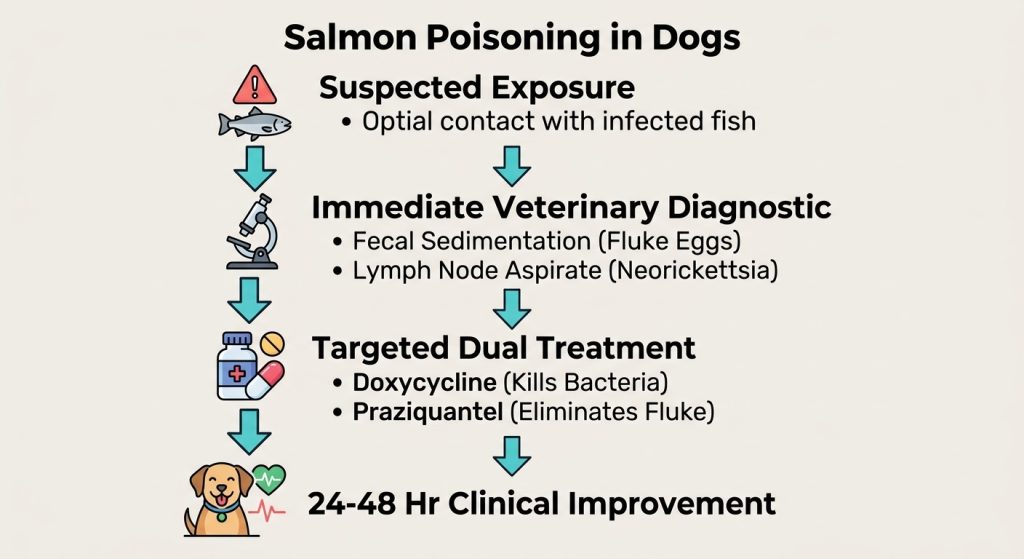
Diagnostic Procedures
Your veterinarian will typically perform two quick tests to confirm SPD:
-
Fecal Flotation/Sedimentation: Looking under a microscope for microscopic Nanophyetus salmincola fluke eggs.
-
Fine-Needle Lymph Node Aspirate: Sampling fluid from an enlarged lymph node to identify the Neorickettsia bacterial inclusion bodies directly under a microscope.
Treatment Protocol
The good news? When caught early, SPD is remarkably treatable. Because the illness involves both a parasite and a bacterium, treatment requires a targeted two-pronged approach:
-
Antibiotic Therapy: Prescription doxycycline or tetracycline is administered to eliminate the Neorickettsia bacteria. Most dogs show dramatic improvement within 24 to 48 hours of starting antibiotics.
-
Deworming Medication: Praziquantel is prescribed to kill the adult flukes residing in the intestinal tract.
-
Supportive Hospital Care: Dogs exhibiting severe vomiting, dehydration, or bloody diarrhea often require 24–48 hours of hospitalization for IV fluid therapy, electrolyte balancing, and anti-nausea medications.
FYI, dogs that recover from SPD develop long-lasting immunity to the specific strain of bacteria that infected them. However, because multiple bacterial strains exist, they can still contract SPD from different fish in other waterways. Don’t let your guard down just because they survived it once!
Practical Prevention Tips for Active Dog Owners
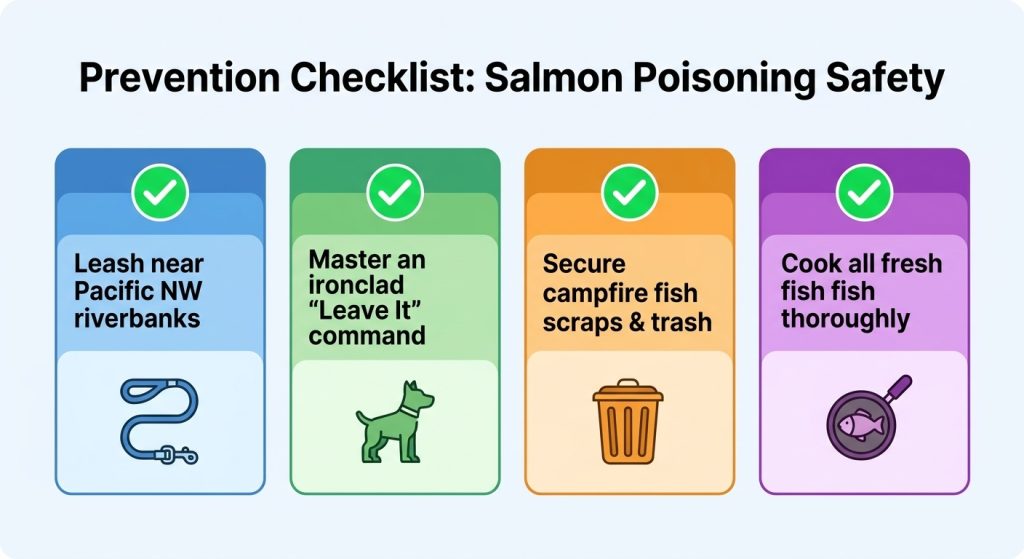
Preventing SPD doesn’t mean you have to stop hiking or banish your dog from the water entirely. It just requires proactive habits when navigating areas where salmon spawn.
-
Keep Dogs Leashed Near Waterways: Keep your dog on a leash when walking along rivers, streams, or beaches in the Pacific Northwest—especially during fall spawning runs when dead fish wash ashore.
-
Train a Rock-Solid “Leave It”: An reliable “leave it” command is your best defense against a dog who spots a washed-up salmon carcass before you do.
-
Secure Trash & Angling Gear: If you fish, pack out all fish entrails, heads, and bones in animal-proof containers. Never leave fish scraps near a campsite or within reach of your pet.
-
Never Feed Raw Native Fish: Avoid raw fish diets that rely on unpasteurized, fresh-caught salmon or trout from West Coast sources.
When to Visit an Emergency Vet
If you catch your dog actively eating raw salmon or fish carcasses on a trail, do not wait for symptoms like fever or vomiting to show up.
Call your vet immediately. Starting preventive antibiotic treatment before the bacteria multiply can completely prevent the illness from taking hold.
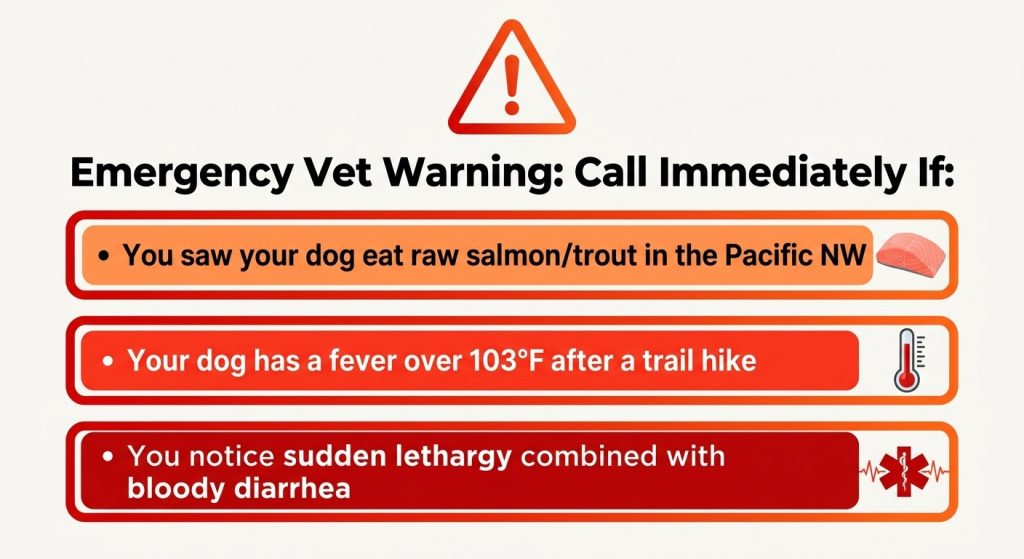
If your vet is closed, contact an emergency animal hospital or call the Pet Poison Helpline (1-800-213-6680) for guidance.
Frequently Asked Questions
Can human beings get salmon poisoning from dogs or fish?
No. Humans can acquire parasitic flukes from eating raw, infected fish, but we are not susceptible to the Neorickettsia helminthoeca bacterial infection that causes severe disease in dogs. The illness cannot be passed directly from a dog to a human.
Are all species of salmon dangerous to dogs if eaten raw?
Any raw freshwater or ocean-going fish that spawns in Pacific Northwest streams can carry the fluke encysted with the Neorickettsia bacteria. This includes Atlantic salmon raised in PNW hatcheries, trout, steelhead, and even salamanders in the region.
Does freezing raw salmon make it safe for dogs?
Deep freezing fish at sub-zero temperatures for prolonged periods can destroy fluke larvae, but home freezers often do not maintain cold enough temperatures consistently enough to guarantee safety. Cooking fish thoroughly remains the only 100% reliable method to kill both parasites and bacteria.
How quickly does a dog show symptoms after eating raw fish?
Symptoms usually manifest between 5 and 7 days after exposure. However, symptoms can appear as early as 2 days or as late as 33 days post-ingestion.
What should I do if my dog licked a raw salmon skin?
If your dog merely licked a piece of commercially processed, store-bought salmon, the risk is relatively low, but monitoring is still advised. If your dog licked or chewed raw salmon caught in the wild in the Pacific Northwest, call your veterinarian right away for advice.
Final Thoughts
Our dogs rely on us to keep them safe from hidden hazards they can’t possibly understand. Understanding Salmon Poisoning in Dogs: Risks and Symptoms gives you the knowledge needed to protect your pup without sacrificing outdoor fun.
Enjoy those scenic trail walks, keep a close eye on what your dog sniffs near the water, and serve up cooked, unseasoned salmon at home as a healthy treat. With a little awareness, you can keep your dog healthy, happy, and ready for the next adventure :/