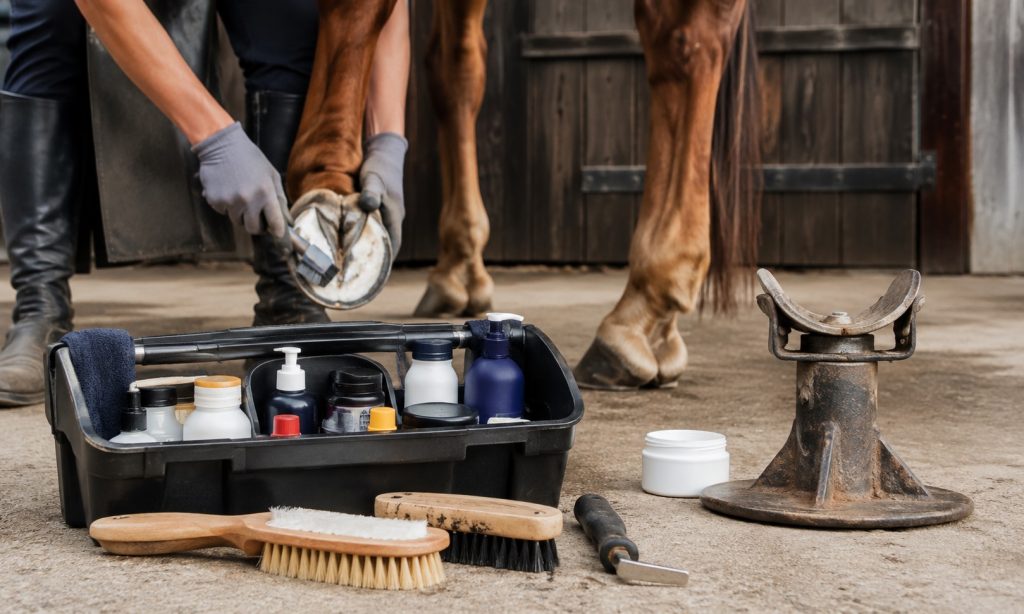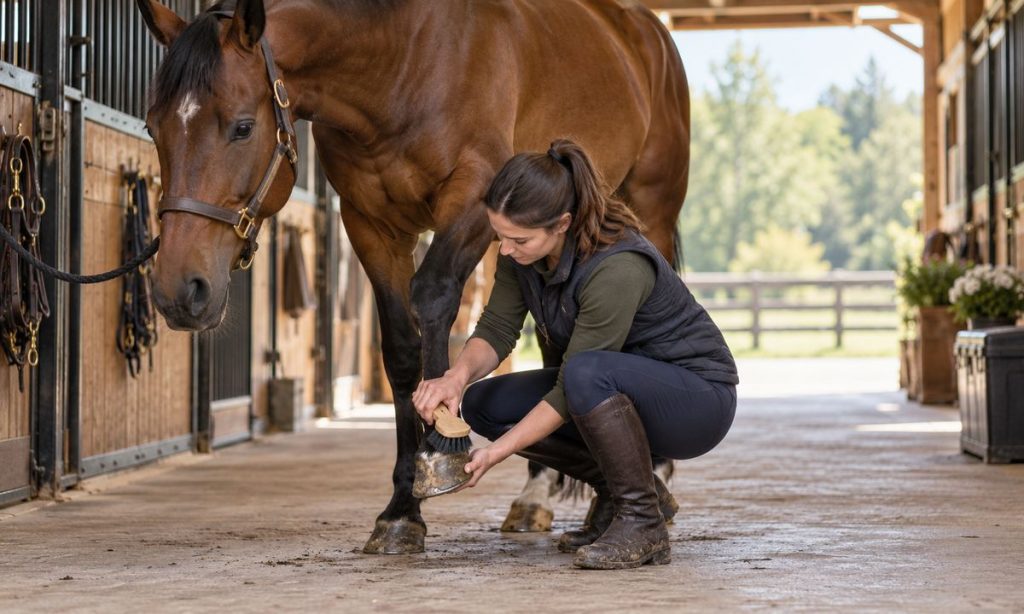
A hoof brush is a small tool that can make daily barn care easier. You may need to loosen dried mud, sweep away loose debris, or apply hoof dressing without getting product on your hands. The right brush depends on that task. A short stiff brush can clear dirt from the hoof wall, while a softer brush may feel easier to handle during routine grooming. An applicator brush serves a different purpose and should not be mistaken for a mud-removal tool. This guide compares three distinct horse hoof brushes whose identities were verified through Amazon’s product data. It explains their useful features, tradeoffs, and best-fit jobs, then gives you a practical checklist for choosing one. We also cover when a brush cannot replace farrier or veterinary care.
Quick Picks
These picks cover daily debris removal and hoof-product application. Check the listed task before choosing.
| Product | Best For | Key Advantage | Buy | |
|---|---|---|---|---|
| Legends Trotter Hoof Cleaning Brush | General hoof cleaning | Natural-fiber construction | View on Amazon | Jump to Review |
| Horze Stiff-Bristled Hoof Brush | Caked mud on the hoof wall | Compact, stiff bristles | View on Amazon | Jump to Review |
| HORZE Hoof Oil Brush with Cap | Applying dressing or oil | Covered 2-inch synthetic bristles | View on Amazon | Jump to Review |
Some links in this review are paid links. PetAdvisorPro may earn a commission if you buy through them.
1. Legends Trotter Hoof Cleaning Brush
This brush is a straightforward choice for routine hoof cleaning where a separate pick already does the deeper work.

What We Like
- Natural-fiber bristles
- Dedicated hoof-cleaning shape
- Compact 7.5-inch length
- Useful for loose surface debris
What We Don’t Like
- Product details do not specify bristle stiffness
- Not a replacement for a hoof pick
The Legends Trotter is a simple brush for finishing a hoof-cleaning routine. Amazon’s product information identifies natural-fiber bristles and a 7.5-inch length. That gives you a compact tool to keep with a grooming kit or near the wash area. A dedicated brush can sweep away loose dirt after you lift the foot and use a hoof pick carefully. It may also help tidy the outside of a hoof before applying a dressing. The available product data does not describe the exact fiber type or stiffness, so avoid assuming it is suited to heavy, dried-on mud. If you need a firmer brushing action, compare it with a stiff-bristle option. If you need to apply oil, choose an applicator designed for that job.
The shorter format may be convenient when you prefer a small brush that fits into a tack box. It is also a reasonable option for a grooming station that already has separate tools for cleaning, hoof-picking, and dressing. Use gentle strokes and keep the brush on accessible surfaces. Do not push bristles into sensitive areas or use a brush to remove packed material from deep grooves. Clean the brush after use so dried dirt does not transfer between hooves. Because the listing does not state whether the brush is washable or how its fibers are secured, inspect it periodically for loose bristles or a damaged head. Replace it if it no longer cleans effectively or if the handle or brush head becomes unstable.
My Recommendation
Choose the Legends Trotter if you want a compact, dedicated brush with natural-fiber bristles for routine finishing. Its listing gives limited detail about stiffness, so it is less suitable when you specifically need firm bristles for caked mud. Keep a separate hoof pick for debris removal.
2. Horze Stiff-Bristled Hoof Brush
A stiff-bristle design is worth considering when routine brushing needs more resistance against dried surface dirt.

What We Like
- Stiff bristles are specified
- Intended for caked mud on hoof walls
- Small format for tack storage
- Simple single-purpose design
What We Don’t Like
- May feel too firm for delicate brushing
- One size and color are listed
Horze describes this model as a small, stiff-bristled hoof brush designed to remove caked mud from the hoof wall. That makes its stated job clearer than a general grooming brush with no bristle information. Use it for the outside surface after you have safely picked out the hoof. The compact design may suit a tack box or a grooming tote that already carries several tools. Stiffer bristles can provide more scrubbing resistance than softer fibers, which may help with dried surface dirt. They do not make the brush appropriate for every part of the hoof. Avoid scrubbing sensitive tissue or using the brush to pry out stones or packed debris.
The product information gives little detail beyond size, bristle stiffness, and its mud-removal purpose. It makes no durability promise. It does not specify a replacement head, cleaning instructions, or handle material. Check the brush after use and remove trapped dirt before the next grooming session. If you share tools among horses, clean and dry them between animals as part of your barn hygiene routine. A firmer brush may also be less comfortable for horses that dislike vigorous grooming, so begin lightly and watch the horse’s response. The brush cannot correct cracks, tenderness, odor, or discharge. If you notice changes in the hoof or your horse becomes reluctant to bear weight, stop grooming that area and consult a farrier or veterinarian.
My Recommendation
The Horze stiff-bristle model is the most direct match here for brushing caked mud from the hoof wall. It is a practical option when you want a firm, small tool. If your horse is sensitive to vigorous brushing, start with a softer brush and use this one only where tolerated.
3. HORZE Hoof Oil Brush with Cap
This covered applicator is intended for spreading hoof products, not for removing heavy dirt.

What We Like
- 2-inch synthetic bristles for product application
- Cap helps cover the brush between uses
- Plastic handle is easy to grasp
- Specified for oil, conditioner, polish, or hardener
What We Don’t Like
- Not designed to scrub packed mud
- Small bristle area may require repeated strokes
The HORZE Hoof Oil Brush with Cap is an applicator for grooming products. Its listing specifies two-inch synthetic bristles, a plastic handle, and a cap. The intended uses include applying hoof oil, conditioner, polish, or hardener. A separate applicator helps you spread a product without using a cleaning brush that still holds mud. The cover can help keep the bristles contained when the brush is stored in a grooming kit. Synthetic bristles may also be easier to rinse than natural fibers, although the listing does not provide detailed care instructions. Follow the directions on the hoof product you use, and avoid applying it to damaged areas unless a farrier or veterinarian has advised you to do so.
This tool has a narrower job than a general hoof brush. It will not replace a hoof pick or stiff brush for removing dirt. A smaller bristle face may require several passes to cover a larger area, which can be helpful for controlled application but slower for a large job. Keep it dedicated to one product when possible. If you switch between oils, conditioners, or treatments, wash and dry the bristles according to the product labels. Do not let a horse lick or chew the applicator. The cap is useful for storage, but it does not make a dirty brush sanitary. Inspect the bristles and handle regularly, and replace the tool if the brush head loosens or the bristles become difficult to clean.
My Recommendation
Pick this HORZE brush if your main task is applying a hoof dressing neatly and storing the applicator with its bristles covered. It is not the right choice for routine mud removal. Pair it with a dedicated cleaning brush and hoof pick instead of asking one tool to do every job.
How to choose best hoof brush for horses
Start with the task: removing surface dirt, clearing mud from the hoof wall, or applying a dressing. A brush that matches the job is easier to clean and less likely to be used in the wrong place.
Match the bristle to the job
Stiff bristles are useful for surface dirt that has dried onto the hoof wall. Use light pressure and let the bristles do the work. Softer or natural-fiber brushes may suit general finishing, especially when the hoof is already clean. Product listings do not always identify fiber stiffness. When details are missing, treat the brush as a general-purpose option rather than assuming it can handle packed mud. A hoof brush should not replace a hoof pick. Use the pick carefully to remove stones and debris from the sole and grooves, working away from sensitive structures.
Separate cleaning tools from applicators
An applicator brush is designed to spread hoof oil, conditioner, polish, or hardener. Its bristles may be shorter and its small head can help control product placement. Keep it separate from brushes used for mud. Mixing cleaning and application tools can transfer dirt into a product or leave residue on the hoof. A cap can make storage tidier, but clean the brush based on the care directions for the product. For an article on broader choices such as hoof dressing and clay, see our guide to horse hoof care products.
Check grip, fit, and cleaning needs
A brush should feel secure in your hand, especially when you work in a busy barn or clean wet hooves. Consider whether its length fits your grooming tote and whether the head is easy to rinse. Avoid forcing a brush into a narrow groove or brushing tender areas. Clean shared tools between horses and allow them to dry before storage. Replace a brush if its bristles loosen, the handle cracks, or trapped material cannot be removed. A simple grooming tool cannot diagnose hoof problems. Cracks, persistent foul odor, discharge, heat, sudden lameness, or reluctance to lift a foot call for professional assessment.
Related Horse-Care Reading
For a wider look at hoof products, see our hoof-care product guide. You can also compare hoof supplements for barefoot horses and explore horse shedding blades for coat grooming.
Frequently Asked Questions
Can I use a horse hoof brush instead of a hoof pick?
No. A brush removes surface dirt, while a hoof pick is used carefully to lift out stones and packed debris from the sole and grooves. Keep both tools in your grooming kit.
Are stiff bristles better for horse hooves?
They can help remove dried dirt from the hoof wall. Use gentle pressure and avoid sensitive tissue. A softer brush may be more comfortable for finishing or for horses that dislike firm grooming.
Can I use the same brush for hoof oil and cleaning?
It is better to use separate tools. A cleaning brush can carry dirt into a dressing, while an applicator may not be firm enough to remove mud.
How often should I clean a hoof brush?
Remove dirt after use and wash it when residue builds up. If brushes are shared among horses, clean and dry them between animals.
When should I call a farrier or veterinarian?
Seek professional advice for new cracks, persistent odor, discharge, heat, pain, or lameness. A hoof brush is a grooming tool, not treatment for an underlying hoof problem.
Final Verdict
For everyday finishing, the Legends Trotter offers a compact natural-fiber brush. The Horze stiff-bristle brush is the clearest choice for caked surface mud. Choose the covered HORZE applicator when you want to spread hoof products. These are different tools, so the best choice depends on your routine. Keep a hoof pick for debris and involve your farrier or veterinarian when you see a hoof concern.
Affiliate disclosure
This article contains Amazon affiliate links. If you purchase through these links, PetAdvisorPro may earn a commission. As an Amazon Associate I earn from qualifying purchases.