
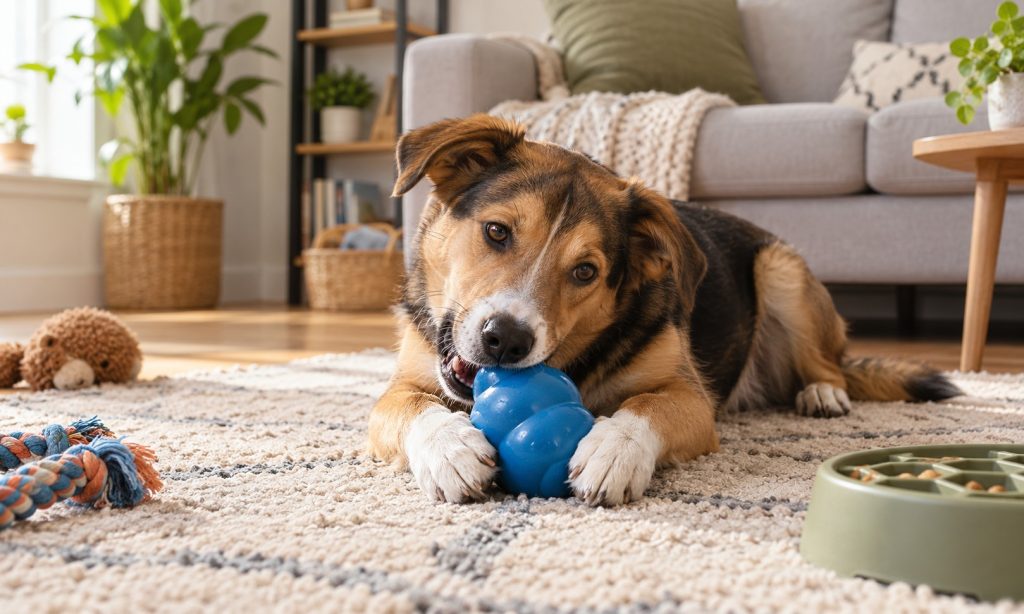
If your dog gnaws a toy, steals a sock, or works on a cardboard box, it is natural to wonder what the behavior means. Why Do Dogs Chew? Chewing is a normal way for dogs to explore and interact with their surroundings, but the reasons can change with age, routine, and health. Some dogs chew during play or teething. Others chew because they are bored, stressed, or trying to reach something that smells interesting. This guide explains common causes, how to redirect chewing without punishment, and when sudden or intense chewing deserves veterinary attention. It also answers why do dogs like bones and how to provide safer outlets without relying on real bones. A careful look at context can make redirection more effective.
Why Do Dogs Chew?
Chewing is a normal canine behavior. Dogs use their mouths to investigate texture and scent, manipulate objects, play, and satisfy an urge to gnaw. The action can be enjoyable in itself. Why Do Dogs Chew household objects specifically? Often, the object is available, interesting, and rewarding to interact with. A shoe may smell like a familiar person, while a paper towel roll crinkles and tears easily.
Chewing can also serve different purposes at different times. A young dog may mouth objects while learning about the world. A dog left alone with little to do may turn to furniture. A dog under stress may chew as part of a broader pattern of pacing, vocalizing, or struggling to settle. The behavior alone does not reveal the cause, so consider when it happens, what the dog chews, and what happens just before and after.
Common reasons dogs chew
Dogs chew for several reasons; the setting and object can help explain which one may be involved.
Exploration and play
Dogs gather information through smell, taste, and touch. A new object may invite sniffing and mouthing. Some dogs enjoy pulling apart soft toys or carrying objects from room to room. If your dog chews briefly and can switch to an appropriate toy, this may simply be ordinary play. Why Do Dogs Chew toys even when they have plenty? Different textures and shapes can make certain toys more appealing than others.
Puppy teething and development
Puppies often chew as they explore and as their mouths develop. They need safe, age-appropriate outlets and careful supervision. Put tempting shoes, cords, children’s toys, and small objects out of reach. Offer suitable toys and praise the puppy for choosing them. Avoid giving a puppy an object that resembles something you do not want chewed later, such as an old shoe.
Teething should not be used to explain every destructive behavior. If chewing is intense, painful, or accompanied by difficulty eating, drooling, or a sudden change in behavior, contact your veterinarian. For puppy-specific chewing behavior, ask your veterinarian which materials are appropriate for your puppy’s age and teeth.
Boredom or unmet activity needs
Dogs need opportunities to move, explore, rest, and interact. When a dog has long stretches with little activity, chewing may become a way to pass time. This does not mean every dog needs more intense exercise. The right mix depends on age, health, breed traits, temperament, and household routine. Try short training sessions, scent games, walks suited to your dog, and food puzzles that fit the dog’s diet.
Why Do Dogs Chew when a person leaves the room? Sometimes the dog is simply continuing an activity that has become rewarding. In other cases, the chewing may occur alongside distress about separation. Watch for a broader pattern, such as persistent barking, pacing, escape attempts, or accidents only when the dog is alone. A veterinarian or qualified behavior professional can help assess that pattern.
Stress, frustration, or attention
Some dogs chew more during changes in routine, unfamiliar visitors, loud events, or periods of uncertainty. Others learn that grabbing an object reliably brings a person running over. Avoid yelling or chasing, which can turn the object into a game or increase stress. Calmly manage access, trade for an appropriate item, and reward the behavior you want to see.
Medical problems or compulsive behavior
A new chewing pattern can sometimes be related to discomfort, dental disease, nausea, or other health issues. Dogs that repeatedly chew and swallow non-food objects may have pica, which can lead to poisoning, dental injury, or gastrointestinal obstruction. If your dog eats fabric, rocks, plastic, or other non-food materials, seek veterinary advice rather than treating it as ordinary mischief.
Why Do Dogs Chew one part of their body or one object over and over? Repetitive behavior that is hard to interrupt, causes injury, or disrupts normal activities needs professional assessment. A veterinarian can check for medical causes and discuss whether behavior support is appropriate.
How to redirect chewing
Start by preventing access to unsafe or valuable items. Use gates, closed doors, storage bins, and supervised time in dog-proofed spaces. Put electrical cords, medications, cleaning products, socks, and small objects out of reach. Prevention reduces opportunities to rehearse the behavior while you teach alternatives.
Offer a few safe chew choices with different textures, then observe which ones your dog uses. Choose a size the dog cannot swallow whole, inspect toys for damage, and remove pieces that may break off. Avoid items that are so hard they could damage teeth. Bones can splinter, lodge in the digestive tract, or fracture teeth. If you are asking “Are bones safe for dogs?” the safest course is to avoid real bones and discuss suitable chew activities with your veterinarian. See our published article on salmon bones and dogs for a related food-safety question.
When you catch your dog chewing an approved toy, calmly praise or reward that choice. If the dog has an inappropriate object, offer a trade rather than grabbing it or creating a chase. Keep training sessions short and consistent. Reward a “drop it” cue with something the dog values, then return to a safe activity when appropriate.
Rotate toys so they remain interesting, and pair chewing with quiet rest periods. A dog that is tired but overstimulated may need a calm routine rather than more activity. Add calm sniffing games for variety. Dental care is separate from chew play; ask your veterinarian about brushing and oral exams.
Why do dogs like bones?
Many dogs are attracted to the smell, taste, texture, and challenge of chewing bones. That preference can make a bone highly rewarding, but it does not make the object safe. Cooked bones can splinter, and raw bones can still cause choking, tooth fractures, digestive obstruction, and bacterial exposure. Why Do Dogs Chew bones when other toys are available? The scent and food value may make them especially motivating. Keep meal bones and trash out of reach, and offer a safer activity instead.
When to ask for help
Contact your veterinarian if chewing begins suddenly, intensifies, involves swallowing non-food items, or occurs with changes in appetite, drooling, bad breath, facial sensitivity, vomiting, or trouble eating. Seek urgent care if you suspect your dog swallowed a dangerous object or is choking. Tell the clinic what was chewed, how much may be missing, when it happened, and any symptoms you have noticed.
For persistent destructive chewing, keep a simple log: time, location, what happened beforehand, what was chewed, how long the behavior lasted, and whether anyone was home. A brief video can also help a veterinarian or behavior specialist understand the pattern. Why Do Dogs Chew should not be answered from one clue alone; context often points toward the next useful step.
What to observe before changing the routine
For a week, note when the chewing starts, which objects are targeted, how long it lasts, and whether the dog can switch to another activity. Include the time of day, recent exercise, visitors, alone time, meals, and any stressful event. This simple record can reveal patterns, such as chewing only when the household is quiet or only after a certain object is left within reach. Why Do Dogs Chew? The setting often helps answer the question better than guessing from the object alone.
Look at what the dog does immediately before and after chewing. Does the dog sniff, grab, and settle? Does it pace, pant, vocalize, or try to escape? Does the behavior stop when a person returns? These observations can help distinguish ordinary exploration from a possible anxiety pattern, though only a professional can assess a behavior disorder. Why Do Dogs Chew more intensely after a household change? Uncertainty or a new schedule may affect some dogs, and a predictable routine can help while you seek advice.
Also check whether the dog’s mouth appears comfortable. A sudden preference for soft toys, dropping food, chewing on one side, or avoiding face handling deserves a veterinary exam. Dental pain is not always obvious. Why Do Dogs Chew less than usual? A change in interest can be just as useful to notice as an increase.
Make the environment easier to succeed in
Set up a dog-safe area with water, a comfortable resting spot, and a few durable toys suited to the dog’s size. Rotate toys instead of leaving every item out at once. Use doors, gates, and closed storage to protect shoes, cords, children’s items, and laundry. This is management, not a punishment; it reduces mistakes while the dog learns.
Choose activities based on the dog’s habits. A dog that likes shredding may enjoy a supervised, veterinarian-approved alternative designed for that behavior. A dog that wants to carry objects may prefer fetch or a soft toy. Avoid household items that can splinter, choke, tangle, or be swallowed. Why Do Dogs Chew objects that are unsafe? Dogs do not understand the difference between a valuable shoe and a permitted chew unless people make the safe choice clear and rewarding.
If redirection, barriers, and routine do not improve the behavior, ask your veterinarian for help. Keep your notes and a short video if you can record safely. A veterinarian may look for medical concerns and help you decide whether a credentialed behavior professional is appropriate. Why Do Dogs Chew is a question with several possible answers, so the plan should match the dog rather than rely on one correction.
How to redirect chewing in the moment
When you catch your dog chewing an unsafe object, stay calm and prevent access if you can do so safely. Offer an appropriate toy or invite the dog into a simple activity, then praise the choice to engage with that item. If the dog has something valuable, trade for a treat or another safe object instead of chasing or grabbing. This reduces the chance that the dog will swallow the item or guard it.
Why Do Dogs Chew things they should leave alone? The behavior often works for the dog: the object is available, interesting, or gets a reaction. Management matters as much as training. Use closed doors, covered bins, cord protectors, and a clear place for toys. Give the dog safe choices before predictable times when chewing tends to start, such as after meals or before you leave.
Keep a simple behavior log
For several days, note the time, location, object, activity beforehand, and what happened after the chewing. Include whether the dog was alone and whether the behavior involved swallowing. This can reveal a pattern that is easy to miss during a busy day. Why Do Dogs Chew more after walks, for example, may relate to tiredness, excitement, or a need to settle; the log helps you test a routine change rather than guess.
Bring the notes to your veterinarian if chewing is new, escalating, focused on non-food objects, or paired with appetite, dental, digestive, or behavior changes. A professional can help distinguish ordinary exploration from pain, pica, anxiety, or another issue. Why Do Dogs Chew is a useful question, but the safest answer comes from looking at the whole pattern, not one object in isolation.
Frequently Asked Questions
These answers address common chewing behaviors and when to seek help.
Is chewing normal for dogs?
Yes. Chewing is a normal way for dogs to explore, play, and interact with objects. The goal is to guide it toward safe items and watch for sudden or harmful changes.
Why do dogs like bones?
Their scent, taste, and texture can be rewarding. However, real bones can injure teeth or the digestive tract, so ask your veterinarian about safer chewing options.
Should I punish my dog for chewing furniture?
Punishment can increase fear and does not teach which item is appropriate. Manage access, provide suitable alternatives, and reward your dog for using them.
When is chewing a medical concern?
Contact a veterinarian if chewing starts suddenly, is focused on the body, involves swallowing objects, causes injury, or occurs with changes in eating or behavior.
Can chewing mean a dog is anxious?
It can be one sign, especially when paired with distress during absences or other changes. A veterinarian or behavior professional can assess the full pattern.
Final Words
Why Do Dogs Chew? Most chewing reflects normal exploration, play, development, or a need for a more suitable activity. Stress, dental discomfort, illness, or compulsive behavior can also contribute. Observe the context, make unsafe items inaccessible, and reward appropriate chewing. If your dog swallows objects or the behavior changes suddenly, contact your veterinarian. And while many dogs enjoy bones, why do dogs like bones does not change the safety risks: real bones can harm teeth and the digestive tract.









