
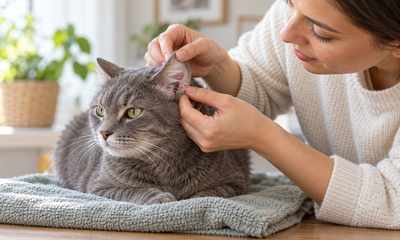
Indoor cats can still develop ear wax, irritation, or an ear disorder, but many healthy cats do not need routine ear cleaning. If you are asking what to look for in cat ear cleaner for indoor cats, first find out whether cleaning is needed at all. A liquid cleaner cannot diagnose an infection, ear mites, a foreign object, or a damaged eardrum. A search for the Best Cat Ear Cleaner for Indoor Cats should not come before an exam when symptoms are present. Redness, pain, odor, discharge, frequent head shaking, or persistent scratching call for veterinary guidance before you put anything in the ear. If a veterinarian recommends cleaning, the right product depends on your cat’s ear condition and the instructions for use. This guide explains what to ask, which label details matter, what to avoid, and how to handle a cleaning session gently. It does not replace an exam or prescribe a treatment for an ear problem.
Do indoor cats need ear cleaner?
Not always. For a healthy cat, what to look for in cat ear cleaner for indoor cats may be no cleaner at all. Many healthy cats keep their ears clean without routine product use. Indoor living does not remove every cause of ear irritation, but it also does not mean that regular cleaning is automatically necessary. Ask your veterinarian whether your cat’s ears need cleaning and how often to do it.
Excessive cleaning can irritate the ear canal. A cleaner also may be unsuitable if the ear is inflamed or the eardrum is damaged. The first step in what to look for in cat ear cleaner for indoor cats is therefore professional guidance, not a scent, ingredient list, or claim on a bottle.
What to look for in cat ear cleaner for indoor cats
If a veterinarian has recommended home cleaning, choose a product and method that the veterinary team confirms are appropriate for your cat. What to look for in cat ear cleaner for indoor cats includes clear directions, suitability for the reason cleaning was recommended, and a plan for stopping if your cat shows discomfort.
Ask why cleaning is needed
Ask whether the goal is to remove visible debris, manage recurring wax buildup, or prepare for a prescribed ear medication. These are different situations. For what to look for in cat ear cleaner for indoor cats, consider the exam findings first. A cleaner does not treat every cause of discharge or itching, and an ear medication may require a specific cleaning plan. Do not use a household liquid or leftover product from another pet without veterinary advice.
The supporting keyword how to choose the right cat ear cleaner for indoor cats should begin with this question: what did the veterinarian identify, and what does the care plan require? If the cause is unclear, an exam may be needed before cleaning begins.
Read the intended-use directions
Check the label for the species and age range, intended use, application directions, storage instructions, and warnings. Make sure the cap and applicator are intact and the solution has not expired. If the label is vague or the product’s purpose does not match the vet’s instructions, pause and ask before use.
Do not choose a cleaner because it claims to prevent or treat mites, yeast, or bacterial infection. Ear disorders can have different causes and may require an examination and testing. The veterinarian should direct treatment and explain whether cleaning belongs in the plan.
Check ingredients with your veterinarian
Ask the veterinary team about the formula before using it, especially if your cat has a history of ear irritation, allergies, surgery, or a known eardrum problem. Some ingredients can sting or irritate an inflamed canal. Do not use alcohol, hydrogen peroxide, vinegar, essential oils, or home remedies in the ear unless a veterinarian specifically directs you.
A “natural” or fragrance-free label does not prove a product is appropriate for a painful or inflamed ear. If the cleaner causes strong discomfort, stop and contact the veterinary clinic for instructions. Do not try a second product to see whether it feels better.
Consider packaging and handling
Choose packaging you can use without inserting the bottle tip into the ear canal. A clean applicator helps reduce contamination, but it should not touch the ear. Check whether the container is easy to hold while supporting your cat and whether the instructions require another person to help.
For what to look for in cat ear cleaner for indoor cats, handling is as important as the formula. If your cat struggles, bites, or becomes highly distressed, stop rather than restraining it more firmly. Ask the veterinary team to demonstrate the technique or discuss another plan.
Signs that need a veterinary exam first
Do not start home cleaning if an ear looks red, swollen, painful, or has a strong odor or unusual discharge. Repeated head shaking, persistent scratching, a head tilt, balance changes, or sensitivity when the ear is touched also deserve veterinary attention. These signs can occur with infection, mites, inflammation, trauma, or other conditions.
A dark discharge or debris does not confirm ear mites by itself. A veterinarian may need to examine the ear canal and a sample to identify the cause. A cleaner can remove visible debris without addressing the underlying problem, and delaying diagnosis may prolong discomfort. If you are also tracking skin itching, our guide to why a cat may itch without visible fleas explains why itching can have several causes.
Seek prompt care if your cat seems very painful, loses balance, has a sudden change in hearing or behavior, or becomes unwell. Do not probe the ear to find out how deep the problem goes.
How to choose the right cat ear cleaner for indoor cats
When choosing what to look for in cat ear cleaner for indoor cats, start after the veterinarian confirms that home cleaning is appropriate. Use only the product and frequency they recommend. How to choose the right cat ear cleaner for indoor cats is not about selecting the strongest formula; it is about matching the cleaning method to the cat’s exam findings and following the care plan accurately.
- Ask the clinic to confirm the exact product type and how often to use it.
- Read the label and check that it matches the veterinarian’s directions. This step is central to what to look for in cat ear cleaner for indoor cats.
- Gather cotton balls or gauze and treats, if the clinic recommends them.
- Choose a calm place and stop if your cat shows pain or severe distress.
- Record any reaction and tell the clinic before the next cleaning.
Many people searching for the Best Cat Ear Cleaner for Indoor Cats may be trying to handle a symptom at home. If your cat has no ear problem and your veterinarian has not recommended cleaning, you may not need a cleaner at all. If a cleaner is recommended, ask the clinic to demonstrate the technique and confirm what results should prompt a call.
Using a veterinarian-approved cleaner carefully
Follow the instructions provided by your veterinarian and the product label. Keep the bottle tip from touching the ear. Do not insert cotton swabs, fingers, or other objects into the canal. The visible outer ear can be wiped gently with gauze or a cotton ball when the clinic says it is appropriate, but do not push debris deeper.
Some cats shake their heads after liquid is applied. If your veterinarian has shown you a technique, use it exactly as directed and wipe away only the material that reaches the outer ear. Do not improvise by adding more solution, combining products, or cleaning more often to remove every trace of wax.
A gentle, brief session is another part of what to look for in cat ear cleaner for indoor cats. Make the session brief. Offer a treat or calm praise if your cat accepts it. If the cat resists strongly, stop and contact the clinic about safer handling. Some cats need cleaning performed at the veterinary practice, especially when ears are painful or heavily blocked.
How often should indoor cats have their ears cleaned?
There is no universal schedule for every cat. Many healthy cats need no routine cleaning. Cats with recurring buildup or a diagnosed condition may have a specific plan from their veterinarian. Do not follow a weekly or monthly schedule from a general online article unless it matches your cat’s care instructions.
Recheck the plan if your cat develops new discharge, odor, redness, pain, or frequent scratching. Do not respond by cleaning more often. Ask again what to look for in cat ear cleaner for indoor cats if symptoms have changed. A change in symptoms can mean the cause needs reassessment.
Frequently Asked Questions
1. Do indoor cats need their ears cleaned?
Many healthy cats do not need routine cleaning. Ask your veterinarian whether your cat’s ears need care and how often to clean them.
2. Can I use hydrogen peroxide or alcohol in my cat’s ears?
Do not use these or other home remedies unless a veterinarian specifically instructs you. They may irritate an inflamed ear canal.
3. Can I use a cotton swab to clean deep inside a cat’s ear?
No. Do not insert cotton-tipped applicators or other objects into the canal. They can injure the ear or push debris deeper.
4. What if my cat’s ears smell or have discharge?
Contact your veterinarian before cleaning. Odor or discharge can have several causes and may need examination or testing.
5. How often should I use cat ear cleaner?
Follow the schedule given by your veterinarian. Do not increase frequency without checking, because over-cleaning can irritate the ear.
Final Words
The safest first step is confirming that your cat needs ear cleaning. What to look for in cat ear cleaner for indoor cats means checking the veterinarian’s instructions, the intended use, and the handling method. Avoid home remedies and do not put anything into a painful, red, or discharging ear without veterinary guidance. A cleaner can support a care plan, but it cannot diagnose or treat an ear disorder on its own. If you are still considering the phrase Best Cat Ear Cleaner for Indoor Cats, use it as a prompt to ask your veterinarian what is appropriate for your cat, rather than choosing based on claims alone.
Reference
These veterinary and university sources informed the ear-care and safety guidance in this article.
- Cornell University College of Veterinary Medicine: Feline Ear Disorders
- Texas A&M University College of Veterinary Medicine: Ear Care for Pets
- Washington State University Veterinary Teaching Hospital: Examining and Medicating a Cat’s Ears
- MSD Veterinary Manual: Otitis Externa in Cats
- 2022 AAFP/ISFM Cat Friendly Veterinary Interaction Guidelines









