A saddle pad can creep over roots or on slopes. Repeated tack checks disrupt a trail ride. The right non-slip saddle pad can add grip, but it cannot make a poorly fitted saddle fit. This guide compares western trail pads, gel layers, and under pads. Match each design to your saddle, horse, and ride length. Learn how cushioning, airflow, shape, and thickness affect the choice. Each style also has trade-offs. For more trail tack planning, you can also compare our guide to horse boots for trail riding. Use the product details as a shortlist, then confirm current dimensions and care instructions before choosing.
Quick Picks
These picks include full trail pads and thinner grip layers. Match each one to the saddle and pad setup you already use.
| Product | Best For | Key Advantage | Buy | |
|---|---|---|---|---|
| Reinsman Contoured Trail Pad with Tacky Too Bottom | Dropped-rigging trail saddles | Non-slip Tacky Too underside | View on Amazon | Jump to Review |
| Reinsman M2 Lite Contour Trail Pad | Lighter full-size trail pad | Listing claims 40% lower weight than traditional pads | View on Amazon | Jump to Review |
| Reinsman Square Contour Tacky Too Under Pad | Adding grip beneath a favorite pad | Designed to sit beneath a favorite saddle pad | View on Amazon | Jump to Review |
| THREE ARCHERS Silicone Gel Saddle Pad | Washable gel-style grip layer | Silicone gel construction | View on Amazon | Jump to Review |
| Ovation Perforated Silicon Anti-Slip Half Pad | Compact English trail saddles | Silicone grip is listed | View on Amazon | Jump to Review |
| Pro Rider Western Endurance Barrel Gel Tack Anti-Slip Neoprene Saddle Pad | Compact western gel-and-neoprene pad | Western saddle style | View on Amazon | Jump to Review |
| Harrison Howard Perforated Neoprene Saddle Pad Liner | Perforated liner for everyday trail use | Perforated neoprene construction | View on Amazon | Jump to Review |
Our Trail Saddle Pad Picks
A non-slip pad is only one part of stable tack. Start with a correctly placed, well-fitted saddle, then choose pad coverage and grip that work together. These picks are compared by their listed shape, materials, intended use, and practical limitations.
Reinsman Contoured Trail Pad with Tacky Too Bottom

What We Like
- Non-slip Tacky Too underside
- Anatomical spine cut and relief channel
- Comfort felt for uneven terrain
- Listing describes wear, stain, and UV resistance
What We Don’t Like
- Trail-saddle shape may not suit every saddle
- Full felt pad adds more bulk than a thin liner
Trail saddles can shift on climbs, descents, and turns. A gripping underside may help when the saddle and tack fit correctly. The Reinsman Contoured Trail Pad is described for trail saddles with dropped rigging. Its Tacky Too bottom is intended to improve grip while remaining breathable. The listing also says it does not pinch or pull the horse’s hair. That construction may appeal to riders who want a full-size pad rather than a thin friction layer. The listing includes a contoured spine cut and relief channel. Comfort felt is intended to absorb some impact over uneven ground. These are design claims, not a guarantee that the pad will correct saddle movement or prevent soreness.
The listing describes a 30-by-34-inch pad with a microsuede top and materials said to resist wear, stains, and UV exposure. These details may suit repeated outdoor use. Riders get broad coverage and a non-slip surface in one piece. It is still important to match the pad’s shape to the saddle skirt, rigging, and horse’s back. More padding is not automatically better; excess thickness can change how a saddle sits. Brush away dry debris and inspect the underside for packed dirt or rough areas after rides. If the saddle still rolls or slides, reassess fit and tack. Do not simply tighten the cinch or add more pads.
My Recommendation
This is the most directly trail-oriented option in the group for a dropped-rigging western saddle. Consider it when you want a contoured full pad with a grippy underside and felt cushioning. Its shape and thickness still need to work with your individual saddle and horse.
Reinsman M2 Lite Contour Trail Pad

What We Like
- Tacky Too underside described as non-slip
- Contoured shape with spine-relief channel
- Moisture-wicking felt and quick-drying claim
- Listing specifies a 30-by-34-inch size
What We Don’t Like
- Listing says it works best with average conformation
- Full-pad construction may be more than short rides require
A full trail pad can feel substantial beneath the saddle, particularly on a longer outing. The M2 Lite is presented as a lighter alternative to traditional pads. Its listing claims a 40% weight reduction. That comparison is manufacturer-provided rather than independently measured here. Its design includes a contoured shape, spine-relief channel, cushioning, and Tacky Too material on the underside. The grip layer is intended to limit movement without pinching or pulling hair. For trail riders, the combination may be worth considering when they want a built-in pad rather than adding a separate liner. The product listing identifies average horse conformation as its best fit, so shape and saddle clearance deserve attention before purchase.
The listing describes moisture-managing felt that wicks sweat and dries quickly. Its top is intended to resist wear, stains, and UV exposure. These features may help during regular riding. They do not establish a precise temperature, lifespan, or result for every horse. Compare the 30-by-34-inch footprint with your saddle and the coverage you prefer. Check that the front edge does not crowd the withers and that the pad lies flat rather than bridging or bunching. A thinner pad may suit a close-fitting saddle. More cushioning may be unsuitable if it changes the saddle’s balance. The best choice is the one that stays smooth and allows the saddle to fit as intended.
My Recommendation
Choose the M2 Lite when you want the contour and grip of a trail pad with a listing-described lighter build. It may suit riders who cover varied terrain and prefer a full-pad format. Check the conformation note and saddle clearance carefully before deciding.
Reinsman Square Contour Tacky Too Under Pad

What We Like
- Designed to sit beneath a favorite saddle pad
- Made to sit beneath a favorite saddle pad
- Listed 3/8-inch padding
- Quick-drying and easy-clean claim
What We Don’t Like
- Adds a layer beneath the existing pad
- Square 30-inch shape may not suit every skirt
If your comfortable saddle pad shifts, consider a dedicated underlayer. That may be more targeted than replacing the whole setup. Reinsman describes this square contour Tacky Too model as an under pad. It is intended to help keep a favorite pad from slipping. The listing gives a 30-by-30-inch footprint and 3/8-inch thickness. It also describes a breathable underside that distributes pressure and absorbs shock. Because it is an extra layer, this option should be assessed as part of the complete saddle-and-pad stack. It is not a full replacement pad and does not resolve poor saddle fit. Measure the existing pad and saddle skirt to confirm that the underlayer will remain covered and lie flat during movement.
The listing says the material does not collect hair or trap heat and sweat. It is also described as quick-drying and easy to clean. Treat those as product claims; actual care should follow the current label and observed condition. Before a trail ride, position the under pad and outer pad together, then check for wrinkles, exposed edges, or pressure from added thickness. The extra layer may be convenient when the main pad fits well but needs additional friction at the horse’s back. It can be less suitable when a saddle already sits tightly or when the pad stack reduces clearance. If sliding continues, investigate saddle balance, cinch placement, and the horse’s conformation with a qualified saddle fitter.
My Recommendation
This under pad suits riders who like their current saddle pad and want to add a grippy layer beneath it. It is a practical alternative to buying another full pad, provided the extra thickness and square footprint do not interfere with saddle fit.
THREE ARCHERS Silicone Gel Saddle Pad

What We Like
- Silicone gel construction
- Listing says it fits beneath Western or English saddles
- Rinse-clean care claim
- Endurance riding is among the listed uses
What We Don’t Like
- Gel may change saddle feel or clearance
- Confirm dimensions and trimming instructions
A gel-style layer has a wipeable surface. It offers a low-profile grip option beneath a Western or English saddle. The THREE ARCHERS listing describes a silicone gel saddle pad for both styles, with shock absorption and a non-slip function. It also presents the item as an all-purpose option for trail, endurance, and arena use. Those broad-use claims do not mean every saddle shape or horse back will fit it equally well. Check the current dimensions before riding. Position the pad to avoid restricted movement or exposed edges. If a product is cuttable, follow the seller’s exact instructions and avoid trimming areas that affect fit or structural stability.
The product listing says the gel can be rinsed with water and describes it as waterproof and durable. Rinsing may simplify cleanup after dusty or muddy rides. Remove hair and grit before the next use. Check the surface for tears, rough edges, or residue, and let it dry as directed. A low-profile pad can add grip without thick cushioning. Do not add one automatically to correct saddle movement. If the saddle is already close to the horse or the horse shows signs of discomfort, pause and get the fit assessed. Compare this option with a breathable textile or neoprene liner if heat and sweat management are priorities.
My Recommendation
The THREE ARCHERS model is worth comparing when a washable gel surface and broad saddle compatibility are priorities. It may work for riders seeking a simple grip layer, but its thickness, edge placement, and fit should be checked with the saddle you actually ride.
Ovation Perforated Silicon Anti-Slip Half Pad

What We Like
- Silicone grip is listed
- Perforations for airflow
- Contoured shape
- Half-pad format limits extra coverage
What We Don’t Like
- Not a full western trail pad
- Listing provides limited care and sizing detail
English-saddle riders who take their horses out on trails may prefer a compact half pad over a large western-style blanket. The Ovation Perforated Silicon Anti-Slip Half Pad is listed as a contoured half-pad with perforations and a silicone grip surface. Its product details emphasize light weight and a discreet profile. The half-pad format pairs with an English saddle cloth. It offers less coverage than a full trail pad. Confirm that its shape lines up with the saddle panels and that the cloth beneath it remains smooth. A half pad should be selected for the saddle and horse, not only for its grip material. If the pad shifts, check whether the saddle itself fits and balances correctly.
Product information says the perforations are intended to allow airflow. The grip is meant to keep the saddle and pad stable. The listing provides little detail about dimensions or cleaning, so confirm the current size and care instructions before ordering. After a ride, inspect the silicone surface for trapped grit and clean it without using products that may damage the material. This pad may make sense for riders who value a relatively small friction layer and already use a well-fitted English saddle cloth. It is less suitable for someone who needs a full western pad, significant cushioning, or extensive skirt coverage. On longer rides, check your horse’s back and the pad position when you stop, especially if the terrain has been steep or uneven.
My Recommendation
Consider the Ovation half pad for an English trail saddle when you want a perforated, compact grip layer. Its limited coverage and sparse listing details make fit verification important. Riders using a western saddle should compare full-size trail-pad options instead.
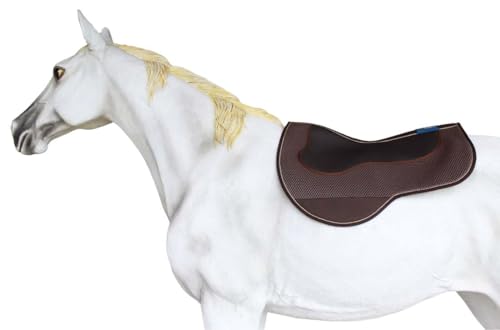
Pro Rider Western Endurance Barrel Gel Tack Anti-Slip Neoprene Saddle Pad
What We Like
- Western saddle style
- Gel-filled design with anti-slip neoprene
- Listing gives 28-inch spine and 19-inch drop
- Hose-clean care is listed
What We Don’t Like
- Smaller drop may not cover every saddle skirt
- Limited feature detail beyond its core construction
Some riders want a western pad with a grippy surface but less bulk than a large rectangular trail blanket. The Pro Rider 6402BR is described as an endurance and barrel-style western saddle pad made with gel-filled anti-slip neoprene. Product information lists a 28-inch spine and 19-inch drop. Those measurements are useful for screening, but the actual coverage depends on the saddle skirt and the horse’s build. Before buying, compare the pad’s dimensions with your tack and consider whether the saddle stays balanced across the back. The listing also mentions shock absorption and a lightweight, breathable construction. These are product-description claims and should not be treated as a substitute for checking fit or the horse’s comfort after riding.
The product information describes a washable surface that can be cleaned with soap and a hose. It also states that the gel is intended to regulate temperature, though a precise temperature effect is not independently established here. The compact dimensions may appeal to riders whose western saddle has a smaller footprint, while riders needing broad skirt coverage may prefer a larger pad. Look for even contact, smooth edges, and room at the withers after saddling. Remove dirt and sweat after trail use and allow the pad to dry fully according to the care instructions. If a compact pad shifts on hills, do not assume a tighter cinch is the fix; check saddle balance, pad placement, and whether the model matches your horse.
My Recommendation
The Pro Rider is a candidate for riders who want a western-specific gel-and-neoprene design with listed compact dimensions. It may be easier to match with a smaller saddle footprint, but verify the drop and coverage before using it on long trail outings.
Harrison Howard Perforated Neoprene Saddle Pad Liner

What We Like
- Perforated neoprene construction
- Designed to sit beneath a saddle pad
- Listing says it helps reduce sweat and dirt transfer
- Trail riding and ranch work are listed uses
What We Don’t Like
- Dimensions not shown in available product details
- Not a complete saddle pad
Consider a liner if your main saddle pad otherwise works but tends to slide. It may also protect the pad underneath. Harrison Howard’s perforated neoprene liner is described as an anti-slip under pad for riding. The listing says perforations improve airflow and flexibility. Neoprene is intended to help secure the liner and outer pad. It is also described as light cushioning. The liner may reduce sweat and dirt transfer to the main pad. Those benefits depend on correct placement and a compatible saddle-pad combination. Since it is a liner, do not expect it to provide the coverage, shape, or support of a full-size trail saddle pad.
The listing names everyday riding, training, trail riding, and ranch work as intended uses. It does not provide dimensions in the API details, so check the current seller page and measure your existing pad before choosing. A liner that is too small can bunch or expose edges; one that is too large may wrinkle beneath the outer pad. Place both layers carefully, then recheck after mounting and at the first rest stop. Clean off grit and sweat before they dry into the material, following the care label. If the horse’s back becomes unusually warm, tender, or irritated, stop using the setup and investigate the cause. A breathable liner can support a well-fitted tack arrangement, but cannot correct an ill-fitting saddle.
My Recommendation
This liner may suit riders who want an anti-slip layer beneath a saddle pad and appreciate a perforated neoprene design. It is not a full pad, so check dimensions and the combined thickness. Choose it only if it lies flat under your existing tack.
How to choose Best Non Slip Saddle Pad for Trail Riding
Choose a pad that supports a well-fitted saddle, lies flat, and suits the horse’s back. On trails, prioritize fit, grip, coverage, and care over extra thickness. Match the material to your ride and cleaning routine.
Start with saddle fit and movement
A saddle pad should not be expected to correct a saddle that rocks, bridges, crowds the shoulders, or repeatedly slides. Check that the saddle sits evenly and that the pad is centered, smooth, and clear of the withers. If the saddle shifts forward or sideways, review saddle balance, rigging, cinch placement, rider balance, and the horse’s conformation. A qualified saddle fitter can assess persistent movement. Adding layers may alter clearance or pressure, so more padding is not automatically safer.
Choose grip, shape, and thickness together
Full trail pads suit riders who want broad coverage, felt cushioning, and a built-in grip surface. Under pads and gel layers are thinner choices that sit beneath or alongside an existing pad. They may help when the current pad is otherwise suitable, but every extra layer changes the setup. Match a square, contoured, or half-pad shape to the saddle skirt and the horse’s back. For an English saddle, a compact half pad may be more appropriate; a western trail saddle often calls for a larger profile. Check dimensions instead of relying on labels such as universal.
Grip materials vary. Tacky-style undersides, silicone, gel, and neoprene each feel different and need appropriate cleaning. Perforations can support airflow, while dense gel or thick layers may retain warmth depending on construction and conditions. Do not assume a marketing term guarantees that a saddle will stay put. For long rides, ride length and terrain increase the value of secure placement and a pad that is easy to inspect. Our guide to how far a horse may travel in a day can help you plan the outing itself.
Consider the trail, care routine, and your saddle type
Dirt, sweat, rain, and repeated use make easy cleaning useful. Brush away grit after a ride and follow the current product care label. Inspect seams, edges, gel, and neoprene for cracks, rough spots, or wear. A liner can be convenient if you want to protect a favorite outer pad; a full pad can be simpler when you need matching coverage and cushioning in one piece. Confirm that the material and shape suit your saddle before riding.
For sustained outings, also plan rest and water stops, and check tack when you pause. Riders preparing for longer mileage can read our guide to endurance horse distance for broader trail-planning context. No pad can guarantee stability across every horse, saddle, rider, and terrain combination. Choose the least complicated setup that fits correctly, stays smooth, and is easy to monitor.
Frequently Asked Questions
Can a non-slip saddle pad fix a saddle that keeps sliding? A grippy pad may reduce movement in a suitable setup. Persistent sliding can point to fit, balance, rigging, cinch placement, rider balance, or conformation. Have the full arrangement assessed.
Should a gel pad go above or below the saddle pad? Follow the product’s instructions. Some are designed beneath the saddle, while others are used with a cloth or as a liner. Do not stack layers without checking fit, clearance, and whether the pad lies flat.
Are western trail pads different from English half pads? They often differ in shape and coverage. Western saddles generally need larger pads under the skirt, while English half pads are compact and designed to work with an English saddle cloth. Match the item to your actual saddle.
How do I know if my saddle pad is too thick? Watch how the saddle sits with the pad in place. If added thickness crowds the withers, changes balance, or creates uneven contact, the combination may not be appropriate. A saddle fitter can help evaluate it.
What should I check after a long trail ride? Remove the tack and inspect the horse’s back and the pad for unusual warmth, dampness, rubbing, packed grit, or damage. Clean and dry the pad as directed before storing it.
Final Verdict
The Reinsman Contoured Trail Pad is the most trail-specific full pad here. Compare the M2 Lite if a lighter build matters. If your main pad works well, consider Reinsman’s Tacky Too Under Pad or Harrison Howard’s perforated liner. English-saddle riders can compare the Ovation half pad. Confirm fit and dimensions first: grip helps only when the whole saddle setup works for your horse.
Affiliate disclosure: This article contains Amazon affiliate links. If you purchase through them, PetAdvisorPro may earn a commission. As an Amazon Associate I earn from qualifying purchases.