
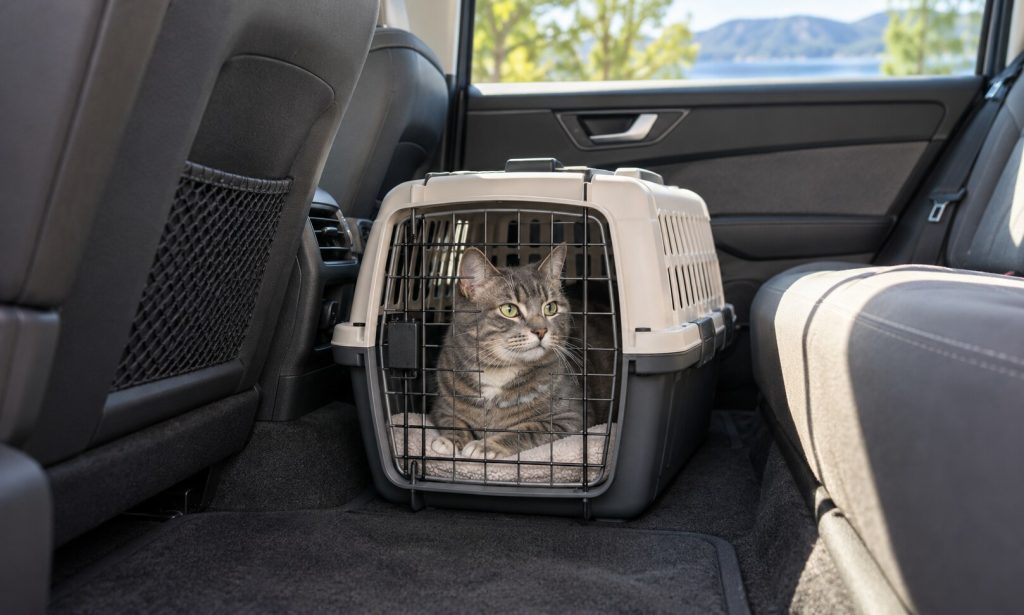
Long car trips are easier to plan when your cat has a secure, familiar space. The carrier must stay closed, allow comfortable posture, and fit safely in the vehicle. A carrier that works for a quick veterinary visit may be inconvenient for several hours, especially if it is hard to clean or difficult to access at stops. When choosing a cat carrier for long car trips, consider your cat’s size, temperament, the car’s layout, and how you will offer water and manage breaks. This guide explains fit, construction, restraints, preparation, and travel routines. No carrier can guarantee protection in a crash, so choose carefully and follow current veterinary and vehicle-safety guidance. If you need a separate overview, see our guide to cat carrier for long car trips.
Start with safe restraint
AVMA advises keeping cats confined in a carrier during car travel to prevent driver interference and escape during stops. Place the carrier away from airbags and secure it according to the carrier and vehicle guidance. The 2025 Feline Veterinary Medical Association statement recommends securing carriers on the floor behind the driver or passenger seat; seat belts should be used only with crash-tested carriers. Check the carrier’s instructions and your vehicle manual.
Check size and construction
Your cat should be able to sit, stand, turn, and lie in a natural position. Check weight limits as well as interior dimensions. Look for a stable base, durable seams, dependable latches, ventilation, and a door that cannot be pushed open. A top opening or removable top can make entry easier. A waterproof, wipe-clean surface and absorbent bedding help with spills.
Plan for the trip
Let the carrier remain open at home and reward calm exploration. Practice short rides before a long journey. Bring familiar bedding, water, and cleaning supplies. At rest stops, keep the cat inside the closed carrier unless you are in a fully enclosed, secure area. Never leave a cat unattended in a parked vehicle. For broader travel preparation, see our guide to helping cats cope with travel.
For safe hydration stops away from home, our guide to a travel water bottle for cats explains features to consider and how to practice using one.
Set up the carrier before leaving home
Check that all doors, zippers, and latches close fully before loading the cat. Put a familiar, absorbent blanket on the base and keep a spare liner, cleanup supplies, and water within reach. Avoid loose items that could block ventilation or become a hazard. Place the carrier where it will not slide, tip, or block an airbag. Follow the carrier maker’s instructions and your veterinarian’s travel advice.
Plan stops around the cat’s needs, but do not open the carrier beside traffic or in an unfamiliar parking lot. If the cat must be let out for care, use a secure enclosed room. Watch for repeated vomiting, panting, drooling, or distress and contact a veterinarian for guidance. Never leave the cat unattended in the vehicle, even for a short errand or with windows partly open.
Prepare the carrier for a long day in the car
For a multi-hour trip, plan how the carrier will be secured, accessed, and cleaned before you leave. It should be restrained so it cannot slide or tip during routine driving, while still allowing airflow and keeping the cat contained. Follow the carrier and vehicle instructions for the safest placement. Avoid putting loose objects where they could strike the carrier during a stop. Keep identification and emergency contact details with the cat, and bring familiar bedding that fits without blocking ventilation.
Decide in advance how you will manage water, food, litter, and rest breaks. Cats may not use a litter tray or eat during travel, and opening the carrier in an unsecured area can create an escape risk. If a break is needed, choose a closed, secure room or vehicle with doors and windows shut before opening the carrier. For cats with motion sickness, anxiety, or a medical condition, ask your veterinarian about an individual travel plan before departure.
Practice with the same carrier and car setup you plan to use. Begin with the carrier indoors, then sit in the parked car, and progress to short drives if the cat remains comfortable. Check for panting, drooling, repeated vocalizing, vomiting, or frantic movement, and stop to reassess safely. A long-trip carrier should be sturdy, correctly sized, easy to clean, and familiar to the cat; no design can replace preparation and careful supervision.
Frequently Asked Questions
Can a cat ride loose in the car?
No. A loose cat can distract the driver, interfere with controls, or escape when a door opens. Use a closed carrier.
Where should I put the carrier?
Follow vehicle and carrier instructions. Veterinary guidance commonly recommends a stable floor position behind a front seat, away from airbags.
Should I open the carrier at rest stops?
Keep the cat contained unless you are inside a secure enclosed space. Cats can bolt quickly in unfamiliar places.
How can I reduce carrier stress?
Leave it out at home, add familiar bedding, and build up from short practice trips. Ask your veterinarian about severe travel anxiety.
Can I leave my cat in a parked car?
No. Vehicle temperatures can become dangerous quickly. Take the cat with you in a safe carrier or arrange another plan.
Final Words
Choose a carrier that fits your cat, closes securely, and can be positioned safely in your vehicle. Practice before the trip and plan water, cleaning, and secure breaks. For more detail on a cat carrier for long car trips, review the car-travel guide alongside your veterinarian’s advice.









