
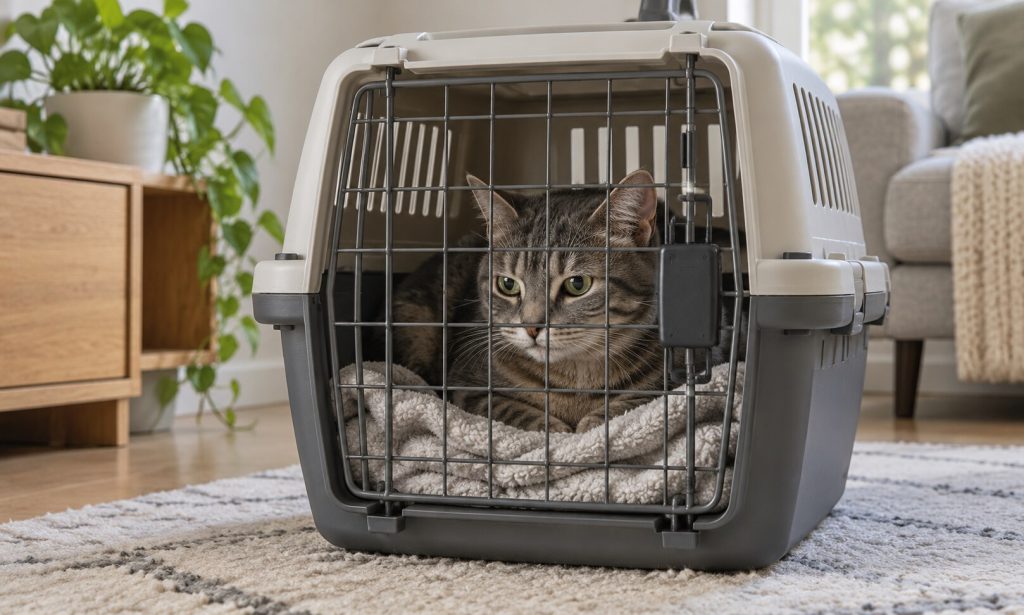
A nervous cat may find travel stressful, so a hard shell carrier should feel secure, steady, and easy to use. A rigid design can provide a firm base and may offer a removable top that helps with veterinary handling. Yet the shape alone will not make a fearful cat comfortable. When choosing a hard shell cat carrier for nervous cats, consider entry style, door security, ventilation, privacy, cleaning, and how you can introduce it at home. This guide explains those features and a gradual training approach. If travel causes intense distress, ask your veterinarian about a tailored plan before the trip. Consider whether the door opens widely and whether the top can be removed without startling your cat during a visit.
Choose a secure, easy-to-use design
A hard shell carrier gives a cat a rigid base, but its door and latches must stay secure. Check the door for a dependable locking mechanism and examine hinges, seams, and top-to-bottom fasteners. A removable top can let a nervous cat remain in the familiar bottom half during a veterinary exam. Look for ventilation on several sides without large openings that could permit escape.
Make the carrier feel less exposed
Choose a carrier that can be partly covered with a light towel without blocking airflow. Add familiar bedding that stays flat and does not slide. A top-loading or wide-opening design may reduce the need to push a reluctant cat through a narrow door. A hard plastic shell should be smooth inside and simple to wipe clean.
For a wider comparison of access and privacy features, see our guide to carriers for anxious cats.
Train gradually
Leave the carrier open in a quiet room. Let the cat investigate at its own pace and reward voluntary approaches. Add bedding and treats if appropriate, then practice closing the door briefly before trying short rides. The Feline Veterinary Medical Association recommends carrier acclimation and a stable travel position. Never force a cat into prolonged practice if it is panicking; speak with a veterinarian about a gradual plan.
Our guide on travel preparation for cats covers additional ways to plan calmly. A carrier cannot solve severe fear on its own, and medication decisions belong with your veterinarian.
Build a calm carrier routine
Keep the carrier in a familiar area between trips. Use a washable bed that smells like home and reward voluntary approaches. Once the cat enters comfortably, practice closing the door briefly, then reopen it before the cat becomes distressed. Gradually add lifting and a short car ride only when the cat tolerates each step. Move at the cat’s pace rather than trying to complete training in one session.
If the carrier will be used in a car, our guide to cat carriers for car travel discusses restraint and preparation for the ride.
For an appointment, ask the clinic whether it can examine the cat in the carrier’s bottom half. Avoid chasing the cat through the home or using the carrier only for stressful events. If the cat panics, hides for hours, or cannot be transported safely, call the veterinarian to discuss a behavior and travel plan.
Make the carrier familiar before travel day
A hard shell can be easy to clean and may open widely, but a nervous cat can still associate it with a stressful trip. Leave the carrier assembled in a quiet part of the home with the door secured open. Add familiar bedding and allow the cat to enter voluntarily. Offer food or treats nearby, then gradually place them farther inside. Do not trap the cat in the carrier during the first introduction or force a long session.
Compare the door’s latch, hinge, and opening size, and check whether the top can be removed safely if your veterinarian needs access to the cat. A removable top may help with a fearful cat who prefers not to be pulled through a small door, but the carrier must be assembled and latched correctly before transport. Look for smooth interior surfaces, ventilation on multiple sides, and a handle that keeps the carrier level. Inspect the shell and fasteners for cracks before every trip.
On travel day, secure the carrier in the vehicle and keep the cat inside while doors are open. A light cover may reduce visual stimulation if airflow remains unobstructed and the cat tolerates it. Watch for signs of severe distress and discuss recurring travel anxiety with a veterinarian. A hard-shell carrier is useful only when its size, ventilation, latch security, and the cat’s gradual acclimation all work together.
Frequently Asked Questions
Is a hard carrier better for every nervous cat?
No. Fit, entry, previous experience, and the individual cat all matter. Introduce any carrier gradually.
Does a removable top help?
It can make some veterinary exams easier and allow the cat to remain in the bottom half. Ask your clinic what it prefers.
Should I cover the carrier?
A light cover may reduce visual stimulation for some cats, but never block ventilation or overheat the carrier.
Can I use calming medication?
Discuss it with your veterinarian. Never use a medication without individualized guidance.
How do I clean a hard carrier?
Follow the manufacturer’s directions. Use a pet-safe cleaner, rinse if required, and dry it fully before use.
Final Words
A useful hard shell carrier combines a stable interior, secure latches, good airflow, and an entry that suits your cat. Pair the carrier with gradual, reward-based practice. Contact your veterinarian if fear is intense or travel causes significant distress.









