
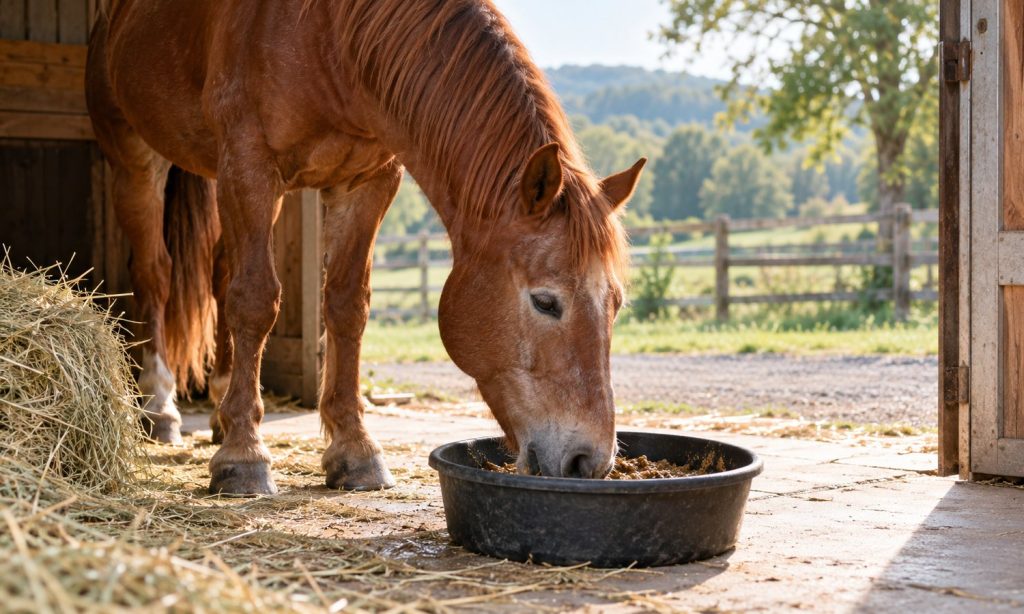
Choosing a senior horse feed supplement is easier when you first identify what the horse can eat, what nutrients its current ration supplies, and what has changed with age. Some older horses maintain condition on forage and a balancer; others struggle to chew hay or need a complete feed at a specific daily amount. A “senior” label alone does not tell you which situation applies. Start with a dental and veterinary check, then compare the feed’s purpose, nutrients, serving size, and fit with the horse’s forage. The Best Senior Horse Feed Supplement guide can help you recognize different product formats, but it should not replace an individual ration assessment. Choose to fill a real gap, not simply because the horse has reached a certain birthday.
Assess the horse before the feed bag
Older horses vary widely. One may be an easy keeper with good teeth, while another may have missing molars, trouble maintaining weight, or a metabolic condition. Record body weight if possible, body-condition score, appetite, manure, workload, and the types and amounts of forage and feed. Look for changes over time rather than relying on a winter coat or one weigh-in.
Ask a veterinarian to check teeth and investigate unexplained weight loss, poor appetite, persistent diarrhea, coughing while eating, or dropped feed. Dental disease, parasites, pain, and other illness can affect nutrition. A complete senior feed may be useful when chewing is impaired, but it will not correct every cause of poor condition. If the horse has PPID, insulin dysregulation, kidney disease, or another diagnosis, ask the veterinarian to review the feed choices.
Understand the feed’s intended role
Ration balancer or vitamin and mineral supplement
A ration balancer is designed to supply concentrated protein, vitamins, and minerals with relatively little energy when fed at its intended rate. It may suit a horse that receives adequate forage and calories but needs a more complete nutrient profile. Compare its feeding amount with the horse’s actual intake. A small scoop may not supply the listed nutrients if the product is fed below the label rate.
Senior concentrate or complete feed
A senior concentrate adds nutrients and energy to forage. A complete feed is formulated to provide the forage portion as well when fed at the specified amount. These products are not interchangeable. Check the label for phrases such as “complete feed,” minimum daily intake, and whether long-stem forage should remain available. Feeding a complete feed at only a token amount may leave nutrient gaps.
If the horse cannot chew hay effectively, ask the veterinarian or nutritionist whether soaked pellets, cubes, or a complete senior feed are appropriate. Follow soaking directions, provide fresh clean water, and supervise a horse that eats rapidly or has a history of choke.
Compare nutrients with the whole ration
Read the guaranteed analysis, ingredient list, feeding directions, calories, protein, fiber, fat, sugar and starch information, and mineral levels. Look for a product that fills an identified need. A second fortified feed can duplicate selenium, vitamin A, calcium, or other nutrients already present. Too much of some nutrients can be harmful, so avoid stacking several supplements without calculating the total ration.
Forage quality matters. Hay and pasture vary in energy and mineral content, and visual appearance cannot reliably show every nutrient. A forage analysis can help guide choices. Check whether the horse can access enough forage, whether dominant herd mates restrict access, and whether the horse can chew and digest it. Clean water and salt should also be available.
Match calories and texture to the horse
A thin horse may need more usable energy, but an overweight horse may need a lower-calorie plan. Avoid choosing a high-energy feed without checking body condition and metabolic history. For horses prone to laminitis or insulin problems, ask a veterinarian or equine nutritionist about sugar and starch limits before making a change. Conversely, restricting calories in a hard keeper without a plan may worsen condition.
Texture and palatability affect whether a horse can eat the feed. A horse with dental trouble may manage a soaked mash better than dry pellets. A picky eater may need a gradual transition or a different form. Monitor for coughing, quidding, or feed falling from the mouth and report these signs. For weight concerns, the separate guide to weight-gain supplements for horses discusses calorie-focused products.
Check cost, storage, and feeding practicality
Compare cost per day at the full recommended serving, not cost per bag. A feed that is economical at its label rate may be expensive if the horse needs several pounds daily. Storage space, freshness, measuring consistency, and how often the horse is fed also matter. This guide to monthly horse-feeding costs offers broader budgeting context.
Check the expiration date, keep feed dry and protected from pests, and use a consistent measuring method. If more than one caregiver feeds the horse, write down the exact amount and preparation instructions. Soaked feeds should be prepared and offered according to the label, not left to spoil in warm conditions.
Make changes gradually and monitor
Introduce new feeds slowly over several days or longer if the veterinarian recommends it. Abrupt changes can upset digestion. Avoid starting multiple products at once; otherwise, it becomes difficult to identify which change affected appetite, manure, or body condition. Record feed amounts and recheck weight and body condition regularly.
Owner conversations about senior feeds often emphasize practical differences in chewing, taste, and whether a horse finishes its meals. Experiences vary and do not prove that one type works for every older horse. Use those accounts to think of questions—such as whether the texture is manageable—then base the ration on the horse’s examination, forage, and nutrient needs.
Frequently Asked Questions
Does every older horse need senior feed?
No. Age alone does not determine the ration. A healthy older horse that chews well may need no special senior product, while another may need a complete feed or targeted nutrient support.
What is the difference between a senior feed and a ration balancer?
A ration balancer supplies concentrated nutrients with limited calories. A senior feed may add more energy, and a complete senior feed can replace forage when fed at its specified rate.
Can senior feed replace hay?
Only if it is labeled as a complete feed and fed at the minimum daily amount specified for forage replacement. Confirm the plan with a veterinarian or nutritionist.
Should I add a vitamin and mineral supplement to senior feed?
Not automatically. Many fortified feeds already supply vitamins and minerals. Review the full ration to avoid unnecessary duplication or excess.
How quickly should I change an older horse’s feed?
Make changes gradually and monitor appetite and manure. Ask the veterinarian for an individualized schedule if the horse has a digestive condition or is eating poorly.
Final Words
Choose a senior horse feed supplement based on the horse’s teeth, body condition, forage, diagnosed health needs, and current nutrient intake. Confirm whether the product is a balancer, concentrate, or complete feed, and follow its full feeding directions. Introduce changes gradually and check the horse’s response. For a look at common product types, see the Best Senior Horse Feed Supplement guide, then have a veterinarian or equine nutritionist help tailor the ration to this horse.









