
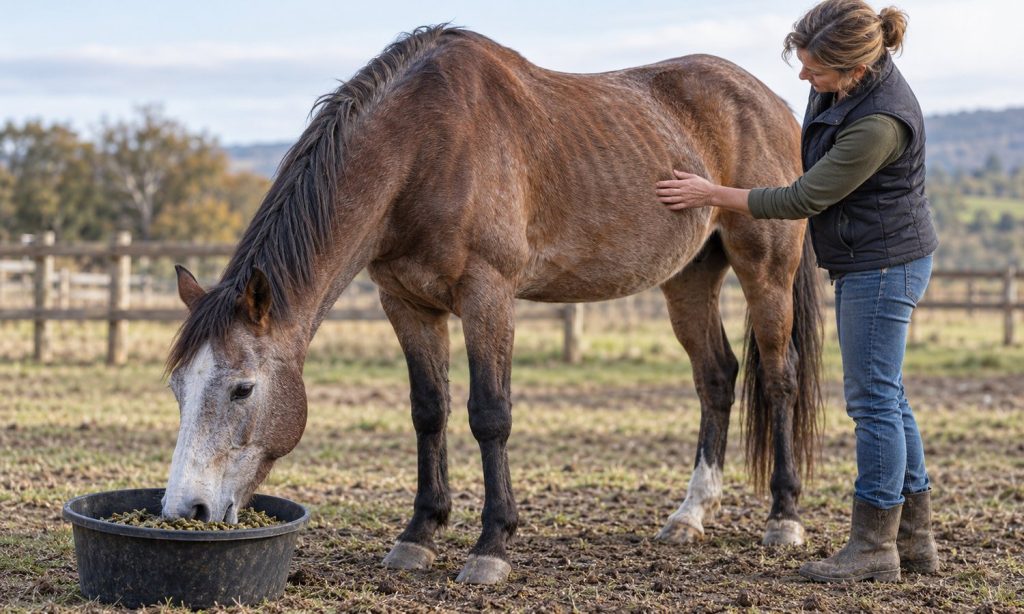
When a horse loses condition, it is tempting to add a high-calorie supplement right away. But weight loss can signal dental pain, parasites, chronic disease, inadequate forage, social competition, or difficulty chewing. The right plan starts with finding the reason and checking the current ration. A veterinarian can assess the horse, including teeth and body condition, and identify health issues that food alone will not solve. If you are comparing the Best Weight Gain Supplement for Horses, use it as a guide to formula types, then ask whether your horse needs extra calories, protein, a more digestible forage, or a balanced complete feed. The safest choice is the one that matches the cause of poor condition and can be introduced gradually.
Start by confirming the weight trend
Use a scale when available, or a weight tape and body-condition score applied consistently. Take measurements on a regular schedule and note season, workload, turnout, and feed changes. A single visual impression can be misleading, especially under a winter coat. Look at the horse from the side and behind, and feel over the ribs, topline, and tailhead rather than relying on appearance alone.
Contact a veterinarian if weight loss is unexplained, rapid, or accompanied by poor appetite, diarrhea, cough, fever, swelling, dullness, or changes in drinking. Older horses may have worn or missing teeth, trouble chewing long-stem hay, or age-related conditions that affect weight. Dental examination, parasite management, and appropriate testing may be more important than adding calories.
Review forage and feed before a supplement
Forage is the foundation of most horse diets. Check what type of hay or pasture the horse receives, whether it is clean and palatable, and whether the horse actually gets enough. In group turnout, observe whether other horses push it away. A hay analysis can help reveal energy, protein, and mineral content that cannot be judged reliably by color or smell alone.
If chewing is difficult, a veterinarian or nutritionist may suggest soaked hay pellets, cubes, or a senior complete feed formulated to replace some or all long-stem forage. Follow the feed’s directions carefully; a small handful of a complete feed may not provide the nutrients listed for its intended use. For broader life-stage considerations, read the site’s guide to senior horse feed supplements.
Choose the kind of calories that fit the horse
Fat and calorie-dense feeds
Some weight-gain products add fat or calorie-dense ingredients. Fat can raise energy intake without relying only on cereal grain, but the full ration still matters. Plant-based oilseeds and bran may also contribute protein, fiber, phosphorus, or other nutrients. A concentrated fat product may add calories with fewer additional nutrients. Compare the actual daily serving, not just the advertised fat percentage.
Introduce added fat gradually. University extension guidance notes that horses need time to adapt to a higher-fat diet. Sudden changes can upset manure or appetite. If the horse has insulin dysregulation, a history of laminitis, or another metabolic condition, ask the veterinarian or equine nutritionist before choosing a high-calorie product.
Protein and amino acids
A horse may need a better balance of protein or essential amino acids, especially if muscle condition is poor. Extra protein alone will not fix an overall calorie deficit or a disease. Check the ration’s protein sources and feed rate before choosing a separate amino-acid product. Avoid combining several fortified feeds without calculating the total nutrients.
Senior and complete feeds
A senior feed can help when an older horse struggles to chew hay, but senior products differ. Some are complete feeds designed to replace forage when fed at the labeled rate; others are concentrates that still require adequate forage. Verify the intended use and the minimum daily amount. If the horse has dental disease or choke risk, ask about soaking and feed texture.
Compare supplement labels and feeding directions
Check the guaranteed analysis, calories per serving when available, fat and fiber sources, protein, sugar and starch, mineral levels, and the recommended amount for the horse’s weight. Note whether the product is intended as a top-dress or a complete ration. Look for a clear ingredient list, lot number, expiration date, and manufacturer contact details. A proprietary blend that hides amounts makes it harder to compare products or avoid nutrient overlap.
Consider palatability, cost per daily serving, storage, and whether the horse can eat the product safely. For horses that bolt feed or have dental difficulty, a soaked mash may be more practical than dry pellets. Introduce one change at a time and follow label and veterinary directions. Do not pour on additional calories indefinitely if the horse is not gaining; reassess the underlying cause and the ration.
Build a steady plan and monitor progress
Set a realistic goal with the veterinarian or nutritionist. Make feed changes over roughly one to two weeks unless the professional advises a different schedule. Divide concentrate into smaller meals rather than feeding a large amount at once. Keep forage available as appropriate for the horse’s health and management needs, and provide clean water and salt.
Record the amount of each feed, body weight estimate, body-condition score, appetite, and manure. Recheck regularly and adjust only with a reason. A horse that fails to gain despite an adequate ration may need further evaluation, not a stronger supplement. Public owner discussions describe mixed results: some report a product or soaked feed helped, while others say their horse did not gain until dental or veterinary issues were addressed. These stories are anecdotal and cannot predict what will work for an individual horse.
Understand when a feed change is not enough
If a horse has a consistently adequate intake but continues to lose condition, a veterinarian may recommend blood work, fecal testing, dental evaluation, or other diagnostics based on the history. Do not assume that an older horse simply needs more calories. Pain, parasites, chronic infection, endocrine disease, and difficulty competing for feed can all affect condition. Treating the cause can make the ration more effective and reduce the risk of adding an inappropriate amount of starch or fat.
For a horse that lives with others, observe feeding rather than estimating its share from what remains in the feeder. Separate feeding may help determine whether it can eat comfortably and receive the intended amount. Note chewing, dropped feed, and how long it takes to finish. These observations give the veterinarian and nutritionist practical information that a product label cannot provide.
Frequently Asked Questions
Should I add a weight-gain supplement as soon as my horse looks thin?
Not before checking the weight trend, ration, dental health, parasite control, and possible illness. Unexplained weight loss should be discussed with a veterinarian.
Is oil the best way to add calories?
There is no single best choice for every horse. Compare the full ration and health history, then ask a veterinarian or nutritionist whether fat, forage, or a complete feed is more suitable.
Can an older horse gain weight on senior feed alone?
It depends on the horse’s teeth, needs, and the feed’s intended use. Some senior feeds are complete rations when fed at the stated amount; others are not.
How quickly should I increase a feed serving?
Make changes gradually and follow the product label and professional advice. Sudden changes in feed can upset the digestive system.
What if my horse does not gain weight?
Recheck feed intake and body measurements, then contact the veterinarian. Persistent failure to gain can indicate dental, digestive, metabolic, or other health problems.
Final Words
Choose a weight-gain supplement only after investigating why the horse is losing or failing to gain condition. Evaluate forage, chewing ability, total calories, protein, metabolic risk, and the label’s intended use. Introduce one change gradually and track the horse’s response with consistent measurements. The guide to the Best Weight Gain Supplement for Horses outlines common formula types, while a veterinarian can help determine whether added calories are appropriate for this horse.









