
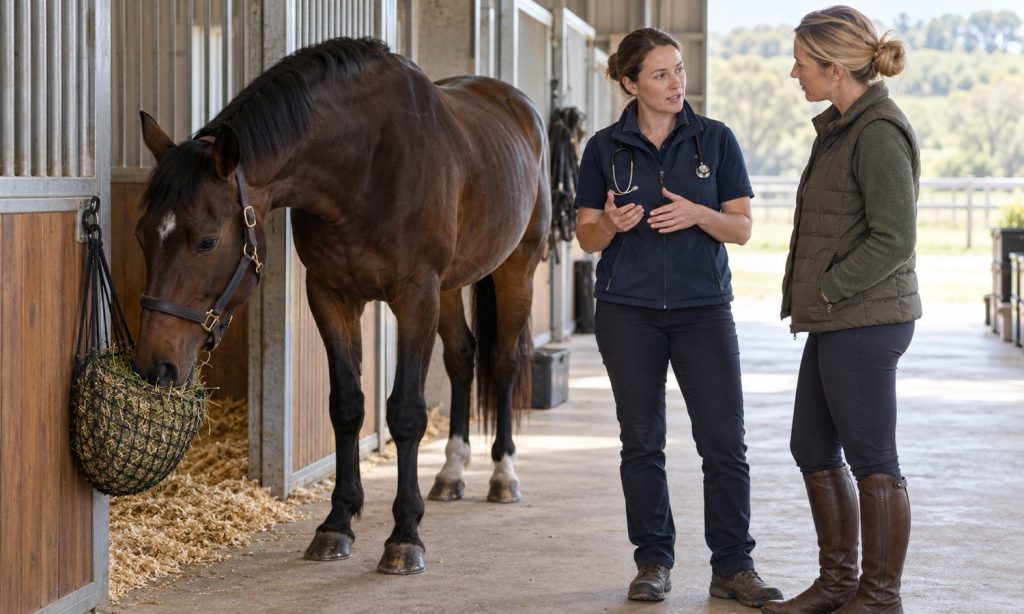
Searching for the right ulcer support supplement for horses often follows subtle signs: a horse may girth poorly, lose appetite, drop weight, or perform differently. Those signs are not specific to ulcers, and a supplement cannot diagnose or heal a lesion by itself. Equine gastric ulcer syndrome includes different stomach regions and disease patterns, so the appropriate plan depends on veterinary assessment. If you are comparing a Best Ulcer Support Supplement for Horses, start by asking what concern the formula is meant to address and whether the horse has been examined. Feeding and management can be important, but they do not replace diagnosis or prescribed treatment. This guide to feed considerations for horses with ulcers covers a related part of the ration; supplements require their own evidence and safety review.
Confirm the problem before choosing support
Changes in appetite, weight, behavior, or performance can have many causes, including dental pain, parasites, other gastrointestinal disease, lameness, stress, and ration changes. A veterinarian may recommend gastroscopy or other testing based on the signs and history. Do not assume that a behavior change proves an ulcer, and do not delay veterinary care while trying successive feed additives.
Seek prompt advice if the horse stops eating, loses weight quickly, has repeated colic signs, develops persistent diarrhea, or seems dehydrated or unwell. Ask the veterinarian what findings would change the treatment plan and how to monitor progress. If an ulcer has been diagnosed, use the prescribed treatment exactly as directed. Supplements marketed for “stomach lining,” “gastric buffering,” or “ulcer comfort” are not interchangeable with medical therapy.
Know what support means—and what it does not
Ulcer support products may contain ingredients such as pectin, lecithin, minerals, seaweed-derived materials, amino acids, herbs, oils, or combinations. They are sold for different purposes, including nutritional support or maintenance after treatment. A product label cannot establish that it prevents ulcers, treats existing lesions, or reduces recurrence. Evidence can be limited, and studies may test a particular formula under specific conditions.
Ask the veterinarian whether a supplement has a reasonable role for this horse, at this stage of care. Confirm whether the evidence refers to the finished product or only to one ingredient. Ask how it fits alongside medication, other feed, and the horse’s metabolic or competition needs. Avoid changing medication or delaying a recheck because a supplement is described as “natural” or “clinically inspired.”
Review feeding and management factors
Horses naturally graze for many hours, and long periods without forage can affect the stomach’s normal environment. A veterinarian may discuss regular forage access, turnout, feed timing, workload, travel, and stress reduction as part of management. The exact plan depends on the horse, its diagnosis, and any other health conditions. Some horses require restrictions for metabolic or orthopedic reasons, so do not make a major diet change without individualized advice.
Check forage quality, amount, and feeding schedule. Review the type and size of concentrate meals and whether the total ration meets the horse’s needs. Abrupt changes can create additional digestive problems. A nutritionist can help assess the ration, especially if the horse is underweight, has restricted forage, or receives several supplements.
Compare labels and quality information
Read the complete ingredient panel and compare the amount per daily serving. A long list of ingredients is not proof of a better product. Watch for proprietary blends that hide individual quantities, duplicated minerals, added sugars or calories, and ingredients that conflict with current medication or feed restrictions. Confirm directions for the horse’s weight, storage needs, expiration date, and lot number.
Ask the manufacturer for information about ingredient identity, batch testing, contamination controls, and manufacturing practices. These details can help you assess product quality, but they do not prove a clinical effect. If the horse competes, consult the veterinarian and check the relevant sport rules for prohibited or contaminated substances. Keep the label and lot number available in case a concern arises.
Use a measured plan
Before introducing a supplement, write down the horse’s baseline signs, diagnosis, current ration, and treatment schedule. Change one variable at a time unless the veterinarian recommends a coordinated plan. Track appetite, weight, manure, comfort during feeding, and any veterinary findings. Agree on when to reassess and what result would justify continuing. Do not increase a serving beyond its label or veterinary direction.
Stop the product and contact the veterinarian if the horse develops hives, worsening diarrhea, reduced appetite, or another new problem. Never stop prescribed ulcer medication without veterinary direction. Nutritional support is most useful when it complements a clear diagnosis and a realistic management plan.
Public horse-owner discussions about ulcer supplements include varied experiences: some owners report continuing a product after treatment, while others emphasize forage and management or say a supplement made no obvious difference. These are personal accounts, not controlled evidence. The ulcer type, veterinary care, diet, and other changes differ between horses, so individual stories cannot show that a particular supplement caused improvement.
Questions to ask your veterinarian
Bring the product label and a concise history to the appointment. Ask whether the signs fit gastric disease, what diagnostic steps are appropriate, and whether the stomach region involved changes the treatment plan. Confirm how the supplement should be timed relative to medication and feed, whether the horse’s competition status creates restrictions, and which signs would require an earlier recheck.
If a product is being considered after a diagnosed ulcer, ask what outcome it is expected to support and how you will know whether it is useful. Keep medication, feeding, and management records together. This helps the veterinarian separate the supplement’s possible role from changes in turnout, training, forage, or prescribed treatment. Do not discontinue therapy or substitute a supplement based on an owner anecdote or a marketing claim.
Frequently Asked Questions
Can a supplement heal a horse’s gastric ulcers?
Do not rely on a feed supplement to heal diagnosed ulcers. Diagnosis and treatment should be guided by a veterinarian, who can determine whether medication and follow-up are needed.
Do symptoms confirm that a horse has ulcers?
No. Appetite, behavior, weight, and performance changes can have many causes. A veterinarian can decide whether examination or gastroscopy is appropriate.
Are maintenance supplements necessary after treatment?
Not automatically. Discuss recurrence risk, feeding and management, and any supplement with the veterinarian who knows the horse’s diagnosis and treatment history.
Can I use an ulcer supplement with medication?
Ask the prescribing veterinarian first. Provide the full label and serving amount so they can review ingredients, timing, and potential interactions.
What should I prioritize when comparing products?
Prioritize veterinary guidance, transparent ingredient amounts, appropriate quality controls, ration fit, and realistic claims. Marketing phrases alone do not prove effectiveness.
Final Words
Choosing a Best Ulcer Support Supplement for Horses begins with a veterinary diagnosis and a clear purpose for the product. Compare actual amounts, quality information, ration fit, and competition considerations, then track one change at a time. Feeding and management may support the care plan, but they do not substitute for prescribed treatment. For related nutritional context, see the guide to feed choices for horses with ulcers. If signs continue or worsen, contact the veterinarian rather than adding another supplement.









