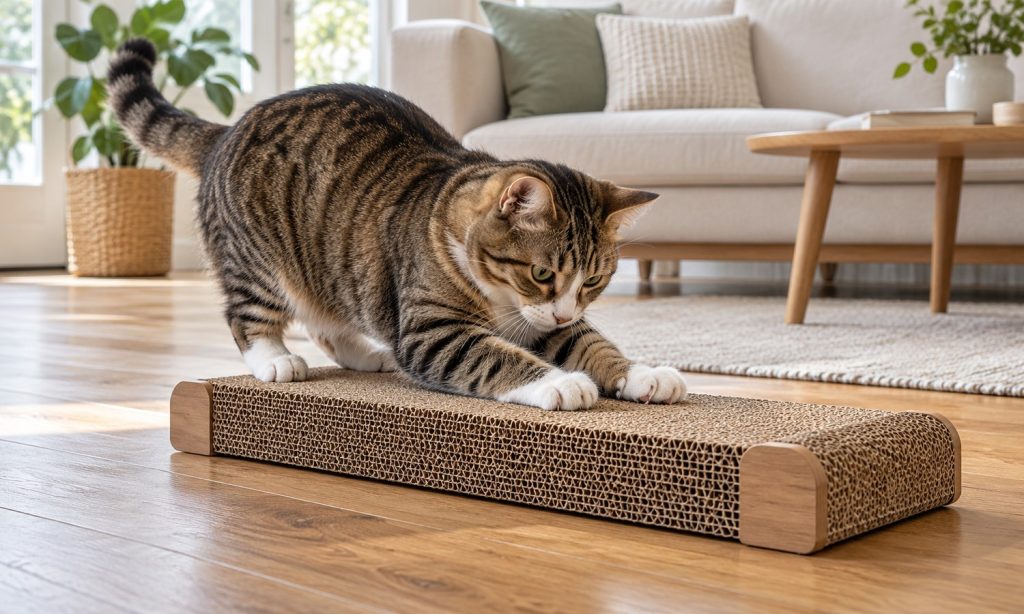
How to choose the right horizontal cat scratcher for cats begins with matching the design to your cat’s preferences, routine, and environment. The best choice is not defined by shape alone. It should give your cat enough room to plant its paws, grip the surface, and pull without the scratcher sliding away. Start with your cat’s usual posture and the material it already chooses. Then compare the scratcher’s length, width, height, traction, durability, and placement with your home. A low profile can also suit apartments and senior cats, but a small or lightweight pad may move during enthusiastic use. This guide walks through the details that matter, how to introduce a new surface, and what to adjust when your cat ignores it.
Understand what your cat likes about horizontal scratching
Scratching is normal behavior. Cats use it to leave scent and visual marks, stretch, and maintain their claws. Some prefer an upright post, while others scratch horizontally or at an angle. Individual preferences can change over time. A cat that targets carpet may be showing a preference for both a low orientation and a particular texture.
Observe the full behavior before choosing. Does your cat crouch and pull with both front paws? Does it stand over a rug and rake backward? Does it stretch forward from a resting position? Notice the surface and location as well. A scratcher that matches posture but feels unfamiliar may still be ignored. These observations are more useful than assuming every cat wants the same style.
If the cat is scratching carpet, a horizontal surface is a logical option to try. If it scratches furniture vertically, include an upright surface too. Offering more than one orientation lets the cat choose and helps you identify what is missing.
Measure the usable scratching area
Check the actual area available for scratching, not only the outside dimensions. Raised side rails, curved ends, or a thick frame can reduce the flat usable space. Your cat should be able to position its front paws comfortably and make several strokes without stepping off the edge. Larger cats may need a longer or wider pad than kittens or small adults.
For a cat that sprawls or stretches forward, choose a length that accommodates the body position. A broad pad can be useful if the cat alternates paws or turns while scratching. Watch whether the cat uses one end repeatedly; that can show where more surface area is needed. If you have multiple cats, consider their size and whether they may use the same scratcher at once.
Height matters even for floor scratchers. Some models are nearly flat, while others are curved or ramp-shaped. A shallow slope can make the surface easier to grip for a cat that likes an angled posture. A high curve can be awkward for a cat that wants a flat, stable platform. Match contours to your cat’s movement instead of choosing an elaborate shape by appearance.
Match the texture to familiar surfaces
Horizontal scratchers commonly use corrugated cardboard, woven sisal, carpet, or textured fabric. Cats can be particular about how a surface feels under their claws. Look at the materials your cat already scratches. A cat that favors a rough rug may accept a woven surface, while a cat that rakes cardboard may prefer a corrugated pad. When possible, offer different textures in separate places and track which gets used.
Cardboard, sisal, carpet, and fabric
Corrugated cardboard gives claws a ridged surface to catch. It is lightweight and can be replaced when worn, but it may shed small pieces and lose structure with heavy use. Keep it dry and remove it if it becomes crushed, damp, or torn enough to create loose pieces that the cat chews or swallows.
Sisal fabric provides a firm, woven texture. It can last longer than lightweight cardboard, though the weave should remain tight and free of loops that could catch a claw. Carpet may be appropriate when a cat seeks that texture, but choose a distinct pattern or location so the cat can tell the scratcher from household carpeting. Any material should be securely attached without exposed staples, sharp edges, or loose threads.
Keep the scratcher from sliding or tipping
A horizontal pad that shifts under a cat’s paws can frustrate the cat and make it less likely to return. Place it on a nonslip surface or choose a design with a broad, weighted base or grippy backing. Before introducing it, push and pull the pad across the floor. It should stay in place during the sort of movement your cat will create.
Check curved or raised designs for tipping. The cat may put weight on one edge, especially while climbing onto or off the scratcher. If it rocks, wedges beneath furniture, or slides toward a stair, choose another location or secure it in a safe way. Keep the walkway around it clear so the cat can approach and exit without being crowded.
Inspect the surface regularly. Replace damaged cardboard and repair or remove fabric with loose strands. Clean according to the material’s care instructions, and avoid strong fragrances that may make the surface less appealing. A clean, stable scratcher is easier to use and safer to keep in a shared living space.
Find a convenient place for it
Put the scratcher close to a spot your cat already scratches, at least while introducing it. A pad hidden in a closet is unlikely to compete with a favorite rug in the living room. Cats often stretch and scratch after waking, so a location near a preferred resting place can help. A visible spot near a window or frequently used room may also feel natural.
In an apartment, consider the footprint and whether the pad can sit beside a sofa, bed, or hallway without blocking movement. A low profile can slide under a table when not in use, but storing it away may reduce opportunities to scratch. Keep it accessible in a place the cat already visits rather than treating it as a temporary toy.
For a multi-cat home, separate scratch surfaces can reduce competition. Place them in different rooms or territories, especially if one cat guards shared resources. Observe whether cats take turns or avoid using a surface when another cat is nearby. You may need one scratcher per favored location, not merely one per household.
Encourage use without force
Put the new scratcher in place and allow the cat to investigate. You can reward voluntary interest with a treat, play, or calm praise. A toy moved across the surface may prompt a pawing motion, but let the cat leave whenever it wants. Do not hold the cat’s paws against the scratcher. Forced contact can make the surface stressful.
If the cat continues to use a rug, temporarily make that area less attractive with a safe cover while positioning the scratcher beside it. Reward use of the approved surface. Avoid yelling, startling, or spraying the cat. Punishment does not explain which surface is acceptable and can add stress.
Change one feature at a time. Move the pad closer to the chosen site, try a different texture, or rotate it if one side is worn. Give the cat a chance to test each change. If you switch several things at once, it becomes harder to know what the cat prefers.
When the cat’s preference changes
A shift from vertical to horizontal scratching can be a simple preference change, but it may also reflect reduced comfort. Older cats may prefer lower surfaces, and cats with joint stiffness may avoid tall stretches. If the change is sudden or comes with limping, reduced jumping, altered grooming, or difficulty using the litter box, ask a veterinarian about possible discomfort. Do not assume the cat is being stubborn.
For a cat that ignores one pad, keep other appropriate scratchers available. Try a different orientation, material, or location. The aim is to meet the cat’s normal behavior in a way that fits the space, not to force one design to work for every cat.
Frequently Asked Questions
How large should a horizontal cat scratcher be?
Choose a usable surface long and wide enough for your cat to plant its paws and make repeated strokes without stepping off. Larger cats and cats that stretch forward often need more area.
Are cardboard scratchers good for cats?
Many cats enjoy corrugated cardboard, but preferences vary. Keep it dry, stable, and free of loose pieces. Replace it when it becomes crushed or damaged.
Where should a horizontal scratcher go?
Start near the place your cat already scratches, such as a rug or resting area. Keep it visible, accessible, and out of the main walking path.
Why does my cat scratch the carpet instead?
Your cat may prefer the carpet’s texture, its horizontal orientation, or that specific location. Try a similar safe texture nearby and reward voluntary use.
Should I offer both horizontal and vertical scratchers?
Yes, if you have room. Cats differ in orientation preference, and preferences can change. Offering both helps you see which surface your cat chooses.
Final Words
A useful horizontal cat scratcher for cats offers enough room to scratch, a familiar texture, and a base that stays put. Let your cat’s posture and current habits guide the size, shape, material, and location. Keep the surface clean and intact, introduce it without force, and provide alternatives when needed. If your cat changes scratching behavior along with signs of discomfort, consult a veterinarian. A thoughtful setup makes it easier for your cat to scratch appropriately in the home.