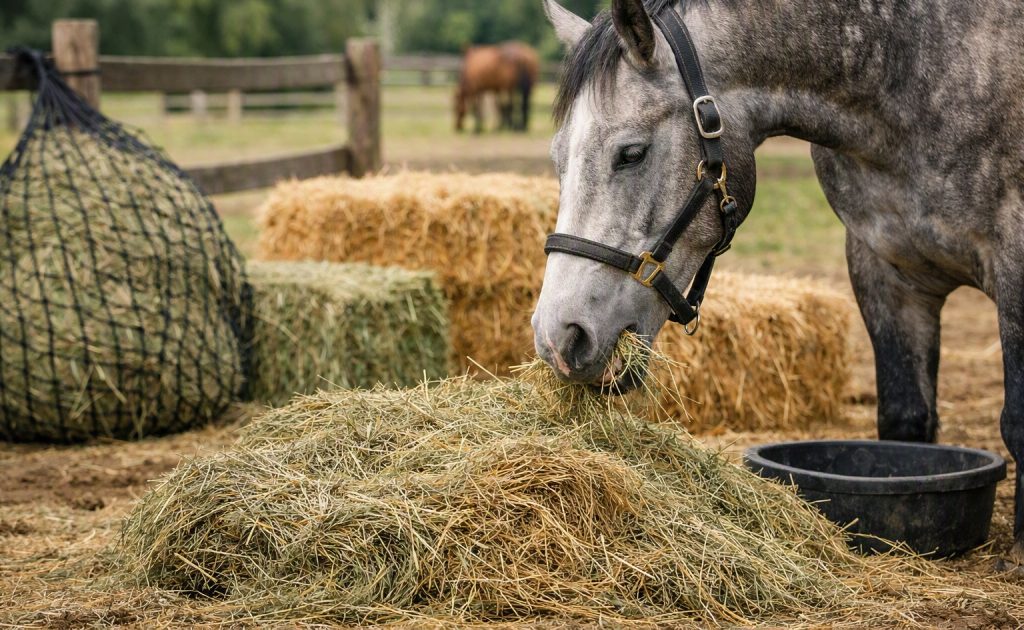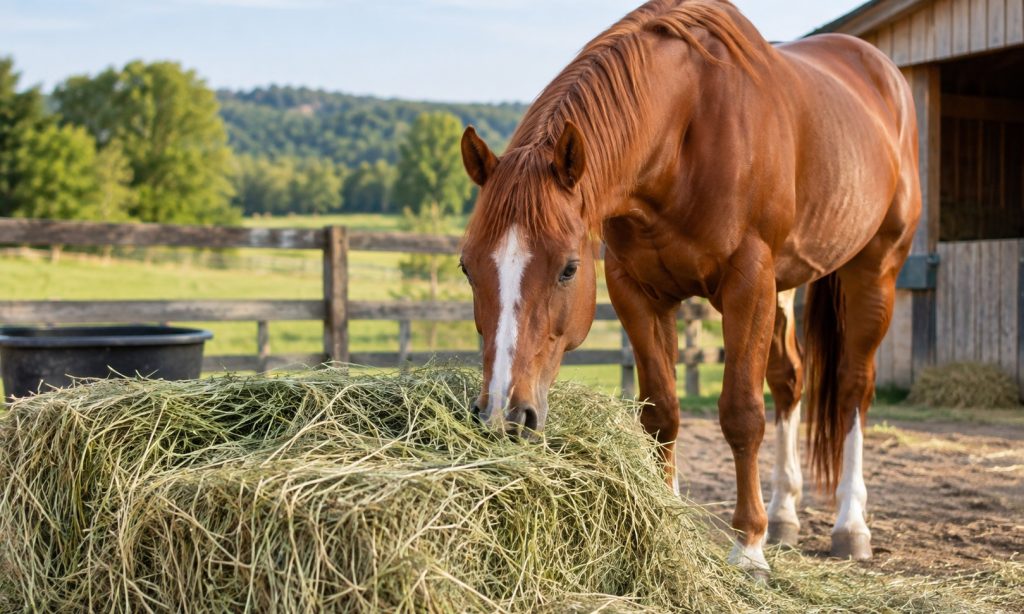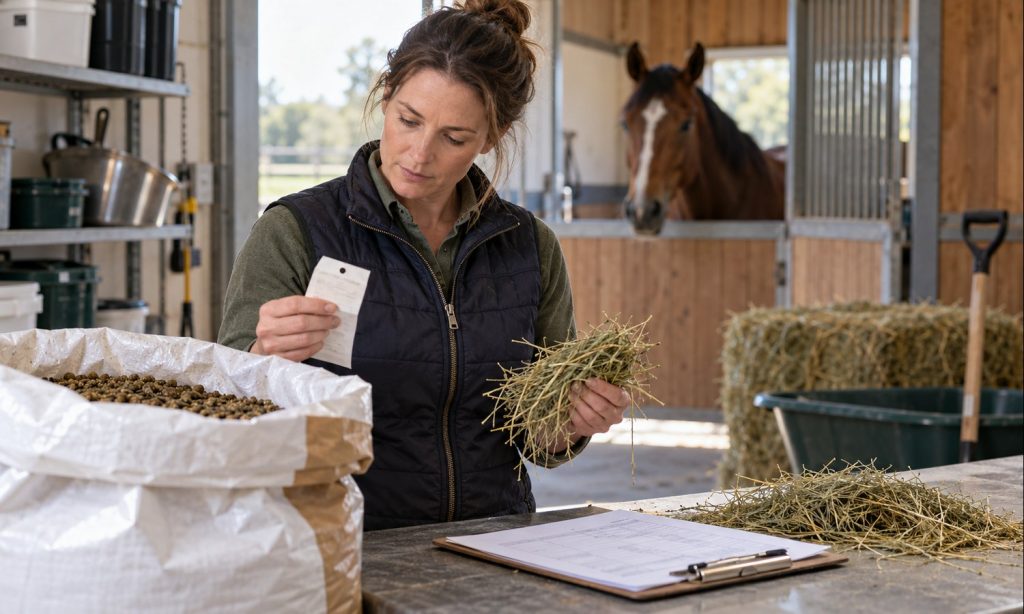
Horse feed bags and hay reports provide different kinds of information. A commercial feed label lists ingredients, guaranteed nutrient values, and directions, while a laboratory hay analysis estimates the forage’s nutrient content from a submitted sample. When comparing hay for horses in winter, look at the forage species and quality, the horse’s needs, and the analysis—not just a seller’s description or a feed bag’s ingredient list. This guide explains what to read on a horse feed tag, what a hay analysis can tell you, and how to compare them on a consistent basis. The right choice depends on the whole ration, body condition, workload, and health history. Ask an equine veterinarian or nutrition professional to help balance a diet when needs are specialized.
Know which document you are reading
A manufactured feed label is not the same as a hay analysis. In the United States, commercial feed tags include information such as product purpose, guaranteed analysis, ingredient listing, feeding directions, manufacturer details, and net weight. A hay analysis is a laboratory report based on a representative sample of a particular lot. It estimates nutrient content and can help compare forage sources or balance the ration.
Hay does not usually have a conventional ingredient panel because it is a crop, not a standardized manufactured feed. To understand what is in a bale, inspect the forage species, maturity, smell, color, leafiness, dust, mold, and any visible weeds or foreign material. A lab test adds nutrient data, but it does not replace checking hay quality and safe storage.
Read the commercial feed label
Purpose statement: Identify what type of horse or feeding situation the product is formulated for. A complete feed, ration balancer, and concentrate are not interchangeable. Check whether the product is intended to be fed with forage or can replace part of the forage in a specific situation.
Guaranteed analysis: This section lists selected nutrient minimums or maximums, such as crude protein, crude fat, crude fiber, and minerals. It does not provide a complete nutrient profile, and two feeds with similar guaranteed values may differ in ingredients and digestibility. Use the label as a starting point, not a complete comparison by itself.
Ingredient list: Read the common names and look for ingredients relevant to the horse’s needs. Ingredients are not a ranking of which feed is best for your horse, and the list alone does not show the amount of every nutrient delivered at the feeding rate. If a specific ingredient matters because of an allergy, medication, or competition rule, confirm details with the manufacturer and veterinarian.
Feeding directions: Follow the recommended amount based on body weight and workload. Some fortified products are designed to supply vitamins and minerals only when fed at a minimum daily rate. Feeding less may leave nutrient gaps; feeding more can add unwanted calories. Weigh a portion rather than relying on a scoop whose volume may vary.
Read a hay analysis
Check the sample identity, harvest or lot, laboratory, and whether the values are reported on an as-fed or dry-matter basis. Use a consistent basis when comparing hay or combining feed values. Moisture changes the as-fed numbers, so dry-matter values are often more useful for comparing nutrient density. Make sure the sample represents the hay you plan to feed; one bale may not reflect an entire shipment.
Common analysis measures include crude protein, acid detergent fiber (ADF), neutral detergent fiber (NDF), digestible energy, minerals, and nonstructural carbohydrates (NSC). These values help estimate nutrient content, digestibility, and energy, but they do not indicate every aspect of palatability, safety, or suitability. A high or low number only has meaning in context of the horse’s needs and the rest of the ration.
Ask the laboratory or nutrition professional what the report’s units and carbohydrate calculations mean. Different labs may report NSC using different components or calculation methods. If the horse has a metabolic condition, a veterinarian or nutritionist should interpret the result and help set feeding decisions.
Compare hay ingredients with a feed plan
Forage type and maturity influence nutrients. Grass hay, legume hay, and mixed hay can vary in protein, energy, fiber, and minerals. Within a hay type, harvest conditions, plant maturity, and storage also matter. A visually green bale is not necessarily more nutritious, and hay that smells musty or contains visible mold should not be fed.
Compare the hay analysis with the commercial feed’s guaranteed values and feeding rate, but avoid adding percentages as though every value were on the same basis. A feed tag may report nutrients on an as-fed basis, while a hay report may provide dry-matter values. Ask a qualified professional to convert and combine the values accurately when balancing the full ration.
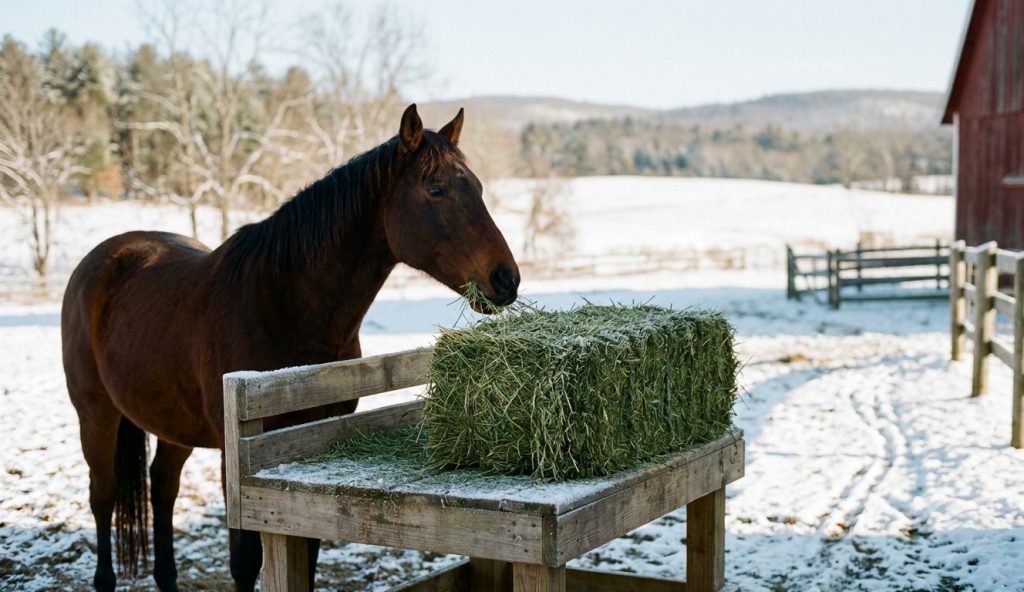
Consider the whole diet: hay, pasture, concentrate, supplements, treats, and water. For winter feeding, also account for cold weather, shelter, activity, and body condition. Hay needs are not determined by season alone. If you are reviewing hay for horses in winter, compare available forage reports and the horse’s changing needs rather than assuming a particular type is automatically best.
Use labels and analyses to make a decision
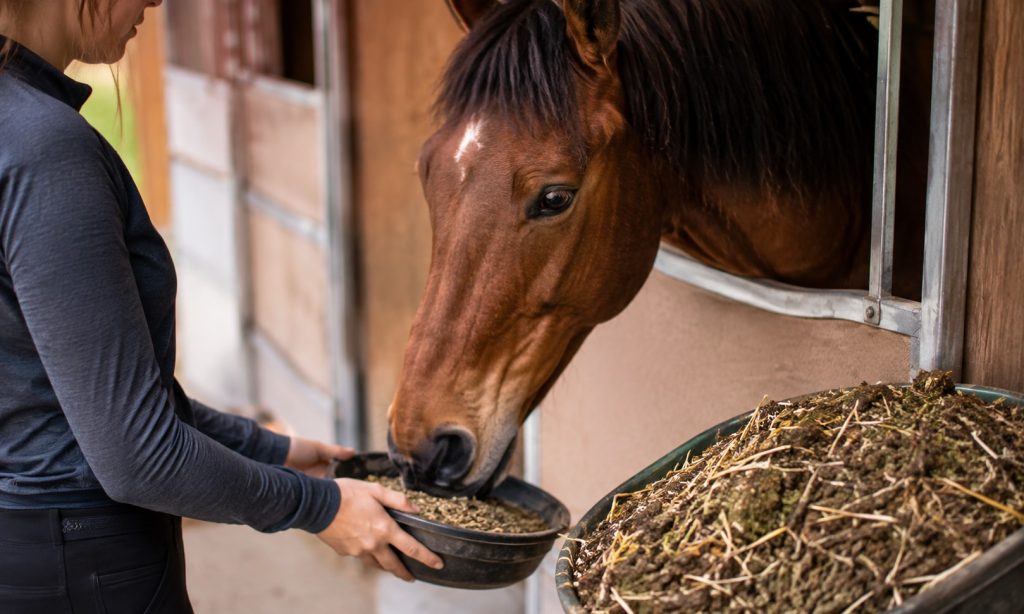
Start by estimating the horse’s body weight and condition, recording all current feed amounts, and identifying the goal—maintain weight, support work, or meet a known nutrient need. Compare the feeding rate and nutrient contribution of each product. Check whether the horse is actually consuming the ration and whether teeth, competition, or management make forage intake difficult.
If labels are unclear, contact the feed manufacturer for a full nutrient profile or ask an equine nutritionist to review the ration. Use hay testing when the forage’s nutrient content affects an important decision, especially when feeding a horse with special needs. Make ration changes gradually and monitor body condition, appetite, and manure.
Do not choose or reject a feed based only on a single ingredient or marketing phrase. Products can differ in energy density, fiber, protein quality, mineral balance, and intended feeding amount. The best comparison is one that matches the horse’s full diet and measured needs.
Frequently Asked Questions
Does hay have an ingredient label?
Usually not like a manufactured feed. You can review the plant species and visible quality, then use a laboratory analysis to estimate nutrient content from a representative sample.
Can I compare feed and hay percentages directly?
Only when they are reported on the same basis and in compatible units. As-fed and dry-matter values differ, so ask a nutrition professional to help with accurate comparisons.
Does the first ingredient tell me which feed is best?
No. The ingredient list does not show the full nutrient contribution at the feeding rate or whether the product fits your horse. Consider purpose, guaranteed analysis, directions, and total ration.
How often should I test hay?
Test when you receive a new lot or when the forage source or feeding goal changes. The sample should represent the hay being fed; consult the lab or Extension guidance for sampling.
Can I switch feeds as soon as the analysis arrives?
Use the results to plan a change with an equine professional, then transition gradually according to the product directions and the horse’s needs.
Final Words
Read a feed tag for its purpose, guaranteed analysis, ingredients, and feeding directions, and use a hay analysis to understand the forage lot. Compare numbers only on compatible bases, consider the whole ration, and match the decision to the horse’s body condition, workload, and health. If you are selecting hay for horses in winter, ask for a representative forage analysis and avoid judging hay by one number or appearance alone. Professional help is useful when you need to balance nutrients or manage a medical condition.