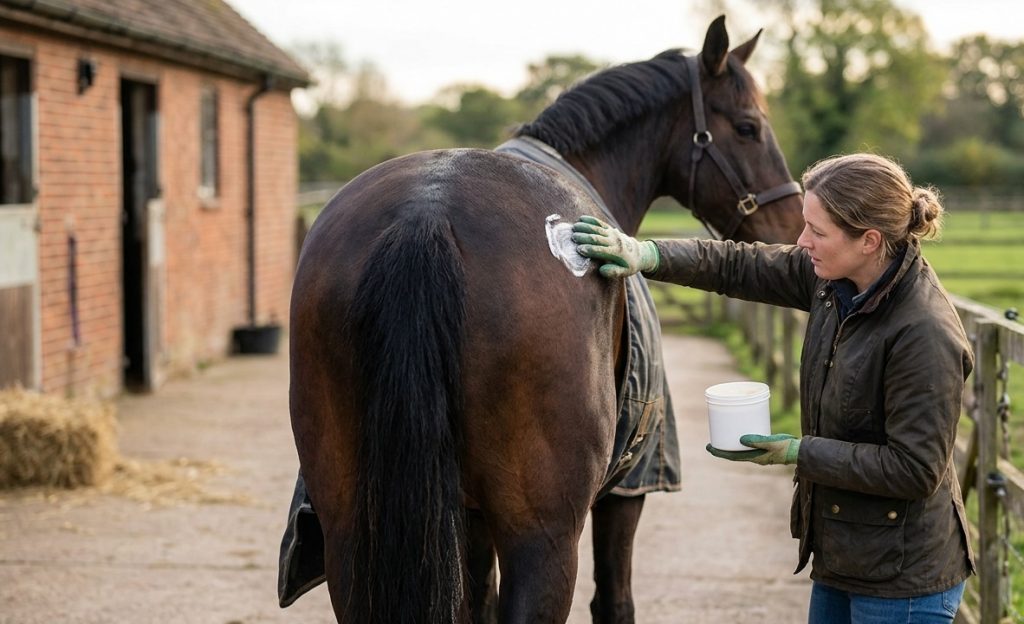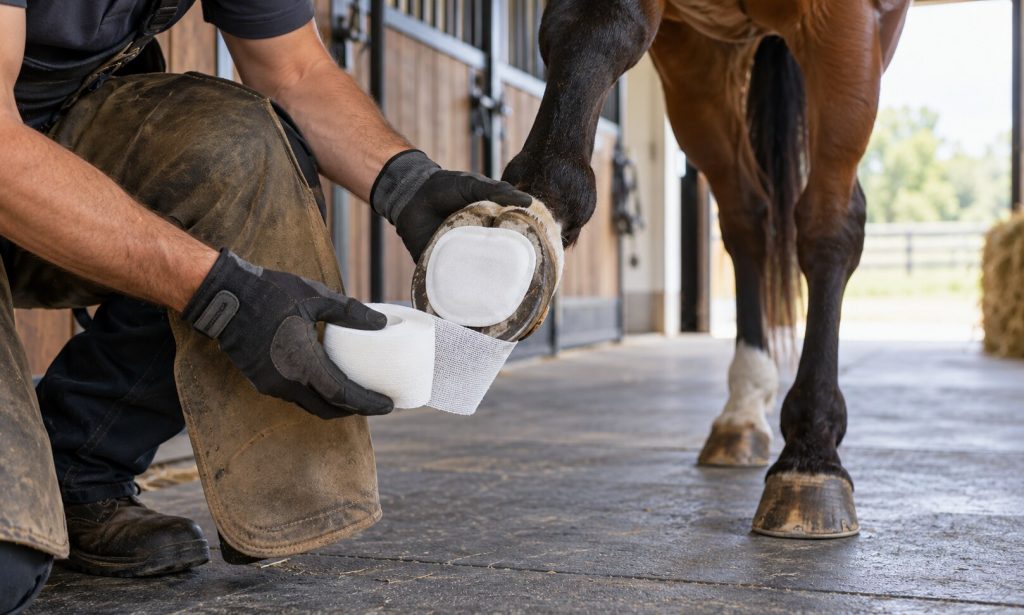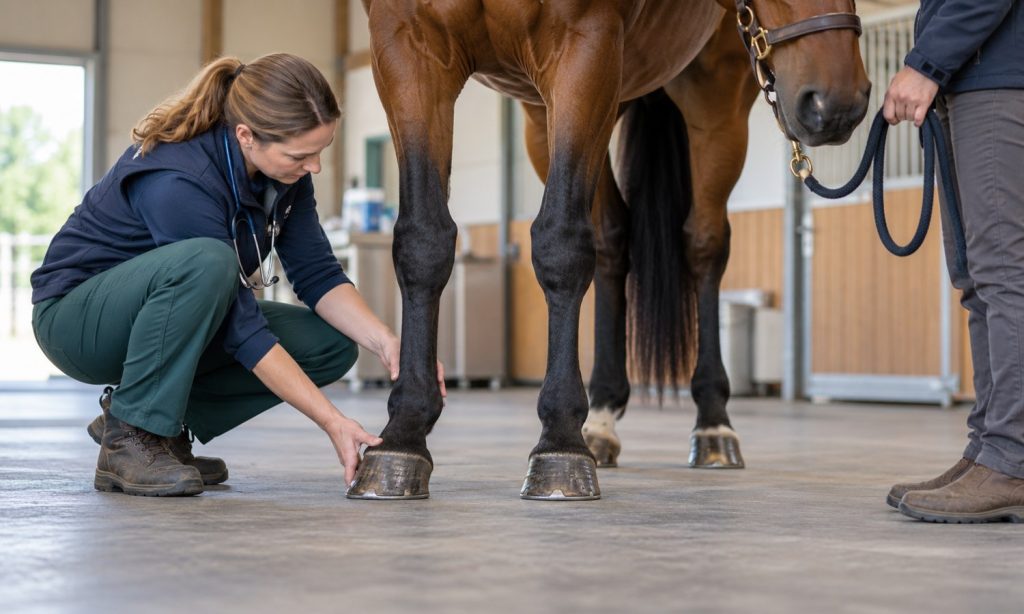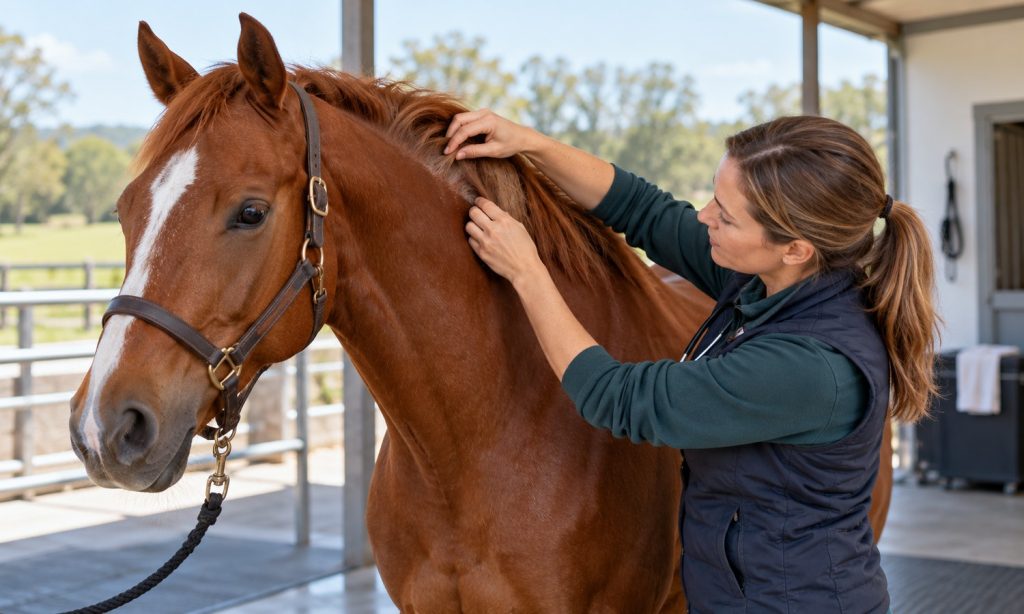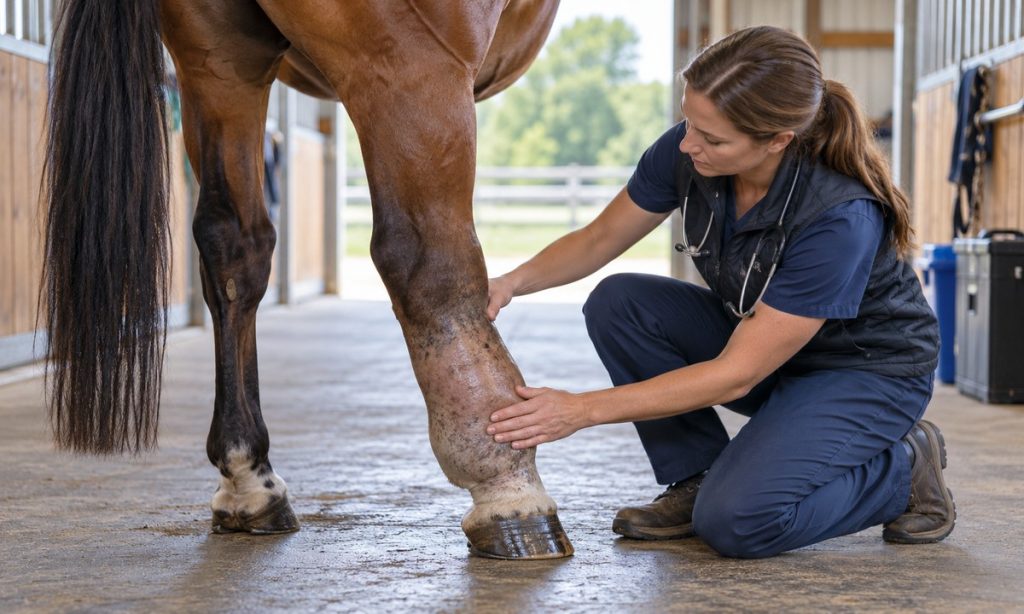
An antibiotic can be an important part of treatment for a horse with a bacterial infection, but the right plan depends on the diagnosis, severity, and individual horse. Swelling, heat, and lameness do not prove that an infection is present, and using leftover medication can delay the care a horse needs. Before giving an antibiotic, ask your veterinarian what condition they suspect, why this medicine is appropriate, and how to use it safely. This is especially important when discussing an antibiotic for cellulitis in horses, because cellulitis can progress quickly and may need urgent veterinary attention. Bring the medication label, the horse’s history, and questions about dosing, monitoring, missed doses, and follow-up. Use the visit to agree on warning signs and a follow-up point.
First ask whether an antibiotic is needed
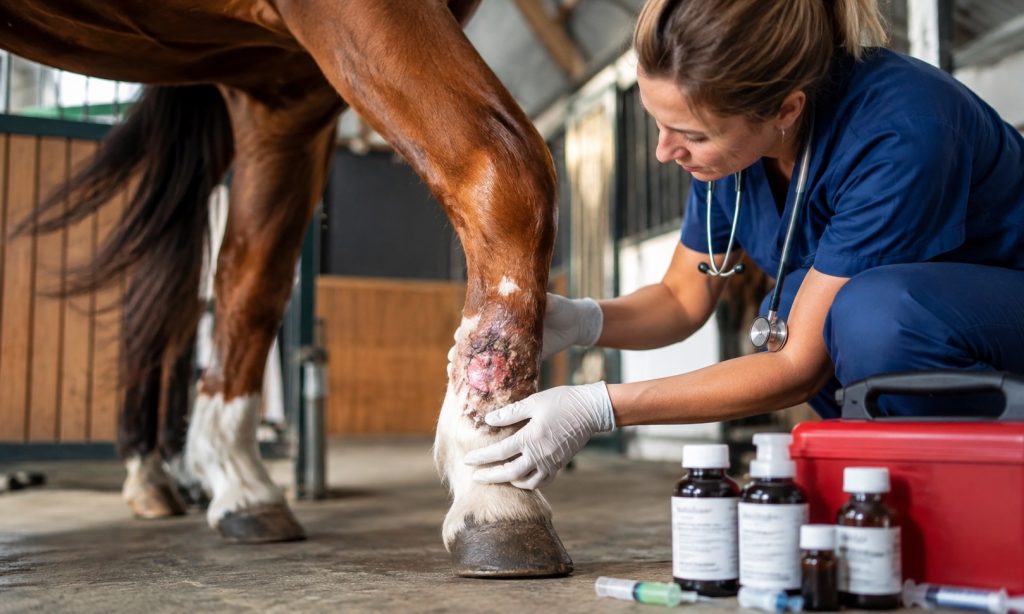
Ask your veterinarian to explain the working diagnosis and what findings support it. Swelling, pain, fever, discharge, and lameness can have different causes. Cellulitis involves infection in tissues under the skin, but similar signs can occur with injuries or other conditions. A veterinarian may need to examine the horse and consider tests before choosing treatment.
Useful questions include: “What are the likely causes?” “How certain are we that bacteria are involved?” “Does the location or severity require an examination today?” “Would a sample, imaging, or another test change the treatment choice?” Testing is not needed in every case, but recurrent, deep, nonhealing, or treatment-resistant infections may need additional investigation.
Do not start an antibiotic left from another animal or an earlier illness. The drug, dose, route, and duration may not fit this horse or this problem. An antibiotic also will not treat every cause of swelling or a viral disease. Ask what to do while waiting for veterinary care, and avoid giving medication unless the veterinarian directs you.
Ask why this specific medicine and route were chosen
Ask what the antibiotic is expected to treat and why the veterinarian chose it. The plan may depend on the infection’s location, severity, suspected bacteria, the horse’s health, and whether the horse can reliably receive the medicine. Treatment may be given by mouth, injection, or another route. Each method has different handling and monitoring needs.
Ask whether the medicine is licensed for horses and whether the veterinarian is prescribing it outside the label. In the United States, veterinarians may sometimes use approved animal or human drugs in an extra-label manner under applicable federal rules and a valid veterinarian-client-patient relationship. That decision belongs to the veterinarian. Ask for clear instructions and do not substitute a different strength, formulation, or route yourself.
For a horse with suspected cellulitis, ask which signs make the situation urgent and whether the horse needs clinic care. University extension guidance advises prompt veterinary consultation when cellulitis is suspected. Rapidly increasing limb swelling, marked pain, fever, severe lameness, or a horse that seems dull or stops eating warrants immediate contact.
Get precise instructions for giving the medication
Before leaving the clinic or ending the call, confirm the exact dose, schedule, route, start date, and planned duration. Ask whether the medicine should be given with food, whether it needs special storage, and how to measure or administer it. If the instructions are unfamiliar, ask the veterinarian to demonstrate or write them down.
Ask what to do if a dose is late, missed, spit out, or only partly swallowed. Do not double the next dose or change the schedule without veterinary direction. Ask whether the horse can be turned out, exercised, or transported during treatment. For limb problems, the veterinarian should decide whether rest, movement, wrapping, or other care is appropriate.
Ask how to store the medication, how long it remains usable after opening or mixing, and how to dispose of any unused amount. Keep it labeled and out of reach of children and animals. Do not share medication between horses. If multiple caregivers help, post one written schedule so every dose is recorded and accidental double dosing is less likely.
Discuss side effects, interactions, and competition rules
Ask which side effects are possible and which require a call. Tell the veterinarian about all medicines, supplements, recent treatments, allergies, and health conditions. Ask whether the antibiotic could interact with anything the horse receives or change how another medicine should be used.
Contact the veterinarian if the horse develops a new rash, swelling, breathing difficulty, diarrhea, reduced appetite, weakness, or another concerning change after a dose. Breathing problems, facial swelling, collapse, or a severe reaction require emergency veterinary help. Do not stop or continue a medicine through a serious reaction without calling for instructions.
If the horse competes, ask whether the medication is restricted under the rules of the specific organization and event. Requirements can vary and change. Ask who is responsible for checking the current rule, whether a withdrawal time applies, and what records you should keep. Do not rely on an old barn note or a rule from a different competition body.
Plan monitoring and follow-up before the first dose
Agree on what improvement should look like and when the veterinarian expects to hear from you. Record temperature if instructed, appetite, attitude, swelling, heat, pain, and willingness to bear weight. Take photos from the same angle and distance each day. Note each dose and any response or reaction.
Ask whether the veterinarian wants a recheck, repeat testing, or a call at a specific time. Contact them sooner if the horse worsens, the swelling spreads, fever develops, or no improvement occurs within the agreed period. Do not extend, shorten, or reuse an antibiotic based on appearance alone. A treatment change may be needed if the cause was different or the infection is not responding.
Frequently Asked Questions
Can I give my horse leftover antibiotics?
No. Ask a veterinarian first. A leftover medicine may be the wrong drug, strength, route, or duration and may delay diagnosis.
Does every swollen leg need antibiotics?
No. Swelling has several possible causes. A veterinarian should assess the horse and decide whether infection is likely and what treatment is needed.
Should I stop an antibiotic when the horse looks better?
Follow the veterinarian’s plan and call before changing it. Ask what to do if the horse improves early or develops a side effect.
What should I record during treatment?
Record each dose, temperature if requested, appetite, attitude, swelling, comfort, and any reaction. Photos can help show changes over time.
When should I call urgently about possible cellulitis?
Call promptly for rapidly worsening swelling, fever, severe pain or lameness, reduced appetite, or a horse that seems unwell. Breathing trouble or collapse is an emergency.
Final Words
Before using an antibiotic, make sure you understand the suspected diagnosis, why the medicine and route were chosen, the exact schedule, possible reactions, and the follow-up plan. Use only the medication and instructions prescribed for that horse, and call if signs worsen or the horse reacts. If your veterinarian suspects cellulitis, seek guidance promptly because limb infections can become serious. For questions about an antibiotic for cellulitis in horses, a product article cannot replace an examination or an individual treatment plan. Keep the veterinarian’s directions and your daily notes together so everyone caring for the horse follows the same plan.