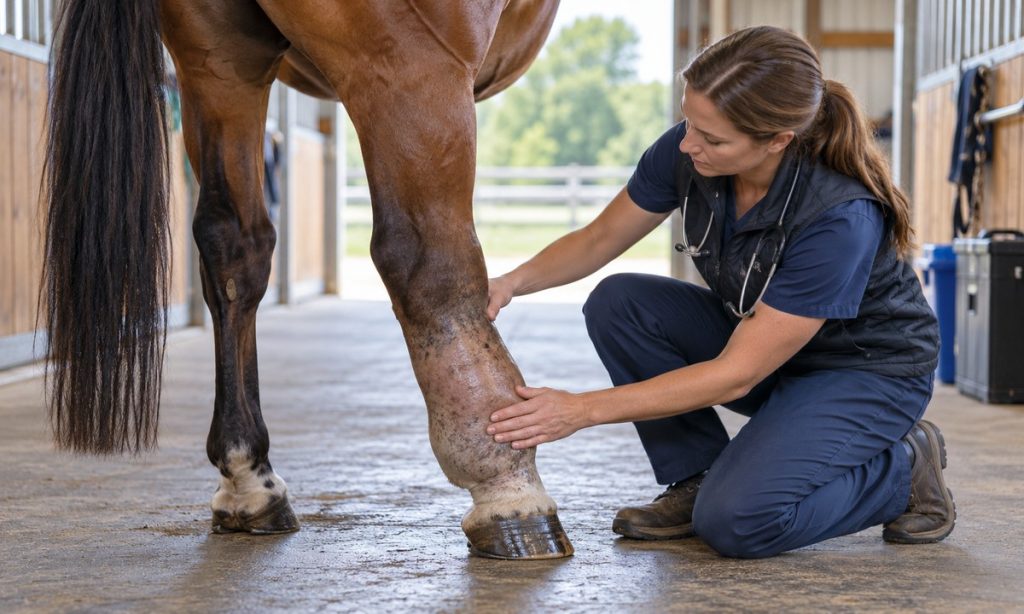
Sudden heat, pain, and marked swelling in a horse’s leg need prompt veterinary attention. Cellulitis is an infection of tissues beneath the skin, but several urgent problems can cause similar swelling and lameness. Veterinarians diagnose cellulitis by combining the timeline and physical findings with tests selected for the horse’s condition. They may check for a wound, assess vital signs and gait, use ultrasound to evaluate deeper tissues, and collect a sample for culture when appropriate. Because severe lameness can also signal a fracture or involvement of a joint or tendon sheath, home diagnosis is unsafe. If you are searching for an antibiotic for cellulitis in horses, treatment decisions belong with the attending veterinarian after examination. This guide explains what that workup may involve and what information to share while arranging care.
Why cellulitis needs prompt assessment
Cellulitis is a diffuse infection of tissue under the skin. In horses, limb cellulitis often begins quickly. The affected area may become hot, painful, and swollen, and the horse may be markedly lame. A small skin break may be present, but veterinarians do not always find an obvious entry point. Cellulitis can also occur after trauma, a wound, surgery, or an injection.
The swelling may spread beyond the original area because inflammation affects nearby tissues and fluid movement. Severe cases can lead to tissue damage and other complications. A horse that suddenly refuses to bear weight, has rapidly increasing swelling, seems feverish or dull, or is in obvious pain should be assessed urgently. Call the veterinarian rather than waiting to see whether the swelling settles.
Swelling alone does not prove cellulitis. A fracture, tendon or ligament injury, joint infection, abscess, lymphatic problem, or other condition can look similar. Some alternatives also require urgent treatment. The veterinary examination is therefore aimed both at supporting cellulitis and ruling out dangerous look-alikes.
What the veterinarian asks first
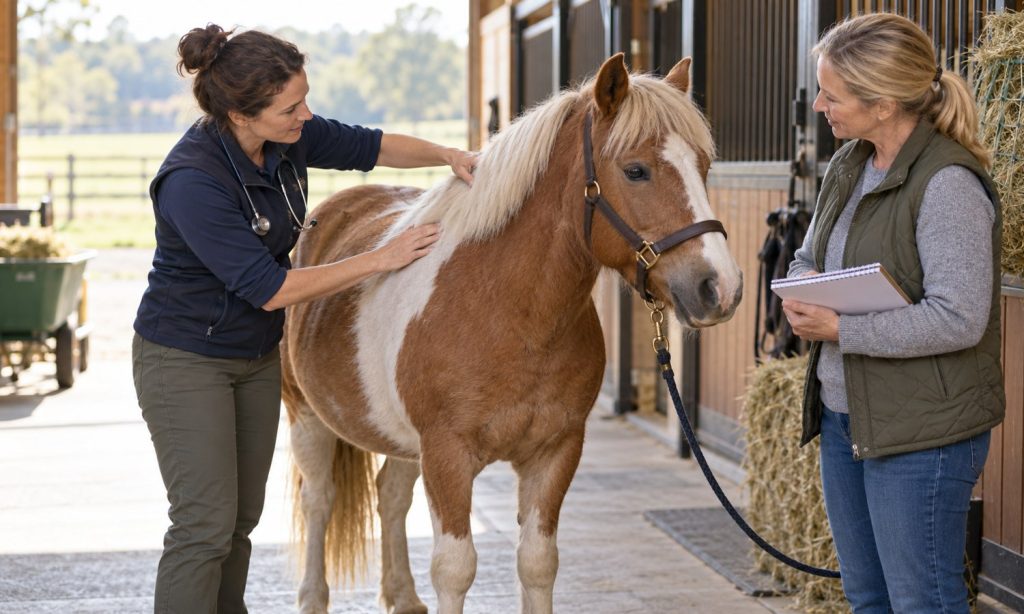
The history helps the veterinarian understand how quickly the problem developed and what may have preceded it. Be ready to say when swelling was first noticed, how quickly it changed, and whether lameness appeared at the same time. Describe any recent cut, puncture, scrape, injection, surgery, bandage, trailering, or unusual exercise.
Tell the veterinarian whether the horse has had cellulitis before, what treatment was given, and how the limb responded. Report appetite, water intake, behavior, manure, and any signs such as sweating or fever. If you have a photo from earlier in the day, it may help show progression. Do not delay the call while trying to take measurements or obtain a perfect picture.
Mention medications already given, including the amount and time, and share the horse’s medical history. Do not give human pain medicines or leftover antibiotics unless the veterinarian directs you. Medication can affect examination findings or create risks, and an inappropriate antibiotic may complicate later testing.
The physical examination
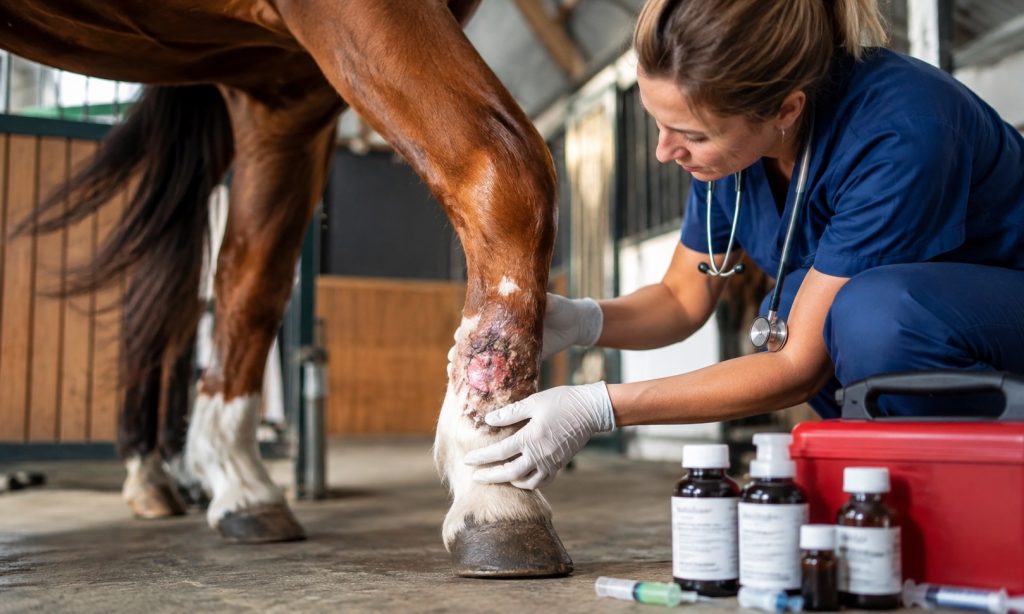
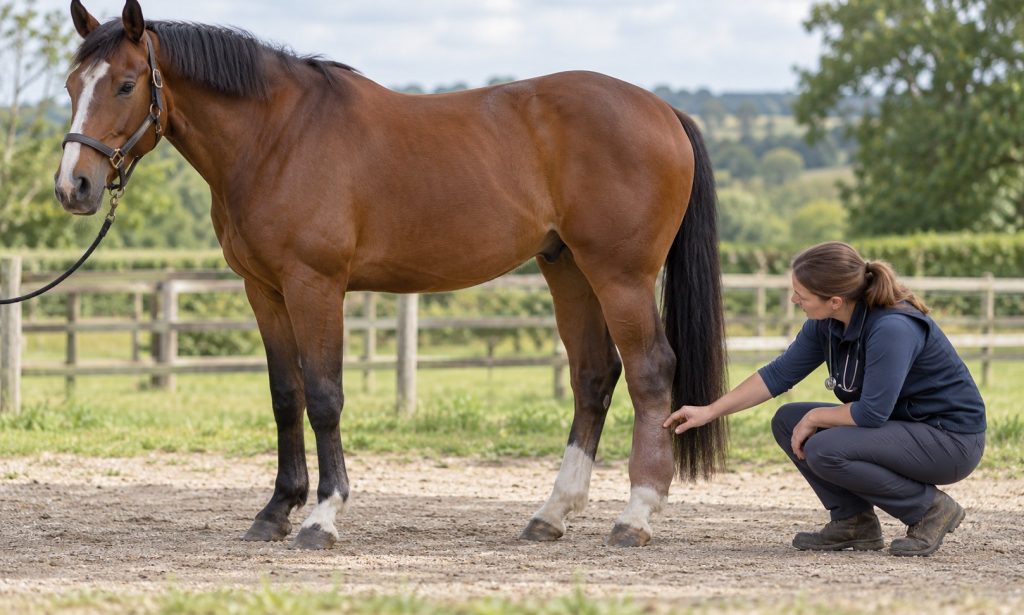
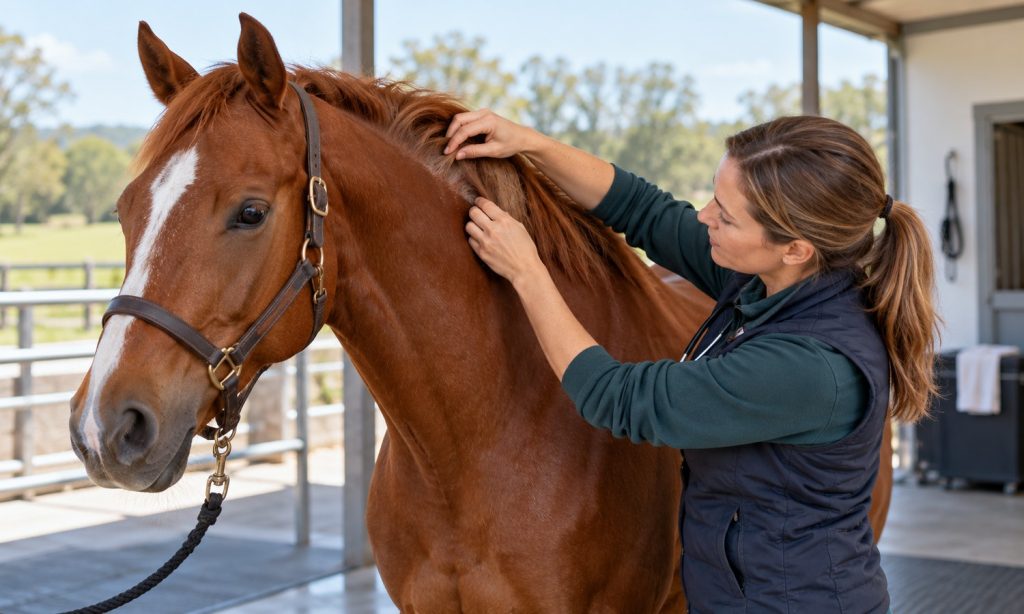
The veterinarian first checks the horse’s overall condition. They may assess temperature, heart and breathing rates, hydration, appetite, and comfort. They examine the swollen limb for heat, tenderness, extent of swelling, skin changes, wounds, drainage, and areas of fluid accumulation. They may compare it with the opposite limb.
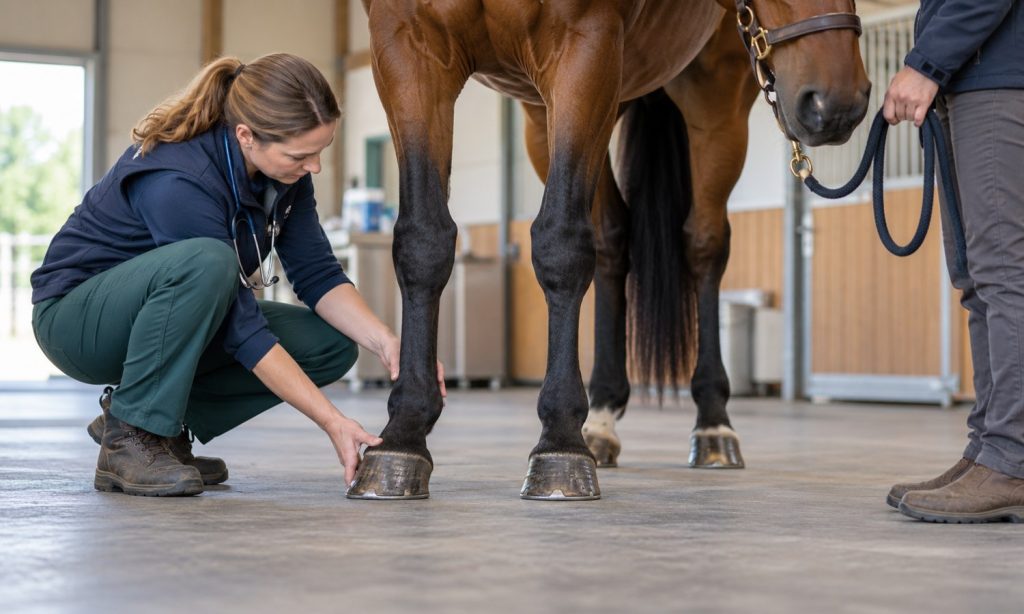
A lameness assessment helps determine how much the horse can safely move and whether the source may be elsewhere. The vet may inspect the hoof, joints, tendons, and nearby tissues. If the horse is severely lame, the veterinarian may avoid walking or flexing tests that could worsen injury. Do not force a painful horse to trot, load into a trailer, or bear weight for a home check.
Cellulitis may be suspected when acute diffuse swelling is accompanied by heat, pain, and lameness. An entry wound can support the diagnosis, but its absence does not exclude it. The veterinarian also considers whether the swelling is infection, inflammation, trauma, or fluid buildup from another cause.
Tests that may help confirm the cause
Blood work
Blood tests may help assess inflammation and the horse’s general health. A veterinarian may request a complete blood count and inflammatory markers such as fibrinogen or serum amyloid A. Results can support the picture of infection or inflammation, but they do not identify the precise bacteria or prove cellulitis by themselves. The physical findings and other tests still matter.
Ultrasound and fluid sampling
Ultrasound can help evaluate soft tissue, identify pockets of fluid, and guide a sample when the findings warrant it. A veterinarian may collect fluid from an appropriate area for laboratory analysis, bacterial culture, and antimicrobial susceptibility testing. This can be especially important when disease is severe, recurrent, or not responding as expected.
Sampling is not appropriate in every location. The vet must consider nearby joints, tendon sheaths, and other structures because entering them carries additional risk. A culture result can help guide medication, but it takes time. In a seriously ill horse, the veterinarian may need to begin care before all results are available, then adjust the plan when more information arrives.
Imaging or referral
Radiographs may be used if a fracture or bone problem is a concern. Additional imaging or referral may be recommended when the diagnosis remains uncertain, the infection may involve a deeper structure, or the horse has severe or repeated episodes. The veterinarian will explain which tests can change treatment and why they are appropriate.
How cellulitis is distinguished from look-alikes
A single swollen leg is not enough to identify the cause. A wound with local infection, a hoof abscess, tendon injury, joint infection, fracture, or lymphatic swelling may produce overlapping signs. The veterinarian weighs how quickly signs appeared, where the heat and pain are located, the degree of lameness, any wound, and the results of examination and testing.
A negative sample does not always rule out infection. The sample may miss the affected area, or prior medication may influence results. Similarly, a high inflammatory marker indicates inflammation but can occur with more than one condition. Diagnosis may be revised as the horse’s response and laboratory results become available.
Recurring cellulitis or a poor response can prompt a closer search for an underlying wound, foreign material, deep infection, or another condition. This is one reason to report previous episodes and to keep follow-up appointments even if the leg initially looks better.
What to do while the veterinarian is coming
Keep the horse as calm and safe as possible. Follow the veterinarian’s instructions about movement, feeding, transport, and any first aid. Do not massage, tightly bandage, hose, poultice, or apply medication unless the veterinarian recommends it for this case. A technique that is appropriate for one injury can be harmful in another.
Make the area accessible and have a safe handler ready, but do not put yourself in danger beside a painful horse. Note the time signs began and any changes. If the horse becomes unable to stand, develops breathing difficulty, collapses, or worsens rapidly, call the clinic again immediately.
Frequently Asked Questions
Can cellulitis be diagnosed from swelling alone?
No. Swelling, heat, and pain raise concern, but trauma, fractures, abscesses, and other conditions can look similar. A veterinarian needs to examine the horse.
Will my horse always need a culture?
No. Testing depends on severity, recurrence, response, and whether a suitable sample can be collected safely. Culture can help guide treatment in selected cases.
Can the veterinarian start treatment before test results return?
In a serious case, the veterinarian may begin care based on the examination while awaiting results. The plan may change when culture or imaging findings are available.
Is cellulitis the same as ordinary edema?
No. Edema describes fluid-related swelling, while cellulitis is infection and inflammation of tissues. A veterinarian determines whether infection or another process is present.
Should I give leftover antibiotics?
No. Contact the veterinarian first. The wrong drug or timing can be ineffective, cause harm, and make diagnostic samples harder to interpret.
Final Words
Veterinarians diagnose cellulitis in horses through the history, whole-horse and limb examination, and targeted tests such as blood work, ultrasound, or culture when needed. Sudden painful swelling and severe lameness deserve prompt attention because several emergencies can look alike. Share the timeline, any wound or procedure, prior episodes, and medicines already given. Avoid starting medication or applying tight wraps without veterinary direction. If you are researching an antibiotic for cellulitis in horses, use that information to prepare questions for your veterinarian, who must choose treatment based on the individual horse and findings.