Riding boots collect dust, sweat, arena footing, and the occasional smear of mud. Regular cleaning helps you spot wear before a loose seam or damaged sole becomes a problem, but cowboy boots are made from different leathers and finishes. Their care needs can vary. Before cleaning, check the boot’s care label and identify whether the leather is smooth, suede, or another finish. Then inspect the heel, sole, stitching, and fit in the stirrup. If you are comparing cowboy boots for riding horses, remember that maintenance keeps a suitable boot in service; it cannot correct unsafe fit or structural damage. This guide explains a careful cleaning routine, what to check after rides, and when a boot should be repaired or retired from riding.
Check the material before cleaning
Read the care label or paperwork that came with the boots. Smooth finished leather, suede, nubuck, synthetic materials, and exotic leathers can respond differently to water, brushes, cleaners, and conditioners. If the material or finish is unclear, ask the maker or a qualified boot repair professional before using a new treatment.
Public rider discussions show that cleaning habits vary. Some riders prefer a damp cloth, while others use soap or polish. That variation is a reason to check the boot’s material and instructions rather than treating forum routines as universal rules. Do not use a cleaner simply because it is marketed for saddles or tack; products intended for one leather finish may not suit another.
Before applying a cleaner or conditioner, test the method on a small, hidden area if the care instructions allow it. Stop if the color changes, the surface becomes sticky, or the finish looks uneven. Avoid solvents, household disinfectants, and harsh detergents unless the manufacturer specifically permits them.
Clean boots after a ride
Remove dry dirt first
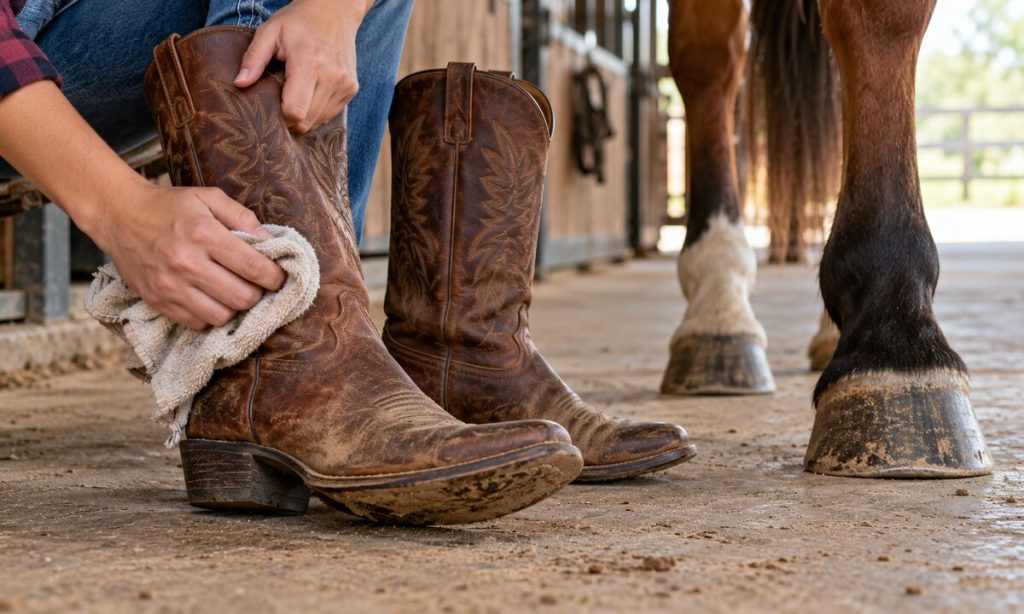
Take off the boots and let loose dust dry if the surface is wet. Brush away grit with a soft brush or wipe it off with a dry cloth. Removing grit first helps prevent it from scratching the leather as you clean. Pay attention to the welt and seams, where packed dirt can hide.
Wipe away sweat and mud
For smooth leather, use a clean, barely damp cloth and gentle pressure. Work over one area at a time. Do not soak the leather or leave water sitting around stitching. If mud is caked on, soften it with a small amount of water and wipe it away instead of scraping with a hard tool.
Use a separate cloth for the sole and heel so grit does not transfer back to the upper. If the manufacturer permits a particular cleaner, follow its directions and use only the amount needed. Avoid spraying the boot with barn disinfectant or insect-control products; they may affect the finish and should not be used on footwear unless the label says so.
Dry at room temperature
Wipe off excess moisture and let the boots air-dry in a ventilated place, away from direct sun, heaters, or a hot tack-room vent. High heat can dry or distort leather. If the inside is damp, loosen the laces or open the shaft and allow air to circulate. Do not put wet boots back into a closed bag or locker.
Condition and polish only when appropriate
Conditioner is not a routine requirement after every ride. Some finished leathers have coatings that can be dulled or damaged by oils or conditioners. Apply care products only when the label recommends them, and use the correct type for the boot’s finish. Use a small amount and wipe away excess so it does not attract grit.
Polish can improve appearance and cover minor scuffs, but it cannot repair cracking, a separating sole, or a weak heel. Keep polish away from the inside footbed and areas where residue could make the boot slippery. If you compete, follow event rules for attire and any restrictions on products or markings.
For suede or nubuck, avoid the smooth-leather routine unless the maker approves it. Water and creams may leave marks or flatten the nap. Use the brushing or spot-cleaning method specified for that finish and get professional advice for stains that do not lift easily.
Inspect the parts that affect riding safety
Check both boots before riding and after cleaning. Look for splits, deep cracks, loose stitching, a lifted sole, a heel that rocks, or material separating at the welt. Press gently around the heel and sole. Any movement, sharp edge, or exposed internal material deserves attention from a repair professional before riding.
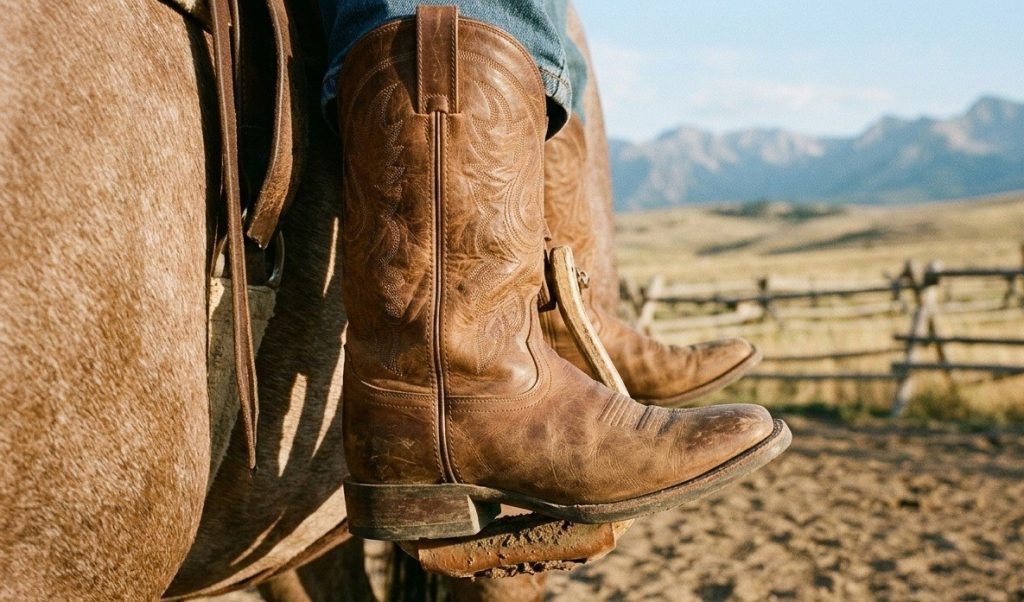
Inspect the outsole for uneven wear, smooth bald patches, missing chunks, or a shape that catches on the stirrup. A slight riding heel and a secure fit matter: footwear that is too bulky or poorly fitted may increase the chance of a foot catching. Make sure the boot slides into and out of your stirrup without force. Check fit again if you change stirrups or add an insole.
Examine the toe, shaft, zipper, elastic, and pull tabs. A split seam or damaged zipper can make the boot unstable or hard to remove quickly. Check that the footbed has not collapsed and that the boot does not pinch, slip excessively, or rub enough to distract you. Wear can differ between the left and right boot, so assess each one separately.
If a structural part is loose, cracked, or separating, do not ride in the boots until they have been repaired or replaced. Avoid temporary fixes that could fail in the stirrup. A cobbler can assess whether the boot is repairable; the rider remains responsible for checking that the repaired boot fits the stirrup safely.
Store boots so they keep their shape
Store clean, fully dry boots in a cool, dry place with the shafts supported. Keep them away from direct sunlight, damp floors, and heat sources. A boot tree or rolled support can help a tall shaft stay upright, but do not force the boot into a shape that strains its seams. Avoid sealing damp boots in plastic or a gear bag.
If boots become wet during a ride, clean off mud after it dries and allow the boots to dry naturally before storage. Recheck the leather and stitching once dry. A new crack, stiff area, or change in fit after wetting may mean the boots need repair or a different care plan.
Frequently Asked Questions
Can I use saddle soap on cowboy riding boots?
Only if the boot’s care instructions permit it for that leather and finish. Some riders use it, while others avoid it. Check the material and test an approved method first.
How often should I clean riding boots?
Wipe away sweat and dirt after rides, especially before storage. A deeper cleaning is needed when grime builds up, but avoid unnecessary soaking or conditioning.
Can I dry wet boots beside a heater?
No. Let them air-dry at room temperature. Direct heat may dry, stiffen, or distort leather and can affect adhesives or other boot materials.
What boot damage means I should stop riding in them?
A loose heel, separating sole, broken seam, deep crack, or damage that affects stirrup fit should be assessed before the next ride.
Are cowboy boots always safe for riding?
No. Fit, heel shape, sole bulk, condition, and compatibility with the stirrup all matter. Check your equipment and riding setup before mounting.
Final Words
Clean off dirt gently, dry the boots away from heat, and use care products only when they suit the material. Inspect each boot for wear that can affect fit, sole stability, heel strength, or quick removal from the stirrup. If a structural part is damaged, have it assessed before riding. When reviewing cowboy boots for riding horses, consider the fit and riding setup as well as the look. Regular checks help you decide whether ordinary cleaning is enough or the boots need professional repair.