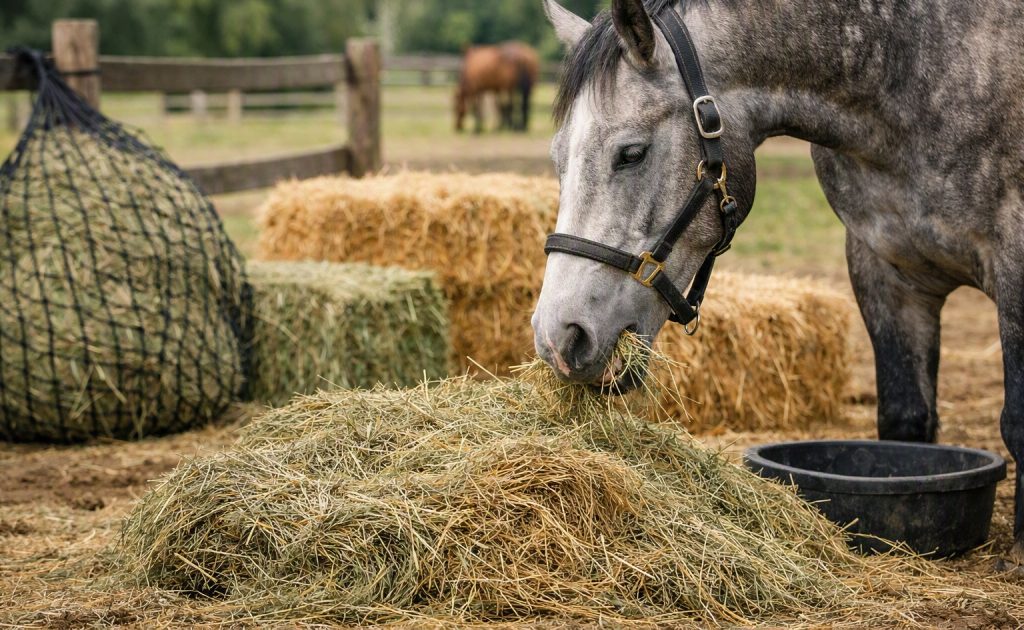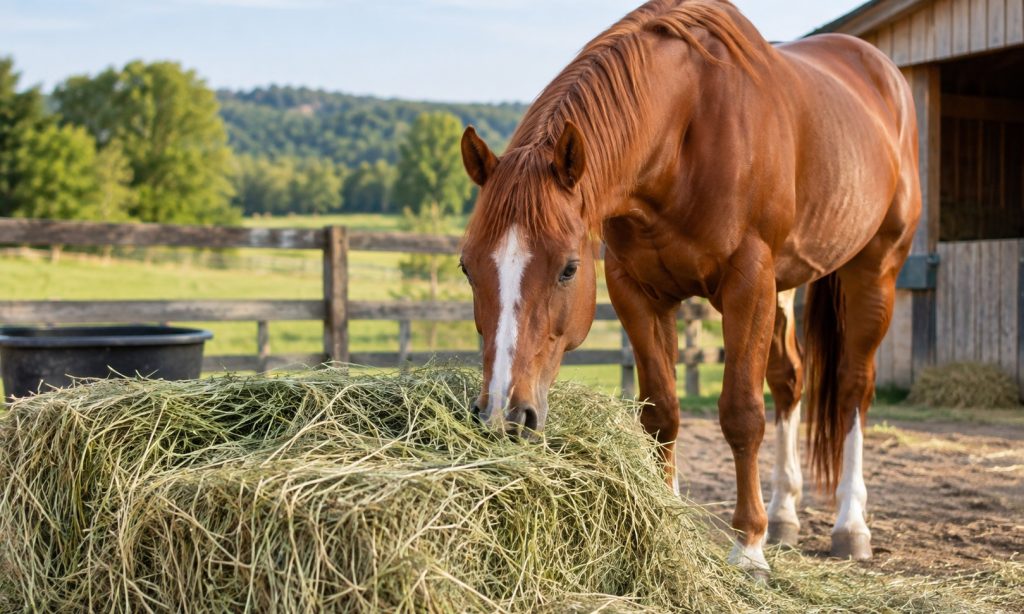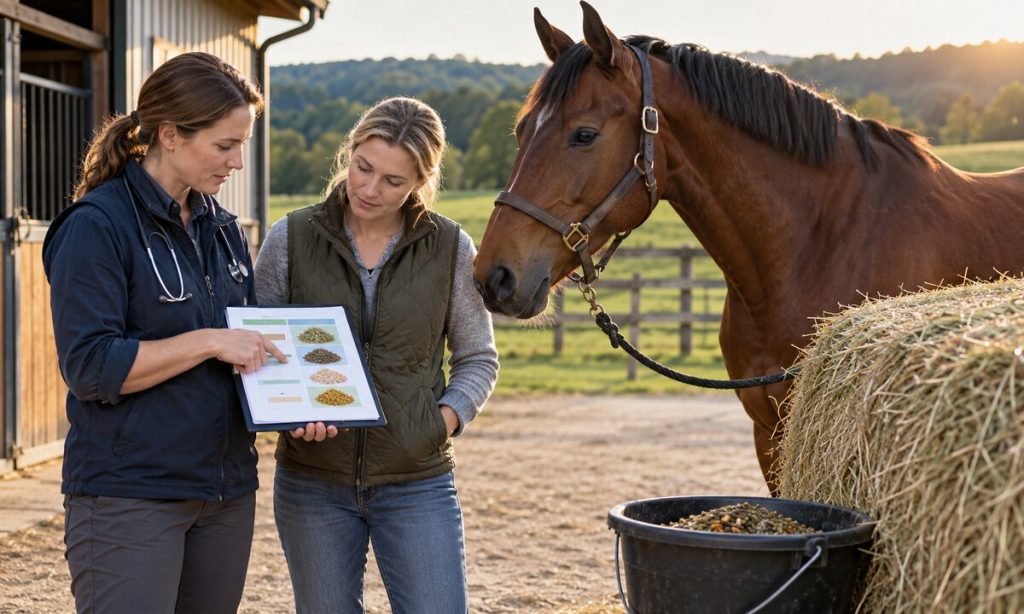
A horse’s winter coat can hide gradual weight change, so regular body-condition checks are more useful than relying on appearance from memory. A simple record of body condition, estimated weight, hay, and changes in routine gives you and your veterinarian a clearer picture over time. This is especially helpful for a horse with insulin resistance, previous laminitis, or a veterinarian-directed feeding plan, where abrupt ration changes may create risk. If you are learning about hay for insulin resistant horses, use the veterinarian’s assessment and hay analysis to guide decisions. This article explains how to monitor consistently, recognize trends, and know when to call for advice; it does not set a ration or replace veterinary care. A weight tape is an estimate, so consistent technique matters more than a single reading.
Set up a repeatable baseline
Ask your veterinarian how often to assess body condition and weight for your horse. Choose a consistent schedule and use similar conditions each time: same location, similar time of day, and before or after feeding in the same way. Record the date, season, workload, turnout, hay lot, concentrate, supplements, and any relevant health or medication changes.
Use a recognized body condition scoring method and score the horse by looking at and feeling several areas, not just the belly. A long winter coat can obscure ribs, topline, and fat deposits, so hands-on assessment matters. If you are not confident, ask a veterinarian or experienced equine professional to teach you and check your technique. Use the same scoring system each time and write down the score rather than keeping it in your head.
Estimate weight with the same tool each time, such as a scale or weight tape, if available. A tape is an estimate and may not match an actual scale weight, so do not treat small changes as exact. The direction over several measurements is more useful than one number. Dated photos from the same angle can supplement your notes but cannot replace palpation or a veterinary examination.
Track hay and the whole ration
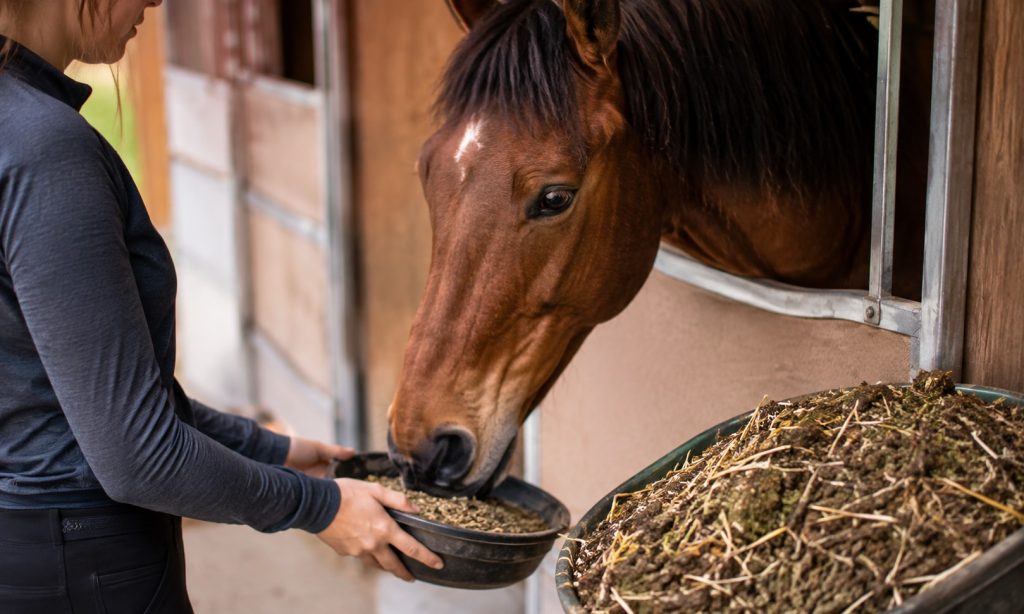
Record hay by weight when practical, along with the source or lot, feeding method, and whether the horse finishes it. Flake size can vary between bales, so note when the supply changes. Keep hay analysis, labels, and the feeding plan with the log. Do not make a substantial reduction or increase in hay based on a single score or weight-tape reading without speaking to the veterinarian.
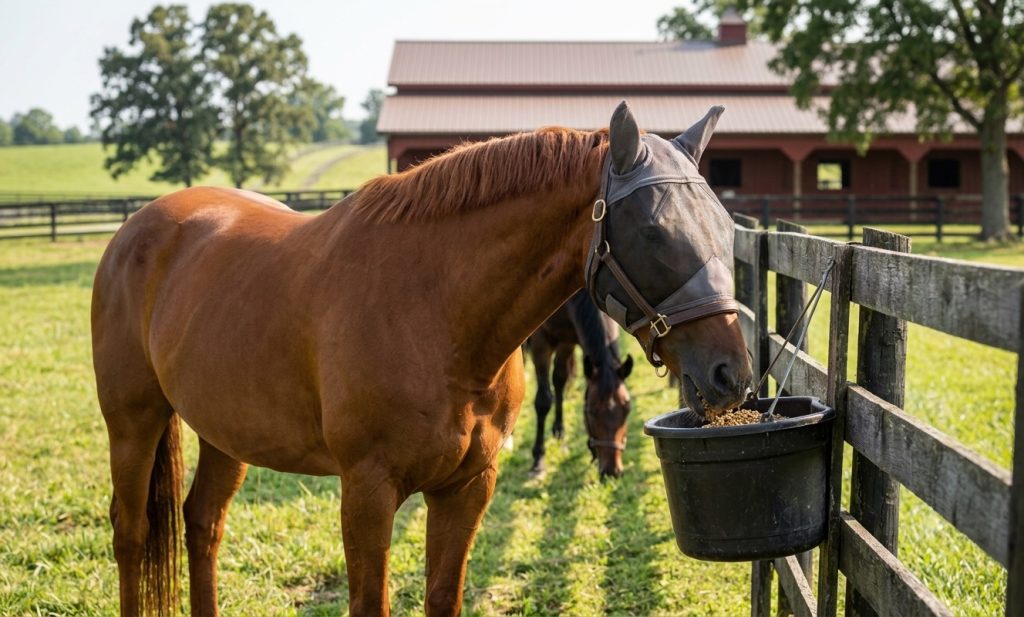
Include pasture access, treats, concentrates, supplements, and forage alternatives. A horse may receive calories from more sources than the main hay ration. Note seasonal changes in turnout and weather, because both may alter forage availability and energy needs. If the horse lives with others, make sure you know how much it actually eats; group feeding can make individual intake hard to estimate.
For an insulin-resistant horse, ask the veterinarian whether hay testing, insulin monitoring, or other follow-up is appropriate. Avoid relying on visual appearance, a “low sugar” label, or another owner’s experience as a substitute for the horse’s individual plan.
Watch for changes between scheduled measurements
Record appetite, manure, water access, activity, comfort, and any change in the horse’s willingness to move. Note new neck or crest fat, changes around the ribs and tailhead, or muscle loss along the topline. These observations can help the care team decide whether the trend needs closer assessment, but none diagnoses insulin resistance or laminitis by itself.
If the horse becomes foot-sore, reluctant to turn, shifts weight repeatedly, or develops sudden lameness, contact a veterinarian promptly. Laminitis can be serious and may require urgent assessment. Do not wait for the next weigh-in or try to solve sudden signs by changing hay alone.
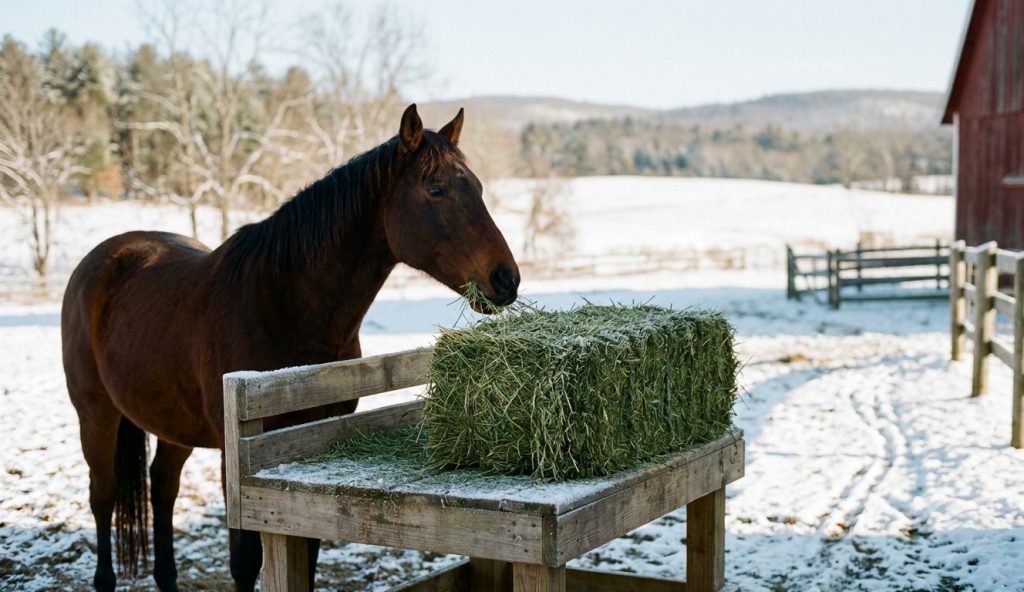
Winter feeding can change as temperatures, shelter, coat, and activity change. Monitor body condition at regular intervals and share trends with the veterinarian. Adjustments should reflect the horse’s health, forage analysis, and overall diet, not a one-size-fits-all winter rule.
Use a log that helps you compare
A notebook or spreadsheet can include date, body-condition score, estimated weight, hay lot and amount, pasture hours, concentrate and supplement changes, workload, and notes. Use concise descriptions, such as “weight tape 1,045; BCS 6; new hay lot started Monday,” rather than “looks fatter.” Keep the same units and method so measurements can be compared.
Review the record every few weeks or at the interval your veterinarian recommends. Look for a steady trend across multiple observations. A single higher or lower score may reflect measurement variation, gut fill, coat, or another short-term factor. Public discussions among horse owners often describe varied winter weight changes and feeding choices; such anecdotes cannot determine what is safe for a particular insulin-resistant horse.
Bring the log and hay information to veterinary appointments. Ask what range is appropriate, what change would prompt a call, whether the feeding plan needs revision, and whether weight or insulin testing should be repeated. Agree on who will measure the horse if several people share care.
Make changes with veterinary guidance
Do not suddenly restrict forage or remove food to force weight loss. Abrupt restriction may be harmful, and horses with insulin dysregulation need a plan that accounts for both metabolic risk and adequate nutrition. If the horse is gaining or losing weight, discuss a measured adjustment with the veterinarian or an equine nutrition professional familiar with the medical history.
When a new hay lot or feeding approach is introduced, change it gradually when possible and record the dates. If you need to address a hay shortage, a change in weather, or a sudden decline in body condition, call the care team for a practical plan. Keep water available and follow instructions for exercise, turnout, medication, and hoof monitoring.
When reviewing a trend, compare measurements taken with the same equipment and method. Write down who took the measurement and whether the horse had just eaten, exercised, or been turned out. If the result seems very different from the horse’s appearance or previous record, repeat the measurement calmly and ask the veterinarian before changing feed.
Frequently Asked Questions
How often should I check my horse’s body condition?
Follow your veterinarian’s schedule. Consistent checks every few weeks or monthly may be appropriate, depending on the horse and plan.
Is a weight tape accurate?
It estimates weight. Use the same tape and method to watch trends, and do not treat small differences as exact scale measurements.
Can I judge weight by looking at a winter-coated horse?
A coat can hide changes. Use a consistent body-condition method that includes feeling key areas and seek help if unsure.
Should I cut hay if my insulin-resistant horse gains weight?
Ask the veterinarian first. Do not make sudden forage restrictions or change the ration without an individualized plan.
What signs need a prompt veterinary call?
Sudden foot soreness, reluctance to move, shifting weight, colic signs, marked appetite loss, or rapid weight change need veterinary advice.
Final Words
Use a consistent body-condition score, repeatable weight estimate, and a record of hay and other feed to spot gradual changes through winter. Share trends and hay information with your veterinarian before making significant adjustments, especially for an insulin-resistant horse. When assessing hay for insulin resistant horses, let the horse’s test results, health history, and measured response guide the plan. Regular monitoring supports informed decisions, while veterinary assessment remains essential for sudden or concerning signs.
References
- Caring for the overweight horse, University of Minnesota Extension.
- Equine Metabolic Syndrome, UC Davis Center for Equine Health.
- Body Condition Scorecard, American Association of Equine Practitioners.