Fly spray can be useful during buggy weather, but the bottle and applicator need as much care as any barn tool that contacts a horse. Dirt in a nozzle can change the spray pattern, a damaged cap can leak, and an unreadable label makes safe storage and use harder. Cleaning is not the same as mixing, transferring, or repurposing a pesticide. Follow the specific product label for use, storage, cleaning, and disposal. If you are comparing a fly spray for horses, check that the product is labeled for horses and the intended use. This guide covers routine inspection, safe external cleaning, nozzle care, and signs that a container or applicator should be removed from service. Keep a dated note of any nozzle or bottle problems.
Read the label before opening or cleaning
Keep the original label with the spray. It contains the directions, restrictions, first-aid information, storage conditions, and disposal instructions. Do not transfer a pesticide to a drink bottle, household spray bottle, or an unmarked container. Do not combine leftover products or add water unless the label directs dilution.
Some products are ready to use, while others are concentrates or have specific application equipment. Their cleaning and storage steps may differ. Before cleaning, identify whether the bottle itself contains pesticide, whether the sprayer can be detached, and what the label says about rinsing. Never assume that a container can be washed down a drain or reused for another purpose.
Inspect the container and applicator
Before each use, check that the label is legible and the container is the correct one. Look for a cracked bottle, loose cap, bulging or corroded aerosol can, leaking seams, damaged trigger, split hose, or a missing nozzle. Make sure the sprayer draws product normally and does not drip from the handle or connection.
If the product has changed color, separated, crystallized, or developed an unusual odor, do not guess whether it remains usable. Check the label and contact the manufacturer, veterinarian, or pesticide authority for guidance. Do not strain or dilute it to make it spray. Keep a leaking or unidentified container away from horses, feed, water, children, and drains while you follow disposal advice.
A clogged nozzle can deliver an uneven stream or make the user squeeze harder, increasing the chance of spills or accidental contact. Horse owners in public forums describe varied nozzle-clogging experiences with different sprayers and mixtures; those anecdotes do not override label directions or establish a safe cleaning method.
Clean the outside without spreading residue
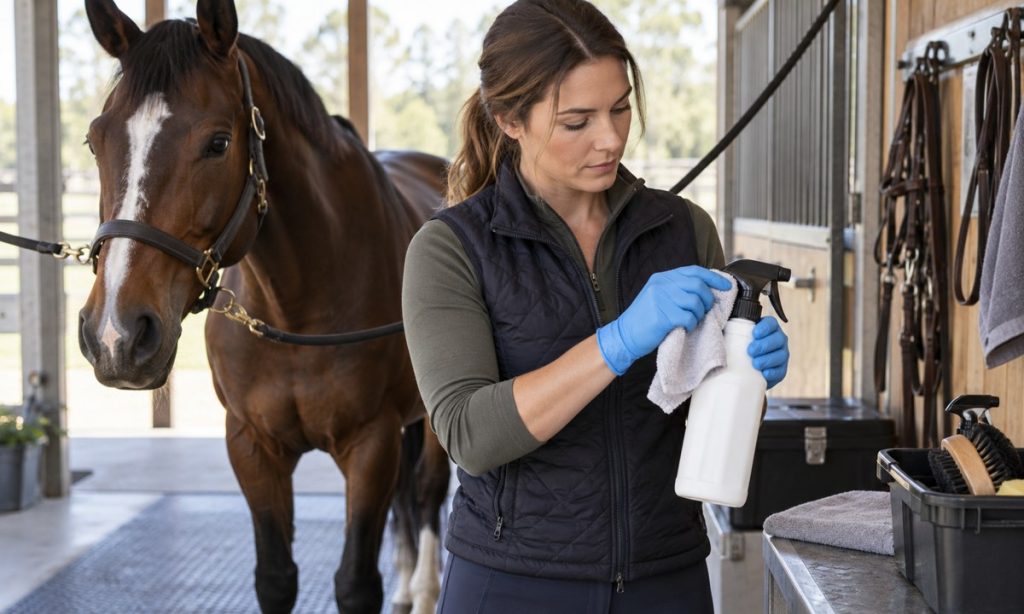
Choose a ventilated area away from feed, water, tack, and horses. Wear the protective equipment the label calls for. If the outside of the bottle or handle is dusty, wipe it with a disposable cloth or other method allowed by the label. Keep residue and cleaning materials out of drains and animal areas. Wash your hands after handling the bottle, even if you wore gloves.
Do not pressure-wash the bottle, soak its label, or use household cleaners on pesticide residue unless directed. Do not clean the sprayer next to a horse or in a stall. If product spills, use the label’s spill response instructions. Keep used cloths, gloves, and rinsate away from feed and water and dispose of them as directed.
Care for reusable sprayers only as directed
Some fly sprays come in refillable bottles; others are sealed or aerosol containers that should not be opened. Follow the label for the exact type. If the label permits cleaning a reusable applicator, remove it from the horse’s area and use only the specified method. Do not use a household spray bottle that previously held cleaner or another chemical.
If a nozzle can be detached under the label instructions, inspect it for visible dirt or dried material. Use the recommended cleaning procedure and let removable parts dry before reassembly. Do not poke a wire or pin into the opening unless the manufacturer explicitly allows it; that can enlarge the orifice or damage a seal. Do not blow through the nozzle or put it in your mouth.
Never rinse pesticide residue into a sink, storm drain, pasture, or waterway. Do not improvise with vinegar, solvents, or other household substances. When the label does not explain how to service an applicator, contact the manufacturer or local pesticide office rather than experimenting.
Store spray away from horses and feed
Store the product in its original, tightly closed container, in the location and temperature range stated on its label. Keep it locked or otherwise inaccessible to children, horses, and other animals. Store it separately from feed, forage, medicines, and grooming products. Avoid areas where a leak could reach a drain, well, or water source.
Return the bottle to storage after use; do not leave it on a stall ledge or in direct sun. Do not keep an unlabeled mixture for later. Mark the date opened if useful, but follow the label or manufacturer for any shelf-life question. If the product freezes, overheats, leaks, or becomes unidentifiable, ask for disposal guidance.
Dispose of containers and leftovers safely
Read the label’s storage and disposal section before discarding an empty or partly full container. “Empty” does not automatically mean harmless, and different container types have different requirements. Do not puncture, burn, crush, or recycle an aerosol can unless the label and local program allow it. Do not pour leftover spray onto the ground or into a drain.
If the label is missing or the contents are unknown, do not put the container into routine trash or reuse it. Keep it contained and contact your local household hazardous-waste program or pesticide regulatory office for next steps. Keep the product and any contaminated materials away from horses until resolved.
Know when a bottle is no longer safe to use
Stop using a container with a leak, cracked housing, failed trigger, damaged seal, unreadable label, or inconsistent spray pattern that cannot be corrected through label-approved care. Do not tape a leaking bottle or transfer its contents to another container. Follow the label’s spill and disposal directions and replace the applicator only with a compatible, approved part.
If spray contacts a horse’s eyes, mouth, or sensitive skin contrary to label directions, or the horse shows an adverse reaction, move away from further exposure and contact a veterinarian. Keep the product label available. For a person exposed to the product, follow its first-aid instructions and contact the appropriate medical or poison-control service as directed.
Frequently Asked Questions
Can I rinse a fly-spray bottle in the sink?
Do not assume rinsing is allowed. Follow the product’s label and local disposal rules; keep pesticide residue out of drains.
Can I transfer fly spray to a different bottle?
No. Keep it in its original labeled container. Never use food or drink containers for pesticides.
How do I unclog a fly-spray nozzle?
Use only the label or manufacturer’s cleaning method. Do not poke, blow through, or soak it in an improvised solution.
Where should fly spray be stored?
Store it closed in its original container, according to the label, away from children, animals, feed, water, and heat sources.
What if the label is missing?
Do not use or transfer the product. Keep it secure and ask the manufacturer or local hazardous-waste program how to identify or dispose of it.
Final Words
Inspect the bottle, label, cap, trigger, and nozzle before use. Clean only reusable applicators according to their directions, keep pesticide residue away from animals and water, and store the product in its original labeled container. Dispose of leftovers and empty containers exactly as directed. When selecting a fly spray for horses, its label is the authority for how the specific formula may be used and maintained. Replace damaged equipment rather than improvising a repair that could leak or change application.
References
- Storing Pesticides Safely, U.S. Environmental Protection Agency.
- Pesticide Labeling Questions and Answers, U.S. Environmental Protection Agency.
- Fly control around horses, University of Minnesota Extension.