
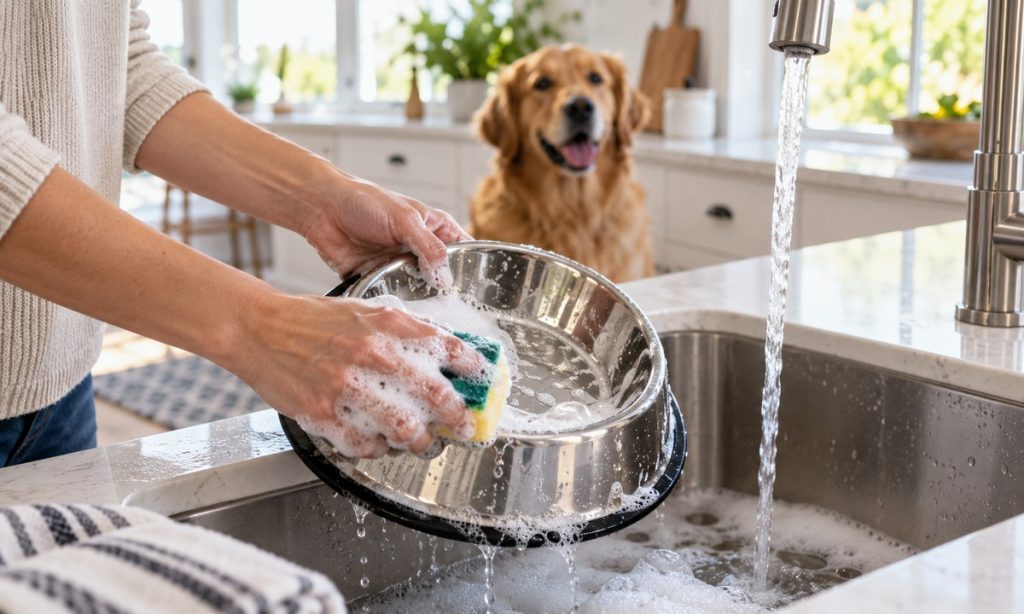
A bowl can look clean and still hold a thin film of food, saliva, or mineral residue. Leftover wet food can dry along the rim, while water dishes may develop a slick coating or odor. How to clean food and water bowls to limit residue and odors is mostly about regular washing, thorough rinsing, and complete drying. The routine should match the type of food and the bowl’s design. If you are comparing dog bowls for Cavalier King Charles Spaniels, ease of cleaning is one practical feature to consider, along with stability and fit. This guide explains a simple daily routine, how to remove stubborn film, and when extra care is appropriate. A steady washing routine helps keep buildup from returning and makes it easier to spot when a bowl needs replacing.
Why residue and odors develop
Food oils, crumbs, saliva, and moisture can cling to a bowl after a meal. Repeated topping up without washing allows that material to build into a film. Hard water may leave mineral marks, and scratches or seams can hold debris that is harder to remove. A strong smell can come from leftover food, stale water, or a bowl that stays damp between uses.
How to clean food and water bowls to limit residue and odors starts with not waiting for visible grime. Wash the dish on a regular schedule and replace old water with fresh water daily. Inspect the rim, base, seams, and underside. A bowl that remains slick or smells unpleasant after washing may need more thorough scrubbing or replacement if it is damaged.
Set a practical washing schedule
The U.S. Food and Drug Administration advises washing pet food bowls and measuring utensils with soap and hot water after each use. The Centers for Disease Control and Prevention recommends cleaning bowls after every wet-food use and cleaning dry-food and water bowls daily. Follow any stricter instructions from your veterinarian, especially when a pet is ill or eats raw food.
For a simple household routine, wash wet-food dishes after meals, wash dry-food dishes at least daily, and clean water bowls every day. Refresh drinking water with clean water rather than repeatedly pouring it over yesterday’s water. How to clean food and water bowls to limit residue and odors works best when the schedule is easy to repeat.
In a multi-pet home, keep each animal’s bowl separate if there is food guarding, a contagious illness, or a veterinary instruction to avoid sharing. Use a clean dish for each meal rather than letting several pets use a single bowl in turn.
A step-by-step hand-washing routine
- Remove leftover food and discard it safely. Do not rinse large food scraps into a drain.
- Wash your hands before handling the bowl and use a clean sponge or brush reserved for pet dishes.
- Scrub the inner surface, rim, underside, and any seams with hot water and dish soap.
- Rinse until no soap or loosened residue remains.
- Let the bowl air-dry on a clean rack or dry it with a clean towel before refilling.
How to clean food and water bowls to limit residue and odors also means cleaning the mat or feeding surface underneath. Crumbs and splashes can collect there and transfer back to a freshly washed dish. Wash the mat according to its care instructions and let it dry fully.
Use a dishwasher only when the bowl allows it
Check the bowl’s care instructions before putting it in a dishwasher. A dishwasher-safe dish can be convenient, but some materials, coatings, or glued parts may not tolerate the heat. Remove visible food first and keep pet dishes separate from human dishes if that is your household’s preference. Do not assume a quick rinse cycle removes stuck-on residue.
If the bowl has a rubber ring or detachable base, remove it when the manufacturer allows and clean underneath. Reassemble only after the parts are dry. How to clean food and water bowls to limit residue and odors includes checking the areas that are hidden during ordinary washing.
Remove stubborn film and mineral marks
For a greasy or dried-on film, soak the bowl in warm soapy water, then scrub with a nonabrasive brush. Rinse thoroughly. Mineral deposits from hard water may need a different approach, but use only a cleaning method compatible with the dish material. Avoid steel wool or harsh abrasives that can scratch the surface and create places where residue collects.
Do not mix cleaning chemicals. Never combine bleach with vinegar, ammonia, or other cleaners. If disinfection is needed, follow the product label and any veterinary or public-health guidance. Rinse or wipe away disinfectant as directed, and keep the pet away until the bowl is safe to use. How to clean food and water bowls to limit residue and odors should not involve leaving a strong chemical taste or scent behind.
If an odor remains after ordinary washing, inspect the bowl for scratches, cracks, trapped food, or a damaged coating. A worn dish can be harder to clean. Replace it when the surface is chipped, cracked, or no longer washes clean.
Take extra care with raw food or illness
Raw pet food needs careful handling because harmful germs may be present. Wash hands with soap and water after touching raw food, its bowl, or nearby surfaces. Clean and disinfect dishes and the surrounding area according to food-safety instructions. Keep raw pet food and its utensils separate from food prepared for people.
If a veterinarian diagnoses an infection or gives cleaning instructions, follow those directions rather than relying on a general routine. Ask whether bowls, mats, and feeding tools need daily disinfection and what product is safe for the material. How to clean food and water bowls to limit residue and odors may require extra steps during a contagious illness, but the method should come from reliable instructions.
Reduce water-bowl odor between washes
Empty stale water, wash the bowl, rinse it, and refill with fresh water. Clean the underside and the surface beneath the dish. If several pets drink from one bowl, clean it daily and refresh the water more often when it becomes cloudy or contains debris. Do not add household cleaners, fragrances, or essential oils to drinking water.
How to clean food and water bowls to limit residue and odors also depends on how the bowl is stored. Avoid putting a damp bowl away in a closed cabinet. Allow it to dry completely, and store clean bowls in a dry location. Keep food storage containers clean and use a separate scoop instead of using the bowl to measure kibble.
A quick inspection before serving
Before filling a bowl, check for visible crumbs, a slippery film, stale odor, cracks, or leftover soap. If the dish feels greasy or smells off, wash it again. Keep a spare clean bowl available so the pet still has a dish while the used one dries.
For shape and fit considerations, see our guide to choosing a dog bowl height and shape. The most helpful dish is one that suits the dog and can be cleaned consistently. How to clean food and water bowls to limit residue and odors should fit the real household routine rather than depend on a complicated setup.
Frequently Asked Questions
How often should I wash my dog’s water bowl?
Wash it daily and replace the water with fresh water. Clean it sooner if it becomes cloudy, slimy, or contains food or debris.
Is dish soap safe for pet bowls?
Ordinary dish soap can be used to wash a bowl, followed by thorough rinsing. Follow the bowl’s care instructions and avoid leaving soap residue.
Can I wash pet bowls in the kitchen sink?
CDC guidance says dog and cat bowls can be washed by hand in a kitchen sink. Wash your hands and clean the sink afterward if raw food or illness is involved.
Why does a clean bowl still smell?
Food residue, damp storage, seams, scratches, or mineral deposits may hold odor. Inspect the bowl and wash hidden areas before deciding whether it needs replacement.
Can I use bleach to disinfect a bowl?
Use a disinfectant only according to its label and appropriate public-health guidance. Never mix bleach with other cleaners, and rinse or dry as directed before the pet uses the bowl.
Final Words
How to clean food and water bowls to limit residue and odors comes down to frequent washing, careful scrubbing, complete rinsing, and dry storage. Follow FDA guidance for washing after use, and take extra precautions when handling raw food or caring for a sick pet. Inspect bowls for damage and clean the mat or surface beneath them. If you are choosing among dog bowls for Cavalier King Charles Spaniels, include cleanability in your decision and follow the bowl’s care label.









