
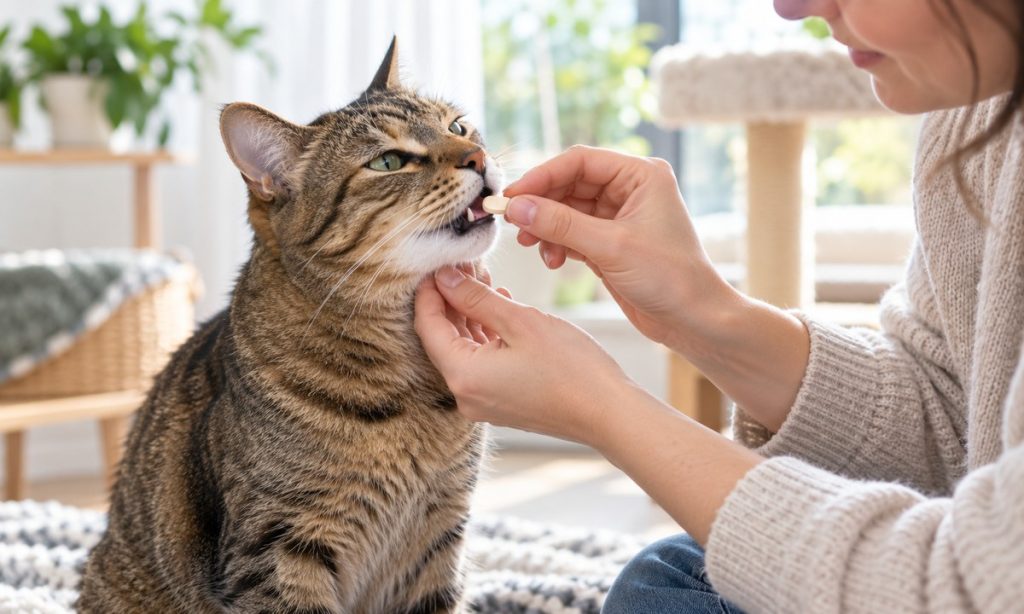
A cat that hides, vocalizes, scratches, or becomes tense may be showing stress, but those signs can also reflect pain or illness. “Calming drops” is a broad label that may describe products with very different ingredients and uses. How veterinarians evaluate calming drops in cats starts with understanding the behavior and checking the product itself. A veterinarian considers the cat’s health, the reason for the behavior, the ingredient list, evidence, possible interactions, and a safe plan for monitoring. If you are researching calming drops for cats, do not assume that every formula works the same way or is suitable for every cat. This guide explains what a veterinary review can cover and what information to bring to the appointment.
First, define what “calming drops” means
The phrase may refer to an oral supplement, a liquid herbal product, a pheromone-based product, or a medication prescribed for a specific situation. These are not interchangeable. A product applied to the environment does not have the same ingredients or exposure route as a liquid given by mouth. Bring the bottle, package, or clear photos of every label panel so the veterinarian can identify the exact product.
How veterinarians evaluate calming drops in cats includes clarifying how the product is used, what ingredients it contains, how much is given, and what result the caregiver expects. If the label is incomplete or the ingredients are unclear, the veterinarian may be unable to assess it confidently. Do not estimate a dose from a product intended for another species.
The behavior and situation come first
A veterinarian asks what behavior concerns you, when it began, how often it occurs, and what happens before and after it. Hiding during visitors, distress during travel, tension between household cats, and urine marking can have different causes. A short diary or video may help explain the pattern, provided recording does not frighten or endanger the cat.
How veterinarians evaluate calming drops in cats begins with considering the whole environment. Changes in the home, resource access, noise, conflict with another animal, or a disrupted routine may contribute. The plan may include environmental changes or behavior support rather than relying on a drop alone.
Ask whether a physical exam is needed before assuming a behavior is anxiety. Pain, urinary problems, skin disease, age-related changes, and other health concerns can alter behavior. Treating an underlying medical issue may be more important than trying a calming product.
The veterinarian reviews ingredients and product details
The clinician may look at active and inactive ingredients, concentration, serving directions, intended route, lot information, and manufacturer contact details. “Natural” does not automatically mean safe. Some products contain multiple ingredients, and the amount of each ingredient may not be obvious from the front label.
How veterinarians evaluate calming drops in cats also involves asking what claims the product makes and whether evidence supports those claims. Supplements and other non-drug health products may not undergo the same pre-market review as approved medications. Product quality and evidence can vary, so a veterinarian may recommend caution or suggest a better-studied approach.
Do not rely on online dosing charts or another cat’s experience. A cat’s size, age, health, other medications, and the product’s concentration all matter. The veterinarian may advise against a product if its ingredients are unclear, the evidence is weak, or a safer plan is available.
Health history and medication interactions
Tell the veterinarian about prescription medicines, over-the-counter products, vitamins, supplements, and any previous reaction. Share information about kidney or liver disease, heart problems, pregnancy, appetite changes, and recent illness. Cats may process substances differently from people, and a product can affect another treatment.
How veterinarians evaluate calming drops in cats includes checking whether a cat’s current condition could make a product risky. The veterinarian may ask for the exact dose already given and the time of the last dose. If the cat is unusually sleepy, uncoordinated, vomiting, trembling, or behaving differently after a product, stop further doses and contact a veterinarian or emergency clinic for instructions.
Evidence, goals, and realistic expectations
Ask what outcome would count as improvement. A useful goal might be fewer episodes of hiding during a predictable trigger, easier carrier entry, or less conflict between cats. Set a reasonable observation period with the veterinarian and note the behavior before and after any plan begins.
How veterinarians evaluate calming drops in cats is not simply a yes-or-no judgment about whether a product is “good.” The clinician weighs available evidence, the likely cause of the behavior, safety, and the cat’s response. Some products may be considered as one part of a broader plan, while another cat may need environmental adjustments, behavior modification, medical treatment, or referral.
If a veterinarian recommends a product, ask how it should fit with other care and what signs would mean it is not helping. Do not increase the amount or combine multiple calming products without checking. A more is better approach can create unwanted effects without solving the cause.
Behavior support may be part of the plan
Cats benefit from predictable access to food, water, litter boxes, resting areas, hiding places, and vertical space. In multi-cat homes, resources may need to be separated so one cat cannot block another. A veterinarian may suggest gradual behavior work, changes to the home, or help from a veterinary behavior professional.
How veterinarians evaluate calming drops in cats includes asking whether the environment can be made less stressful. A product should not be used to suppress behavior while a painful or frightening trigger remains unaddressed. Avoid punishment, yelling, or spraying water; these can increase fear and make the situation harder to understand.
For a cat that becomes distressed during travel or veterinary visits, ask the clinic about preparation steps well before the appointment. A veterinarian may recommend carrier training, a quieter arrival plan, or prescription medication for a specific event. These choices should be tailored to the cat rather than improvised at home.
Monitoring after starting a veterinarian-approved plan
Keep a log of the product name, amount, time given, behavior, appetite, activity, and any unusual signs. Follow the veterinarian’s instructions about how long to use it and when to reassess. Do not continue indefinitely if the product is not helping or if the behavior changes.
How veterinarians evaluate calming drops in cats includes reviewing both benefits and possible adverse effects. Contact the clinic if the cat becomes excessively sedated, weak, uncoordinated, agitated, or stops eating. Seek urgent care for collapse, trouble breathing, seizures, or a severe reaction. The article on signs to monitor after giving calming drops can help you identify observations to report, but your veterinarian should guide the response.
Questions to bring to the appointment
Ask: What might be causing this behavior? Should we check for pain or illness first? Which exact ingredient or product are you evaluating? Is there reliable evidence for this use in cats? Could it interact with current medication? What dose and route are appropriate, and for how long? What side effects should prompt a call?
Also ask what environmental or behavior changes should accompany the plan, when to reassess, and what to do if the cat refuses the product. How veterinarians evaluate calming drops in cats is easier when the veterinarian sees the exact label and understands the household situation. Bring notes instead of relying on memory during a short appointment.
Frequently Asked Questions
Are all calming drops for cats the same?
No. Products may differ in ingredients, route, intended use, and evidence. The veterinarian needs the exact label to assess a specific product.
Can I give a cat a calming product made for dogs?
Do not do so unless a veterinarian specifically approves it. Species, formulation, and dose can affect safety.
Should a cat be examined before using a calming product?
Ask the veterinarian. A physical exam may be appropriate because pain or illness can appear as behavior change.
How soon should calming drops work?
Timing depends on the product and the behavior being addressed. Ask the veterinarian what response to expect and when to reassess.
What should I do if my cat seems unwell after a dose?
Do not give another dose until you have veterinary guidance. Contact a veterinarian promptly, and seek urgent care for severe signs.
Final Words
How veterinarians evaluate calming drops in cats involves the behavior, health history, exact ingredients, evidence, possible interactions, and a plan for monitoring. A product should not replace an exam or behavior support when illness, pain, or environmental stress may be involved. Bring the label and notes to the veterinarian before starting or combining products. If you are reviewing calming drops for cats, ask the clinician whether a specific formula fits your cat’s needs.
Reference
- Cornell Feline Health Center: Cats That Lick Too Much
- American Association of Feline Practitioners and International Society of Feline Medicine: Environmental Needs Guidelines
- Cornell University College of Veterinary Medicine: Behavior Medicine
- Cornell University College of Veterinary Medicine: Feline Aggression and Behavior
- Feline Veterinary Medical Association: 2024 Intercat Tension Guidelines









