
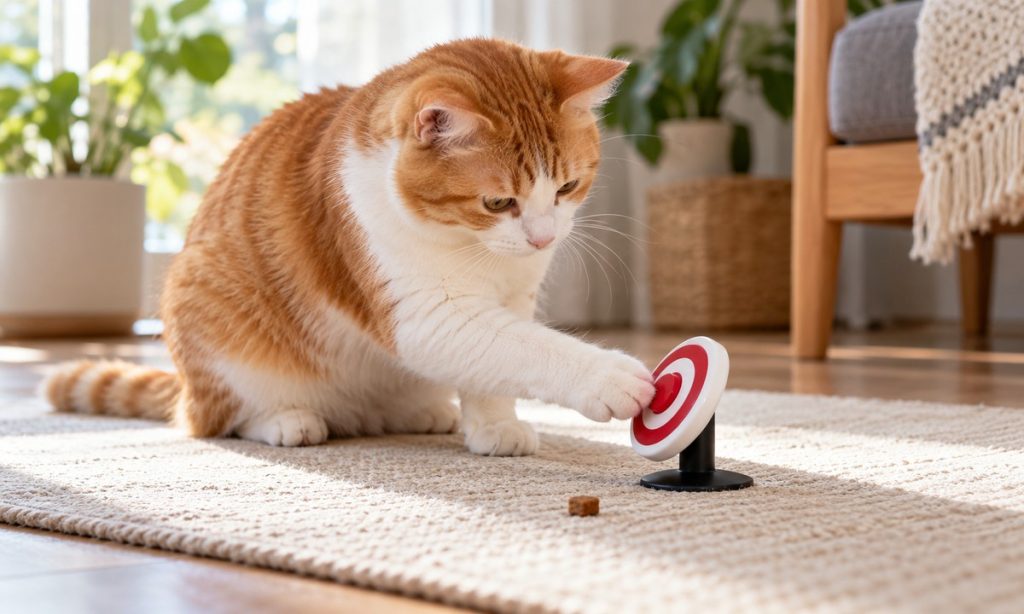
A few treats can feel too small to matter, but several rewards across a day can add up. How to account for cat treats in a cat’s daily calories begins with knowing the cat’s calorie target and reading the treat label. Count training rewards, dental treats, food used to give medication, table food, and any extras from other family members. A common veterinary guideline is to keep treats and other non-complete foods within about 10% of daily calories, while most calories come from a complete and balanced diet. If you are researching cat treats for kidney disease, ask the veterinarian before adding them because a therapeutic diet may have specific limits. This guide shows how to do the math and track portions without guessing. For reward ideas, see short reward-based cat training sessions, and for broader portion context read about feeding routines for older cats.
Start with the cat’s daily calorie goal
The right calorie target depends on a cat’s age, body condition, activity, health, and weight goals. A food-package chart is a starting point, not a personal prescription. Ask your veterinarian for the daily calorie goal, especially if your cat is overweight, underweight, growing, pregnant, nursing, or has a medical condition.
How to account for cat treats in a cat’s daily calories becomes easier once the target is written down. Use the veterinarian’s recommended amount for the whole day, not a guessed number based on appetite. Cats that need weight loss should not be placed on a severe calorie restriction without veterinary guidance.
Read the calorie information on each treat
Look for calories per treat, per piece, per serving, or per weight. Check the serving size carefully. If a label lists calories per ounce or gram rather than per piece, weigh a typical portion or ask the manufacturer how many pieces make the stated serving. Treat size varies, so do not assume every small-looking treat has the same calories.
Record the product name and its calorie value somewhere easy to find. If the package changes or the treat is homemade, update the number. How to account for cat treats in a cat’s daily calories requires using the actual label rather than a general estimate from another product.
Use a simple 10% planning limit
Many veterinary nutrition guidelines advise that treats and extras make up no more than about 10% of daily calories. For example, if a veterinarian sets a cat’s daily goal at 200 calories, a 10% treat allowance is 20 calories. The remaining calories should generally come from the cat’s complete and balanced main diet, unless the veterinarian provides a different plan.
If each treat contains 2 calories, then 10 treats would equal 20 calories. If a treat contains 4 calories, five treats would reach the same allowance. That is a ceiling for all treats and extras combined, not a target that must be used every day. How to account for cat treats in a cat’s daily calories means keeping a buffer for unplanned rewards.
Some cats may need a smaller allowance. A veterinarian may recommend no extra treats or a special plan for cats with disease, food allergies, weight concerns, or a prescription diet. Follow the individualized direction over a general 10% rule.
Count every source of extra food
A treat budget includes more than packaged snacks. Count food used for training, pieces of kibble given as rewards, table scraps, lickable snacks, dental products that provide calories, and food used to hide medication. If several people feed the cat, make one shared record or container so everyone can see how much has already been offered.
How to account for cat treats in a cat’s daily calories also means checking what the cat can access. Other pets’ food, dropped food, and unattended dishes can add calories without being noticed. Feed pets separately when needed and record the amount the cat actually eats.
How to account for cat treats in a cat’s daily calories by using a short food diary can help make patterns visible. Write down the time, treat type, number of pieces, and any other food. A few days of notes may show that a treat budget is being used sooner than expected or that one household member is giving extra rewards.
Subtract treats from the daily plan
Suppose a veterinarian recommends 200 calories per day and the cat receives 15 calories in treats. About 185 calories remain for the main diet under that plan. Use the food label to measure the corresponding amount of food, and ask the veterinary team how to divide it across meals. Do not reduce a prescription diet or change the amount if your veterinarian has given different instructions.
For training, set aside a small portion of the cat’s regular food and use it as rewards. This can reduce extra calories while preserving a familiar routine. How to account for cat treats in a cat’s daily calories is simpler when a planned portion is reserved at the beginning of the day.
If the cat receives a mix of wet and dry food, include calories from both. The calorie information may be listed per can, pouch, cup, or gram. Measure each serving consistently. Do not rely on a scoop or bowl line unless you know its volume and use it the same way each time.
Choose how to reward without overfeeding
Rewards do not always need to be food. Praise, play, attention, or access to a favorite resting spot may work for some cats. Keep food rewards small and account for them within the daily plan. Do not withhold a needed meal to make a cat more interested in training.
A cat with a special diet may still have safe reward options, but the veterinarian should approve them. If the cat’s normal food can be used as a reward, ask how much to reserve. How to account for cat treats in a cat’s daily calories is especially important when extra foods could interfere with a therapeutic plan.
When the calorie math does not match progress
If weight changes despite careful tracking, check portion measurements, treat counts, food sharing, and label values with your veterinarian. Body weight can also change because of illness, age, or activity. Do not keep cutting food without a plan, since cats need adequate nutrients and excessive restriction can be harmful.
Weigh the cat as your veterinarian recommends and track body condition, not just the number on the scale. Ask when to revisit the calorie target. How to account for cat treats in a cat’s daily calories may need adjustment as the cat’s body condition or health changes.
For kidney disease, diabetes, food allergy, or another health concern, ask before giving any new treat. The article on cat treats for kidney disease can help you identify questions about ingredients and nutrition, but your cat’s veterinarian should approve foods for the individual treatment plan.
Frequently Asked Questions
What percentage of a cat’s calories can come from treats?
A common veterinary guideline is no more than about 10% from treats and extras, with most calories coming from a complete and balanced diet. Your veterinarian may set a lower amount.
Do I need to count food used to give medicine?
Yes. Include the food or treat used to hide medication in the daily total, and make sure the medicine can be given with that food.
Can I use kibble as a training treat?
Often, a portion of the cat’s regular diet can be reserved for rewards. Ask your veterinarian if the cat follows a special diet.
What if the treat label does not show calories per piece?
Check the serving size and calories per serving, weigh the amount, or contact the manufacturer. Avoid guessing when the cat has a strict calorie or medical plan.
Should I reduce my cat’s meal after giving treats?
Treats should fit within the daily plan, but ask your veterinarian how to adjust meals. Do not change a prescribed diet or weight-loss plan on your own.
Final Words
How to account for cat treats in a cat’s daily calories is a matter of measuring the daily goal, checking calories per piece, and counting every extra food. Plan treats within a modest allowance and reserve most calories for a complete diet. Use a shared log when several people feed the cat, and ask for veterinary advice when health or weight goals are involved. If you are considering cat treats for kidney disease, confirm that they fit your cat’s medical nutrition plan before offering them.









