
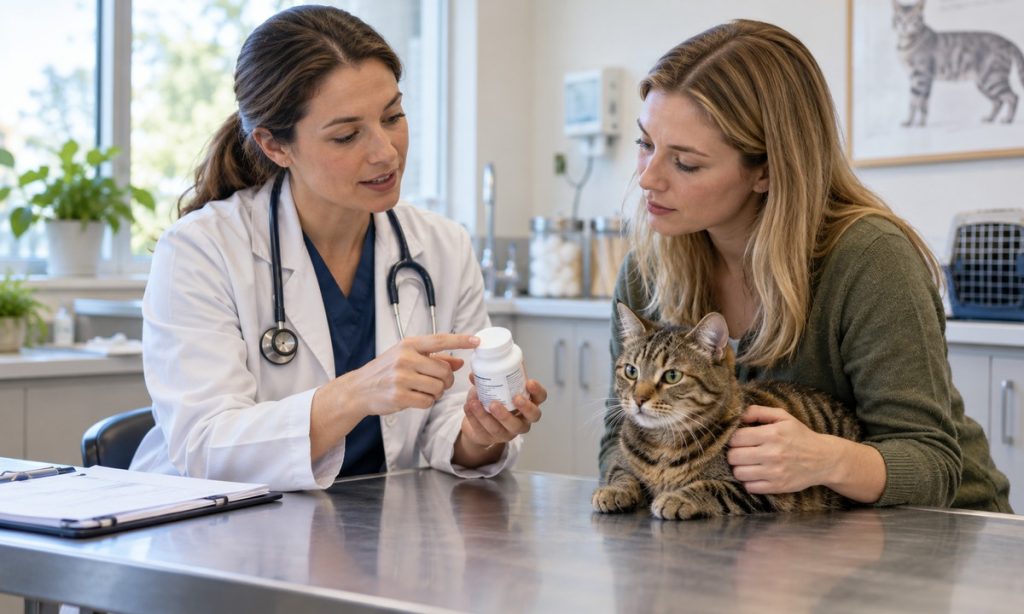
A cat’s itching, sneezing, watery eyes, or skin irritation may look like an allergy, but several conditions can cause similar signs. Before giving a medicine, ask the veterinarian what problem they are treating, which exact product is appropriate, and how to use it safely. What to ask a veterinarian before using medicine includes questions about diagnosis, ingredients, dose, interactions, side effects, and follow-up. If you are considering medicine for cat allergy, bring the package or a photo of its label. Human products can contain combinations or strengths that are unsuitable for cats. A veterinary plan should fit the cat’s symptoms, health history, and other medications. Keeping a written list of the product, dose, and timing makes the visit more useful and reduces confusion later.
Confirm the cause before discussing treatment
Ask, “What conditions could explain these signs, and what makes allergy likely?” Fleas, infection, parasites, food reactions, environmental allergens, and other skin or respiratory problems may look alike. The veterinarian may ask about when symptoms began, where the cat spends time, recent diet changes, flea prevention, and whether other pets or people have symptoms.
What to ask a veterinarian before using medicine starts with whether an examination or testing is needed. Depending on the signs, the veterinarian may recommend skin checks, parasite control, an elimination diet, or other tests. Do not assume that itching means the cat needs an antihistamine or that sneezing is caused by the same issue as a previous episode.
Describe what you have observed and bring photos of skin changes or a list of foods and medications. Mention scratching, hair loss, scabs, ear problems, vomiting, diarrhea, coughing, or breathing changes. A clear history can help the veterinarian select the next step. What to ask a veterinarian before using medicine depends on the cat’s current symptoms and health.
Identify the exact medicine and formulation
Ask the veterinarian to write the full medicine name, active ingredient, strength, and form. A tablet, liquid, topical product, or combination cold-and-allergy medicine may have different ingredients. Similar package names do not guarantee that two products are equivalent.
Bring the original package or clear photos of every label panel. Check whether it contains more than one active ingredient, sweeteners, flavorings, or other additives. What to ask a veterinarian before using medicine includes confirming that the product is intended for this cat and this specific problem.
Never give a human allergy or cold medicine based on an online dose or a previous prescription. Some products contain decongestants or other ingredients that may be dangerous to pets. If the cat has already swallowed an unknown medicine, contact a veterinarian or animal poison service immediately and provide the package details.
Clarify the dose, route, and schedule
Ask how much to give, how often, by which route, and for how long. Confirm whether the dose is based on the cat’s weight, medical condition, or a specific test result. Ask what to do if a dose is missed, vomited, or only partly swallowed. Do not double a dose unless the veterinarian directs you to do so.
What to ask a veterinarian before using medicine also includes whether it should be given with food, whether the tablet can be split, and how to measure a liquid accurately. Do not crush, divide, or mix medicine into a full meal unless the clinic confirms that is safe and practical. If giving the medication is difficult, ask for a demonstration or another formulation.
Ask about interactions and health risks
Tell the veterinarian about every prescription, over-the-counter medicine, supplement, topical product, and flea treatment the cat uses. Mention previous reactions and conditions involving the kidneys, liver, heart, breathing, or digestion. These details may affect which medicine is chosen or how closely the cat should be monitored.
Ask whether the medicine can interact with current treatments or affect upcoming allergy testing. Some medicines can change test results or need to be paused before a procedure, but the timing depends on the product. What to ask a veterinarian before using medicine includes asking the clinic before stopping any current treatment.
If your cat is pregnant, nursing, very young, or elderly, mention that before the first dose. Do not assume a medicine is safe because it was previously used for a different cat or condition.
Understand expected effects and warning signs
Ask what improvement should look like and when the veterinarian expects to see it. Find out which side effects can occur, which require a call, and which need emergency attention. Depending on the product, possible concerns may include unusual sleepiness, agitation, vomiting, appetite change, or coordination problems. The veterinarian should explain what matters for the specific medicine.
What to ask a veterinarian before using medicine includes a clear plan for an unexpected reaction. Keep the clinic and after-hours contact information accessible. If signs worsen, the cat has trouble breathing, collapses, develops facial swelling, or cannot stay alert, seek emergency veterinary help.
The guide to early signs of a reaction to cat allergy medicine can help you prepare observations, but it does not replace a call to your veterinarian. Do not give another dose after a suspected reaction until you have professional instructions.
Discuss duration and follow-up
Ask how long to continue the medicine and whether it is meant for occasional use or a longer treatment period. Confirm whether the veterinarian wants a recheck, skin photographs, symptom notes, or testing before renewing it. Some allergy conditions need ongoing management and reassessment rather than repeated short courses without a diagnosis.
What to ask a veterinarian before using medicine includes finding out when to stop, when to call, and what to do if symptoms return. Do not increase the dose, extend the course, or restart an old prescription on your own. A recurrence may need a fresh examination because the cause can change.
Ask whether non-medicine steps are needed
Medicine may be only one part of allergy care. The veterinarian may recommend flea control, cleaning or environmental changes, a supervised food trial, or treatment for a secondary infection. Ask which steps are essential and how to carry them out consistently.
If a food trial is recommended, ask which food is allowed, how long the trial lasts, and whether treats or flavored medications could interfere. The article on cat skin allergy symptoms offers background on signs to discuss, but the veterinarian should direct diagnosis and treatment.
A short appointment checklist
Before leaving, confirm the suspected diagnosis, exact medicine, active ingredient, dose, route, schedule, duration, storage, and follow-up plan. Ask about side effects, interactions, missed doses, and after-hours care. Write down the answers and keep the label with the medication.
What to ask a veterinarian before using medicine is easier to remember when the questions are prepared in advance. If any instruction is unclear, call the clinic before giving the first dose. A short clarification can prevent accidental double dosing or use of the wrong formulation.
Frequently Asked Questions
Can I give my cat an allergy medicine made for people?
Do not give it unless a veterinarian has approved the exact product and instructions. Combination products may contain ingredients that are unsafe for cats.
Should I stop the medicine if my cat seems better?
Ask the veterinarian. Some treatments should be completed or tapered under veterinary direction, while others have different instructions.
What if I cannot read the medicine label?
Take the package to the clinic or send clear photos through the clinic’s approved communication method before giving it.
Can I use a previous allergy prescription again?
Only if the veterinarian confirms it is appropriate for the current episode. Similar signs can have different causes.
What if my cat reacts after a dose?
Do not give another dose until you receive veterinary advice. Seek emergency care for breathing difficulty, collapse, facial swelling, or severe weakness.
Final Words
What to ask a veterinarian before using medicine includes confirming the cause, exact product, dose, interactions, side effects, duration, and follow-up plan. Share every medicine and supplement your cat takes, and never use a human combination product without approval. If you are exploring medicine for cat allergy, review the label with your veterinarian before giving a dose. The safest plan is specific to the cat and the diagnosis.
Reference
- MSD Veterinary Manual: Allergies of Cats
- MSD Veterinary Manual: Antihistamines for Integumentary Disease
- MSD Veterinary Manual: Toxicoses from Human Cold and Allergy Medications
- MSD Veterinary Manual: Allergic Reactions in Cats
- Cornell Feline Health Center: Flea Allergy
- Cornell Feline Health Center: Food Allergies









