
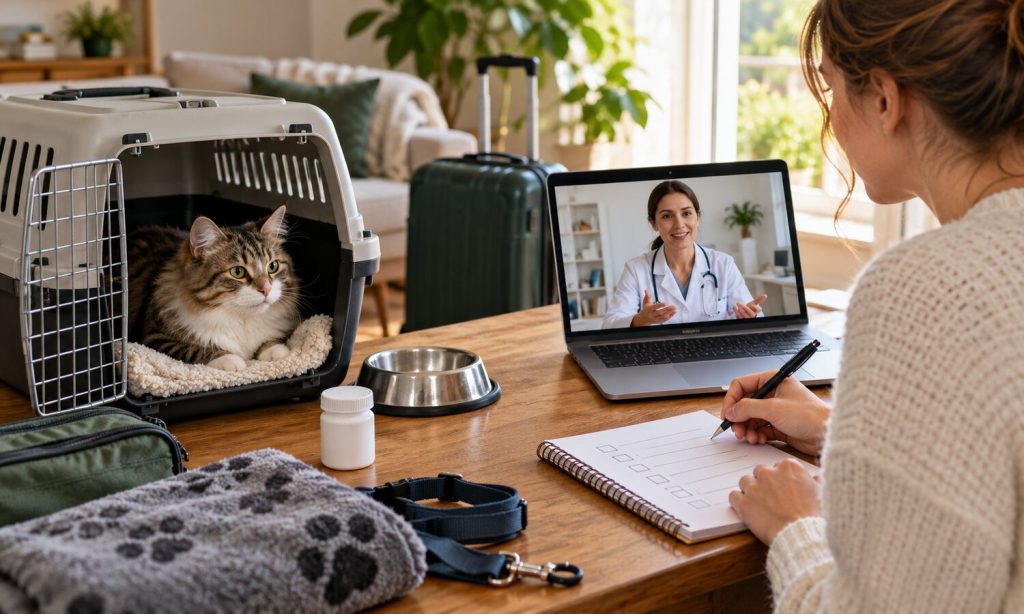
Questions to ask a veterinarian before using sedative for cats for travel start with the reason for travel, the cat’s health, and the risks of the trip. Sedation is not suitable for every cat or every journey. A medicine can affect alertness, balance, breathing, temperature regulation, and the ability to respond to stress. Never give a human sedative or a drug prescribed for another animal. Before travel, ask whether medication is appropriate, how to test the plan safely, and what signs need urgent help. Bring your cat’s health history and itinerary to the appointment. For practical carrier preparation, see our guide to choosing a cat carrier for airline travel. The answers should be specific to your cat rather than a general travel checklist. The phrase sedative for cats for travel belongs in a veterinary discussion, not a self-directed plan.
Start by describing the trip and your cat
Tell the veterinarian whether the trip is by car, plane, train, or another method, how long it may last, and whether your cat will remain in a carrier. Explain the expected temperature, stops, layovers, and access to water or a litter area. Airline rules and travel requirements can change, so confirm details with the carrier and relevant authorities before departure.
Share the cat’s age, weight, medical diagnoses, current medicines and supplements, previous reactions to medication, and history of motion sickness or breathing problems. Mention pregnancy, nursing, or recent illness. Ask whether the cat needs an examination or testing before a travel plan is chosen. A medication decision should be based on this individual information.
Describe what happens during travel: hiding, vocalizing, drooling, vomiting, frantic escape attempts, or calm settling. These behaviors can have different causes. The veterinarian may suggest carrier training, trip adjustments, medication, or a combination. A sedative cannot make an unsafe carrier or unsuitable trip safe.
Questions about whether medication is appropriate
Ask: “Is medication appropriate for this cat and this kind of trip?” Then ask what benefit is expected and what risks may apply to your cat’s conditions. Ask whether travel itself presents a greater concern than the medicine. Your veterinarian can explain the options and whether a different approach is safer.
Ask for the exact medicine name, formulation, route, and written directions. Confirm whether it is approved for cats or being prescribed extra-label, and why the veterinarian recommends it. Do not assume that a product described as calming is a sedative, or that a supplement is automatically harmless. Bring the package of any product you are considering.
Ask about interactions with current prescriptions, flea or tick treatments, supplements, and foods. Ask whether any medicine should be avoided because of heart, kidney, liver, breathing, or neurologic concerns. If the cat has reacted to a sedative or anesthesia before, describe what happened and when.
Questions about a trial and travel-day timing
Ask whether a trial at home is recommended before travel. If so, confirm the specific day, amount, and conditions for the trial with the veterinarian. Do not test a medication for the first time at an airport or during a long trip. Ask whether the clinic wants you to observe the cat during a period when help is available.
Ask how long the medicine may take to work and how long its effects may last. Confirm the travel-day timing in writing. Ask what to do if the cat spits out a dose, vomits, or seems unaffected. Do not repeat or increase a dose unless the veterinarian explicitly directs you to.
Discuss feeding, water, bathroom access, and breaks. Ask if food should be offered before or during the trip. The answer can depend on the cat, medicine, and travel method. For air travel, ask whether the airline permits the plan and whether any health or documentation requirements apply.
Questions about monitoring and emergency plans
Ask which effects may be expected and which should prompt a call. Confirm whether mild sleepiness or wobbliness is possible for the specific medicine, and how to keep the cat safely contained. Ask what signs indicate an emergency, such as trouble breathing, collapse, severe weakness, repeated vomiting, or inability to wake normally.
Get the clinic’s daytime and after-hours contact information. Ask where to seek help along the route or at the destination. Keep the medicine in its original labeled container and carry the cat’s records. Do not leave a sedated cat unattended in a parked vehicle or allow the cat to roam outside the carrier.
Ask whether a follow-up call is needed after the trip and how to report a reaction. Make a note of when the medicine was given and what you observed. This record helps the veterinarian make better recommendations for future travel.
Non-medication steps to discuss
Ask whether gradual carrier training could reduce distress. Short, positive practice sessions at home may help some cats become more comfortable with the carrier. Use a secure carrier that allows the cat to stand and turn, and keep it stable during transport. Our guide to airline-approved cat carrier features covers fit, ventilation, and closures.
You can also ask about reducing noise, avoiding unnecessary stops, maintaining a comfortable temperature, and protecting the cat from escape. Do not use a carrier that opens or is damaged. For international travel or air transport, confirm current rules directly with the airline and appropriate government sources. A calm routine helps, but it does not replace necessary medical guidance.
Before the appointment, write down the full route, expected duration, weather, and likely delays. Tell the veterinarian if the cat will be transported in the cabin or elsewhere, since access and temperature conditions differ. Ask whether the cat should wear identification, whether the carrier needs a familiar blanket, and what documents to carry. Confirm the destination clinic’s contact details before departure. A plan for delays is useful because travel schedules rarely behave like a neat checklist.
If the trip includes border crossings or air transport, ask well in advance about health certificates, vaccination records, carrier rules, and timing. Requirements vary by destination and can change. Verify them with the airline and official authorities rather than relying on an old checklist or a social media post.
Frequently Asked Questions
Can I give my cat a human sedative for a trip?
No. Do not give human medication or another pet’s prescription. Ask a veterinarian to assess your cat and the trip.
Should I test a travel medication before the trip?
Ask the veterinarian whether a trial is appropriate and follow the specific plan. Never choose a test dose or timing on your own.
Can a sedative be used for air travel?
Ask your veterinarian and airline. Medical suitability and carrier rules both matter, and policies may change.
What if my cat remains anxious after medication?
Do not give more unless directed. Contact the veterinarian for advice and keep the cat safely contained.
What signs require urgent veterinary help?
Breathing difficulty, collapse, severe weakness, repeated vomiting, or inability to wake normally need urgent attention.
Final Words
A safe travel plan depends on the cat’s health, trip conditions, and a clear veterinary discussion. Ask whether a sedative is appropriate, how to test and time it, what reactions to monitor, and where to call for help. Follow only the instructions for your cat; do not improvise a dose or rely on another pet’s medicine. Review our cat carrier travel guide as you prepare the non-medication parts of the plan. A sedative for cats for travel should be considered only after a veterinarian reviews the individual risks.









