
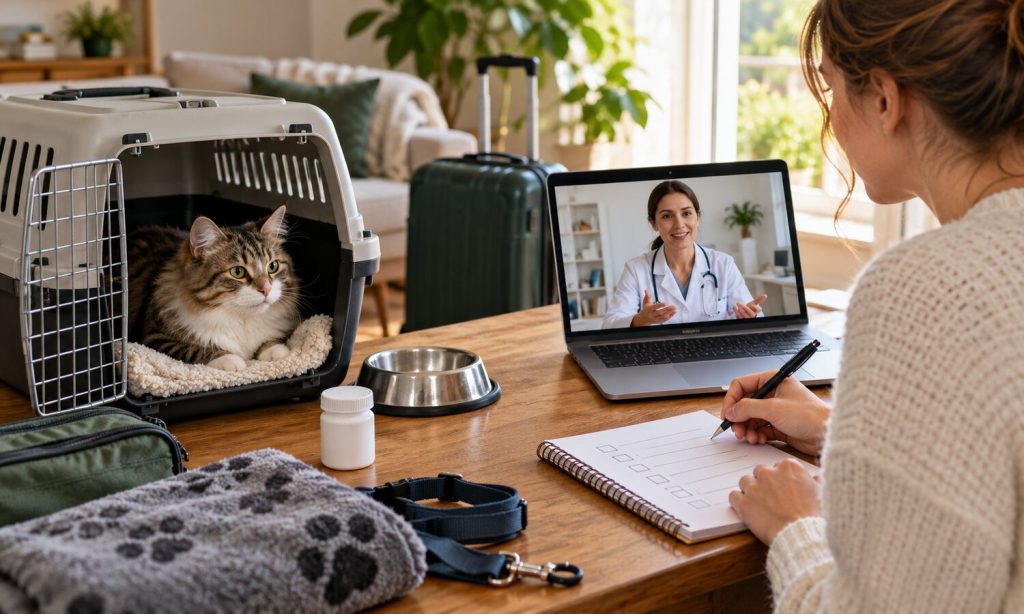
How veterinarians evaluate sedative in cats depends on why calming or sedation is being considered, the cat’s health, and the setting. A medicine for a stressful car ride may be different from sedation for an examination or procedure. The veterinarian weighs expected benefit against risks such as excessive sleepiness, poor coordination, changes in breathing, or interactions with other drugs. Owners should not choose a sedative from a human medicine cabinet or another pet’s prescription. If travel is the concern, write down the route and timing before the appointment. Our guide to preparing a cat carrier for travel can help you plan the non-medication parts. The goal is a plan that reduces distress while protecting safety throughout recovery. The details can change the medicine selected and the level of observation needed. A sedative for cats for travel is only one possible setting for this assessment.
First, the veterinarian defines the goal
The veterinary team will ask what problem the medicine should address. Is the cat fearful during transport, difficult to handle for a routine visit, or scheduled for a procedure? The goal affects which options and monitoring may be appropriate. The veterinarian may also consider whether behavior support, carrier training, pain control, or a change in the appointment setup could meet the need.
The word sedative can refer to different medicines and levels of effect. Some medicines may reduce anxiety without producing deep sedation; others may cause stronger drowsiness or be used as part of a procedure. A product marketed as calming may be a supplement rather than a sedative. The veterinarian clarifies the exact medication, intended effect, and limits of the plan.
Ask what improvement is expected and how it will be measured. For travel, that might mean easier loading and less distress while the cat stays responsive and safely contained. For a procedure, the clinical goal and monitoring needs are different. A clear goal helps prevent owners from interpreting “sleepy” as proof that a medicine is working as intended.
The health history and examination
The veterinarian reviews the cat’s age, weight, previous illnesses, current symptoms, and prior reactions to sedatives or anesthesia. Share all prescriptions, supplements, over-the-counter products, and recent treatments. Mention heart, kidney, liver, breathing, or neurologic conditions, as well as pregnancy or nursing. A previous reaction matters even if the medicine was given years ago.
An examination may help identify concerns that change the risk assessment. Depending on the cat and reason for sedation, the veterinarian may recommend tests or review recent results. Not every cat needs the same workup. The decision depends on the planned medicine, the level of sedation, the procedure, and the cat’s overall condition.
The team may also assess hydration, breathing, heart function, mobility, and stress response. If the cat is ill, dehydrated, or breathing abnormally, the veterinarian may postpone a nonurgent plan or choose another approach. Owners should not try to evaluate these risks by appearance alone.
Medication choice and risk review
When considering a sedative, the veterinarian selects a drug and formulation based on the goal, route, duration, and health factors. They review possible side effects, interactions, and practical administration concerns. Ask whether the medicine is approved for cats or prescribed extra-label, and why it is appropriate for this case. The veterinarian can explain alternatives and expected monitoring.
The team considers all medicines the cat receives, including products not thought of as medication. Do not add calming drops, supplements, or a second sedative without disclosure and approval. Different products may contain ingredients that affect alertness or interact. Our guide to changes to monitor after calming drops explains why it helps to record the exact product and observed effects.
The veterinarian gives specific instructions about dose, timing, route, food, and what to do if a dose is missed, spat out, or vomited. Do not calculate or adjust a dose yourself. If a prescription label conflicts with the verbal plan, call before giving the medicine.
Monitoring depends on the setting
For a home or travel plan, the veterinarian may recommend a trial when the cat can be observed and help is available. Ask when to give the medicine, how long effects may last, and which signs are concerning. Keep the cat in a secure carrier or quiet area as advised. Do not leave a sedated cat unattended in a vehicle or allow it outdoors.
For sedation at a clinic or during a procedure, monitoring may include observation of breathing, circulation, temperature, and responsiveness. The veterinary team decides what monitoring and recovery support are needed. The owner’s role is to share accurate history, follow fasting or medication directions, and report changes after the visit.
Call the clinic about unexpected agitation, marked sleepiness, stumbling, vomiting, or any effect the veterinarian identified as a concern. Difficulty breathing, collapse, severe weakness, inability to wake normally, or suspected overdose require urgent veterinary help. Keep the medication package available when contacting the clinic.
How owners can prepare
Bring the cat’s current medication list, medical records if requested, and a short description of the stressful situation. For travel, include the transport method, duration, expected temperature, layovers, and carrier type. Explain what you have already tried and what the cat did. Precise details help the veterinarian decide whether sedation, behavior training, or a change in travel plans is more suitable.
Ask for written directions, the clinic’s after-hours contact, and a plan for a poor response or side effect. Confirm whether the cat should eat before medication and what recovery should look like. If the cat is flying, ask the airline directly about its current rules; a veterinarian’s prescription does not override carrier policies. See our airline carrier guide for fit and ventilation considerations.
The veterinarian may ask you to describe the cat’s normal behavior so post-medication changes are easier to interpret. Note how the cat walks, responds to sound, eats, and settles before the medicine. Afterward, record the time, behavior, and any unexpected sign. A short baseline makes the follow-up more specific and helps distinguish the planned calming effect from a reaction that needs attention.
Keep the written plan with the carrier supplies so another caregiver can follow it if needed. Confirm who is responsible for observing the cat during each part of the trip.
Frequently Asked Questions
Does every cat need a sedative for travel?
No. The veterinarian considers the cat’s distress, health, route, and alternatives before recommending medication.
Can I use a human sedative for my cat?
No. Give only medicine prescribed or specifically directed by a veterinarian for that cat.
Will the veterinarian always run tests first?
Not always. Testing depends on the cat’s health, planned medicine, and reason for sedation.
What should I do if my cat seems too sleepy?
Contact the prescribing clinic for advice. Seek urgent care if the cat is difficult to wake, weak, collapsed, or breathing abnormally.
Can I combine a sedative with calming supplements?
Do not combine them unless the veterinarian has reviewed the exact products and approved the plan.
Final Words
A veterinarian evaluates sedation by matching the intended effect to the cat’s health, other medicines, and the demands of the situation. Share the full history, ask about alternatives and monitoring, and follow written instructions exactly. The right plan may involve medication, behavior preparation, or both. For travel, pair medical advice with a secure setup and review our cat carrier preparation guide. If travel is the concern, a sedative for cats for travel still requires an individualized veterinary decision.









